
The global energy transition towards electrification and decarbonization has created an unprecedented demand for efficient, reliable, and scalable energy storage solutions. Central to this transformation is the lithium-ion battery, a technology distinguished by its high voltage, substantial energy density, extended cycle life, and favorable cost-performance ratio. As nations worldwide, including the United States, the European Union, Japan, and South Korea, enact supportive policies for electrochemical energy storage, the lithium-ion battery industry continues its rapid expansion. This growth is further propelled by the robust markets for electric vehicles (EVs), portable electronics, and grid-scale renewable energy integration.
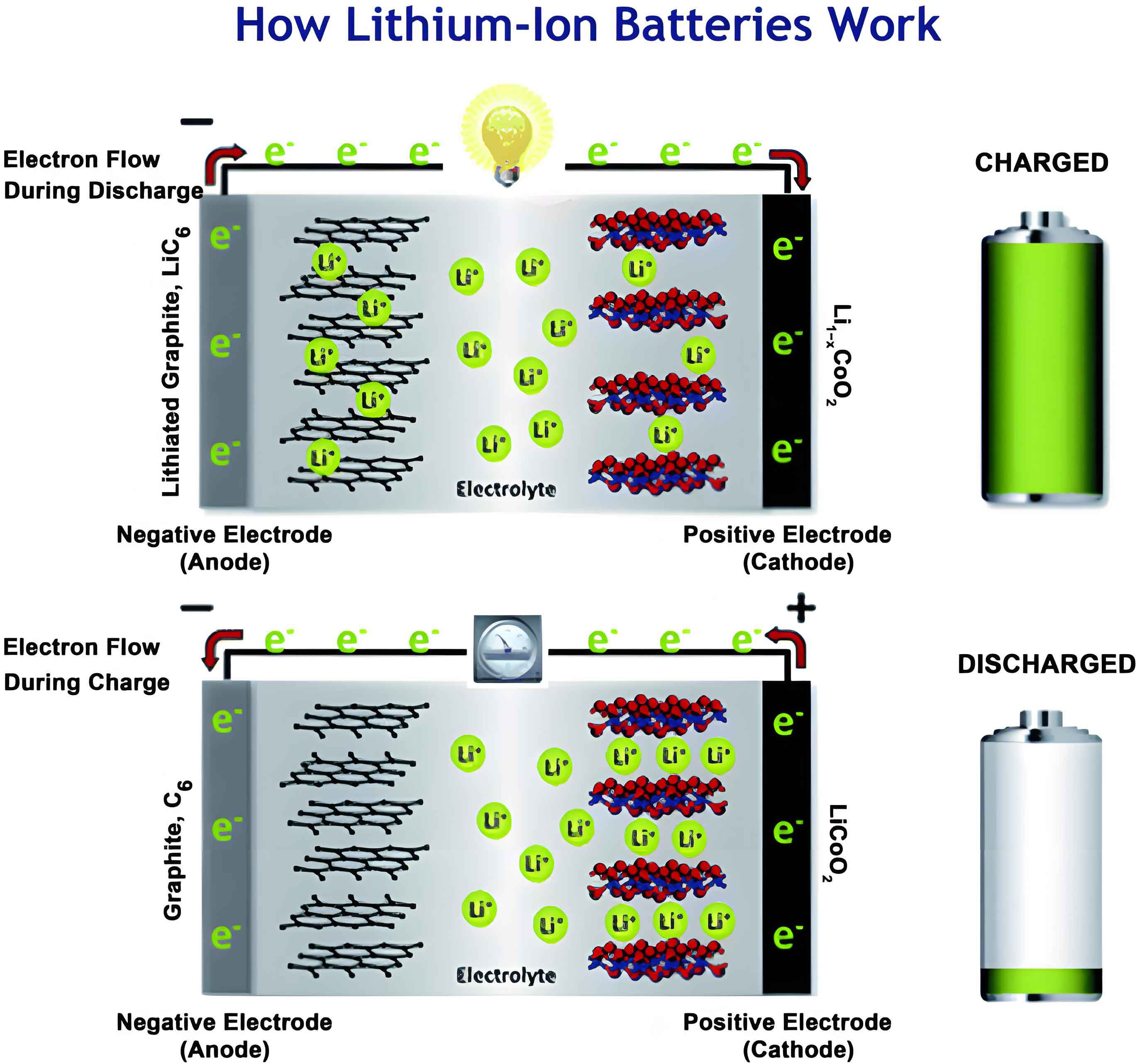
The performance, cost, and safety of a lithium-ion battery are fundamentally dictated by its core constituent materials: the cathode, anode, separator, and electrolyte. These materials represent the upstream critical nodes of the lithium-ion battery value chain and are the primary battleground for innovation and intellectual property (IP) strategy. The cathode material, as the source of lithium ions, largely determines the energy density and cost of the cell. The anode material critically influences the energy density, rate capability, and cycle life. The separator, while electrochemically inactive, is vital for safety, preventing electrical short circuits while facilitating ion transport. This analysis delves into the patent landscape of these three key material domains—cathode, anode, and separator—to map technological trends, assess the competitive environment, and identify future innovation pathways for the advancement of lithium-ion battery technology.
1. Patent Data Retrieval and Methodology
This study utilizes the incoPat global patent database as the primary data source and analytical tool. To ensure the relative completeness of annual data, the patent search scope was limited to applications filed up to December 31, 2023. Scientifically constructed search strategies, combining keywords and International Patent Classification (IPC) codes relevant to lithium-ion battery cathode, anode, and separator materials, were employed. The initial dataset underwent rigorous cleaning through IPC code refinement and manual review to exclude irrelevant documents. The final analysis is based on the following patent datasets:
- Cathode Materials: 10,919 patent application records.
- Anode Materials: 14,628 patent application records.
- Separator Materials: 5,134 patent application records.
2. Patent Landscape Analysis for Lithium-ion Battery Materials
2.1 Geographical Distribution of Patent Applications
The geographical distribution of patent filings reveals the central innovation hubs within China for lithium-ion battery materials. The analysis consistently identifies Guangdong, Jiangsu, Zhejiang, Beijing, and Shanghai as the top regions, with Guangdong Province holding a commanding lead across all three material categories. This concentration aligns with the presence of major battery manufacturers, material suppliers, and research institutions in these economically developed coastal regions.
| Material Type | Total CN Applications | Top 5 Regions (by Application Count) |
|---|---|---|
| Cathode | 10,919 | Guangdong (1,881), Jiangsu (1,084), Beijing (813), Hunan (722), Zhejiang (666) |
| Anode | 14,628 | Guangdong (2,629), Jiangsu (1,459), Zhejiang (1,133), Beijing (947), Shanghai (780) |
| Separator | 4,135 | Guangdong (867), Jiangsu (571), Shanghai (244), Zhejiang (244), Anhui (222) |
Foreign entities maintain a significant IP presence in the Chinese market, underscoring its strategic importance. For cathode and anode materials, Japanese and South Korean corporations are the most active foreign filers. In the separator domain, Japanese companies lead, followed by South Korean and American applicants. The relatively high grant rates for foreign applications (e.g., 53.62% for separators) indicate a focus on filing high-quality, substantive inventions.
2.2 Analysis of Patent Applicant Types and Key Players
Enterprises unequivocally dominate as the primary innovation actors across all material sectors, accounting for the majority of patent filings. However, universities and research institutes exhibit higher patent grant rates, suggesting a strong foundational research focus. The synergy between academic R&D and corporate commercialization is a defining feature of the lithium-ion battery materials innovation ecosystem.
| Applicant Type | Cathode Grant Rate | Anode Grant Rate | Separator Grant Rate |
|---|---|---|---|
| Enterprises | 34.93% | 35.53% | 37.19% |
| Universities | 35.52% | 42.41% | 41.71% |
| Research Institutes | 43.62% | 43.16% | 35.65% |
The competitive landscape features prominent Chinese and international players. South Korea’s LG Chem and Samsung SDI are consistently ranked among the top applicants for both cathode and anode materials in China. Leading Chinese academic institutions, such as Central South University, demonstrate formidable research output and quality, topping the list in cathode and anode patent filings. Chinese industry leaders like Contemporary Amperex Technology Co., Limited (CATL), BYD Company Limited, and Guoxuan High-Tech Co., Ltd. have also established substantial patent portfolios, reflecting their integrated strategies of technological advancement and IP protection.
2.3 Evolving Trends in Technical Objectives (2011-2022)
Analyzing the evolution of patent claims reveals shifting R&D priorities over the past decade, driven by market demands for higher performance, lower cost, and improved safety in lithium-ion battery technology.
For Cathode Materials: Early efforts (pre-2018) heavily prioritized cost reduction, particularly through cobalt minimization. Subsequently, the focus has intensified on enhancing stability—encompassing structural, thermal, and cycling stability—especially for high-nickel (Ni-rich) and lithium-rich layered oxide cathodes. Simplifying synthesis processes for easier industrial scale-up remains a consistent secondary goal.
For Anode Materials: The trajectory shows a clear transition. Before 2016, cost, stability, and process complexity were equally weighted. Post-2016, stability and process simplification began to outweigh pure cost considerations. By 2019, enhancing the structural and electrochemical stability of next-generation anodes (e.g., silicon-based composites) became the paramount technical objective, crucial for managing volume expansion and ensuring long cycle life.
For Separator Materials: The primary driver has consistently been the optimization of stability and safety, specifically improving thermal shutdown properties and mechanical integrity. Enhancing ionic conductivity (often via coating technologies) and enabling the production of thinner, more robust separators for high-energy-density cells are persistent secondary themes.
3. Technical Deep Dive: Material Innovation Pathways
3.1 Cathode Materials: Pushing the Boundaries of Energy Density
The quest for higher energy density in lithium-ion battery systems is largely a cathode challenge. The theoretical specific capacity ($C_{theo}$) of a cathode material is a key metric, often expressed in milliampere-hours per gram (mAh g$^{-1}$). State-of-the-art research focuses on two primary families:
1. Lithium-rich Layered Oxides (LRLOs): These materials, with a general formula of xLi$_2$MnO$_3$∙(1-x)LiMO$_2$ (M = Ni, Co, Mn, etc.), offer exceptionally high capacities (>250 mAh g$^{-1}$) but suffer from voltage fade, poor rate capability, and oxygen release. Innovations aim to stabilize the crystal structure through doping and surface coating. The voltage fade mechanism can be modeled as a gradual reduction in average operating voltage ($V_{avg}$) over cycle number (N):
$$ \Delta V_{avg}(N) = V_0 – k \cdot \ln(N+1) $$
where $V_0$ is the initial voltage and $k$ is a material-dependent degradation constant. Research seeks to minimize $k$ through structural engineering.
2. High-Nickel (Ni-rich) NCM/NCA Cathodes: Increasing nickel content (e.g., NCM811, NCA) boosts capacity but exacerbates structural degradation and thermal instability. Single-crystal morphology synthesis has emerged as a key strategy to mitigate microcracking and improve longevity. The capacity retention ($R$) after a given number of cycles can be correlated with the primary particle size ($d$) and Ni content ($x_{Ni}$):
$$ R(N) \propto \frac{1}{d \cdot x_{Ni}^\alpha} $$
where $\alpha$ is a positive exponent, highlighting the trade-off between energy density and stability.
3.2 Anode Materials: Beyond Graphite
Graphite’s theoretical capacity (372 mAh g$^{-1}$) is a bottleneck for next-generation lithium-ion battery technology. The industry is actively developing alternatives:
1. Silicon-based Anodes: Silicon offers a tenfold higher theoretical capacity (~4200 mAh g$^{-1}$ for Li$_{22}$Si$_5$). The colossal volume change (~300%) during lithiation/delithiation causes pulverization and rapid capacity decay. The strain ($\epsilon$) induced is proportional to the capacity ($Q$):
$$ \epsilon \propto \frac{\Delta V}{V_0} \propto Q $$
To manage this, strategies focus on nanostructuring (e.g., Si nanoparticles, nanowires), carbon compositing, and sophisticated electrode architecture design. Pre-lithiation techniques are critical to compensate for the large irreversible capacity loss in the first cycle, often represented by the First Cycle Coulombic Efficiency (FCE):
$$ FCE = \frac{Q_{delithiation}^{(1st)}}{Q_{lithiation}^{(1st)}} \times 100\% $$
Targets aim to push the FCE of Si-based anodes above 90%.
2. Hard Carbon Anodes: For applications requiring fast charging and superior low-temperature performance, such as some EV and consumer electronics batteries, hard carbon is a promising candidate. Its disordered structure provides more lithium storage sites and faster ion diffusion kinetics than graphite, albeit with a slightly lower average working potential.
3.3 Separator Materials: The Guardian of Safety
The separator’s evolution is guided by the conflicting demands of ultra-thin porosity for low resistance and robust mechanical/thermal properties for safety. Key innovation directions include:
1. Advanced Coatings: Ceramic (e.g., Al$_2$O$_3$, SiO$_2$) or polymer coatings are applied to enhance thermal stability, wettability, and mechanical strength. The composite separator’s shutdown temperature ($T_s$) and melt integrity temperature ($T_m$) are critical parameters that must satisfy: $T_s < T_m$ for effective safety protection.
2. Non-Woven and Functionalized Separators: Research explores alternative matrices with inherent high thermal resistance. Furthermore, separators with functional groups that can scavenge harmful hydrofluoric acid (HF) or suppress lithium dendrite growth are under development, adding an active safety role to this traditionally passive component.
4. Strategic Implications and Future Outlook
The patent analysis underscores a highly dynamic and competitive global landscape for lithium-ion battery materials. China has established itself as a dominant force in both production volume and patent filing activity, with strong regional innovation clusters. The interplay between enterprises (driving application-oriented R&D) and academia (pioneering fundamental breakthroughs) is a key strength. However, international players from Japan and South Korea retain significant technological leadership and a strong IP foothold in the critical Chinese market.
The future trajectory of lithium-ion battery material innovation will be shaped by several converging forces:
- Sustainability Pressures: The environmental impact of material sourcing (e.g., cobalt, lithium) and processing will drive innovation towards cobalt-free or low-cobalt cathodes, efficient recycling technologies, and bio-based or less energy-intensive separator production.
- Performance Demands: The relentless push for higher energy density (>400 Wh/kg at cell level), faster charging (<15 minutes to 80% SOC), and longer lifespan (>2000 cycles) will continue to fuel research into novel cathode/anode chemistries and cell engineering.
- Cost Reduction: While performance is crucial, achieving cost parity with internal combustion engines remains imperative for mass EV adoption. Innovations that simplify manufacturing processes, use abundant raw materials, and improve yield rates will be heavily patented.
- Safety as a Non-Negotiable Attribute: As battery packs grow larger, safety innovations—from inherently stable cathodes and anodes to “fail-safe” separators and solid-state electrolytes—will attract immense R&D and patenting focus.
In conclusion, the lithium-ion battery remains the cornerstone of modern portable and mobile electrification. Its continued evolution, as evidenced by the vibrant and strategic patent activity in core materials, is essential for realizing a sustainable energy future. The next decade will likely witness the maturation of current advanced material concepts (high-nickel cathodes, silicon-carbon anodes) and the emergence of potentially disruptive paradigms, such as solid-state batteries, where the material innovation landscape will be redrawn anew.