
I have long been interested in how the atomic-scale arrangement of transition metals controls the macroscopic performance of a lithium ion battery. Among the many possible cathode chemistries, layered oxides with the general formula LiMO2 remain the most important family for high-energy lithium ion battery applications. In particular, ternary compositions containing nickel, cobalt, and manganese offer a tunable balance of capacity, voltage, structural stability, and cost. My goal in this work is to isolate the role of transition metal ratio by comparing four carefully chosen compositions: LiCoO2 (LCO), LiNi0.6Co0.2Mn0.2O2 (NCM622), LiCo0.6Mn0.2Ni0.2O2 (CMN622), and LiMn0.6Ni0.2Co0.2O2 (MNC622). Although all three ternary compounds share the same 6:2:2 transition metal stoichiometry, the identity of the dominant metal changes dramatically. I use first-principles density functional theory to examine lattice response, theoretical capacity, equilibrium voltage, energy density, electronic structure, Bader charge compensation, and lithium ion migration barriers. The results allow me to construct a coherent picture of Ni, Co, and Mn synergy in a lithium ion battery cathode.
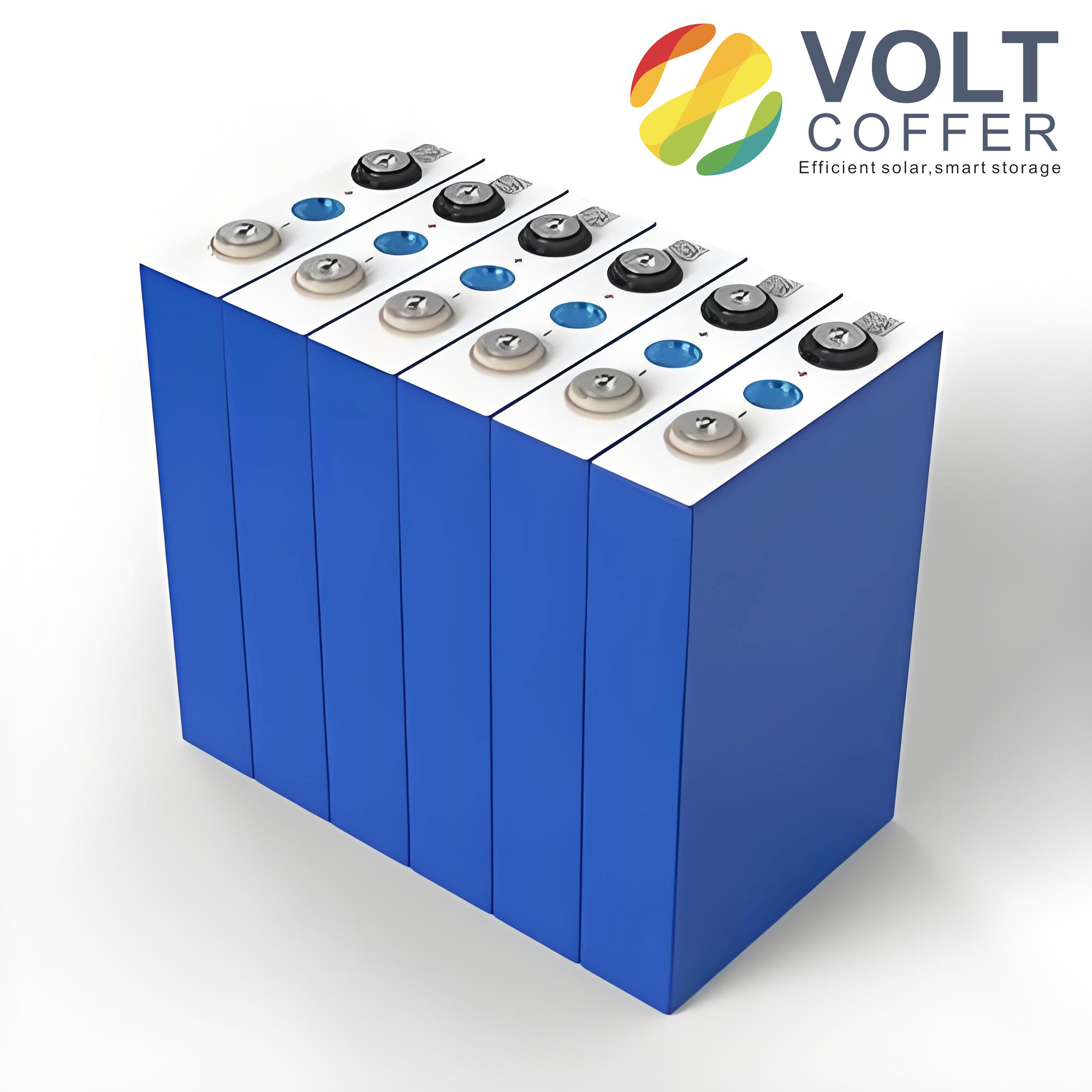
Before presenting my computational results, I should emphasize why this comparison matters. In a conventional lithium ion battery, the positive electrode determines the energy density, the operating voltage, and a large fraction of the total cost. Layered LiCoO2 was the first commercial cathode, and it still offers a high equilibrium voltage and excellent electronic conductivity. However, its practical capacity is limited by structural degradation at deep delithiation, including oxygen loss, cobalt dissolution, and irreversible phase transformations. Nickel-rich ternary oxides can deliver higher capacity because Ni provides the main redox activity, but Ni2+ has an ionic radius close to that of Li+, which promotes cation mixing and surface reconstruction. Manganese is generally redox-inactive in the voltage window of interest, but it stabilizes the layered framework. Cobalt improves rate capability and suppresses cation disorder, yet it is expensive and toxic. Therefore, a detailed understanding of how these three elements partition the burden of charge compensation and structural stability is essential for designing better lithium ion battery cathodes.
I begin with the computational method and structural models. My calculations are performed with the Vienna Ab initio Simulation Package within the framework of density functional theory. The projector augmented wave method describes the interaction between ionic cores and valence electrons. The exchange-correlation functional is the Perdew-Burke-Ernzerhof parameterization of the generalized gradient approximation. I include spin polarization in all structural optimizations. The energy convergence criterion is set to 10-4 eV per atom, and the Hellmann-Feynman force threshold is 0.5 eV/nm. A plane-wave cutoff of 500 eV is used. Reciprocal space is sampled with a 2×2×2 Monkhorst-Pack mesh centered at the Γ point. Because the transition metal d electrons are strongly correlated, I apply a Hubbard U correction. I set U = 3.5 eV for Ni, Co, and Mn. This consistent value ensures that comparisons among the four compounds are meaningful and that the lattice constants and equilibrium volumes are discussed on the same footing. For layered materials, I include Grimme D3 dispersion corrections to describe interlayer van der Waals interactions. Lithium ion migration barriers are calculated with the climbing-image nudged elastic band method.
The crystal structures of LCO, NCM622, CMN622, and MNC622 all belong to the R-3m space group, which is the hexagonal α-NaFeO2 layered structure. In this structure, edge-sharing octahedra form a cubic close-packed oxygen lattice that is slightly distorted along the c axis. The transition metal layer occupies the thinner octahedral sites at the 3a Wyckoff position, while the lithium layer occupies the thicker octahedral sites at the 3b position. Oxygen atoms sit at the 6c sites. The resulting stacking sequence is [Li]3b[TM]3a[O2]. For LCO I use the primitive cell. For the three ternary compositions I construct 3×3×1 supercells containing 108 atoms. This supercell size allows me to distribute Ni, Co, and Mn over the transition metal sublattice while preserving the overall 6:2:2 ratio. The supercell approach also reduces artificial periodicity effects and provides a reasonable representation of the local environments that arise in a real lithium ion battery cathode.
My first analysis concerns lattice constants and structural stability. During charge and discharge, the cathode transforms from a lithiated state to a delithiated state. The associated volume change generates local strain, which can cause particle cracking, loss of electrical contact, and accelerated capacity fade. Therefore, the volume change between the fully lithiated and fully delithiated states is a useful indicator of long-term cycling stability. I calculate the lattice parameters a and c, the unit cell volume V, and the volume change ΔV for all four compounds. I define the volume change as
$$ \Delta V = \frac{V_{\mathrm{delithiated}} – V_{\mathrm{lithiated}}}{V_{\mathrm{lithiated}}} \times 100\% $$
Table 1 summarizes the results. For LCO, the a lattice parameter remains essentially unchanged at 2.829×10⁻¹ nm, while c decreases from 1.376 nm to 1.315 nm. The volume falls from 9.541×10⁻² nm3 to 9.116×10⁻² nm3, giving a volume change of 4.45%. CMN622 shows a = 2.844×10⁻¹ nm and c = 1.398 nm in the lithiated state, and a = 2.824×10⁻¹ nm and c = 1.342 nm in the delithiated state. Its volume changes from 9.793×10⁻² nm3 to 9.271×10⁻² nm3, corresponding to 5.33%. NCM622 has the largest lithiated volume, 1.000×10⁻¹ nm3, and the largest volume contraction, 7.18%, with a changing from 2.873×10⁻¹ nm to 2.830×10⁻¹ nm and c changing from 1.399 nm to 1.339 nm. MNC622 exhibits the smallest volume change, 4.19%, with a decreasing only slightly from 2.853×10⁻¹ nm to 2.844×10⁻¹ nm and c decreasing from 1.408 nm to 1.358 nm.
| Material | State | a / nm | c / nm | V / nm3 | ΔV / % |
|---|---|---|---|---|---|
| LCO | LiCoO2 | 2.829×10⁻¹ | 1.376 | 9.541×10⁻² | 4.45 |
| LCO | CoO2 | 2.829×10⁻¹ | 1.315 | 9.116×10⁻² | 4.45 |
| CMN622 | LiCo0.6Mn0.2Ni0.2O2 | 2.844×10⁻¹ | 1.398 | 9.793×10⁻² | 5.33 |
| CMN622 | Co0.6Mn0.2Ni0.2O2 | 2.824×10⁻¹ | 1.342 | 9.271×10⁻² | 5.33 |
| NCM622 | LiNi0.6Co0.2Mn0.2O2 | 2.873×10⁻¹ | 1.399 | 1.000×10⁻¹ | 7.18 |
| NCM622 | Ni0.6Co0.2Mn0.2O2 | 2.830×10⁻¹ | 1.339 | 9.283×10⁻² | 7.18 |
| MNC622 | LiMn0.6Ni0.2Co0.2O2 | 2.853×10⁻¹ | 1.408 | 9.926×10⁻² | 4.19 |
| MNC622 | Mn0.6Ni0.2Co0.2O2 | 2.844×10⁻¹ | 1.358 | 9.510×10⁻² | 4.19 |
The trend in volume change is NCM622 > CMN622 > LCO > MNC622. A larger volume change generally indicates more severe irreversible phase transformation and poorer cycling stability. Therefore, NCM622 is expected to suffer the most significant capacity decay during extended cycling of a lithium ion battery. In contrast, MNC622, with its high manganese content, exhibits the smallest volume change. The reason is that Mn4+ is redox-inert in the relevant voltage window and does not participate in the same degree of oxidation-reduction-driven structural distortion as Ni and Co. The high concentration of Mn4+ helps maintain the integrity of the layered framework. This observation is consistent with experimental reports that manganese stabilizes the layered structure of lithium ion battery cathodes.
Next I evaluate the theoretical capacity, equilibrium voltage, and energy density. Theoretical capacity is the maximum amount of charge that can be stored per unit mass if all lithium ions are removed. It is given by
$$ C = \frac{n F}{3.6 M} $$
where C is the theoretical capacity in mAh/g, n is the number of lithium ions participating in the reaction, F is the Faraday constant (96 485 C/mol), and M is the molar mass of the material in g/mol. The factor 3.6 converts coulombs and grams to milliampere-hours per gram. For a lithium ion battery, the equilibrium voltage is another critical parameter. It reflects the energy barrier for removing lithium from the cathode and is determined by the chemical potential difference between lithium in the cathode and lithium metal. The electrochemical reaction can be written as
$$ \mathrm{Li}_{x_1}\mathrm{MO}_2 \rightarrow \mathrm{Li}_{x_2}\mathrm{MO}_2 + (x_1 – x_2)\mathrm{Li} $$
where x1 is the lithium content in the lithiated state and x2 is the lithium content in the delithiated state, with x1 > x2. The equilibrium voltage is
$$ V = -\frac{\mu_{\mathrm{Li}}^{\mathrm{cathode}} – \mu_{\mathrm{Li}}^{\mathrm{anode}}}{(x_1 – x_2)F} $$
Integrating this expression gives the Nernst-like relation between voltage and the free energy change of the cell reaction:
$$ V = -\frac{\Delta G}{(x_1 – x_2)F} $$
$$ \Delta G = \Delta E + p\Delta V – T\Delta S $$
Because the pressure-volume work and the entropy term are much smaller than the internal energy change, I approximate ΔG by ΔE. Therefore, for a cathode material MO2, the voltage for lithium removal from x1 to x2 is
$$ V = -\frac{E_{\mathrm{Li}_{x_1}\mathrm{MO}_2} – E_{\mathrm{Li}_{x_2}\mathrm{MO}_2} – (x_1 – x_2)E_{\mathrm{Li}}}{(x_1 – x_2)F} $$
where the energies are total energies obtained from density functional theory. Once capacity and voltage are known, the gravimetric energy density is
$$ \varepsilon = C \times V $$
where ε is in mWh/g when C is in mAh/g and V is in volts. Table 2 lists my calculated values. MNC622 has the highest theoretical capacity, 280.301 mAh/g, which is about 2.4% higher than that of LCO (273.763 mAh/g). NCM622 and CMN622 have capacities of 276.684 mAh/g and 276.389 mAh/g, respectively, both slightly higher than LCO. However, voltage decreases in the order LCO > CMN622 > NCM622 > MNC622. LCO has the highest equilibrium voltage, 3.35 V, because the Co3+/Co4+ redox couple has a high redox potential. CMN622 and NCM622 have voltages of 3.24 V and 3.18 V, respectively, indicating that manganese substitution lowers the average reaction potential. MNC622 has the lowest voltage, 2.95 V, which may be related to the Jahn-Teller effect of Mn3+ and the associated structural distortion. It is important to note that PBE-D3 calculations typically underestimate equilibrium voltages by about 0.6 V. Adding this correction to my calculated NCM622 and LCO values gives approximately 3.78 V and 3.95 V, respectively, which are close to experimental values. This agreement supports the validity of my computational approach and structural models.
| Material | C / (mAh/g) | V / V | ε / (mWh/g) |
|---|---|---|---|
| LCO | 273.763 | 3.35 | 918.00 |
| CMN622 | 276.389 | 3.24 | 894.86 |
| NCM622 | 276.684 | 3.18 | 878.57 |
| MNC622 | 280.301 | 2.95 | 827.02 |
The energy density results reveal an important trade-off. LCO has the highest energy density, 918.00 mWh/g, because it combines a high voltage with a competitive capacity. MNC622 has the highest capacity but the lowest voltage, so its energy density is only 827.02 mWh/g. NCM622 and CMN622 fall in between. This shows that capacity alone does not determine energy density; voltage is equally important. For a lithium ion battery intended for electric vehicles, both high capacity and high voltage are desirable, but the two often cannot be maximized simultaneously. The design of a ternary cathode therefore requires careful balancing of Ni, Co, and Mn. Cobalt contributes high voltage but is scarce and expensive. Nickel contributes capacity but can cause cation mixing. Manganese improves structural stability but can lower the average voltage if present in large amounts. These competing effects define the composition space of practical lithium ion battery cathodes.
I now turn to the electronic structure. Projected density of states (PDOS) analysis is a powerful way to connect the atomic orbital character to macroscopic electrochemical behavior. In LCO, the Co 3d states dominate the top of the valence band, with a pronounced peak between -1.5 eV and 0 eV. The Co 3d and O 2p states are strongly hybridized near the valence band maximum and conduction band minimum, indicating significant Co-O covalent interaction. The Co3+/Co4+ redox couple changes valence during delithiation, and this change affects the oxygen sublattice, which can participate in charge compensation and influence stability. The Li s states are distributed in a way that reflects lithium insertion and extraction. Overall, LCO is calculated to be a semiconductor in the ground state, consistent with its electronic structure.
For the three ternary materials, the PDOS includes contributions from Ni 3d and Mn 3d in addition to Co 3d, O 2p, and Li s. The presence of multiple transition metals leads to a more complex electronic structure with overlapping d states near the Fermi level. All three ternary compounds exhibit metallic conductivity, in contrast to the semiconducting behavior of LCO. The calculated Fermi level positions are 5.162 eV for NCM622, 6.512 eV for MNC622, and 6.961 eV for CMN622. The Ni 3d peak in NCM622 lies closest to the Fermi level, which helps explain its good electronic conductivity under certain conditions. In MNC622, the density of states near the Fermi level is noticeably higher than in NCM622 and CMN622, although the distribution is quite different. Using Boltzmann transport theory as implemented in VASPKIT, I estimate the electrical conductivity at 300 K. At the Fermi level, MNC622 has a conductivity of about 4×10³ S/m, while NCM622 has about 5×10² S/m. When the chemical potential is shifted 1 eV below the Fermi level, NCM622 reaches about 3×10³ S/m, whereas MNC622 drops to about 8×10² S/m. These values indicate that the conductivity is sensitive to the position of the Fermi level and to the detailed orbital overlap.
Orbital hybridization analysis shows that in NCM622 and CMN622, Ni 3d and Co 3d states hybridize strongly with O 2p states, implying strong Ni-O and Co-O covalent interactions. The Mn-O interaction is weaker in these compounds. Only in MNC622, where manganese is the majority transition metal, do Mn 3d and O 2p states overlap significantly across a wide energy range from the valence band to the conduction band. In addition, compared with LCO, much of the O 2p density in MNC622 is pushed to lower energies, leaving fewer oxygen states near the Fermi level. This suggests that the oxygen ions in MNC622 are more stable. Strong Mn-O covalency may therefore help stabilize part of the lattice during cycling, improving the cycling stability of the lithium ion battery cathode.
To understand charge compensation, I performed Bader charge analysis for LCO, CMN622, NCM622, and MNC622 at different lithium contents. Table 3 lists the Bader charges for each element at x = 1.0, 0.5, and 0.0. In LCO, as lithium content decreases from 1.0 to 0.0, the Co Bader charge increases from +1.20 to +1.42, a change of 0.22, corresponding to the Co3+ to Co4+ oxidation. At the same time, the absolute value of the oxygen Bader charge decreases from 1.05 to 0.71, a change of 0.34, indicating partial conversion of O2- to O– and a tendency toward oxygen release at deep delithiation. This is consistent with the irreversible oxygen loss observed in high-voltage LCO.
| Material | x | Li | Co | Mn | Ni | O |
|---|---|---|---|---|---|---|
| LCO | 1.0 | +0.89 | +1.20 | — | — | -1.05 |
| LCO | 0.5 | +0.90 | +1.33 | — | — | -0.90 |
| LCO | 0.0 | — | +1.42 | — | — | -0.71 |
| CMN622 | 1.0 | +0.89 | +1.22 | +1.66 | +1.19 | -1.10 |
| CMN622 | 0.5 | +0.90 | +1.31 | +1.75 | +1.24 | -0.93 |
| CMN622 | 0.0 | — | +1.41 | +1.79 | +1.32 | -0.74 |
| NCM622 | 1.0 | +0.89 | +1.26 | +1.74 | +1.16 | -1.10 |
| NCM622 | 0.5 | +0.90 | +1.28 | +1.77 | +1.27 | -0.92 |
| NCM622 | 0.0 | — | +1.41 | +1.80 | +1.33 | -0.73 |
| MNC622 | 1.0 | +0.89 | +1.19 | +1.62 | +1.09 | -1.15 |
| MNC622 | 0.5 | +0.90 | +1.27 | +1.76 | +1.18 | -0.99 |
| MNC622 | 0.0 | — | +1.39 | +1.80 | +1.33 | -0.80 |
For the ternary materials, the charge compensation mechanism is more complex because several transition metals can change valence. In CMN622, as x decreases from 1.0 to 0.0, the Bader charge of Co increases by 0.19, Mn by 0.13, and Ni by 0.13. This means that Co carries the main burden of charge compensation in the cobalt-rich composition. In NCM622 and MNC622, nickel becomes the principal charge-compensating species, with increases of 0.17 and 0.24, respectively. The larger nickel change in MNC622 shows that even at a modest nickel content, Ni can undergo substantial oxidation when the surrounding transition metal environment is dominated by manganese. In both MNC622 and NCM622, the Mn Bader charge at x = 0.0 approaches +1.80, similar to the +1.79 value found in CMN622. This indicates that Mn4+ is remarkably stable at high voltage in all three ternary compounds, which suppresses Jahn-Teller distortion caused by Mn3+ and strengthens the layered framework against degradation. At x = 0, the absolute oxygen Bader charge in MNC622 reaches its maximum value of 0.80, higher than in NCM622 (0.73) and CMN622 (0.74). This suggests that manganese enhances lattice oxygen stability and suppresses oxygen evolution, which is beneficial for the thermal stability and cycling safety of a lithium ion battery.
The charge compensation behavior can be summarized by the net oxidation change of each transition metal:
$$ \Delta q_{\mathrm{TM}} = q_{\mathrm{TM}}(x=0) – q_{\mathrm{TM}}(x=1) $$
For CMN622, ΔqCo = 0.19, ΔqMn = 0.13, and ΔqNi = 0.13. For NCM622, ΔqCo = 0.15, ΔqMn = 0.06, and ΔqNi = 0.17. For MNC622, ΔqCo = 0.20, ΔqMn = 0.18, and ΔqNi = 0.24. The total oxidation capacity is distributed differently depending on which transition metal is dominant. In CMN622, cobalt does most of the work. In NCM622 and MNC622, nickel does the most. Manganese never dominates the charge compensation, but its oxidation to Mn4+ provides a stable reservoir of charge neutrality and helps keep the oxygen sublattice stable. This division of labor is a clear example of transition metal synergy in a lithium ion battery cathode.
Lithium ion migration is another key factor because it controls rate capability and, indirectly, cycling stability. A cathode with a high migration barrier will suffer from poor rate performance and increased polarization, especially in a lithium ion battery that is charged or discharged quickly. I therefore calculated the lithium ion migration barriers along the oxygen-dumbbell-hop (ODH) path, which is known to be the most probable diffusion pathway in layered LiCoO2, especially in the early stages of delithiation. I used the climbing-image nudged elastic band method to locate the saddle point and obtain the activation energy. The activation energy is defined as
$$ E_a = E_{\mathrm{saddle}} – E_{\mathrm{initial}} $$
and the diffusion coefficient follows an Arrhenius temperature dependence:
$$ D = D_0 \exp\left(-\frac{E_a}{k_B T}\right) $$
where D0 is a pre-exponential factor, kB is the Boltzmann constant, and T is temperature. A lower activation energy means faster lithium ion migration, which improves the power capability of the lithium ion battery. My calculated migration barriers follow the order MNC622 < NCM622 < CMN622. The manganese-rich MNC622 has the lowest barrier, which is attributed to the larger ionic radius of Mn4+ and the longer Mn-O bonds, which widen the lithium ion diffusion channel. NCM622 has an intermediate barrier. CMN622 has the highest barrier, consistent with its cobalt-rich character and more rigid transition metal-oxygen network. The lower barrier in MNC622 means that lithium ions can move more easily through the structure, which can significantly improve rate performance and reduce structural damage caused by sluggish diffusion. This is an important advantage for a lithium ion battery intended for high-power applications.
| Property | LCO | CMN622 | NCM622 | MNC622 |
|---|---|---|---|---|
| Volume change ΔV / % | 4.45 | 5.33 | 7.18 | 4.19 |
| Theoretical capacity / (mAh/g) | 273.763 | 276.389 | 276.684 | 280.301 |
| Equilibrium voltage / V | 3.35 | 3.24 | 3.18 | 2.95 |
| Energy density / (mWh/g) | 918.00 | 894.86 | 878.57 | 827.02 |
| Migration barrier order | — | Highest | Intermediate | Lowest |
| Main charge compensator | Co | Co | Ni | Ni |
| Oxygen stability at x=0 | Poor | Moderate | Moderate | Best |
The electronic conductivity results deserve further comment because they affect the rate performance of a lithium ion battery. The Boltzmann transport expression for electrical conductivity is
$$ \sigma = e^2 \int \Xi(\varepsilon) \left( -\frac{\partial f}{\partial \varepsilon} \right) d\varepsilon $$
where e is the elementary charge, Ξ(ε) is the transport distribution function, and f is the Fermi-Dirac distribution. At the Fermi level, MNC622 has a higher conductivity than NCM622, but when the chemical potential is shifted below the Fermi level, NCM622 becomes more conductive. This means that the conductivity ranking depends on the state of charge and the position of the Fermi level. In a real lithium ion battery, the Fermi level shifts during cycling, so both materials may experience regimes of good and poor conductivity. Nevertheless, the metallic character of all three ternary compounds is an advantage over the semiconducting behavior of LCO, because it reduces the need for conductive additives and improves electronic transport within the composite electrode.
Taken together, my results reveal clear structure-property relationships. Manganese is the stabilizing element. It reduces the volume change, strengthens the Mn-O covalent interaction, pushes oxygen states to lower energy, and widens the lithium ion diffusion channel. These effects improve cycling stability and rate capability. However, a high manganese content lowers the average voltage because Mn4+ is not redox-active in the same high-voltage window as Co and Ni, and Mn3+ can introduce Jahn-Teller distortion. Cobalt is the voltage-enhancing element. It raises the equilibrium voltage and suppresses structural degradation at high voltage, but it is expensive and its capacity contribution is limited. Nickel is the capacity-enhancing element. It provides the main redox activity and can balance the other properties, but too much nickel promotes Li+/Ni2+ mixing and surface reconstruction. The best lithium ion battery cathode should therefore exploit the synergy of all three metals rather than maximize any single one.
My calculations also allow me to comment on the practical implications for lithium ion battery design. LCO offers the highest energy density, 918.00 mWh/g, and the highest equilibrium voltage, 3.35 V. If the goal is maximum energy density for a small portable device, LCO remains attractive. However, its poor oxygen stability at deep delithiation, reflected in the large decrease of the oxygen Bader charge from -1.05 to -0.71, limits its practical capacity and cycle life. For a lithium ion battery that must operate for many cycles, such as an electric vehicle battery, MNC622 may be attractive because of its small volume change, 4.19%, its high capacity, 280.301 mAh/g, and its low lithium ion migration barrier. The main drawback is its low voltage, 2.95 V, which reduces the energy density to 827.02 mWh/g. NCM622 provides a balanced compromise, with a capacity of 276.684 mAh/g, a voltage of 3.18 V, and an energy density of 878.57 mWh/g. CMN622 offers a higher voltage than NCM622 but a slightly lower capacity, and its volume change is smaller than that of NCM622. These trade-offs mean that the optimal choice depends on the specific application requirements of the lithium ion battery.
I should also emphasize that the 6:2:2 stoichiometry is a useful reference point, but the exact arrangement of Ni, Co, and Mn on the transition metal sublattice can influence local properties. In my 3×3×1 supercells, I distribute the transition metals to represent the average composition. In a real material, short-range order, surface reconstruction, and electrolyte interactions can further modify performance. Nevertheless, the trends I observe are robust and physically meaningful. The fact that the volume change follows the manganese content, the charge compensation follows the identity of the majority redox-active metal, and the migration barrier correlates with the transition metal-oxygen bond length all point to the same conclusion: the transition metal ratio is a primary control knob for lithium ion battery cathode performance.
Another important consideration is the oxygen stability revealed by Bader charge analysis. In LCO, oxygen loses a substantial amount of electron density at deep delithiation, which indicates a tendency toward oxygen oxidation and release. In NCM622 and CMN622, the oxygen Bader charge at x = 0 is about -0.73 and -0.74, respectively, which is less negative than the -0.80 found in MNC622. This means that oxygen in MNC622 retains more electron density and is more resistant to oxidation. Since oxygen release is a major cause of thermal runaway and capacity fade in a lithium ion battery, the oxygen stabilization provided by manganese is a significant safety advantage. The strong Mn-O hybridization in MNC622 creates a more covalent Mn-O bond, which raises the energy required for oxygen loss. This is consistent with the idea that manganese acts as a structural stabilizer in ternary layered oxides.
The charge compensation analysis also shows that nickel oxidation is more pronounced in manganese-rich MNC622 than in cobalt-rich CMN622. In MNC622, the Ni Bader charge increases by 0.24, which is larger than the 0.17 increase in NCM622 and the 0.13 increase in CMN622. This suggests that when manganese dominates the transition metal layer, nickel is more willing to undergo oxidation, possibly because the local Ni-O environment is more ionic and the Ni 3d states are closer to the Fermi level. The higher nickel oxidation in MNC622 helps compensate for the lower cobalt content and contributes to the high theoretical capacity. At the same time, the Mn4+ remains stable near +1.80, so the layered framework is preserved. This division of labor is precisely the kind of synergy that makes ternary cathodes attractive for a lithium ion battery.
The lithium ion migration results can be connected to the rate capability and the cycling stability. A low migration barrier means that lithium ions can move quickly through the cathode without requiring a large overpotential. In a lithium ion battery, this translates to higher power density and less heat generation during fast charging. The fact that MNC622 has the lowest barrier is consistent with its larger diffusion channel. The larger Mn4+ ion expands the transition metal-oxygen layer and increases the interlayer spacing, which lowers the activation energy for lithium hopping. In contrast, CMN622 has the highest barrier, which may limit its rate performance. NCM622 falls in between. These results suggest that manganese-rich compositions are advantageous for high-power lithium ion battery applications, provided that the voltage penalty can be tolerated or compensated by other means.
In summary, I have performed a systematic first-principles study of transition metal ratio effects in four layered cathode materials for a lithium ion battery. My calculations reveal the following key findings. LCO has the highest equilibrium voltage and energy density, but it suffers from the poorest oxygen stability and the largest oxygen Bader charge loss at deep delithiation. MNC622 has the highest theoretical capacity, the smallest volume change, the best oxygen stability, and the lowest lithium ion migration barrier, but its equilibrium voltage is the lowest. NCM622 offers a balanced combination of capacity, voltage, and stability. CMN622 exhibits a higher voltage than NCM622 but a slightly lower capacity and a higher migration barrier. The charge compensation mechanism shifts from cobalt-dominated in CMN622 to nickel-dominated in NCM622 and MNC622, while manganese remains stable as Mn4+ in all ternary compounds. These results demonstrate that the outstanding electrochemical performance of a ternary cathode depends on the synergistic interaction of Ni, Co, and Mn ions.
I conclude that the design of next-generation lithium ion battery cathodes should not focus on a single element. Instead, it should balance the high voltage of cobalt, the high capacity of nickel, and the structural stabilization of manganese. The transition metal ratio provides a powerful tuning parameter for optimizing the trade-off between energy density, power density, cycling stability, and safety. My computational framework can be extended to other compositions, dopants, and surface modifications, providing a rational pathway for the development of advanced lithium ion battery cathode materials.