
In my assessment of the global battery landscape, the solid electrolyte cell has emerged as the most consequential technological pivot of the coming decade. The replacement of flammable liquid electrolytes with solid ionic conductors promises simultaneous gains in safety, energy density, and cycle life. I have examined patent data, industrial roadmaps, and policy instruments across the world’s principal innovation regions to determine how China can convert its impressive research scale into durable industrial leadership. The analysis that follows is organized around three layers: technology development, industrial configuration, and policy environment. I focus especially on the competitive positions of Japan, South Korea, the United States, and Europe, before turning to China’s own advantages and unresolved bottlenecks. Throughout, I treat the solid electrolyte cell not as a single artifact but as a complex system whose performance and cost are governed by coupled material, interface, and manufacturing variables.
Global Patent Concentration and the Race for Solid Electrolyte Cell Dominance
Patent data provide the clearest quantitative signal of national commitment to the solid electrolyte cell. Using a global database of invention applications and utility models, I aggregated simple patent families with a search strategy covering solid-state electrolytes, solid-state batteries, and solid electrolyte cells. The resulting dataset contains 42,962 families. Five jurisdictions account for 90.28% of all filings: Japan, China, South Korea, the United States, and Germany. This extreme concentration tells me that the solid electrolyte cell is not a diffuse global project but a concentrated oligopolistic race among a small number of innovation systems.
To quantify concentration, I use the Herfindahl-Hirschman Index for patent shares. Let \(s_i\) be the share of country \(i\) in total solid electrolyte cell patent families. Then:
$$ HHI = \sum_{i=1}^{n} s_i^2 $$
With Japan at 41.41%, China at 28.68%, South Korea at 10.57%, the United States at 7.29%, and Germany plus other European countries making up the remainder, the HHI is well above 2,500, indicating a highly concentrated innovation market. This matters because the solid electrolyte cell is still pre-commercial; early patent concentration often predicts future standard-setting power and supply chain control.
| Country or Region | Share of Global Solid Electrolyte Cell Patent Families | Dominant Technology Route | Primary Innovation Actors |
|---|---|---|---|
| Japan | 41.41% | Sulfide solid electrolyte cell | Automotive OEMs, electronics conglomerates, national research institutes |
| China | 28.68% | Oxide and hybrid solid electrolyte cell | Universities, battery manufacturers, automotive groups |
| South Korea | 10.57% | Sulfide and polymer composite solid electrolyte cell | Large industrial conglomerates, national laboratories |
| United States | 7.29% | Oxide, sulfide, and hybrid solid electrolyte cell | Startups, automotive OEMs, national laboratories |
| Germany and other European countries | 2.33% | Polymer, oxide, and hybrid solid electrolyte cell | Automotive OEMs, research centers, specialty chemical firms |
The patent race in the solid electrolyte cell is also a race in filing strategy. I observe that Japanese applicants file heavily in Japan, the United States, Europe, and China, creating thickets around sulfide electrolytes. Chinese applicants file predominantly domestically, with only a small fraction going abroad through WIPO, the United States, Japan, the European Patent Office, and South Korea. This asymmetry means that a Chinese solid electrolyte cell invention may be free to operate in China but blocked in export markets. I therefore treat international filing as a strategic variable, not merely a legal formality.
Japan: Sulfide Leadership and Automotive Integration
In my reading of the Japanese innovation system, the solid electrolyte cell is treated as a核心 national project. Japanese filings account for 41.41% of the global total, and seven of the top ten global applicants are Japanese. A single automotive OEM holds more than 2,500 patent families, nearly twice the second-ranked applicant. This scale is not accidental. It reflects a coordinated system in which universities discovered key sulfide electrolytes, automotive OEMs integrated them into vehicle platforms, and electronics firms developed manufacturing equipment and control systems.
The technical core of Japan’s advantage is the sulfide solid electrolyte cell. Sulfide electrolytes offer exceptionally high ionic conductivity, sometimes exceeding \(10^{-2}\) S/cm at room temperature, which approaches that of liquid electrolytes. The Arrhenius relationship governing ionic conductivity is:
$$ \sigma(T) = \sigma_0 \exp\left(-\frac{E_a}{k_B T}\right) $$
where \(\sigma_0\) is the pre-exponential factor, \(E_a\) is the activation energy, \(k_B\) is the Boltzmann constant, and \(T\) is absolute temperature. Japanese teams have optimized sulfide glass-ceramic compositions to lower \(E_a\) and raise \(\sigma_0\), enabling a solid electrolyte cell that can operate at high rates. However, sulfide electrolytes are moisture-sensitive and generate hydrogen sulfide upon exposure to air, which imposes strict dry-room manufacturing requirements. This trade-off between conductivity and processability is central to the Japanese strategy.
| Dimension | Japanese Position in Solid Electrolyte Cell Development |
|---|---|
| Electrolyte material | Sulfide glass-ceramic, LGPS-type and argyrodite-type solid electrolyte cell |
| Anode strategy | Silicon-based and lithium-metal anodes with interfacial protection |
| Manufacturing | Dry-room processes, roll-to-roll stacking, high-pressure densification |
| Commercialization target | 2027–2028 for automotive solid electrolyte cell deployment |
| Policy instrument | National R&D projects, public-private consortia, direct subsidies |
Japan’s policy environment reinforces this technical focus. A national battery strategy has set the formal commercialization of all-solid-state batteries as a 2030 goal, with substantial public funding. Earlier programs brought together automotive OEMs, battery manufacturers, and academic institutes under shared research targets. I interpret this as a deliberate attempt to internalize the externalities of pre-competitive solid electrolyte cell research while preserving competition at the product level.
South Korea: Full-Chain Coordination and Sulfide Scaling
South Korea ranks third globally in solid electrolyte cell patent families, but its industrial structure is distinctive. Large conglomerates coordinate across materials, cells, and systems. Samsung, LG, and SKI have each announced aggressive timelines. From my analysis of their patent portfolios, I see a shift from material discovery toward system integration. Early filings focused on sulfide electrolyte compositions and silver-carbon interlayers. More recent filings emphasize lithium-metal anode protection, stack pressure control, and manufacturing yield.
The South Korean approach can be modeled as a coupled cost-performance system. Let \(C_{cell}\) be the manufacturing cost of a solid electrolyte cell, and let \(Y\) be the cumulative production volume. A learning curve applies:
$$ C_{cell}(Y) = C_0 \left(\frac{Y}{Y_0}\right)^{-\alpha} $$
where \(C_0\) is the initial cost at reference volume \(Y_0\), and \(\alpha\) is the learning elasticity. South Korean firms aim to increase \(Y\) rapidly through pilot lines so that \(\alpha\) drives costs down before Chinese and European competitors reach scale. Policy supports this through a national battery strategy that targets all-solid-state commercialization by 2027 and energy density above 500 Wh/kg by 2030. Public funds are matched by private investment, creating a blended capital structure for solid electrolyte cell scale-up.
| Parameter | South Korean Solid Electrolyte Cell Roadmap |
|---|---|
| Near-term product | Polymer-based semi-solid electrolyte cell |
| Mid-term product | Polymer all-solid-state solid electrolyte cell |
| Long-term product | Sulfide all-solid-state solid electrolyte cell |
| Target energy density | > 500 Wh/kg at cell level |
| Target commercialization | 2027 for all-solid-state, 2030 for mass market |
| Policy funding | Public and private co-investment exceeding 20 trillion KRW |
I note that South Korea’s solid electrolyte cell strategy relies heavily on collaboration with universities and government research institutes. This reduces duplication in fundamental electrolyte science while allowing firms to differentiate in cell design and manufacturing. The main risk I see is dependence on a narrow set of sulfide material suppliers, which could create bottlenecks if demand accelerates faster than upstream capacity.
United States: Startup-Driven Innovation and Capital Markets
The United States presents a different model for solid electrolyte cell development. Rather than relying on incumbent automotive OEMs to lead, the U.S. ecosystem uses venture-backed startups to explore multiple technology routes in parallel. I observe three archetypes: an oxide-focused startup partnering with a European automaker, a sulfide-focused startup backed by two global automakers, and a lithium-metal protection company developing conductive glass separators. These firms are small relative to Japanese and Korean conglomerates, but they are agile and attract patient capital.
From a financial perspective, the U.S. model can be described by a risk-adjusted net present value for a solid electrolyte cell startup:
$$ NPV = \sum_{t=1}^{T} \frac{CF_t}{(1+r)^t} – I_0 $$
where \(CF_t\) is cash flow in year \(t\), \(r\) is the discount rate, and \(I_0\) is initial investment. Because \(CF_t\) is highly uncertain and back-loaded, U.S. startups depend on milestone-based financing and strategic corporate investors. Policy amplifies this through national battery blueprints, defense research programs, and tax credits that include solid electrolyte cell components. I see the U.S. advantage as optionality: by funding many routes, the system increases the probability that at least one solid electrolyte cell architecture achieves commercial viability.
| Actor Type | Role in U.S. Solid Electrolyte Cell Innovation |
|---|---|
| Startups | Develop oxide, sulfide, and hybrid solid electrolyte cell architectures |
| Automotive OEMs | Provide strategic investment, vehicle integration, and demand certainty |
| National laboratories | Conduct fundamental interface science and diagnostic method development |
| Federal agencies | Fund pre-competitive research and pilot-line construction |
| Capital markets | Supply equity and convertible debt for scale-up |
However, I must also note the weakness of the U.S. model. Startups often lack in-house manufacturing expertise, and their pilot lines are expensive. The solid electrolyte cell requires extreme precision in stacking and densification, which is difficult to outsource. Without a domestic manufacturing base, U.S. innovations may be commercialized in Asia or Europe, capturing less domestic value than expected.
Europe: Policy Frameworks and Automotive-Science Linkages
Europe’s approach to the solid electrolyte cell is characterized by strong policy frameworks and cross-border collaboration. European patent filings are concentrated in Germany, France, the United Kingdom, and Switzerland. Automotive OEMs, research centers, and specialty chemical companies participate in a web of projects funded by the European Union and national governments. I observe a division of labor: German automakers focus on integration and vehicle platforms, French research organizations focus on materials and recycling, British firms develop thin-film oxide solid electrolyte cells, and Swiss industrial groups contribute automation and manufacturing equipment.
European policy has two layers. At the union level, a battery research roadmap identifies fourth-generation solid electrolyte cell materials as a 2030 priority and sets cost targets. The battery regulation establishes lifecycle requirements, including carbon footprint and recycled material content. At the national level, Germany funds a battery alliance that supports domestic supply chain localization, while France offers tax incentives for battery investment. I represent the combined effect as a policy intensity index:
$$ P_{int} = w_1 F + w_2 R + w_3 T + w_4 L $$
where \(F\) is direct funding, \(R\) is research program breadth, \(T\) is tax incentive generosity, \(L\) is localization requirement strength, and \(w_i\) are weights. Europe scores high on \(F\), \(R\), and \(L\), but lower on \(T\) compared with the United States. This shapes a solid electrolyte cell ecosystem that is strong in pre-competitive research and regulation but slower in venture-driven experimentation.
| European Strength | Implication for Solid Electrolyte Cell Development |
|---|---|
| Unified regulatory framework | Creates predictable requirements for safety, recycling, and carbon footprint |
| Automotive OEM engagement | Provides early demand and vehicle-level validation |
| Cross-border research programs | Shares risk and avoids duplication in electrolyte science |
| Localization policies | Attracts investment but may raise short-term costs |
| Recycling requirements | Favors designs that recover lithium and critical metals |
In my view, Europe’s greatest weakness in the solid electrolyte cell race is speed. Regulatory processes and consensus-based research can delay pilot-line decisions. Several European automakers have partnered with U.S. startups rather than developing in-house solid electrolyte cell platforms, which suggests a reliance on external innovation that may not translate into domestic manufacturing leadership.
China’s Position in the Solid Electrolyte Cell Race
China’s solid electrolyte cell research has expanded rapidly. Over the most recent five-year window, Chinese patent applications exceed Japan’s in annual volume. However, the Chinese portfolio is more dispersed. Among the top ten global applicants, only one Chinese institution appears, and it is a system of research institutes rather than a single company. This fragmentation is both a strength and a weakness. It indicates broad participation and a deep talent pool, but it also means that no single Chinese entity has accumulated the concentrated patent thicket of a leading Japanese automotive OEM.
I identify four main categories of Chinese solid electrolyte cell innovators:
| Category | Representative Capabilities | Contribution to Solid Electrolyte Cell Development |
|---|---|---|
| Universities and research institutes | Electrolyte synthesis, interface characterization, modeling | Generate foundational intellectual property and trained personnel |
| Automotive groups | Vehicle integration, pack design, thermal management | Define performance targets and validate solid electrolyte cell modules |
| Battery manufacturers | Cell design, electrode coating, pilot production | Scale sulfide, oxide, and hybrid solid electrolyte cell chemistries |
| Materials and equipment firms | Precursors, separators, dry-room equipment, testing | Supply critical inputs and enable manufacturing yield |
Chinese patent content covers four broad areas: electrolytes, electrodes, processes, and architectures. In electrolytes, Chinese applicants work on sulfides, oxides, and composite systems that combine polymers with inorganic fillers. In electrodes, I see silicon-based composites with porous scaffolds and carbon coatings, lithium-metal protection layers, and gradient structures. In processes, dry electrode and electrolyte membrane fabrication, 3D printing, and in-situ polymerization appear frequently. In architectures, multi-layer heterogeneous electrolytes, bipolar all-solid-state designs, and self-heating membranes are explored. This breadth is impressive, but it also reveals a lack of convergence around a single dominant solid electrolyte cell platform.
Chinese firms have begun international patenting. The most active overseas filers include battery manufacturers, automotive groups, and universities. Their preferred destinations are WIPO, the United States, Japan, the European Patent Office, and South Korea. I note that foreign applicants also file heavily in China. The United States, South Korea, and Japan each hold more than one hundred solid electrolyte cell patent families in China. Their filings focus on safety and energy density, with U.S. applicants emphasizing advanced materials, Korean applicants emphasizing process control, and Japanese applicants emphasizing sulfide interfaces. This means that Chinese solid electrolyte cell developers will face both domestic and foreign competition in their home market.
| Technology Route | Ionic Conductivity | Processability | Interface Stability | Cost Potential | Chinese Activity Level |
|---|---|---|---|---|---|
| Sulfide solid electrolyte cell | Very high | Low (moisture sensitivity) | Moderate | Medium | High |
| Oxide solid electrolyte cell | Moderate | Moderate | High | Medium-high | Very high |
| Polymer solid electrolyte cell | Low at room temperature | High | Moderate | Low | Moderate |
| Hybrid solid electrolyte cell | Moderate to high | Moderate | Moderate to high | Medium | Very high |
| Halide solid electrolyte cell | High | Low to moderate | High | High | Emerging |
China’s policy environment is supportive. National plans list solid-state batteries as a core technology direction, and recent action plans explicitly support the transition from liquid to solid electrolytes. Standardization is a notable strength. Chinese organizations have issued a group standard for identifying all-solid-state batteries and have drafted a national terminology and classification standard for solid electrolyte cells used in electric vehicles. I consider this early standardization a strategic asset because it reduces ambiguity for investors and enables regulators to set safety thresholds.
At the local level, several regions provide subsidies, tax breaks, and pilot-line support. Some coastal innovation hubs fund solid electrolyte cell research and attract startups. Inland resource-rich provinces are positioning themselves as suppliers of lithium, phosphorus, and other critical materials. I see the beginnings of a regional division of labor: coastal provinces focus on cell design and manufacturing equipment, while interior provinces focus on raw materials and electrolyte precursors.
Critical Bottlenecks in China’s Solid Electrolyte Cell Development
Despite rapid progress, I identify four structural bottlenecks that could prevent China from converting patent volume into high-quality industrial leadership. These are not independent; they interact through the physics and economics of the solid electrolyte cell.
Interface Compatibility and Stability
The most fundamental bottleneck is the solid-solid interface. Unlike a liquid electrolyte, which conforms to electrode surfaces, a solid electrolyte cell relies on mechanical contact between rigid particles and layers. Poor contact creates high interfacial resistance and uneven current distribution. The total interfacial resistance can be decomposed as:
$$ R_{int} = R_{contact} + R_{film} + R_{ct} + R_{spread} $$
where \(R_{contact}\) arises from incomplete physical contact, \(R_{film}\) from passivation layers, \(R_{ct}\) from charge transfer, and \(R_{spread}\) from current constriction. Each term must be minimized to achieve high rate capability. More dangerously, voids and grain boundaries concentrate current and promote lithium dendrite growth. The critical current density for dendrite initiation depends on the shear modulus of the solid electrolyte \(G_{el}\), the interfacial energy \(\gamma\), and the defect size \(a\):
$$ J_{crit} \propto \frac{G_{el} \gamma}{a} $$
This relationship tells me that softer, defect-rich solid electrolyte cells are more susceptible to short circuits. Interface engineering, including coating layers, interlayers, and gradient structures, is therefore not optional but essential.
Manufacturing Complexity and Yield
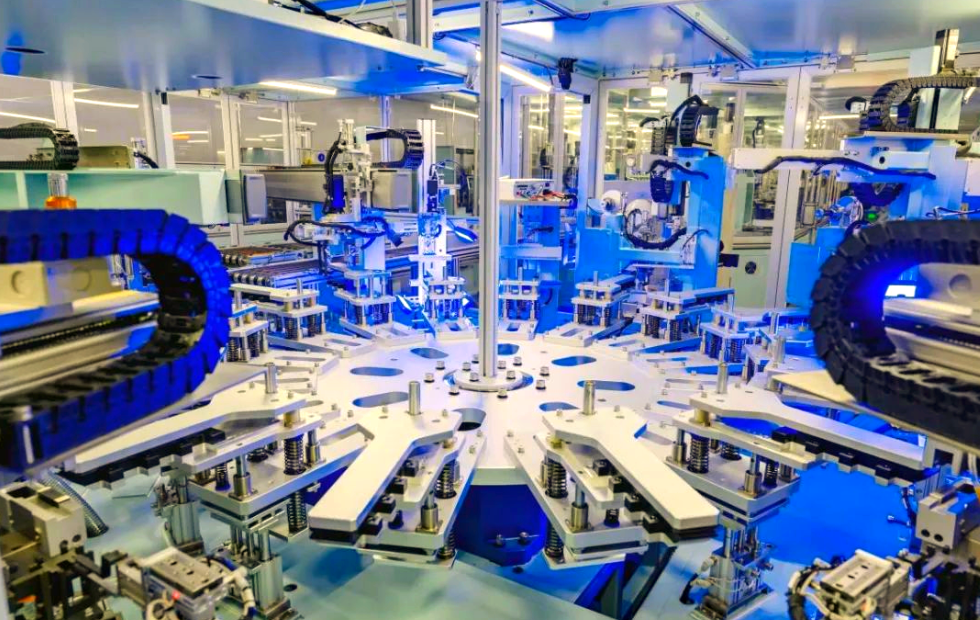
The second bottleneck is manufacturing. A solid electrolyte cell requires precise stacking, high-pressure densification, and ultra-dry environments for sulfide chemistries. Many existing pilot lines are adapted from liquid-electrolyte production, which is a poor fit. The overall yield of a multi-step solid electrolyte cell line is the product of individual step yields:
$$ Y_{total} = \prod_{i=1}^{n} Y_i $$
If each of twenty steps has a 95% yield, the total yield is only 35.8%. If each step improves to 99%, the total rises to 81.8%. This multiplicative penalty explains why solid electrolyte cell pilot lines struggle to reach economic scale. Equipment must be redesigned for dry processing, high-pressure lamination, and non-destructive inspection. Without high yield, the cost per kilowatt-hour remains far above liquid-electrolyte cells.
Cost Structure and Material Economics
The third bottleneck is cost. I model the cell cost as:
$$ C_{cell} = \frac{C_{mat} + C_{proc} + C_{equip} + C_{yield}}{Q_{cell}} $$
where \(C_{mat}\) is material cost, \(C_{proc}\) is processing cost, \(C_{equip}\) is amortized equipment cost, \(C_{yield}\) is the cost of scrap and rework, and \(Q_{cell}\) is usable capacity. For a solid electrolyte cell, \(C_{mat}\) is high because sulfide and oxide electrolytes require high-purity precursors and rare elements. \(C_{proc}\) is high because of dry-room operation and high-pressure densification. \(C_{equip}\) is high because pilot lines are small and specialized. \(C_{yield}\) is high because yields are low. All four terms must fall simultaneously to reach parity with liquid-electrolyte cells.
Standards, Safety, and Market Competition
The fourth bottleneck is the absence of a complete safety and standards framework specifically for the solid electrolyte cell. Although solid electrolytes remove flammable liquids, they introduce new failure modes. Lithium-metal anodes can release large amounts of energy under abuse. Sulfide electrolytes can generate toxic gases if exposed to moisture. Oxide electrolytes can fracture and create short circuits. Current safety tests were designed for liquid-electrolyte cells and do not capture these risks. Without dedicated standards, downstream users cannot compare products, which slows adoption.
At the same time, the solid electrolyte cell faces competition from improved liquid-electrolyte cells, fast-charging architectures, battery swapping, hybrid powertrains, and alternative chemistries such as sodium-ion and lithium-sulfur. These alternatives reduce the urgency of the solid electrolyte cell in some market segments. I summarize the competitive pressure as:
$$ P_{comp} = \sum_{j} w_j \frac{Perf_j}{Cost_j} $$
where \(Perf_j\) and \(Cost_j\) are the performance and cost of alternative technology \(j\), and \(w_j\) is the weight of that segment. As liquid-electrolyte cells improve, \(P_{comp}\) rises, and the solid electrolyte cell must improve faster to justify a premium.
| Bottleneck | Physical or Economic Root Cause | Consequence for Solid Electrolyte Cell | Required Countermeasure |
|---|---|---|---|
| Interfacial resistance | Poor solid-solid contact and passivation layers | Low rate capability and dendrite growth | Coatings, interlayers, stack pressure control |
| Low manufacturing yield | Multi-step dry processing and high-pressure densification | High cost and slow scale-up | Dedicated equipment and in-line inspection |
| High material cost | High-purity precursors and rare elements | Poor cost competitiveness | Material substitution and recycling |
| Incomplete standards | New failure modes not covered by legacy tests | Slow market acceptance | Dedicated safety and performance standards |
| Alternative technologies | Continuous improvement of liquid-electrolyte cells | Reduced urgency and investment | Focus on high-value applications |
Pathways to High-Quality Development of China’s Solid Electrolyte Cell Industry
Based on my comparative analysis, I propose five pathways. Each pathway addresses one or more of the bottlenecks identified above. I treat them as complementary rather than sequential, because the solid electrolyte cell is a coupled system and progress in one area can unlock progress in another.
Pathway One: Concentrated Attack on Core Science and Manufacturing Bottlenecks
The first pathway is to concentrate resources on interface science, electrolyte synthesis, and dedicated manufacturing equipment. I recommend a national solid electrolyte cell program that funds pre-competitive research at scale while requiring industrial co-investment. The goal is not to pick a single winner but to accelerate learning across multiple routes. For interface science, I prioritize operando characterization, multi-scale modeling, and standardized test protocols. For manufacturing, I prioritize dry electrode processing, isostatic pressing, and large-area electrolyte membrane formation.
I model the effect of concentrated research funding on technology readiness level as:
$$ TRL(t) = TRL_0 + \beta \int_{0}^{t} F(\tau) e^{-\lambda (t-\tau)} d\tau $$
where \(F(\tau)\) is research funding intensity, \(\beta\) is a conversion coefficient, and \(\lambda\) is a knowledge depreciation rate. This formulation captures the idea that funding has a cumulative effect but that early knowledge decays if not continuously refreshed. A sustained program is therefore more effective than a one-time subsidy.
| Research Priority | Target Metric | Expected Impact on Solid Electrolyte Cell |
|---|---|---|
| Interfacial impedance reduction | Area-specific resistance below 10 Ω·cm² | Higher rate capability and lower heat generation |
| Dendrite suppression | Critical current density above 5 mA/cm² | Safer lithium-metal anode operation |
| Dry electrode processing | Line yield above 90% | Lower manufacturing cost |
| Large-area electrolyte membranes | Area above 1,000 cm² with uniform thickness | Scalable solid electrolyte cell production |
| Stack pressure control | Pressure variation below 10% across stack | Uniform current distribution and longer cycle life |
Pathway Two: Build a Collaborative Industrial Ecosystem
The second pathway is to build a collaborative ecosystem that links materials suppliers, equipment makers, cell manufacturers, automotive OEMs, and research institutes. China’s current ecosystem is broad but fragmented. I recommend creating a national solid electrolyte cell innovation platform with shared pilot lines, common test methods, and open interface standards. This platform would reduce duplication and allow small firms to test their materials in realistic cells.
Collaboration can be modeled as a network effect. Let \(V\) be the value of the ecosystem, and let \(N\) be the number of active participants. Metcalfe’s law suggests:
$$ V \propto N^2 $$
However, not all connections are equally valuable. I refine this with a weighted network model:
$$ V = \sum_{i} \sum_{j} w_{ij} c_{ij} $$
where \(w_{ij}\) is the strength of collaboration between participants \(i\) and \(j\), and \(c_{ij}\) is the complementarity of their capabilities. This implies that the ecosystem should prioritize links between materials firms and cell makers, and between equipment firms and pilot lines, because those links have high \(c_{ij}\).
| Ecosystem Actor | Primary Contribution | Needed Collaboration |
|---|---|---|
| Materials suppliers | High-purity precursors, electrolytes, binders | Joint qualification with cell manufacturers |
| Equipment makers | Dry-room systems, presses, coating tools | Co-development with pilot lines and universities |
| Cell manufacturers | Cell design, stacking, formation | Feedback to materials and equipment suppliers |
| Automotive OEMs | Pack integration, thermal management, demand | Early specification sharing with cell makers |
| Research institutes | Fundamental science, characterization, modeling | Technology transfer to industry |
I also recommend regional specialization. Coastal innovation clusters should focus on cell design, system integration, and advanced equipment. Inland resource-rich regions should focus on raw materials, electrolyte precursors, and recycling. This division of labor avoids duplication and leverages China’s geographic diversity. I estimate that a well-designed cluster network could reduce solid electrolyte cell pilot-line costs by 20–30% through shared infrastructure.
Pathway Three: Accelerate Standards, Testing, and Certification
The third pathway is to accelerate standards, testing, and certification for the solid electrolyte cell. China has already issued a group standard for all-solid-state battery identification and drafted a national terminology standard. I recommend building on this by developing mandatory safety tests for solid electrolyte cell failure modes, including lithium dendrite penetration, sulfide gas release, oxide fracture, and thermal runaway under abuse. A comprehensive standard system should cover the entire lifecycle:
$$ L = \{D, M, P, U, R\} $$
where \(D\) is design, \(M\) is manufacturing, \(P\) is performance, \(U\) is use, and \(R\) is recycling. Each stage should have quantifiable requirements. For example, design should specify minimum ionic conductivity and maximum interfacial resistance; manufacturing should specify dry-room dew point and stack pressure; performance should specify energy density and cycle life; use should specify safe operating temperature range; recycling should specify recovery rates for lithium and critical metals.
| Standard Area | Key Parameter | Proposed Requirement for Solid Electrolyte Cell |
|---|---|---|
| Terminology and classification | Definition of all-solid-state | No liquid phase above 1 wt% |
| Safety | Dendrite penetration test | No short circuit after 100 cycles at 3 mA/cm² |
| Performance | Energy density | Cell-level > 400 Wh/kg |
| Durability | Cycle life | > 1,000 cycles at 80% depth of discharge |
| Recycling | Lithium recovery | > 90% by mass |
I also recommend establishing national test and certification centers in key clusters. These centers should offer material characterization, cell testing, safety validation, and reliability assessment. A specialized high-altitude and large-temperature-difference test center would be valuable for validating solid electrolyte cells in extreme environments, which is relevant for both transportation and stationary storage.
Pathway Four: Implement Precise Policy Support and Market Pull
The fourth pathway is precise policy support combined with market pull. I recommend a portfolio of instruments: direct funding for pre-competitive research, tax credits for pilot-line investment, accelerated depreciation for manufacturing equipment, and public procurement for early solid electrolyte cell deployment. The policy mix should be differentiated by technology readiness level. Basic research needs grants; pilot lines need matching funds and tax credits; early commercialization needs procurement commitments and standards.
I model the optimal policy mix as a constrained optimization:
$$ \max_{x} \sum_{i} B_i(x_i) – C_i(x_i) \quad \text{subject to} \quad \sum_{i} x_i \leq B_{total} $$
where \(x_i\) is spending on instrument \(i\), \(B_i\) is the social benefit, \(C_i\) is the social cost, and \(B_{total}\) is the total budget. The solution equates marginal benefit per unit cost across instruments. In practice, this means that China should not over-subsidize manufacturing before the science is ready, nor under-invest in standards and testing, which have high social returns.
| Policy Instrument | Target Stage | Expected Effect on Solid Electrolyte Cell |
|---|---|---|
| National research grants | Basic and applied research | Generates new electrolyte and interface knowledge |
| Pilot-line matching funds | Scale-up | Reduces capital risk and accelerates learning |
| Tax credits for equipment | Manufacturing | Lowers cost of dry-room and pressing tools |
| Public procurement | Early market | Provides demand certainty and field data |
| Standards and certification | Market formation | Reduces information asymmetry and builds trust |
Market pull should target high-value applications where the solid electrolyte cell’s advantages are most valued. These include long-range electric vehicles, electric aircraft, premium consumer electronics, and grid-scale storage where safety is paramount. I also see opportunities in cross-border electric motorcycles and remote communication base stations, where extreme temperatures and remote locations make safety and durability critical. Early deployment in these niches can generate revenue and field data that accelerate cost reduction.
Pathway Five: International Engagement and Strategic Patenting
The fifth pathway is international engagement and strategic patenting. China’s solid electrolyte cell innovators must file abroad to protect export markets and to participate in global standard setting. I recommend a coordinated international filing strategy that targets WIPO, the United States, Japan, the European Patent Office, and South Korea. The strategy should prioritize core patents on electrolyte compositions, interface layers, and manufacturing processes. A portfolio approach can be modeled as:
$$ V_{IP} = \sum_{k} p_k v_k – \sum_{k} c_k $$
where \(p_k\) is the probability that patent \(k\) is commercially relevant, \(v_k\) is its value if relevant, and \(c_k\) is its filing and maintenance cost. The portfolio should include a mix of high-value core patents and lower-cost defensive publications to block competitors.
International engagement also means participating in standards organizations and research consortia. By contributing to international standards for solid electrolyte cell terminology, safety, and performance, Chinese firms can shape the rules of the game. I also recommend joint research with foreign universities and startups, which can provide access to complementary knowledge and markets. However, such collaboration must be managed carefully to protect core intellectual property.
| International Action | Objective | Risk Management |
|---|---|---|
| Overseas patent filing | Protect export markets and licensing revenue | Prioritize core patents; use PCT and regional routes |
| Standards participation | Shape international rules for solid electrolyte cell | Coordinate industry positions; build technical evidence |
| Joint research | Access complementary knowledge | Define background and foreground IP clearly |
| Strategic investment | Gain access to foreign startups and technologies | Use minority stakes and board observation |
| Global supply chain | Secure critical materials and equipment | Diversify sources; build domestic alternatives |
Quantitative Synthesis and Scenario Analysis
To synthesize the pathways, I construct a simple scenario model for China’s solid electrolyte cell industry in 2030. The model has three scenarios: baseline, accelerated, and constrained. The key variables are manufacturing yield \(Y\), cell cost \(C\), energy density \(E\), and market share \(M\). I define a composite development index:
$$ D = w_Y \frac{Y}{Y^*} + w_C \frac{C^*}{C} + w_E \frac{E}{E^*} + w_M \frac{M}{M^*} $$
where starred values are targets, and weights sum to one. In the baseline scenario, I assume incremental progress: \(Y = 70\%\), \(C = 1.8 \times\) liquid-electrolyte cost, \(E = 350\) Wh/kg, and \(M = 10\%\). In the accelerated scenario, I assume coordinated policy and industrial action: \(Y = 90\%\), \(C = 1.2 \times\), \(E = 450\) Wh/kg, and \(M = 25\%\). In the constrained scenario, I assume bottlenecks persist: \(Y = 50\%\), \(C = 2.5 \times\), \(E = 300\) Wh/kg, and \(M = 5\%\).
| Scenario | Yield | Relative Cost | Energy Density | Market Share | Composite Index |
|---|---|---|---|---|---|
| Baseline | 70% | 1.8× | 350 Wh/kg | 10% | 0.62 |
| Accelerated | 90% | 1.2× | 450 Wh/kg | 25% | 0.89 |
| Constrained | 50% | 2.5× | 300 Wh/kg | 5% | 0.38 |
The difference between the accelerated and constrained scenarios is large. It implies that the pathways described above are not marginal improvements but decisive interventions. I estimate that the accelerated scenario requires sustained annual investment of 0.1–0.2% of GDP in solid electrolyte cell research, pilot lines, and standards, combined with strong industry co-investment. The returns include reduced import dependence, lower battery costs, and a leadership position in a technology that could reshape transportation and energy storage.
Conclusion
In my analysis, the solid electrolyte cell is a strategic technology that will determine the competitive position of national battery industries for decades. Japan leads in sulfide solid electrolyte cell patents and automotive integration. South Korea coordinates full-chain development and targets rapid commercialization. The United States uses venture-backed startups to explore multiple routes. Europe combines strong policy frameworks with automotive-science collaboration. China has the largest recent patent volume, a broad industrial base, and early standards leadership, but it faces fragmentation, interfacial bottlenecks, manufacturing yield challenges, and incomplete safety standards.
The pathways I propose are concentrated research, collaborative ecosystems, accelerated standards, precise policy support, and international engagement. Together, they address the coupled physical and economic constraints of the solid electrolyte cell. If China executes these pathways with discipline, I believe it can move from patent quantity to industrial quality, from domestic scale to global leadership. The solid electrolyte cell is not merely a better battery; it is a platform technology that can enable safer electric vehicles, more efficient grid storage, and new categories of electric mobility. The time to act is now, because the global race is already well underway.