
As a researcher deeply immersed in the field of energy storage, I have observed a paradigm shift towards alternative battery technologies, with sodium-ion battery emerging as a frontrunner due to its inherent advantages. The abundance of sodium, which is over 500 times more plentiful in the Earth’s crust than lithium, positions sodium-ion battery as a sustainable and cost-effective solution for diverse applications. In this article, I will explore the latest advancements in sodium-ion battery technology, particularly focusing on a novel hybrid design that enables charging within seconds. This breakthrough not only addresses the limitations of traditional sodium-ion battery but also opens new avenues for their deployment in electric vehicles, portable electronics, and grid-scale energy storage systems. Throughout this discussion, I will emphasize the key aspects of sodium-ion battery, utilizing tables and formulas to provide a comprehensive analysis.
The fundamental operation of a sodium-ion battery relies on the reversible insertion and extraction of sodium ions between the anode and cathode during charge and discharge cycles. The electrochemical reactions can be generalized as follows: for the anode, typically composed of carbon-based materials, the process involves $$ \text{Na}_x\text{C} \rightleftharpoons \text{C} + x\text{Na}^+ + x\text{e}^- $$ and for the cathode, often made of transition metal oxides or polyanionic compounds, $$ \text{Na}_{1-y}\text{MO}_2 + y\text{Na}^+ + y\text{e}^- \rightleftharpoons \text{NaMO}_2 $$ where \( \text{C} \) represents carbon, \( \text{MO}_2 \) denotes a metal oxide, and \( x \) and \( y \) are stoichiometric coefficients. The overall cell voltage \( E_{\text{cell}} \) is determined by the difference between the cathode and anode potentials, expressed as $$ E_{\text{cell}} = E_{\text{cathode}} – E_{\text{anode}} $$ which influences the energy density of the sodium-ion battery.
Despite the promise, conventional sodium-ion battery have faced challenges such as lower energy density compared to lithium-ion counterparts, slower charge rates, and limited cycle life. These issues stem from the larger ionic radius of sodium ions (1.02 Å) versus lithium ions (0.76 Å), which can lead to sluggish diffusion kinetics and structural stress in electrode materials. To overcome these barriers, recent research has focused on hybrid systems that combine battery-type anodes with capacitor-type cathodes, leveraging the high energy density of batteries and the high power density of supercapacitors. This approach has culminated in the development of a sodium-ion hybrid battery capable of ultra-fast charging, as highlighted in recent studies.
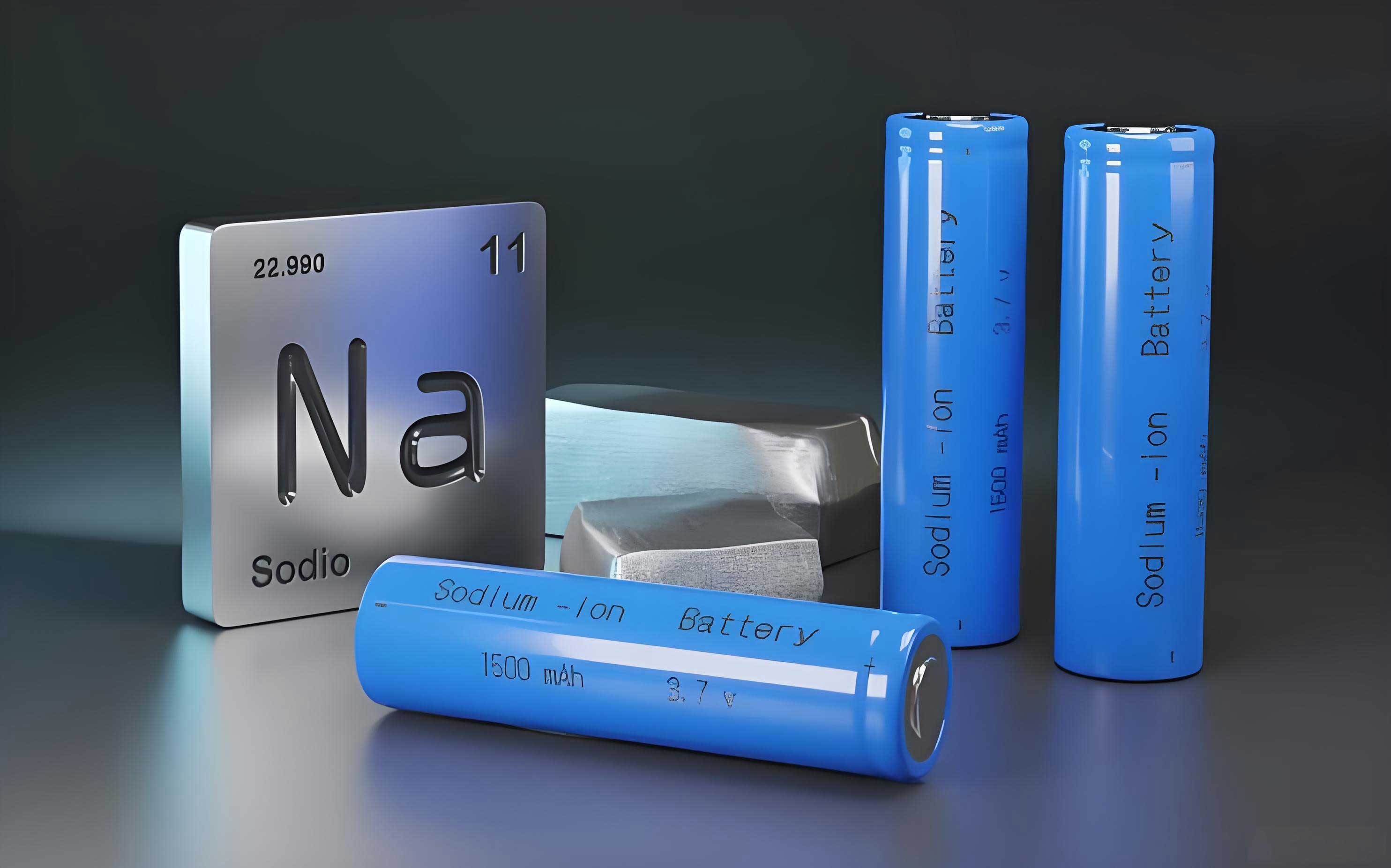
The core innovation in this sodium-ion hybrid battery lies in the optimization of electrode materials using metal-organic frameworks (MOFs). MOFs are porous materials with high surface areas, which facilitate rapid ion transport and enhance active site availability. By incorporating fine active materials into MOF-derived porous carbon, researchers synthesized an anode with improved kinetic properties and a cathode with elevated capacity. This design minimizes the disparity in energy storage rates between electrodes, enabling both high energy and power densities. The performance metrics of this advanced sodium-ion battery are summarized in Table 1, illustrating its superiority over traditional systems.
| Technology Type | Energy Density (Wh/kg) | Power Density (W/kg) | Charging Time | Cycle Life (Cycles) | Coulombic Efficiency (%) |
|---|---|---|---|---|---|
| Traditional Sodium-Ion Battery | 100-150 | 100-300 | Hours | 1,000-2,000 | 90-95 |
| Lithium-Ion Battery (Typical) | 150-250 | 200-500 | 1-3 Hours | 500-1,000 | 99 |
| Sodium-Ion Hybrid Battery (New) | 247 | 34,748 | Seconds | 5,000 | ~100 |
| Supercapacitor | 5-10 | 10,000-100,000 | Seconds | 100,000+ | 95-98 |
The remarkable charging speed of this sodium-ion battery can be analyzed through electrochemical principles. The charging time \( t_c \) is inversely proportional to the charging current \( I \), given by $$ t_c = \frac{Q}{I} $$ where \( Q \) is the battery capacity in ampere-hours. For the hybrid sodium-ion battery, the high power density allows for substantial currents, drastically reducing \( t_c \). Additionally, the ion diffusion in electrodes governs the rate capability, described by Fick’s first law: $$ J = -D \frac{\partial C}{\partial x} $$ where \( J \) is the flux, \( D \) is the diffusion coefficient, \( C \) is concentration, and \( x \) is distance. By nanostructuring electrodes via MOFs, \( D \) is enhanced and diffusion paths are shortened, enabling seconds-level charging for the sodium-ion battery.
Further delving into the material science, the specific capacity \( C_s \) of electrode materials is a critical parameter for sodium-ion battery. It can be calculated using $$ C_s = \frac{nF}{3.6M} $$ where \( n \) is the number of electrons transferred per formula unit, \( F \) is Faraday’s constant (96485 C/mol), and \( M \) is the molar mass of the active material in g/mol. For instance, a typical cathode material like \( \text{Na}_{0.44}\text{MnO}_2 \) has \( n \approx 0.44 \) and \( M \approx 118.94 \) g/mol, yielding \( C_s \approx 121 \) mAh/g. In the hybrid sodium-ion battery, the use of MOF-derived materials boosts \( C_s \) through increased porosity and tailored morphologies.
The energy density \( E_d \) and power density \( P_d \) are key figures of merit for any battery, including sodium-ion battery. They are related by $$ P_d = \frac{E_d}{t_d} $$ where \( t_d \) is the discharge time. For the new sodium-ion hybrid battery, with \( E_d = 247 \) Wh/kg and \( P_d = 34,748 \) W/kg, the discharge time can be estimated as \( t_d \approx 0.0071 \) hours or 25.6 seconds, indicating its capability for rapid energy delivery. This performance bridges the gap between batteries and supercapacitors, as visualized in Ragone plots. To quantify the trade-offs, Table 2 presents a detailed comparison of various energy storage devices, emphasizing the unique position of sodium-ion battery.
| Parameter | Sodium-Ion Battery (Hybrid) | Lithium-Ion Battery | Lead-Acid Battery | Supercapacitor |
|---|---|---|---|---|
| Specific Energy (Wh/kg) | 247 | 150-250 | 30-50 | 5-10 |
| Specific Power (W/kg) | 34,748 | 200-500 | 180 | 10,000-100,000 |
| Cycle Life | 5,000 | 500-1,000 | 200-300 | 100,000+ |
| Efficiency (%) | ~100 | 85-95 | 70-80 | 85-98 |
| Cost ($/kWh) | 50-100 (Projected) | 100-200 | 150-200 | 500-1,000 |
| Temperature Range (°C) | -20 to 60 | -20 to 60 | -20 to 50 | -40 to 70 |
From a safety perspective, sodium-ion battery exhibit advantages over lithium-ion systems due to the lower reactivity of sodium and reduced risk of thermal runaway. The thermal stability can be assessed using the Arrhenius equation for degradation rates: $$ k = A e^{-E_a/(RT)} $$ where \( k \) is the rate constant, \( A \) is the pre-exponential factor, \( E_a \) is activation energy, \( R \) is the gas constant, and \( T \) is temperature. For sodium-ion battery, higher \( E_a \) values for exothermic reactions contribute to improved safety, making them suitable for high-demand applications like electric vehicles.
The economic viability of sodium-ion battery is bolstered by the low cost of raw materials. Sodium is extracted from abundant sources like seawater or salt deposits, whereas lithium is often mined from limited reserves. The levelized cost of storage (LCOS) for sodium-ion battery can be modeled as $$ \text{LCOS} = \frac{C_{\text{cap}} + \sum_{t=1}^{N} \frac{C_{\text{op}}}{(1+r)^t}}{\sum_{t=1}^{N} \frac{E_{\text{out}}}{(1+r)^t}} $$ where \( C_{\text{cap}} \) is capital cost, \( C_{\text{op}} \) is annual operating cost, \( E_{\text{out}} \) is annual energy output, \( r \) is discount rate, and \( N \) is lifespan in years. With projected costs below $100/kWh and long cycle life, sodium-ion battery offer competitive LCOS for grid storage.
In terms of environmental impact, sodium-ion battery align with sustainability goals. The carbon footprint during production is lower compared to lithium-ion battery, as sodium processing requires less energy. Additionally, many materials used in sodium-ion battery, such as iron and manganese, are more abundant and less toxic than cobalt or nickel. The life cycle assessment (LCA) of a sodium-ion battery can be quantified using metrics like global warming potential (GWP), where $$ \text{GWP} = \sum_i m_i \times \text{GWP}_i $$ with \( m_i \) being the mass of material \( i \) and \( \text{GWP}_i \) its characterization factor. Studies indicate that sodium-ion battery could reduce GWP by 30-50% relative to lithium-ion counterparts.
Looking ahead, research directions for sodium-ion battery include exploring novel electrode materials, such as sodium-rich layered oxides, organic compounds, and sulfur-based cathodes. Anode materials like hard carbon, titanium-based compounds, and alloying materials (e.g., Sn or Sb) are under investigation to enhance capacity and stability. Furthermore, electrolyte optimization—using solid-state or aqueous systems—can improve safety and performance. The diffusion-limited current \( I_{\text{lim}} \) in electrolytes is given by $$ I_{\text{lim}} = nFAD \frac{C}{\delta} $$ where \( A \) is electrode area, \( D \) is diffusion coefficient, \( C \) is bulk concentration, and \( \delta \) is diffusion layer thickness. Advances in electrolyte design aim to maximize \( I_{\text{lim}} \) for faster charging in sodium-ion battery.
Manufacturing scalability is another critical aspect for sodium-ion battery. Existing lithium-ion production lines can be adapted with minimal changes, reducing capital expenditure. However, challenges persist in electrode slurry formulation, calendaring, and formation cycling. Statistical process control can be applied to ensure consistency, with key parameters like electrode density \( \rho_e \) affecting performance: $$ \rho_e = \frac{m}{V} $$ where \( m \) is mass and \( V \) is volume. For the hybrid sodium-ion battery, targeting \( \rho_e \approx 1.5-2.0 \) g/cm³ optimizes energy density and mechanical integrity.
Applications of sodium-ion battery span multiple sectors. In electric vehicles, the rapid-charging capability addresses range anxiety and enables quick turnaround times. For renewable energy integration, sodium-ion battery provide reliable storage for solar and wind power, mitigating intermittency. In aerospace, their lightweight and high-power traits benefit satellites and drones. The energy management in these systems can be modeled using power balance equations: $$ P_{\text{gen}} = P_{\text{load}} + P_{\text{charge}} $$ where \( P_{\text{gen}} \) is generated power, \( P_{\text{load}} \) is load demand, and \( P_{\text{charge}} \) is charging power of the sodium-ion battery.
In conclusion, the development of ultra-fast charging sodium-ion battery represents a transformative leap in energy storage technology. By integrating hybrid designs and advanced materials like MOFs, these sodium-ion battery achieve unprecedented performance in energy density, power density, and cycle life. As a researcher, I am optimistic that continued innovation will drive down costs and enhance efficiencies, positioning sodium-ion battery as a mainstream solution. The future holds immense potential for sodium-ion battery to revolutionize transportation, electronics, and grid infrastructure, contributing to a sustainable energy ecosystem.