
In my research, I focus on the accurate estimation of the State of Charge (SOC) and prediction of the Remaining Useful Life (RUL) for lithium-ion energy storage batteries deployed in communication base stations. The rapid expansion of 5G networks has made the reliability of backup power systems increasingly critical, and the energy storage battery serves as the last line of defense for uninterrupted operation. In this thesis, I propose and validate advanced algorithms that combine neural networks, optimization techniques, and Kalman filtering to achieve high-precision SOC estimation, and a hybrid decomposition-deep learning framework for RUL prediction. The entire study is grounded in real battery data from controlled experiments and public datasets, and the results demonstrate significant improvements over conventional methods.
The work begins with a thorough analysis of the working principles and key characteristics of lithium-ion batteries. I selected a Samsung INR18650-20R cell as the experimental subject, with a rated capacity of 2000 mAh and a nominal voltage of 3.6 V. Through capacity calibration experiments, I measured the actual maximum available capacity as 1.9853 Ah. The voltage characteristics were examined using incremental OCV tests, and I established the relationship between open-circuit voltage and SOC at three different temperatures: 0°C, 25°C, and 45°C. The experiments also included constant current discharge tests and dynamic FUDS (Federal Urban Driving Schedule) tests to capture battery behavior under realistic load conditions. For RUL prediction, I utilized the NASA battery aging dataset, which contains capacity degradation data for three cells (B05, B06, B07) over 168 charge-discharge cycles. The aging experiments revealed a consistent downward trend in capacity, with the failure thresholds set according to the rated capacity of each cell.
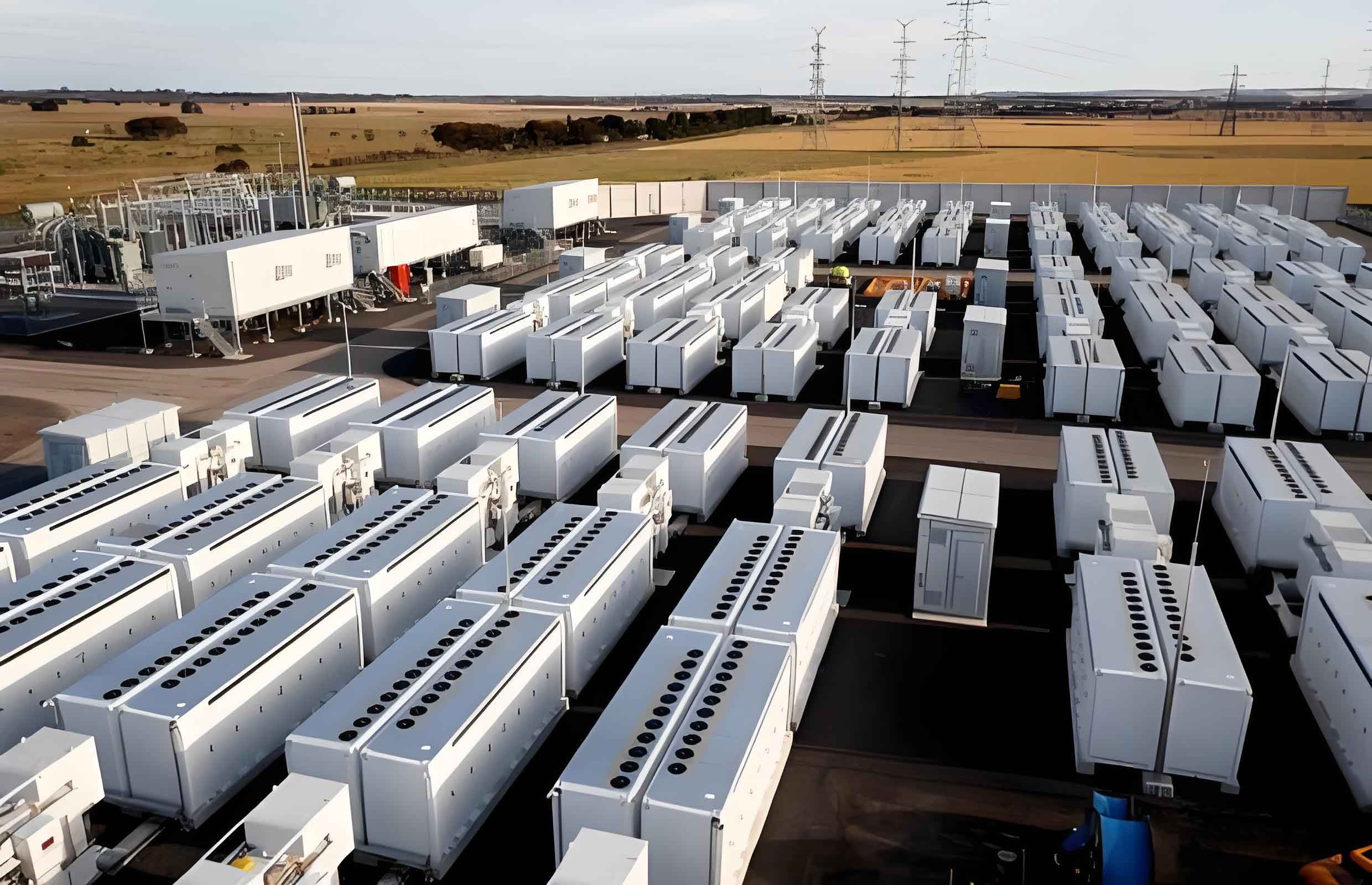
In the SOC estimation section, I addressed the limitation of the Unscented Kalman Filter (UKF), which typically relies on model-based initial values that can be inaccurate. The battery is a highly nonlinear system, and the UKF, while powerful, is sensitive to the initial state error. To overcome this issue, I developed a hybrid method called PSO-BP-UKF. First, a Back-Propagation (BP) neural network is trained to predict SOC directly from measurable inputs such as current, voltage, and temperature. However, the standard BP network suffers from slow convergence and a tendency to fall into local minima due to randomly initialized weights. Therefore, I used Particle Swarm Optimization (PSO) to optimize the initial weights and thresholds of the BP network. The optimal network is then used to predict the SOC value at the current time, and this predicted value serves as the initial state for the UKF. In addition, I modified the state transition equation of the UKF by incorporating the current integration (ampere-hour counting) term to propagate the SOC state. The complete algorithm proceeds iteratively: generate sigma points, perform time update, compute the measurement update, and apply the Kalman gain to correct the state estimate.
The mathematical formulation of the PSO-BP-UKF algorithm is presented below. The BP network output is represented as:
$$
SOC_{BP} = f_2 \left( \sum_{j=1}^{m} W_{jk} \cdot f_1 \left( \sum_{i=1}^{n} W_{ij} x_i + a_j \right) + b_k \right)
$$
where \(x_i\) are the input features (voltage, current, temperature), \(W_{ij}\) and \(W_{jk}\) are the weights, \(a_j\) and \(b_k\) are the biases, and \(f_1\) and \(f_2\) are the activation functions (logsig and purelin, respectively). The PSO algorithm updates the particle velocities and positions as:
$$
v_{sd}^{t+1} = \omega_0 v_{sd}^t + c_1 r_1 (p_{sd}^t – x_{sd}^t) + c_2 r_2 (p_{gd}^t – x_{sd}^t)
$$
$$
x_{sd}^{t+1} = x_{sd}^t + v_{sd}^{t+1}
$$
where \(\omega_0\) is the inertia weight, \(c_1\) and \(c_2\) are learning factors, and \(r_1\), \(r_2\) are random numbers in [0,1]. The fitness function for PSO is the mean squared error (MSE) of the BP network on the training data:
$$
MSE = \frac{1}{N} \sum_{i=1}^{N} \left( T(i) – Y(i) \right)^2
$$
After obtaining the optimized weights and thresholds from PSO, the network’s predicted SOC is used as the initial estimate for UKF. The system state transition equation in my modified UKF includes the ampere-hour integral:
$$
SOC_{k+1} = SOC_k – \frac{I_k \cdot \Delta t}{Q} + w_k
$$
$$
y_k = SOC_k + v_k
$$
where \(Q\) is the battery maximum capacity, \(w_k\) is the process noise, and \(v_k\) is the measurement noise. In the UKF, I first calculate the sigma points:
$$
\chi_{k-1}^{(0)} = \hat{x}_{k-1}
$$
$$
\chi_{k-1}^{(i)} = \hat{x}_{k-1} + \sqrt{(n+\lambda) P_{k-1}}_i, \quad i=1,\ldots,n
$$
$$
\chi_{k-1}^{(i+n)} = \hat{x}_{k-1} – \sqrt{(n+\lambda) P_{k-1}}_i, \quad i=1,\ldots,n
$$
Then, the time propagation and measurement update steps are performed to yield the final SOC estimate. This hybrid approach effectively combines the learning capability of the neural network with the recursive filtering strength of UKF, leading to better accuracy and robustness.
I validated the PSO-BP-UKF algorithm using two types of experimental data. First, constant current discharge experiments were performed at 0°C, 25°C, and 45°C. The estimation errors for BP, UKF, and PSO-BP-UKF are summarized in the following table:
| Temperature | Algorithm | MAE | RMSE | Max Error |
|---|---|---|---|---|
| 0°C | BP | 0.0283 | 0.0333 | 13.53% |
| 0°C | UKF | 0.0227 | 0.0247 | 10.11% |
| 0°C | PSO-BP-UKF | 0.0107 | 0.0158 | 4.98% |
| 25°C | BP | 0.0267 | 0.0321 | 8.87% |
| 25°C | UKF | 0.0178 | 0.0205 | 6.96% |
| 25°C | PSO-BP-UKF | 0.0087 | 0.0113 | 4.62% |
| 45°C | BP | 0.0227 | 0.0269 | 8.51% |
| 45°C | UKF | 0.0139 | 0.0184 | 4.47% |
| 45°C | PSO-BP-UKF | 0.0085 | 0.0097 | 3.68% |
The results clearly demonstrate that the proposed PSO-BP-UKF algorithm achieves the lowest MAE, RMSE, and maximum error at all temperatures. For example, at 25°C, the MAE is reduced by 67% compared to the BP network and by 51% compared to the standard UKF. The maximum error is also significantly lower, indicating that the algorithm is more stable and reliable. The improvement is mainly attributed to the accurate initialization from the PSO-BP network and the incorporation of the current integration term in the state transition.
I further tested the algorithm under the FUDS dynamic condition at different temperatures and initial SOC values (80% and 50%). The FUDS profile includes frequent acceleration, deceleration, and braking events, which makes the SOC estimation more challenging. The experimental results for the 80% initial SOC case are shown in the table below:
| Temperature | Algorithm | MAE | RMSE | Max Error |
|---|---|---|---|---|
| 0°C | BP | 0.0318 | 0.0325 | 4.62% |
| 0°C | UKF | 0.0149 | 0.0187 | 3.31% |
| 0°C | PSO-BP-UKF | 0.0138 | 0.0160 | 1.24% |
| 25°C | BP | 0.0163 | 0.0220 | 6.84% |
| 25°C | UKF | 0.0246 | 0.0273 | 6.13% |
| 25°C | PSO-BP-UKF | 0.0139 | 0.0146 | 3.22% |
| 45°C | BP | 0.0160 | 0.0194 | 4.97% |
| 45°C | UKF | 0.0236 | 0.0225 | 3.87% |
| 45°C | PSO-BP-UKF | 0.0115 | 0.0135 | 2.85% |
For the 50% initial SOC condition, the results are presented in the following table:
| Temperature | Algorithm | MAE | RMSE | Max Error |
|---|---|---|---|---|
| 0°C | BP | 0.0318 | 0.0325 | 5.85% |
| 0°C | UKF | 0.0144 | 0.0161 | 3.31% |
| 0°C | PSO-BP-UKF | 0.0066 | 0.0082 | 1.24% |
| 25°C | BP | 0.0193 | 0.0185 | 6.72% |
| 25°C | UKF | 0.0161 | 0.0175 | 3.43% |
| 25°C | PSO-BP-UKF | 0.0146 | 0.0113 | 3.20% |
| 45°C | BP | 0.0198 | 0.0194 | 5.50% |
| 45°C | UKF | 0.0184 | 0.0189 | 3.07% |
| 45°C | PSO-BP-UKF | 0.0136 | 0.0141 | 2.93% |
Across all dynamic scenarios, the PSO-BP-UKF algorithm consistently outperforms the other methods, producing the smallest estimation error and the most stable error curve. The enhanced performance confirms that the hybrid structure is particularly effective for online SOC estimation of the energy storage battery in realistic operating conditions.
For the RUL prediction part, I proposed a hybrid framework that combines an improved Variational Mode Decomposition (VMD) with a deep learning model integrating Convolutional Neural Networks (CNN) and Gated Recurrent Units (GRU). The capacity degradation data of lithium-ion batteries exhibit strong nonlinearity, non-stationarity, and local capacity regeneration phenomena. Directly predicting RUL from the raw capacity sequence often leads to large errors. To address this, I first used the Whale Optimization Algorithm (WOA) to determine the optimal decomposition parameters of VMD, namely the number of modes \(K\) and the penalty factor \(\alpha\). The WOA algorithm minimizes the sample entropy of the decomposed modes, thereby ensuring that each intrinsic mode function (IMF) contains meaningful frequency information without over-decomposition or under-decomposition.
The VMD algorithm solves a constrained variational problem formulated as:
$$
\min_{\{u_k\},\{\omega_k\}} \left\{ \sum_k \left\| \partial_t \left[ \left( \delta(t) + \frac{j}{\pi t} \right) * u_k(t) \right] e^{-j \omega_k t} \right\|_2^2 \right\}
$$
$$
\text{s.t.} \quad \sum_k u_k(t) = C(t)
$$
where \(u_k\) are the modes, \(\omega_k\) are their center frequencies, and \(C(t)\) is the original battery capacity sequence. The augmented Lagrangian is:
$$
L(\{u_k\},\{\omega_k\},\lambda) = \alpha \sum_k \left\| \partial_t \left[ \left( \delta(t) + \frac{j}{\pi t} \right) * u_k(t) \right] e^{-j \omega_k t} \right\|_2^2 + \left\| C(t) – \sum_k u_k(t) \right\|_2^2 + \langle \lambda(t), C(t) – \sum_k u_k(t) \rangle
$$
The WOA position vector \(X\) represents the candidate parameter set \([K, \alpha]\). The algorithm updates the whale positions using three mechanisms: encircling prey, spiral updating, and random search. The mathematical equations are:
$$
D = |C \cdot X^*(t) – X(t)|
$$
$$
X(t+1) = X^*(t) – A \cdot D
$$
$$
X(t+1) = D’ \cdot e^{bl} \cdot \cos(2\pi l) + X^*(t)
$$
where \(A = 2a \cdot r_1 – a\), \(C = 2 \cdot r_2\), and \(a\) decreases linearly from 2 to 0 over the course of iterations. By minimizing the sample entropy, WOA finds the most suitable \(K\) and \(\alpha\). For the NASA battery datasets B05, B06, and B07, the optimized parameters are listed in the following table:
| Battery | \(\alpha\) | \(K\) |
|---|---|---|
| B05 | 1507 | 6 |
| B06 | 1882 | 6 |
| B07 | 1797 | 6 |
Using the optimized VMD, I decomposed the capacity data into six IMFs. Each IMF captures a different frequency component of the degradation trend. The IMFs are then normalized and used as input features for the CNN-GRU hybrid model. The CNN part is responsible for extracting local spatial features from the sequence, while the GRU captures temporal dependencies. The architecture of my CNN-GRU model is detailed below.
| Model | Layer Configuration |
|---|---|
| CNN | Input → Conv1D(6×1, 32 filters) → FC(50) → Dropout(0.2) → FC(1) → Output |
| GRU | Input → GRU(128 hidden units) → FC → Output |
| CNN-GRU | Input → Conv1D(6×1, 64 filters) → GRU(32 hidden units) → Dropout(0.15) → Output |
The CNN-GRU model is trained using the decomposed IMFs from the training set. I used the mean squared error (MSE) as the loss function and the Adam optimizer with a learning rate of 0.001. The hidden state of the GRU at time \(t\) is computed as follows:
$$
r_t = \sigma(W_r X_t + U_r H_{t-1} + b_r)
$$
$$
z_t = \sigma(W_z X_t + U_z H_{t-1} + b_z)
$$
$$
\tilde{H}_t = \tanh(W_h X_t + r_t \odot U_h H_{t-1})
$$
$$
H_t = z_t \odot H_{t-1} + (1 – z_t) \odot \tilde{H}_t
$$
where \(r_t\) is the reset gate, \(z_t\) is the update gate, and \(H_t\) is the hidden state. The CNN layer extracts high-level features from the input IMFs, and those features are fed into the GRU to model long-term dependencies, which is essential for accurate RUL prediction.
I evaluated the proposed WOA-VMD-CNN-GRU method on the NASA B05, B06, and B07 battery datasets. Two different training set proportions (40% and 50%) were considered to analyze the effect of training data size. The prediction performance metrics include MAE, RMSE, relative accuracy (RA), and RUL error (RULe). The results are reported in the following table:
| Battery | Prediction Start | MAE | RMSE | RA | RULe |
|---|---|---|---|---|---|
| B05 | 67 | 0.01041 | 0.01223 | 0.9938 | 1 |
| B05 | 85 | 0.01150 | 0.01323 | 0.9923 | 1 |
| B06 | 67 | 0.00929 | 0.01166 | 0.9922 | 0 |
| B06 | 85 | 0.00986 | 0.01186 | 0.9931 | 1 |
| B07 | 67 | 0.00979 | 0.01168 | 0.9937 | 1 |
| B07 | 85 | 0.00944 | 0.00881 | 0.9987 | 2 |
The proposed method achieves a very high relative accuracy of over 99% in all cases, and the RUL prediction error is at most 2 cycles. This demonstrates that the WOA-VMD-CNN-GRU model can accurately track the capacity degradation trend and provide reliable RUL predictions for the energy storage battery.
To substantiate the superiority of the hybrid model, I compared it with the WOA-VMD-CNN and WOA-VMD-GRU models using the first 100 cycles as training data. The comparison results for the three batteries are shown below:
| Battery | Model | MAE | RMSE | RA | RULe |
|---|---|---|---|---|---|
| B05 | WOA-VMD-CNN | 0.0234 | 0.0244 | 0.9833 | 6 |
| B05 | WOA-VMD-GRU | 0.0210 | 0.0220 | 0.9848 | 6 |
| B05 | WOA-VMD-CNN-GRU | 0.0077 | 0.0093 | 0.9948 | 1 |
| B06 | WOA-VMD-CNN | 0.0198 | 0.0230 | 0.9865 | 3 |
| B06 | WOA-VMD-GRU | 0.0183 | 0.0205 | 0.9768 | 7 |
| B06 | WOA-VMD-CNN-GRU | 0.0084 | 0.0096 | 0.9937 | 2 |
| B07 | WOA-VMD-CNN | 0.0215 | 0.0207 | 0.9862 | 4 |
| B07 | WOA-VMD-GRU | 0.0145 | 0.0135 | 0.9908 | 6 |
| B07 | WOA-VMD-CNN-GRU | 0.0092 | 0.0083 | 0.9945 | 1 |
The table clearly shows that the CNN-GRU hybrid model significantly outperforms the single CNN or GRU models in terms of MAE, RMSE, and RUL accuracy. The single models tend to have larger deviations, especially when the capacity regeneration effect occurs, because they cannot effectively capture both the local spatial patterns and the long-term temporal dependencies simultaneously. In contrast, the CNN-GRU model leverages the complementary strengths of both architectures, leading to more accurate and stable predictions. The maximum MAE for the hybrid model is only 0.0092, while the single models reach up to 0.0234. The RUL error is also reduced to just 1-2 cycles, which is acceptable for practical maintenance scheduling of the energy storage battery.
The experimental results across both SOC estimation and RUL prediction confirm that the proposed methods are highly effective for the energy storage battery in communication base stations. The PSO-BP-UKF algorithm provides accurate SOC estimation under various temperatures and dynamic conditions, enabling reliable monitoring of the battery’s available energy. The WOA-VMD-CNN-GRU model offers precise RUL predictions, allowing operators to plan battery replacements in advance and avoid unexpected power supply interruptions. These advances contribute to the safe and efficient operation of 5G base station backup systems.
In conclusion, my thesis presents two major contributions: (1) a novel SOC estimation method that integrates PSO-optimized BP neural networks with UKF and ampere-hour current integration, achieving high accuracy and robustness; and (2) a RUL prediction framework that combines WOA-optimized VMD with a CNN-GRU hybrid network, achieving excellent prediction performance. Both algorithms were thoroughly validated using real battery data, and the results demonstrate clear advantages over existing single-model approaches. Future work will focus on implementing these algorithms in real-time battery management systems, incorporating more diverse operating conditions, and extending the methods to other types of energy storage battery technologies. The ultimate goal is to provide a comprehensive and intelligent solution for the state prediction of energy storage battery systems in communication infrastructure.