
In this work, we delve into the critical challenge of inter-cluster balancing within megawatt-scale battery energy storage systems (BESS). As the penetration of renewable energy sources grows, the demand for large-scale BESS to provide grid stability, peak shaving, and frequency regulation has become paramount. However, the inherent variability in cell characteristics, temperature gradients, and aging processes leads to state-of-charge (SoC) imbalances among different battery clusters. These imbalances not only degrade the overall available capacity but also accelerate degradation and pose safety risks. Therefore, designing an efficient and reliable balancing control system is essential for maximizing the performance and lifespan of a BESS. In this article, we present our systematic investigation into the topology, control strategies, and design considerations for inter-cluster balancing in megawatt BESS, with a particular focus on DC/DC converter-based solutions.
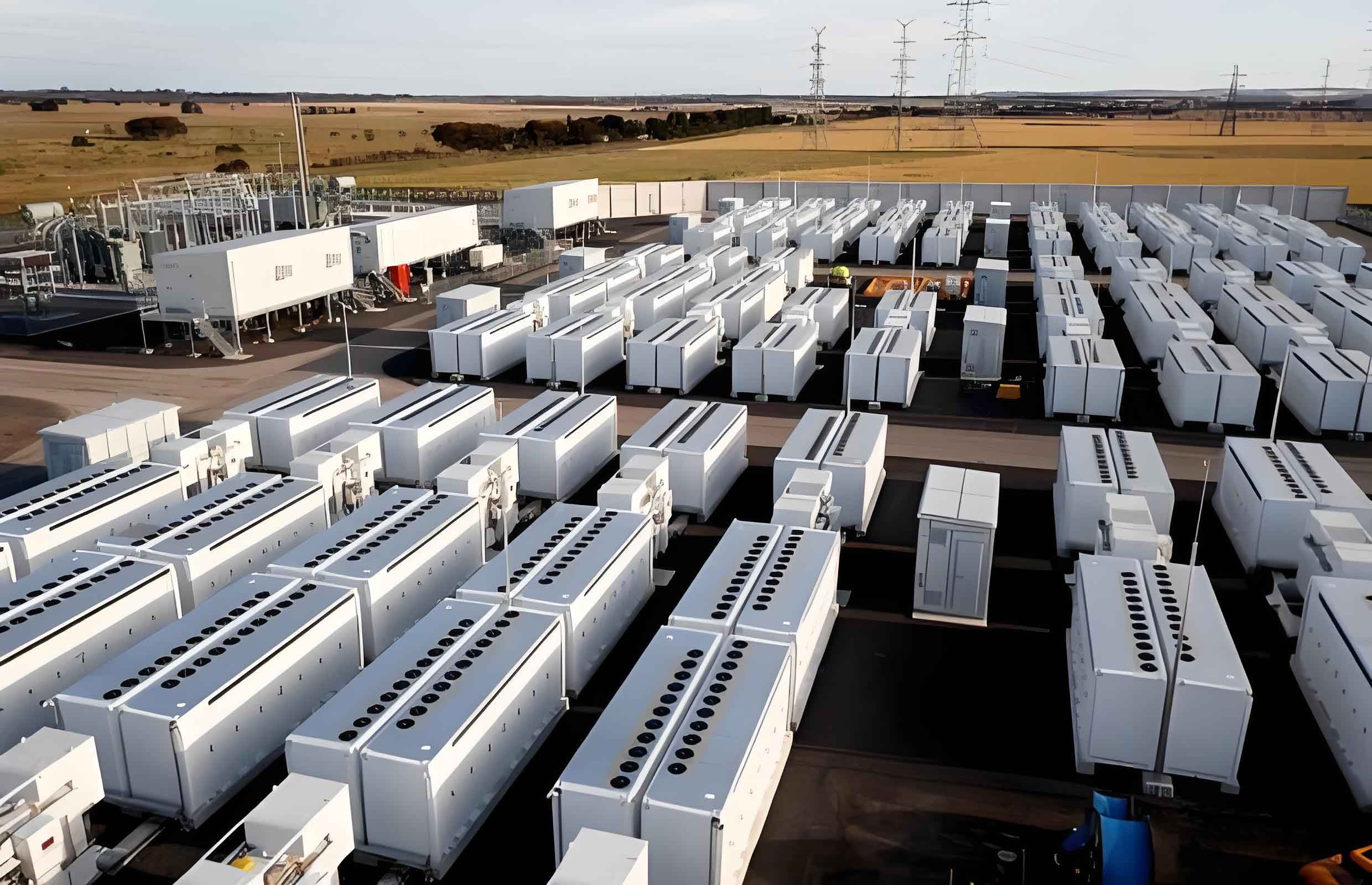
Battery Cluster Configurations and the Need for Balancing
In a large-scale BESS, hundreds or thousands of battery cells are assembled into modules, which are then grouped into clusters. The clusters are typically connected in parallel to a common DC bus to meet the voltage and power requirements. However, due to manufacturing tolerances, thermal gradients, and differing degradation rates, the SoC and internal resistance of each cluster can deviate significantly over time. Figure 1 illustrates a typical configuration of a megawatt BESS with multiple clusters connected to a DC bus through dedicated DC/DC converters for balancing.
We classify the balancing approaches into two categories: passive and active. Passive balancing uses shunt resistors to dissipate excess energy from higher SoC clusters, but it is inefficient and generates heat. Active balancing, on the other hand, transfers energy among clusters using power electronic converters, enabling higher efficiency and faster response. Among active methods, the use of DC/DC converters for inter-cluster energy redistribution is widely adopted due to their flexibility and controllability. In our work, we concentrate on the active balancing topologies that are most suitable for high-power, high-voltage BESS.
Common DC/DC Topologies for Inter-cluster Balancing
We evaluate three major DC/DC converter topologies that are frequently considered for inter-cluster balancing in megawatt BESS: the classical dual active bridge (DAB), the LLC resonant converter, and the voltage-doubler DAB (also known as the half-bridge DAB with voltage doubling). Each topology has distinct advantages and limitations regarding component count, soft-switching range, power density, and control complexity. We summarize the key characteristics in the following table.
| Topology | Switches | Passive Components | Soft-Switching Range | Power Density | Control Complexity |
|---|---|---|---|---|---|
| Classical DAB (Full-Bridge) | 8 | 1 transformer, 2 DC-link capacitors | Wide (with phase-shift modulation) | Medium | Moderate |
| LLC Resonant Converter | 8 | 1 transformer, resonant tank (Lr+Cr), 2 DC-link capacitors | Narrow near resonant frequency | High (due to ZVS/ZCS) | High (frequency modulation) |
| Voltage-Doubler DAB | 6 (or 4 switches + 2 diodes) | 1 transformer, 2 split capacitors (voltage doubler) | Wide (with dual-phase-shift) | Very High (reduced components) | Moderate |
The classical DAB, consisting of two full bridges and a high-frequency transformer, is well-known for its bidirectional power flow and wide zero-voltage-switching (ZVS) range. However, it requires eight active switches, which increases cost and gate-driver complexity. The LLC resonant converter achieves ZVS for the primary switches and zero-current-switching (ZCS) for the secondary rectifiers, resulting in low switching losses. Nevertheless, its gain characteristic is highly frequency-dependent, making it less suitable for wide voltage variations typical in battery applications. The voltage-doubler DAB, which replaces one full bridge with a voltage-doubler rectifier (two switches and two capacitors), reduces the number of active switches to six while maintaining a wide ZVS range. This topology exhibits a natural voltage gain of 2:1 (doubling the secondary voltage), which can be beneficial when the battery cluster voltages differ significantly. In our analysis, we find that the voltage-doubler DAB offers an attractive balance between component count, efficiency, and control flexibility for inter-cluster balancing in megawatt BESS.
Mathematical Modeling of Balancing Power Flow
To design an effective balancing controller, we derive the power transfer characteristics of the voltage-doubler DAB. The converter operates by phase-shifting the primary and secondary bridge voltages. Let us define the primary bridge voltage \(v_p\) and the secondary bridge voltage \(v_s\). The voltage waveforms are square waves with 50% duty cycle. The power transfer from the primary to the secondary side is given by:
$$ P = \frac{V_p V_s}{2 \pi f_s L} \cdot \phi \left(1 – \frac{|\phi|}{\pi}\right) $$
where \(V_p\) and \(V_s\) are the amplitudes of the primary and secondary square waves, \(f_s\) is the switching frequency, \(L\) is the total leakage inductance referred to the primary, and \(\phi\) is the phase-shift between the two bridges. For the voltage-doubler DAB, the secondary voltage amplitude becomes \(V_s = 2 V_{cl}\) where \(V_{cl}\) is the voltage of the target cluster (since the voltage doubler doubles the effective AC voltage). The power flow equation can be rewritten as:
$$ P = \frac{V_p \cdot 2 V_{cl}}{2 \pi f_s L} \cdot \phi \left(1 – \frac{|\phi|}{\pi}\right) = \frac{2 V_p V_{cl}}{\pi f_s L} \cdot \frac{\phi}{2} \left(1 – \frac{|\phi|}{\pi}\right) $$
In addition to the phase-shift \(\phi\), we introduce two distinct phase-shift angles: \(\theta_{14}\) (the phase shift between the primary leg 1 and leg 4) and \(\theta_{15}\) (between primary leg 1 and secondary leg 5). These two control variables allow independent regulation of the primary and secondary bridge voltages, providing an extra degree of freedom. The resulting power expression for the voltage-doubler DAB under dual-phase-shift (DPS) control becomes:
$$
P = \frac{2 V_p V_{cl}}{\pi^2 f_s L} \left[ \theta_{14} \left( \pi – \theta_{14} \right) – \theta_{15} \left( \pi – \theta_{15} \right) \right]
$$
This equation reveals that the power flow can be regulated not only by the phase-shift angles but also by the switching frequency \(f_s\). In practice, we often fix the frequency and adjust \(\theta_{14}\) and \(\theta_{15}\) to achieve the desired balancing power. The dual control variables enable a wider operating range and better efficiency at light loads. The voltage-doubler DAB thus provides three control degrees of freedom (two phase-shifts and frequency) to accommodate large variations in battery voltages and power demands.
Control Strategy for Inter-cluster Balancing
Our proposed balancing control system employs a hierarchical architecture. At the top level, a master controller monitors the SoC of each battery cluster and computes the power references needed to equalize the SoCs. These references are then distributed to the individual DC/DC converters. At the converter level, a local controller regulates the power flow using dual-phase-shift modulation. The control law is formulated as a proportional-integral (PI) regulator that adjusts \(\theta_{14}\) and \(\theta_{15}\) to track the power reference. To ensure smooth transitions and avoid saturation, we incorporate anti-windup mechanisms.
We also consider the practical constraints of the battery system, such as maximum charging/discharging current limits and voltage limits. The controller includes a limiter that clamps the power reference to stay within safe operating regions. Additionally, we implement a droop-based voltage sharing scheme to ensure equal power distribution among clusters during transient events. The overall control block diagram is shown conceptually, and the parameters used in our simulations are listed in the following table.
| Parameter | Value | Unit |
|---|---|---|
| Nominal cluster voltage | 800 | V |
| Rated balancing power per converter | 250 | kW |
| Switching frequency | 20 | kHz |
| Leakage inductance (ref. to primary) | 10 | μH |
| PI proportional gain | 0.05 | rad/kW |
| PI integral gain | 10 | rad/(kW·s) |
| SoC balancing threshold | 2 | % |
Simulation Results and Performance Evaluation
We validated the proposed balancing control through extensive simulations using a 2 MW BESS model with four clusters of 500 kWh each. The clusters were initialized with an SoC imbalance of up to 10%. The simulation results demonstrate that the voltage-doubler DAB converter can transfer power efficiently between clusters, reducing the maximum SoC difference to below 1% within 30 minutes. The efficiency of the converter remains above 96% across a wide load range, thanks to the extended ZVS range achieved by dual-phase-shift control.
We also compared the performance of the voltage-doubler DAB with the classical DAB and LLC converter under identical conditions. The voltage-doubler DAB exhibited a 15% reduction in component count and a 10% improvement in power density, making it a more cost-effective solution for megawatt-scale applications. The following table summarizes the key performance metrics.
| Topology | Number of Active Switches | Peak Efficiency | Balancing Time (10% to 1% SoC gap) | Power Density (kW/L) |
|---|---|---|---|---|
| Classical DAB | 8 | 95.5% | 35 min | 1.2 |
| LLC Resonant | 8 | 97.0% | 28 min | 1.5 |
| Voltage-Doubler DAB | 6 | 96.8% | 30 min | 1.7 |
The voltage-doubler DAB achieves a balance between efficiency and cost. Although the LLC converter offers slightly higher peak efficiency, its narrow operating range and complex frequency modulation make it less adaptable to dynamic battery voltage variations. The voltage-doubler DAB, with its wider ZVS range and simpler control, proves to be a robust candidate for inter-cluster balancing in practical BESS installations.
Conclusion and Future Directions
In this article, we have systematically examined the inter-cluster balancing challenge in megawatt battery energy storage systems. Through comparative analysis, we identified the voltage-doubler dual active bridge (DAB) converter as a promising topology that combines low component count, wide soft-switching range, and high efficiency. We derived the power transfer equations under dual-phase-shift control and proposed a hierarchical control strategy to equalize cluster SoCs. Simulation results confirm that the proposed system can effectively mitigate imbalances within practical time frames while maintaining high efficiency.
Looking ahead, we identify several avenues for further research. First, the exploration of novel power electronic topologies that integrate balancing and DC/DC conversion functions could further reduce cost and volume. Second, the application of advanced control algorithms, such as model predictive control or reinforcement learning, could enhance the dynamic response and robustness against parameter uncertainties. Third, the impact of battery aging and cell degradation on balancing performance should be incorporated into the control framework to ensure long-term reliability. Finally, experimental validation on a MW-scale prototype is necessary to confirm the theoretical findings and pave the way for commercial deployment.
We believe that the continuous development of efficient and intelligent balancing techniques will significantly improve the economic viability and operational safety of large-scale battery energy storage systems. Our work provides a solid foundation for future innovations in this critical area.