
In modern DC microgrids operating in island mode, the battery energy storage system (BESS) plays a critical role in maintaining voltage stability and power balance. However, inconsistencies in the state of charge (SOC) and capacity among individual battery units lead to slow SOC equalization and poor current sharing accuracy. To address these challenges, I propose a novel control strategy for the distributed battery energy storage system that takes into account the battery SOC and unit capacity differences. This strategy improves the conventional droop control by integrating an inverse tangent nested power function to dynamically adjust the droop coefficient based on SOC deviations. Additionally, I optimize the variable acceleration factor to achieve faster SOC convergence while maintaining system stability. Virtual voltage compensation and DC bus voltage restoration are also incorporated to ensure accurate current distribution and voltage regulation. Simulation results demonstrate that the proposed method significantly enhances SOC equalization speed and current distribution precision, making it suitable for real-world microgrid applications.
The growing penetration of renewable energy sources introduces intermittency and uncertainty into microgrids. An islanded DC microgrid typically relies on a distributed battery energy storage system to buffer power fluctuations and ensure reliable operation. However, due to manufacturing tolerances and aging effects, batteries within the same system often exhibit different initial SOC values and capacities. Without proper control, these differences cause some units to reach their charge or discharge limits prematurely, potentially leading to system collapse. Conventional droop control, while simple and communication-light, does not consider SOC states and results in unequal power sharing proportional to line impedances. Therefore, an intelligent control strategy that simultaneously achieves SOC balancing and accurate current sharing is essential for the battery energy storage system.
I first analyze the shortcomings of traditional U-I droop control. In a DC microgrid with multiple parallel battery energy storage system units, the output current of each converter is determined by the droop coefficient and line impedance. The relationship can be expressed as:
$$ u_{dc ref i} = u_{dc}^* – R_i i_{oi} $$
where \( u_{dc ref i} \) is the voltage reference for converter \(i\), \( u_{dc}^* \) is the nominal DC bus voltage, \( R_i \) is the droop coefficient, and \( i_{oi} \) is the output current. The current sharing ratio between two units is inversely proportional to the sum of their droop resistance and line resistance:
$$ \frac{i_{oi}}{i_{oj}} = \frac{R_j + R_{line j}}{R_i + R_{line i}} $$
This equation shows that without adaptively adjusting the droop coefficient according to SOC, the current distribution cannot reflect the battery state, leading to prolonged SOC imbalance and voltage deviation.
To achieve SOC self-balancing, I propose an improved droop control that makes the droop coefficient a function of each unit’s SOC relative to the average SOC of all units. The droop coefficient is defined using an inverse tangent nested power function, which naturally limits the coefficient variation within a safe range and avoids instability. The expression for the droop coefficient during discharge is:
$$ R_i = R_0 + \frac{R_0}{\frac{\pi}{2}} \arctan\left[ p\left( SOC_i^n – SOC_A^n \right) \right] $$
and during charge:
$$ R_i = R_0 + \frac{R_0}{\frac{\pi}{2}} \arctan\left[ -p\left( SOC_i^n – SOC_A^n \right) \right] $$
Here, \( R_0 \) is the base droop coefficient, \( SOC_i \) is the state of charge of unit \(i\), \( SOC_A \) is the global average SOC calculated via a dynamic consensus algorithm, and \( n \) and \( p \) are tuning factors. Based on my analysis, setting \( n=2 \) yields the best performance, and I focus on optimizing the acceleration factor \( p \). The SOC of each unit is estimated using the ampere-hour integration method:
$$ SOC_i = SOC_i(0) – \int \frac{i_{oi}}{C_{ei}} dt $$
where \( C_{ei} \) is the capacity of unit \(i\). By differentiating, the SOC change rate becomes:
$$ \dot{SOC}_i = -\frac{u_{dc ref i} – u_{dc}^*}{C_{ei} R_i} $$
When capacities differ, equalization may be compromised. To eliminate this dependency, I modify the droop coefficient further by scaling with capacity:
$$ R_i’ = \frac{C_{e max}}{C_{ei}} R_i $$
where \( C_{e max} \) is the maximum capacity among all units. Substituting this into the SOC rate expression gives:
$$ \dot{SOC}_i = -\frac{u_{dc ref i} – u_{dc}^*}{C_{e max} R_i} $$
Hence, the SOC change rate becomes independent of individual capacity, ensuring that the battery energy storage system units with different capacities can still converge to the same SOC.
I then analyze the equilibrium condition. For two units with initial SOC1 > SOC2, define the SOC difference \(\Delta SOC = SOC_1 – SOC_2\). Using the approximate linearization of the arctan and power functions, the derivative of the difference can be derived as:
$$ \Delta \dot{SOC} = \frac{2p (u_{dc}^* – u_{dc ref})}{\pi C_e R_0} (SOC_2^2 – SOC_1^2) $$
Since \(SOC_1^2 > SOC_2^2\), the derivative is negative, meaning the difference decreases over time until both SOCs become equal. This confirms that the proposed control leads to SOC convergence.
Stability analysis using the Routh-Hurwitz criterion shows that the closed-loop system remains stable for all practical droop coefficient values, as the first column of the Routh array contains only positive terms. Thus, the introduction of the adaptive droop does not compromise system stability.
A critical innovation in my approach is the optimization of the variable acceleration factor \( p \). Previous works often used a fixed \( p \) or a step-changing \( p \), which either results in slow convergence or abrupt power variations. I propose a continuous function that adjusts \( p \) based on the remaining SOC difference \(\Delta SOC\):
$$ p = \begin{cases}
-1000[\Delta SOC – (\Delta SOC_0 – 0.1)] + 185, & \Delta SOC_0 – 0.01 < \Delta SOC \leq \Delta SOC_0 \\
95, & 0 \leq \Delta SOC \leq \Delta SOC_0 – 0.01
\end{cases} $$
where \(\Delta SOC_0\) is the initial maximum SOC difference. This formulation ensures that \( p \) smoothly increases from a moderate value to a maximum as the SOC gap narrows, thereby accelerating the final convergence without causing power oscillations. The continuous change of \( p \) avoids the sudden jumps that can destabilize the battery energy storage system.
To achieve precise current sharing despite line impedance differences, I introduce a virtual voltage compensation term. Define the virtual voltage drop across the droop coefficient as \( u_i = i_{oi} R_i \). Ideally, if all virtual voltages are equal, the output currents become inversely proportional to the droop coefficients. A PI controller adjusts the voltage reference by adding a compensation term:
$$ \Delta u_{i1} = G_1(s)(u_{avg} – u_i) $$
where \( u_{avg} \) is the average virtual voltage obtained via the dynamic consensus algorithm. Under the PI regulation, all \( u_i \) converge to the same value, eliminating the influence of varying line impedances and ensuring that the current distribution matches the desired ratio (e.g., proportional to capacity).
Another issue is the inherent voltage drop caused by droop control, which can exceed the allowable ±5% deviation. I add a DC bus voltage compensation loop:
$$ \Delta u_{i2} = G_2(s)(u_{dc}^* – u_{dc avg}) $$
where \( u_{dc avg} \) is the average bus voltage estimated by the consensus algorithm. This compensator restores the bus voltage to its nominal value, ensuring high power quality.
Finally, the overall voltage reference for each converter is:
$$ u_{dc ref i} = u_{dc}^* – R_i i_{oi} + \Delta u_{i1} + \Delta u_{i2} $$
I validated the proposed control strategy through extensive simulations in MATLAB/Simulink. The simulation setup includes two battery energy storage system units with nominal DC bus voltage of 60 V, battery voltage 48 V, capacity 3 Ah each, base droop coefficient 0.5, and initial SOC values of 53% and 48%. First, I compare the performance of fixed acceleration factor \( p=85 \) versus the optimized variable acceleration factor.
The results with fixed \( p=85 \) are summarized in the table below, showing slow convergence.
| Metric | Fixed p=85 | Optimized variable p |
|---|---|---|
| Response time (s) | 49.56 | 51.85 |
| SOC equalization time (s) | >100.00 | 52.66 |
| Convergence time (s) | >100.00 | 52.66 |
With the optimized variable acceleration factor, the SOC difference becomes zero at 52.66 s, which is approximately half the time required by the fixed case. The droop coefficients remain within the safe range of \(2R_0\) and eventually return to \(R_0\) after equalization.
Next, I test the strategy with three battery energy storage system units having different capacities: capacities of 3 Ah, 3 Ah, and 1.5 Ah, with initial SOCs of 55%, 52%, and 50% respectively. The results demonstrate that the SOCs converge rapidly despite the capacity mismatch. Moreover, the output currents follow the ratio 2:2:1, exactly matching the capacity ratio. The DC bus voltage deviation is negligible thanks to the compensation loop.
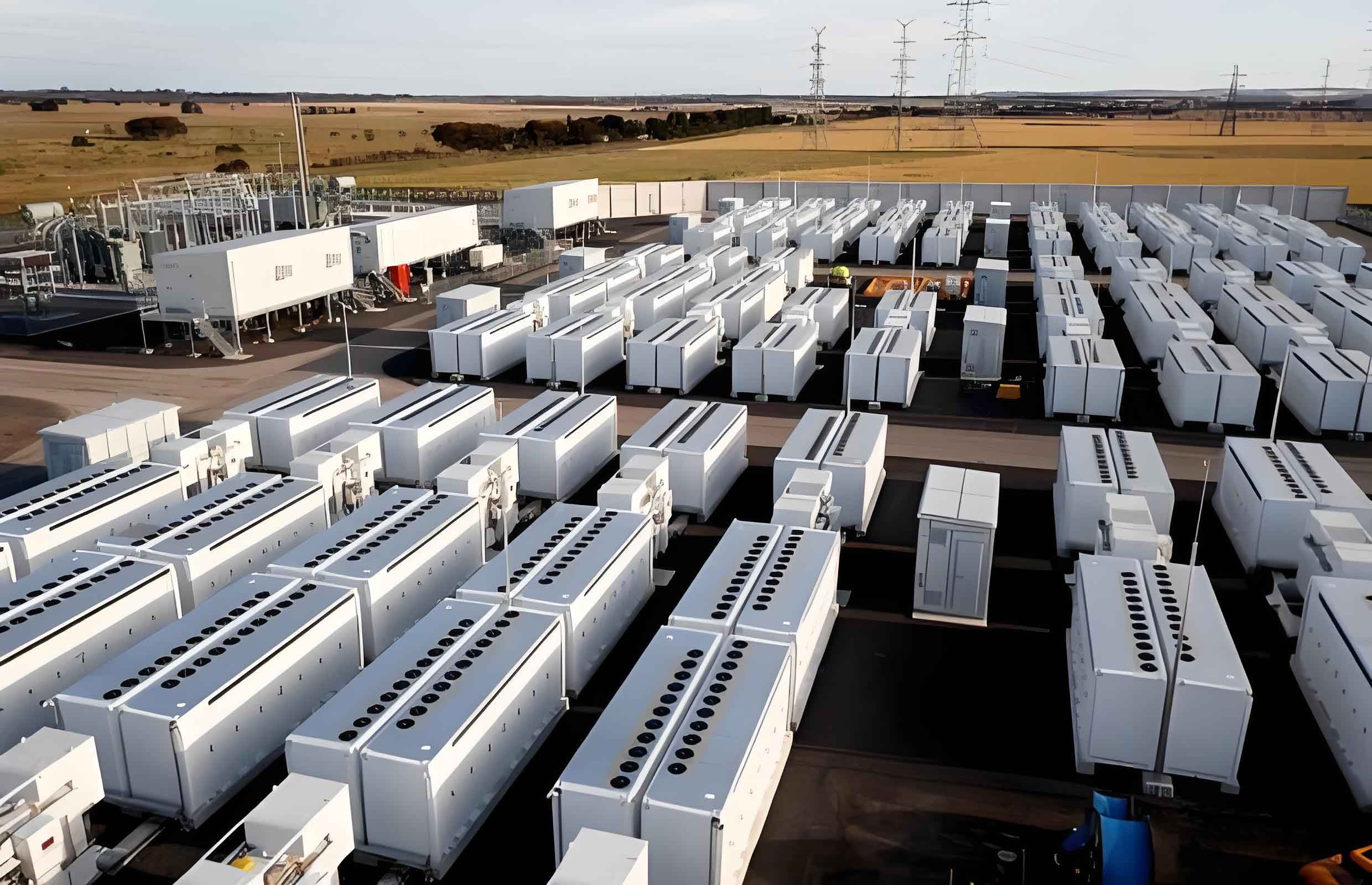
The simulation results confirm that the proposed control strategy significantly improves the SOC equalization speed and current distribution accuracy for the distributed battery energy storage system. The continuous variable acceleration factor ensures smooth transition and avoids power oscillations. The virtual voltage and bus voltage compensations effectively eliminate the adverse effects of line impedance and droop-induced voltage drop, making the system robust and reliable.
In conclusion, I have presented an optimized control strategy for the battery energy storage system that considers both SOC and capacity inconsistencies. The key contributions include: (1) an inverse tangent nested power function droop that limits coefficient variation; (2) a continuously variable acceleration factor that speeds up equalization while preserving stability; (3) virtual voltage and bus voltage compensation loops that achieve precise current sharing and voltage restoration. Future work will extend this approach to incorporate other battery states such as state of health, further enhancing the intelligence and longevity of the battery energy storage system.