
The widespread adoption of LiFePO4 batteries in energy storage and electric vehicle markets has intensified the focus on their performance under extreme operational conditions, particularly elevated temperatures. High-temperature environments accelerate detrimental electrochemical processes within the battery, leading to solid electrolyte interphase (SEI) film instability, continuous electrolyte decomposition, and active lithium depletion. These factors collectively contribute to rapid capacity fade and diminished cycle life. While thermal management systems can mitigate these issues, they add cost and complexity. Therefore, intrinsic improvement of the high-temperature resilience of LiFePO4 battery chemistry is paramount for expanding their application window and reducing system-level costs. A critical pathway to achieve this is through the strategic engineering of the electrolyte, specifically via functional additives that form robust and conductive interfacial layers on the electrode surfaces.
Conventional approaches often focus on forming SEI films rich in lithium fluoride (LiF). While LiF offers certain stability, its low ionic conductivity ($$10^{-12}$$ to $$10^{-13}$$ S/cm) can increase interfacial impedance. For more demanding high-temperature applications, SEI films requiring higher ionic conductivity and thermal stability are essential. Lithium nitride (Li3N), with its superior ionic conductivity ($$10^{-3}$$ S/cm at room temperature for pure phases, though typically lower in composite SEI), presents a promising component. However, common nitrogen sources like LiNO3 suffer from poor solubility in carbonate-based electrolytes used in LiFePO4 batteries. This work explores a novel cyclic nitrogen-containing additive, 2,3-Dihydropyrido[2,3-d][1,3]oxazol-2-one (DPT), to in-situ construct a high-performance SEI on the graphite anode in LiFePO4 battery systems.
Theoretical Foundation and Molecular Design of DPT
The effectiveness of a functional additive is predicated on its electrochemical activity relative to the base electrolyte components. Density Functional Theory (DFT) calculations were performed to evaluate the frontier molecular orbital energies of DPT. The results are summarized below, comparing DPT with the common additive Vinylene Carbonate (VC).
| Molecule | HOMO Energy (eV) | LUMO Energy (eV) |
|---|---|---|
| VC | -7.92 | 0.82 |
| DPT | -6.15 | -0.38 |
The significantly lower LUMO energy of DPT indicates a higher electron affinity. This suggests DPT will be reduced at a higher potential than the carbonate solvents and VC during the initial charging process, allowing it to decompose preferentially and form the primary SEI film matrix. The reduction potential can be estimated from the LUMO energy using a simplified correlation. A more negative LUMO generally corresponds to a higher reduction potential versus Li/Li+. The calculated trend confirms DPT’s role as a sacrificial additive for SEI formation.
The expected decomposition pathway of DPT involves the cleavage of the labile N-O bond in the oxazolone ring upon reduction, leading to the formation of lithium oxalate and lithium amide/organic nitrogen species. Further reactions can yield inorganic components like Li3N and LiNxOy. The proposed initial reduction step can be represented as:
$$ \text{DPT} + 2e^- + 2Li^+ \rightarrow Li_2C_2O_4 + \text{N-containing intermediate} $$
The subsequent reaction of the nitrogen-containing intermediate contributes to the incorporation of nitrogen into the SEI. The presence of LiPF6 salt also leads to the co-formation of LiF and LixPOyFz species through reactions with trace HF or direct reduction.
Electrochemical Verification and SEI Formation Characteristics
The preferential reduction of DPT was confirmed experimentally. Linear sweep voltammetry (LSV) on Li||Gr half-cells with electrolytes containing varying amounts of DPT clearly showed a reduction peak at approximately 1.47 V (vs. Li/Li+). In contrast, the reduction peak for VC appeared at around 1.17 V. As the DPT concentration increased, the intensity of the 1.47 V peak grew while the VC peak was suppressed, demonstrating DPT’s dominant role in the initial SEI-forming reactions. This behavior is crucial for building a stable foundation for the LiFePO4 battery anode interface.
The composition and morphology of the SEI formed with DPT were analyzed using X-ray Photoelectron Spectroscopy (XPS) and Transmission Electron Microscopy (TEM). XPS depth profiling after etching the graphite electrode revealed distinct differences.
| SEI Component | Binding Energy (eV) | Relative Atomic % (BE Electrolyte) | Relative Atomic % (0.5% DPT Electrolyte) |
|---|---|---|---|
| LiF / LixPOyFz (F 1s) | 684.8 / 687.3 | 1.59 | 2.07 |
| P-O / LixPOyFz (P 2p) | 133.2 / 137.1 | 0.25 | 0.33 |
| Li3N / LiNxOy (N 1s) | 398.6 / 401.8 | 0.00 | 1.22 |
| ROCO2Li / Li2CO3 (C 1s) | 290.3 | High | Reduced |
The data confirms that DPT incorporation leads to an SEI enriched with both LiF/LixPOyFz and nitrogenous species (Li3N and LiNxOy). Concurrently, the signals for organic carbonates (ROCO2Li, Li2CO3) were reduced, indicating DPT effectively suppresses the decomposition of EC/VC. TEM images provided visual evidence of the superior SEI morphology. The SEI formed with DPT was uniformly thin (≈15-20 nm) and conformal across the graphite particles. In contrast, the SEI from the base electrolyte was uneven, with thickness varying from 20 nm to over 60 nm, creating sites susceptible to localized lithium plating and accelerated degradation during cycling of the LiFePO4 battery.
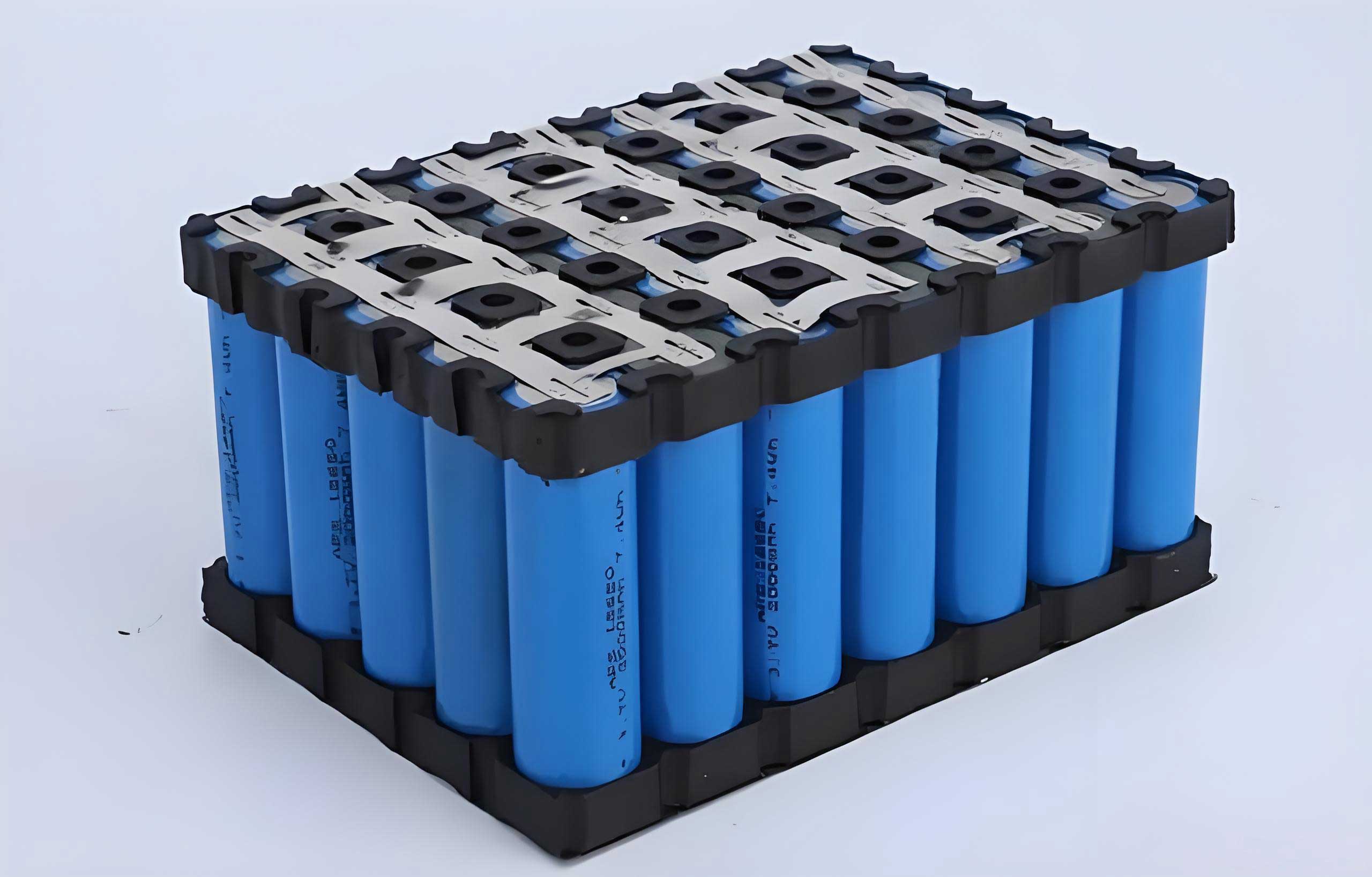
High-Temperature Storage and DC Impedance Performance
The stability of the DPT-derived SEI was first assessed under high-temperature storage conditions. LiFePO4 battery cells at 100% State of Charge (SOC) were stored at 45°C and 60°C. The capacity recovery after storage and the evolution of DC internal resistance (DCR) were critical metrics.
For cells stored at 60°C for 15 days, the capacity recovery rate improved markedly with DPT addition. Cells with 0.5 wt.% DPT showed a recovery rate over 95%, compared to less than 88% for the baseline cells. More strikingly, the DC impedance growth was significantly curtailed. The post-storage DCR for cells with DPT was up to 30% lower than that of baseline cells. This can be attributed to the thermally stable, inorganic-rich SEI which minimizes ongoing parasitic reactions and gas generation that typically increase interfacial resistance during storage of a LiFePO4 battery.
The initial room-temperature DCR (at 50% SOC) showed a slight increase with DPT content, from 27 mΩ (baseline) to 30 mΩ (0.5% DPT). This is expected due to the formation of a more substantial initial interface layer. However, the key benefit is revealed during and after high-temperature stress, where the DPT-based SEI demonstrates superior stability, preventing the dramatic impedance rise seen in the baseline cells. The trade-off between slightly higher initial impedance and vastly improved long-term stability is favorable for LiFePO4 battery applications where calendar life is critical.
High-Temperature Cycling Performance and Modeling
The most significant impact of DPT was observed in high-temperature cycle life testing. LiFePO4 battery pouch cells were cycled at 45°C under a constant power of 10.24 W (approximately 0.5 C rate). The cycle life to 60% capacity retention served as the failure criterion. The results demonstrated a profound improvement.
| DPT Additive (wt.%) | Cycles to 60% Capacity Retention | Capacity Retention at Cycle 1000 | Average Coulombic Efficiency (Cycles 1-500) |
|---|---|---|---|
| 0% (Baseline) | 232 | N/A (Failed before) | 99.65% |
| 0.3% | 432 | ~52% | 99.78% |
| 0.5% | 971 | ~61% | 99.82% |
| 1.0% | >1200 (projected) | 80% | 99.80% |
The enhancement is non-linear with concentration. While 1.0% DPT offers the best performance, the 0.5% formulation presents an optimal balance, extending cycle life by over 400% compared to the baseline while mitigating the excessive initial impedance increase associated with the 1.0% formulation. The average Coulombic efficiency, especially in the first 500 cycles, was higher for DPT-containing cells, indicating reduced parasitic lithium consumption per cycle.
The voltage polarization (ΔV) during cycling provides insight into the kinetic stability of the interface. ΔV is defined as the difference between the charge and discharge voltage at a specific depth of discharge (e.g., 50% of capacity). The growth of ΔV over cycles can be modeled as a function of increasing interfacial resistance (RSEI) and charge transfer resistance (Rct):
$$ \Delta V(n) = I \cdot (R_0 + \alpha \cdot n^{\beta}) $$
where \(I\) is the current, \(R_0\) is the initial ohmic resistance, \(n\) is the cycle number, and \(\alpha\) and \(\beta\) are fitting parameters related to the rate of resistance growth. For the baseline LiFePO4 battery, \(\beta\) was large, indicating rapid growth of RSEI/Rct. For DPT-containing cells, \(\beta\) was significantly smaller, often below 0.1, signifying very stable interfacial impedance throughout the test. This mathematical description aligns with the observed flat voltage profiles for DPT cells even after hundreds of high-temperature cycles, contrasting with the rapidly widening profiles of the baseline cells.
Mechanistic Summary and Optimal Additive Strategy
The superior high-temperature performance of the LiFePO4 battery with DPT can be attributed to a synergistic mechanism centered on the formation of a multi-component, inorganic-rich, and uniform SEI film.
- Preferential Reduction: DPT’s high reduction potential (1.47 V vs. Li/Li+) ensures it decomposes before EC/VC, forming the foundational layer of the SEI.
- Formation of Conductive and Stable Phases: Its decomposition incorporates nitrogenous species (Li3N, LiNxOy) which, alongside LiF and LixPOyFz, create a mechanically robust and ionically conductive interface. The presence of Li3N is particularly beneficial for lithium-ion transport.
- Suppression of Solvent Decomposition: This stable inorganic layer acts as a barrier, drastically reducing the continuous reduction of carbonate solvents (EC, EMC, DMC) and VC at the anode interface during long-term cycling, thereby conserving active lithium inventory.
- Morphological Uniformity: The SEI grows uniformly, preventing localized hot spots for lithium plating and ensuring homogeneous current distribution across the graphite electrode in the LiFePO4 battery.
This mechanism directly addresses the root causes of high-temperature failure: excessive SEI growth, active lithium loss, and impedance rise. The optimal concentration of DPT is determined by balancing the performance gain against the cost and the initial impedance penalty. Based on the comprehensive data, 0.5 wt.% DPT is recommended as the optimal dosage. It delivers a dramatic improvement in high-temperature cycle life (from 232 to 971 cycles to 60% capacity) and storage stability, while maintaining acceptable initial power characteristics for most LiFePO4 battery applications. The 1.0% formulation, while offering the ultimate performance, may be reserved for niche applications where maximum lifetime is the sole priority, and the higher DC impedance can be accommodated.
In conclusion, the strategic use of DPT as a functional electrolyte additive represents a highly effective and practical approach to overcoming the high-temperature performance limitations of LiFePO4 batteries. By engineering a superior SEI through in-situ generation of conductive and stable inorganic components, the intrinsic durability of the LiFePO4 battery system under thermal stress is significantly enhanced, paving the way for more reliable and longer-lasting energy storage solutions.