
In recent years, the contradiction between the demand for accommodating fluctuating renewable energy and the security requirements for stable operation of power grids has become increasingly prominent. With the rapid development of global energy interconnection, the installed capacity of renewable clean energy sources such as wind power and photovoltaic power generation continues to rise, and AC/DC hybrid systems are expanding quickly. These trends pose significant challenges to the frequency regulation capability of power grids. Frequency control is a challenging task, and the battery energy storage system (BESS) is gradually emerging as a flexible and efficient manageable dispatchable resource. The ability of BESS to provide fast response and flexible adjustment makes it particularly suitable for participating in ancillary frequency regulation and improving the frequency regulation capacity of power systems. The capacity configuration of BESS is a critical part of its application planning, as an appropriately sized configuration can enhance the economic viability of BESS in frequency regulation markets. In this paper, I propose a novel method for the optimal capacity configuration of BESS that considers the rate characteristics during primary frequency regulation. The objective is to improve the frequency regulation capability of power systems while reducing the required installed capacity and improving economic benefits.
I begin by analyzing the rate characteristics of different battery technologies. The discharge rate, or C-rate, is defined as the ratio of the charge or discharge current to the nominal capacity of the battery:
$$N = \frac{I}{C_n}$$
where \(N\) is the charge/discharge rate, \(I\) is the current in amperes, and \(C_n\) is the nominal capacity in ampere-hours. In an ideal case, a BESS operating at 1C can sustain charge or discharge for one hour, while at 2C it lasts for 30 minutes. However, in practice, the usable capacity of a BESS varies with the rate due to internal losses and electrochemical limitations. The relationship between the sustained time and the rate can be expressed in a piecewise function:
$$
T(N) =
\begin{cases}
t_1 & N < N_1 \\
\vdots & \\
t_i & N < N_i \\
\vdots & \\
t_n & N < N_n
\end{cases}
$$
where \(T(N)\) is the continuous over-load time, \(t_i\) is the sustained charge/discharge time in seconds, and \(N\) can be estimated from the ratio of actual power to rated power \(N = P/P_{\text{rate}}\). The actual behavior depends on the specific charge/discharge curves of the battery. Based on manufacturer data, I have observed that lead-acid batteries exhibit poor rate characteristics—their capacity degrades severely at high rates, whereas lithium-ion batteries demonstrate excellent rate characteristics with much less capacity reduction at high discharge rates. The following table summarizes typical sustained times for two battery types at various C-rates (values are illustrative based on common curves):
| C-Rate (N) | Lead-Acid (poor rate) [min] | Lithium-Ion (good rate) [min] |
|---|---|---|
| 1C | 60 | 60 |
| 2C | 25 | 30 |
| 5C | 8 | 12 |
| 8C | 3 | 7.5 |
| 10C | 1.5 | 6 |
It is evident that BESS with good rate characteristics can sustain high-power output much longer than those with poor rate characteristics. This property is crucial for primary frequency regulation, which typically requires large instantaneous power but relatively low total energy.
I now present the proposed optimal configuration method that explicitly accounts for the rate characteristics of BESS. The method aims to determine the required rated power \(P_{\text{rate}}\) and rated energy \(E_{\text{rate}}\) such that the BESS can meet the frequency regulation performance indicators under a given maximum load disturbance \(P_L\). The steps are as follows:
Step 1: Obtain the target grid parameters and the maximum load disturbance \(P_L\). Define the frequency regulation evaluation indices such as maximum frequency deviation \(\Delta f_m\), steady-state frequency deviation \(\Delta f_s\), and maximum rate of change of frequency \(\Delta \omega_m\).
Step 2: Determine the maximum allowable discharge rate \(N_n\) of the candidate BESS. Set the required power \(P_b = P_L\) and simulate the frequency regulation process with an initial guess of the rate. Obtain the power output curve and then calculate the required rated power and rated energy using:
$$P_{\text{rate}} = \frac{P_b}{N_i}$$
$$E_{\text{rate}} = \sum_{i=1}^{n} \int \Delta P_i \, dt$$
where \(N_i\) is a specific discharge rate chosen for evaluation, \(P_i\) is the real-time output power, and \(E_{\text{rate}}\) is the net energy contribution.
Step 3: Based on the chosen rate \(N_i\) and the battery’s rate characteristic curve, obtain the theoretical sustained time \(T_{\text{the}}\) (the time the configured BESS can continuously discharge at rate \(N\)). Then perform a detailed simulation of the frequency regulation process using the BESS with rated power \(P_{\text{rate}}\). From the simulated output curve, compute the actual equivalent sustained time \(T_{\text{rel}}\) by converting the time intervals at different actual rates to the reference rate \(N_n\). The conversion uses a factor defined as:
$$a(t_{ni}) = \frac{T(N_n)}{T(N_i)}$$
where \(T(N_i)\) is the sustained time at rate \(N_i\) and \(T(N_n)\) is the sustained time at the maximum rate \(N_n\). Then the actual equivalent time is:
$$T_{\text{rel}} = \sum_{i=1}^{n} a(t_{ni}) \cdot \Delta T_i$$
Step 4: Compare \(T_{\text{the}}\) and \(T_{\text{rel}}\). If \(T_{\text{the}} > T_{\text{rel}}\), the BESS satisfies the frequency regulation requirement at that rate; output \(P_{\text{rate}}\) and \(E_{\text{rate}}\). Otherwise, reduce the discharge rate \(N_i\) and repeat from Step 2 until the condition is met.
This iterative procedure ensures that the final configuration respects the actual rate limitations of the BESS. By appropriately utilizing the high-rate capability of certain battery types, the required rated power can be significantly reduced compared to traditional methods that ignore rate characteristics.
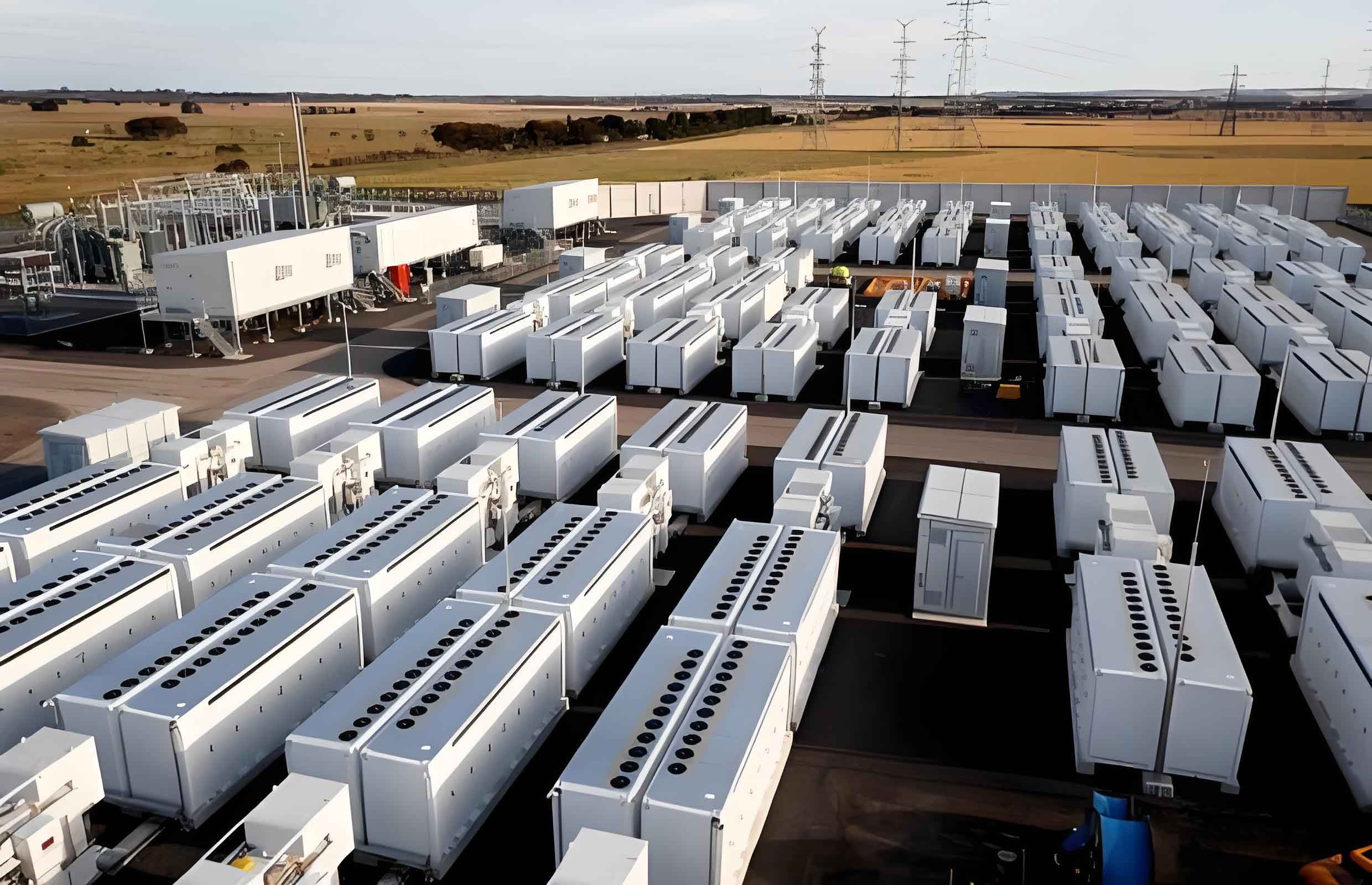
To validate the proposed method, I conducted a case study on a single-area equivalent grid model under a typical peak-load operating condition. The grid parameters and frequency regulation performance requirements are summarized in the following table:
| Parameter | Value |
|---|---|
| SB (base power) [MW] | 150 |
| \(\Delta P_{L,\max}\) [p.u. MW] | 0.15 |
| \(K_G\) [p.u. MW/p.u. Hz] | 23.34 |
| \(M\) [s] | 7 |
| \(D\) [p.u. MW/p.u. Hz] | 1 |
| \(\Delta \omega_m\) [p.u. Hz/s] | 0.024 |
| \(\Delta f_m\) [p.u. Hz] | 0.02 |
| \(\Delta f_s\) [p.u. Hz] | 0.0072 |
Two control strategies were considered: Control Method 1 (constant power sag control) and Control Method 2 (sag control with droop). The BESS output power and grid frequency responses were simulated under a 0.15 p.u. step load increase. The results show that Control Method 1 more effectively suppresses the maximum frequency deviation than Control Method 2, but both methods require the BESS to deliver fast power support.
Three types of BESS were examined: BESS 1 (excellent rate characteristics, typical of high-power lithium-ion), BESS 2 (moderate rate characteristics), and BESS 3 (poor rate characteristics, typical of lead-acid). For each BESS, I applied the proposed optimal configuration method under both control methods. The final configurations (required rated power \(P_{\text{rate}}\) and rated energy \(E_{\text{rate}}\)) are shown in the following tables.
| Battery Type | Discharge Rate (C-rate) | \(P_{\text{rate}}\) [MW] | \(E_{\text{rate}}\) [kW·min] |
|---|---|---|---|
| BESS 1 | 8 | 0.74 | 788.53 |
| BESS 2 | 5 | 1.338 | 788.53 |
| BESS 3 | 1 | 6.69 | 788.53 |
| Battery Type | Discharge Rate (C-rate) | \(P_{\text{rate}}\) [MW] | \(E_{\text{rate}}\) [kW·min] |
|---|---|---|---|
| BESS 1 | 9 | 0.71 | 797.89 |
| BESS 2 | 5 | 1.878 | 797.89 |
| BESS 3 | 1 | 6.39 | 797.89 |
Several important observations can be made from these results. First, the required rated power for BESS 1 is dramatically lower than that for BESS 3—only about 0.74 MW vs. 6.69 MW under Control Method 1. This reduction is a direct consequence of the high discharge rate (8C) that BESS 1 can sustain, allowing it to deliver the necessary instantaneous power with a much smaller inverter and battery stack. BESS 2 falls in between, operating at 5C and requiring 1.338 MW. The total energy requirement \(E_{\text{rate}}\) is essentially the same for all three types in each control method because the net energy needed to arrest the frequency drop is determined by the load disturbance and grid dynamics, not by the battery’s rate capability. However, the energy requirement is slightly higher under Control Method 2 (797.89 kW·min) than under Control Method 1 (788.53 kW·min) due to the different output power profiles.
Second, the optimal discharge rate differs between control methods for BESS 1: 8C in Method 1 and 9C in Method 2. This indicates that the control strategy influences the required rate characteristics. In Control Method 2, the BESS must respond more rapidly to the droop signal, which benefits from an even higher rate, albeit with a marginal reduction in rated power (0.71 MW vs. 0.74 MW). For BESS 3, the rate is limited to 1C in both methods, meaning that it cannot take advantage of faster response; therefore, its required power is the highest.
Third, these results highlight the economic implications. High-rate BESS (e.g., lithium-ion) allow a smaller power rating, which translates to lower capital costs for power conversion equipment and potentially lower balance-of-system costs. Although high-rate batteries may have a higher per-kWh cost, the overall system cost can be reduced because the required power rating is much smaller. The proposed method, by explicitly incorporating the rate characteristics, enables designers to select the most cost-effective combination of battery type and control strategy.
To further illustrate the benefits, I compared the configurations obtained from the proposed method with those from a conventional method that ignores rate characteristics (i.e., assumes ideal sustained time at any rate). The conventional method would underestimate the required power for poor-rate batteries and overestimate for good-rate batteries. In practice, such misconfiguration could lead to system instability or unnecessary oversizing. The proposed method ensures that the BESS can actually deliver the required power for the necessary duration under the given frequency event.
In summary, the main contributions of this work are as follows. First, I have developed a systematic method for optimally configuring the capacity of a battery energy storage system for primary frequency regulation, taking into account the realistic rate-dependent behavior of different battery chemistries. Second, I have demonstrated through a case study that a battery energy storage system with good rate characteristics (such as lithium-ion) can achieve the same frequency regulation performance with a substantially lower rated power compared to a battery with poor rate characteristics. Third, I have shown that the choice of control strategy also influences the optimal discharge rate and power rating, providing additional flexibility for system designers. The proposed method serves as a valuable tool for planning and economic assessment of battery energy storage system in ancillary services markets.
Looking ahead, the methodology can be extended to consider multiple simultaneous disturbances, degradation effects over the lifetime of the battery energy storage system, and integration with renewable generation. By optimizing the configuration of the battery energy storage system in a way that respects its inherent rate limitations, utilities and project developers can improve the economic viability of grid-scale battery storage while maintaining reliable frequency support.