
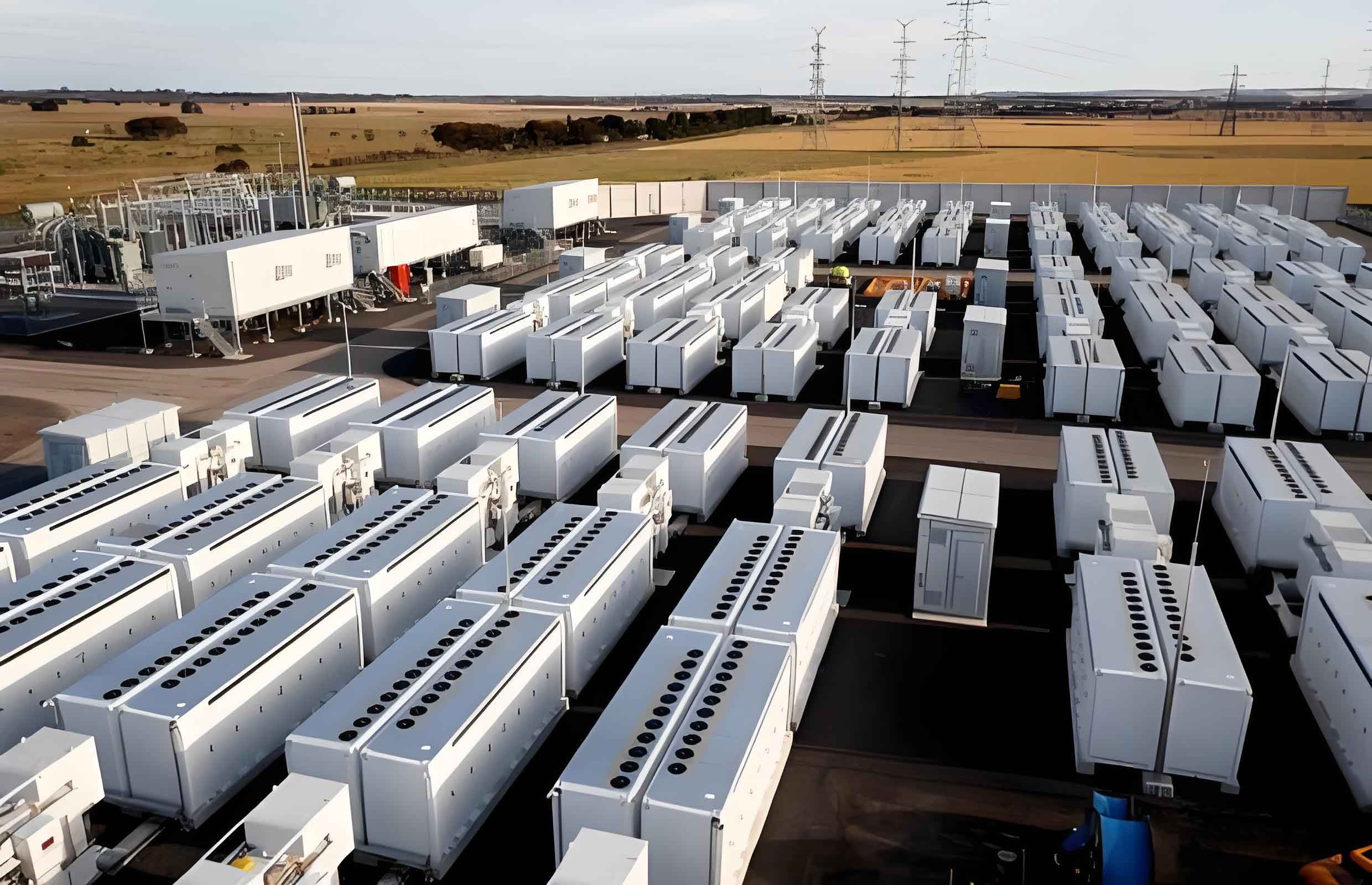
We address the critical challenges faced by heterogeneous battery energy storage systems (battery energy storage system) in microgrids: high lifespan degradation, poor state-of-charge (SOC) balance among battery units (BUs), and insufficient control accuracy under time-delay communication environments. In this paper, we propose a fixed-time proportional control strategy for heterogeneous battery energy storage system based on an improved grouping model. Our approach integrates a competition-cooperation mechanism for grouping, a time-delay tolerant fixed-time proportional consensus algorithm (TFPCA), and a hierarchical regulation method to achieve precise power allocation while reducing lifespan loss and enhancing operational balance.
We first evaluate the regulation capability of each battery unit in the heterogeneous battery energy storage system by considering both electrical parameters (rated power, capacity, efficiency) and operating states (SOC, state of health, SOH). This evaluation forms the basis for constructing an improved grouping model that dynamically partitions the heterogeneous battery energy storage system into several battery groups (BGs). The grouping model minimizes both inter-group capacity differences and intra-group regulation capability variations, ensuring that battery units from the same BESS are kept together to facilitate subsequent SOC balancing.
The evaluation of regulation capability for battery unit i at time t is given by:
$$ A_i(t) = A_{1,i}(t) + A_{2,i}(t) $$
where A1,i(t) represents the capability in handling power commands, and A2,i(t) represents the capability in providing reserve capacity. Their formulas are:
$$ A_{1,i}(t) = \frac{\eta_i^{\text{c}} P_i^{\text{N}} u(P(t)) + \eta_i^{\text{d}} P_i^{\text{N}} u(-P(t))}{P(t)} \cdot \alpha $$
$$ A_{2,i}(t) = \frac{ S_i^{\text{s}}(t) }{ |P'(t)| \Delta t + \epsilon_2 } \cdot \beta $$
Here, P(t) is the heterogeneous battery energy storage system power command, P‘(t) its derivative, Δt the control interval, ηi the charging/discharging efficiency, PiN the rated power, Sis the available reserve capacity computed from SOC and SOH, and α, β dynamic adjustment factors.
Based on the evaluation, we formulate the grouping optimization as:
$$ \min f = \sum_{j=1}^{n_{\text{bg}}} \left[ \sum_{i \in \text{BG}_j} (A_i^*(t) – \bar{A}_{\text{bg},j}(t))^2 + \left( E_j^*(t) – \bar{E}^*(t) \right)^2 \right] $$
where nbg is the number of battery groups, Ai* the per-unit regulation capability, Ej* the per-unit capacity of group j, and Ȧbg,j the average per-unit capability within that group. The resulting groups are named BG1, BG2, … in descending order of average regulation capability.
To address the time-delay issue in the distributed communication network of the heterogeneous battery energy storage system, we propose the TFPCA with the following state-space equation:
$$ x_i(k+1) = x_i(k) – \varepsilon \cdot \text{sgn}(Q_i) \cdot \left( \phi |Q_i|^{\varphi} + \phi |Q_i|^{\phi} \right) $$
$$ Q_i = \sum_{j=1}^{n} a_{ij} w_j (x_i(k) – x_j(k-\tau_{ij})) $$
Here, xi is the state variable (the power assigned to BU i), ε is the step size, τij is the communication delay, aij are the adjacency matrix elements, wj are weighting factors derived from the regulation capability and the balancing function, and φ, φ, ϕ are parameters ensuring fixed-time convergence.
We prove that TFPCA guarantees both fixed-time consensus and proportional consensus. The fixed-time convergence upper bound Tmax is derived as:
$$ T_{\text{max}} = \frac{1}{\rho_1 (m_1 – 1)} + \frac{1}{\rho_2 (1 – m_2)} $$
with explicit expressions for ρ1, ρ2, m1, m2 in terms of the graph Laplacian eigenvalues and weighting elements. Furthermore, the steady-state values satisfy:
$$ x_i(\infty) \propto \frac{1}{w_i} $$
meaning that battery units with larger wi (higher regulation capability) will take less power, which aligns with the hierarchical regulation philosophy.
We design the weighting factor wi as a combination of the regulation capability evaluation and a balancing function that promotes SOC and SOH equalization within the same BESS:
$$ w_i(t) = \frac{A_i(t)}{\max(A(t))} \cdot \frac{ \left| S_i^{\text{s}}(t) \right| }{ \eta_i^{\text{c}} P_i^{\text{N}} u(P(t)) + \eta_i^{\text{d}} P_i^{\text{N}} u(-P(t)) } $$
This design ensures that all wi > 0, satisfying the stability conditions for TFPCA, and simultaneously encourages battery units with higher reserve capacity and better efficiency to take more responsibility in power tracking, thereby reducing lifespan degradation.
The overall power control strategy for the heterogeneous battery energy storage system proceeds as follows:
- Hierarchical regulation determination: According to the improved grouping model, we determine which battery groups participate in power control at time t based on the magnitude of P(t) relative to the cumulative rated powers of the groups. Table 1 summarizes the logic.
- Parameter setting: For the participating battery units (forming a fully connected graph to mitigate delay effects), we compute the initial state vector x0 by randomly distributing P(t) among them.
- TFPCA iteration: Run the TFPCA until convergence within the fixed time bound Tmax (set to 10 s in our implementation). Obtain the converged state vector xend.
- Back-calculation: Since the converged values maintain the same proportion as the desired final powers, we compute the exact power that each battery unit should deliver using:
$$ P_i^{\text{bu}}(t) = \frac{ x_{i,\text{end}} }{ \sum_{j=1}^{n} x_{j,\text{end}} } \cdot P(t) $$
| Condition on P(t) | Participating BGs | Non-participating BGs |
|---|---|---|
| | P(t) | ≤ PBG1max | BG1 | BG2, BG3, … |
| PBG1max < | P(t) | ≤ PBG1max + PBG2max | BG1, BG2 | BG3, … |
| ⋮ | ⋮ | ⋮ |
| ∑i=1nbg−1 PBGimax < |P(t)| ≤ ∑i=1nbg PBGimax | All BGs | — |
Simulation verification
We conduct simulations using a typical daily unbalanced power profile of a microgrid. The heterogeneous battery energy storage system consists of three BESS with different capacities, efficiencies, SOC, and SOH values (see detailed parameter table in the appendix). To validate the TFPCA, we compare it with three other algorithms: a standard fixed-time consensus algorithm (FCA), a fixed-time proportional consensus algorithm (FPCA), and a state-feedback modified FPCA. The results show that only TFPCA achieves both fixed-time and proportional convergence while eliminating steady-state errors caused by time delays. The convergence time of TFPCA is 1.59 s, compared to 1.56 s (FCA), 2.07 s (FPCA), and 1.85 s (state-feedback FPCA). Table 2 summarizes the key metrics.
| Algorithm | Convergence time (s) | Fixed-time consistency | Proportional consistency | Zero steady-state error |
|---|---|---|---|---|
| FCA | 1.56 | ✓ | ✗ | ✗ |
| FPCA | 2.07 | ✓ | ✓ | ✗ |
| State-feedback FPCA | 1.85 | ✓ | ✓ | ✗ |
| TFPCA (proposed) | 1.59 | ✓ | ✓ | ✓ |
We then compare the proposed improved grouping model (Method 0) with three existing grouping methods: a non-grouping method (Method 1), a capacity-and-SOH-based method (Method 2), and a capacity-only method (Method 3). The heterogeneous battery energy storage system lifespan degradation is evaluated using an aging model. Figure 8 (not shown) demonstrates that Method 0 reduces lifespan degradation by approximately 8% compared to Method 2, and significantly outperforms Methods 1 and 3. The reason lies in the fact that our method dynamically adjusts the number of battery groups and simultaneously minimizes intra-group regulation capability differences, preventing premature aging of low-capability battery units.
Finally, we compare the complete power control strategy (Strategy 0) with three alternative strategies: a non-grouping strategy (Strategy 1), a capacity-SOH grouping strategy (Strategy 2), and a competition-cooperation grouping strategy (Strategy 3). Table 3 shows the SOC standard deviation (Std) for the entire heterogeneous battery energy storage system and each BESS at the beginning and end of a typical regulation cycle.
| Strategy | Heterogeneous battery energy storage system SOC Std (initial) | Heterogeneous battery energy storage system SOC Std (final) | BESS1 final Std | BESS2 final Std | BESS3 final Std | Power tracking accuracy (%) |
|---|---|---|---|---|---|---|
| Strategy 1 | 0.075 | 0.086 | 0.042 | 0.091 | 0.054 | 97.6 |
| Strategy 2 | 0.075 | 0.063 | 0.029 | 0.068 | 0.038 | 99.6 |
| Strategy 3 | 0.075 | 0.081 | 0.035 | 0.088 | 0.059 | 100 |
| Strategy 0 (proposed) | 0.075 | 0.032 | 0.015 | 0.034 | 0.022 | 100 |
Strategy 0 achieves the best SOC balance (a 57% reduction in heterogeneous battery energy storage system SOC standard deviation from 0.075 to 0.032) and perfect power tracking (100%). In contrast, Strategy 1 fails to balance SOC and has lower tracking accuracy due to overuse of certain BESS. Strategy 2 improves balance but still suffers from occasional power mismatch when the primary group’s regulation capability drops too fast. Strategy 3 maintains tracking accuracy but does not effectively balance SOC across the entire heterogeneous battery energy storage system, leading to higher lifespan degradation and potential future imbalance.
Experimental verification
We built a hardware experimental platform consisting of two BESS (each with six BUs) connected via wireless communication with realistic time delays. The experimental results confirm the simulation findings. Over a 20-minute test, the proposed grouping method maintained hierarchical regulation capability between battery groups, and the SOC balance of both individual BESS and the whole heterogeneous battery energy storage system improved significantly (by more than 50%). The power tracking error remained below 1% throughout the experiment, demonstrating the practical effectiveness of the TFPCA-based control strategy.
Conclusion
- We proposed an improved grouping model for heterogeneous battery energy storage system that accounts for both electrical parameters and operating states. The model dynamically adjusts the number of battery groups and reduces lifespan degradation by about 8% compared to existing methods.
- We developed a time-delay tolerant fixed-time proportional consensus algorithm (TFPCA) that achieves both fixed-time and proportional consensus, eliminates iteration errors, and is tailor-made for precise power control of heterogeneous battery energy storage system in time-delay environments.
- By integrating the hierarchical regulation method with TFPCA and incorporating SOC/SOH balancing weights, our power control strategy improves SOC balance by about 50%, ensures hierarchical participation of battery groups, and achieves 100% power tracking accuracy, thereby effectively addressing the key challenges of high lifespan degradation, poor balance, and insufficient precision in heterogeneous battery energy storage system.