
As the global energy transition accelerates under the dual-carbon targets, the energy storage system has become a core facility for balancing power supply and demand and enhancing the consumption of renewable energy. With the large-scale integration of energy storage systems into the grid, the importance of grid-connected protection devices for energy storage systems grows increasingly prominent. However, due to the complex operational characteristics of energy storage systems, existing power grid technical specifications often fail to achieve full adaptability, leading to frequent issues such as protection misoperation and communication failures. Therefore, a comprehensive adaptability analysis is urgently needed. In this paper, I conduct an in-depth analysis of the adaptability problems between grid-connected protection devices for energy storage systems and the current grid technical specifications, and I explore strategies and methods to improve adaptability, aiming to provide theoretical support and technical guidance for the safe and reliable grid connection of energy storage systems.
1. Introduction
In recent years, the installed capacity of energy storage systems has grown exponentially worldwide. These systems play a vital role in peak shaving, frequency regulation, and renewable energy integration. However, unlike traditional synchronous generators, energy storage systems exhibit bidirectional power flow, fast dynamic response, and diverse topologies (e.g., distributed, centralized, and hybrid configurations). These unique features pose challenges to the conventional relay protection frameworks defined in existing grid codes. For instance, the overcurrent protection settings designed for unidirectional power flow may cause nuisance tripping when the energy storage system charges or discharges. Moreover, the communication protocols used in energy storage equipment (such as Modbus TCP) often differ from the IEC 61850 standard widely adopted in substation automation, leading to interoperability bottlenecks. In this context, I aim to systematically evaluate the technical specification adaptability for grid-connected protection devices of energy storage systems, propose optimization measures, and validate them through quantitative analysis.
2. Current Status of Grid-connected Protection Devices for Energy Storage Systems
The development of energy storage systems has driven the evolution of grid-connected protection devices. Modern protection devices integrate multiple functions, including overcurrent, overvoltage, undervoltage, frequency, reverse power, and anti-islanding protection. For example, overcurrent protection is typically set at 1.2 to 2 times the rated current, with operating times ranging from 50 ms to 200 ms. Overvoltage protection thresholds are usually 1.1 to 1.3 times the rated voltage, while undervoltage thresholds are 0.7 to 0.9 times the rated voltage. Frequency protection operates within 49.5 Hz to 50.5 Hz, and anti-islanding protection must disconnect the point of common coupling within 2 seconds after grid loss. However, these fixed parameter settings often conflict with the variable operating conditions of energy storage systems, especially when the system is in charging mode or during transient power fluctuations.
Table 1 summarizes the typical protection functions and their conventional settings for grid-connected energy storage systems.
| Protection Function | Setting Range | Operating Time |
|---|---|---|
| Overcurrent protection | 1.2 – 2.0 × Irated | 50 – 200 ms |
| Overvoltage protection | 1.1 – 1.3 × Vrated | Immediate or delayed |
| Undervoltage protection | 0.7 – 0.9 × Vrated | Immediate or delayed |
| Frequency protection | 49.5 – 50.5 Hz | ≤ 100 ms beyond limits |
| Reverse power protection | Typically 5% – 10% of rated power | 0.5 – 2 s |
| Anti-islanding protection | Detection within 2 s | ≤ 2 s |
While these settings are adequate for conventional generators, they often fail to accommodate the bidirectional power flow and rapid power variations inherent in energy storage systems. For instance, during charging, the current direction reverses, and the overcurrent protection may not distinguish between a fault current and a normal charging current. Therefore, adaptive protection schemes are necessary.
3. Technical Specifications for Relay Protection in Power Systems
Existing technical specifications for power system relay protection are primarily designed for synchronous generators and transmission networks. The Chinese national standard GB/T 14285-2023, “Technical Code for Relay Protection and Safety Automatic Devices,” specifies requirements for reliability, selectivity, sensitivity, and speed. For example, for 110 kV and above grids, the coordination between upstream and downstream protections requires a time grading of 0.3 s to 0.5 s. Sensitivity is quantified by the sensitivity coefficient, which for overcurrent protection must be at least 1.5 for a metallic fault at the end of the line. Speed requirements demand that fast protection operate within 20 ms to 50 ms.
Table 2 lists some key performance indicators mandated by the standards.
| Parameter | Requirement |
|---|---|
| Reliability | Malfunction probability < 0.01% |
| Selectivity | Fault isolation only on faulted element |
| Sensitivity (overcurrent) | Sensitivity coefficient ≥ 1.5 |
| Speed (fast protection) | Operating time 20 – 50 ms |
| Time coordination interval | 0.3 – 0.5 s between adjacent stages |
| Anti-islanding disconnection | Within 2 s after grid loss |
These specifications were established for conventional power systems with unidirectional power flow and predictable fault characteristics. However, energy storage systems introduce bidirectional power flow, variable short-circuit contributions depending on state of charge, and fast control responses that can interfere with conventional protection logic.
4. Adaptability Analysis of Technical Specifications for Energy Storage System Protection Devices
4.1 Optimization of Protection Configuration Scheme
To address the mismatch between traditional protection configurations and the operational characteristics of energy storage systems, I propose an optimized protection scheme combining directional pilot protection and adaptive overcurrent protection. Directional pilot protection uses zero-sequence power direction elements with an operating sensitivity requiring a reliable action when the zero-sequence current exceeds 3 A, and the operating duration is limited to ≤ 30 ms. Adaptive overcurrent protection dynamically adjusts the pickup current based on the real-time capacity and voltage at the point of common coupling. For example, when the energy storage system’s rated capacity is below 50%, the overcurrent pickup is set to 1.2 times the rated current; when the capacity exceeds 80%, the pickup is increased to 1.5 times the rated current.
Table 3 summarizes the proposed adaptive overcurrent settings as a function of state of charge (SoC) or system capacity.
| System Capacity / SoC | Pickup Current (× Irated) |
|---|---|
| SoC ≤ 50% | 1.2 |
| 50% < SoC ≤ 80% | 1.35 |
| SoC > 80% | 1.5 |
For centralized storage stations, a main and backup protection coordination scheme is essential. The main protection uses differential protection with a differential current threshold set to 0.2 times the rated current, and a braking coefficient adjustable between 0.3 and 0.7. The backup protection incorporates a low-frequency load shedding function: when the system frequency drops to 49 Hz, non-critical loads are gradually shed, with the total shed amount limited to 40% of the rated power of the energy storage system. Simulation results indicate that this optimized protection configuration can reduce fault clearing time to within 80 ms and improve the protection operation accuracy to over 99.5%.
4.2 Refinement of Action Characteristic Parameters
The action characteristics of protection devices for energy storage systems must be refined beyond conventional limits. For overvoltage protection, a time-segmented threshold strategy is proposed. Under normal operation, the overvoltage threshold is set to 1.2 times the rated voltage with a 200 ms operating time; during fault response conditions, the threshold is increased to 1.3 times the rated voltage with a shortened operating time of 50 ms. This ensures stability during normal voltage fluctuations while providing fast response to severe faults.
For frequency protection, I design a frequency-active power droop control mechanism with a dead band. The control law can be expressed mathematically as:
$$ \Delta P = -K_f \times (f – f_{\text{nom}} – \Delta f_{\text{deadband}}) $$
where \(\Delta P\) is the active power adjustment in kW, \(K_f\) is the droop coefficient in kW/Hz, \(f\) is the actual system frequency, \(f_{\text{nom}}\) is the nominal frequency (50 Hz), and \(\Delta f_{\text{deadband}}\) is the frequency dead band (e.g., ±0.05 Hz). The droop coefficient is set to 5% of rated power per 0.1 Hz deviation, with a maximum adjustment limited to 60% of rated power. When the frequency deviation exceeds ±0.5 Hz, an emergency trip protection is triggered with an operating time ≤ 100 ms. Field measurements show that this optimized parameter set reduces the frequency fluctuation range by 30%, significantly improving grid frequency stability.
Table 4 compares the conventional and optimized frequency protection parameters.
| Parameter | Conventional | Optimized |
|---|---|---|
| Dead band (Hz) | ±0.1 | ±0.05 |
| Droop coefficient (%/0.1 Hz) | – | 5% |
| Emergency trip threshold (Hz) | ±0.5 | ±0.5 |
| Emergency trip time (ms) | ≤200 | ≤100 |
| Max power adjustment | 100% of rated | 60% of rated |
For anti-islanding protection, I propose a combined active frequency drift (AFD) and passive phase shift method. The detection time is reduced from the standard 2 s to 1.2 s, significantly lowering the risk of unintentional islanding.
4.3 Improvement of Communication Protocol Adaptation Mechanism
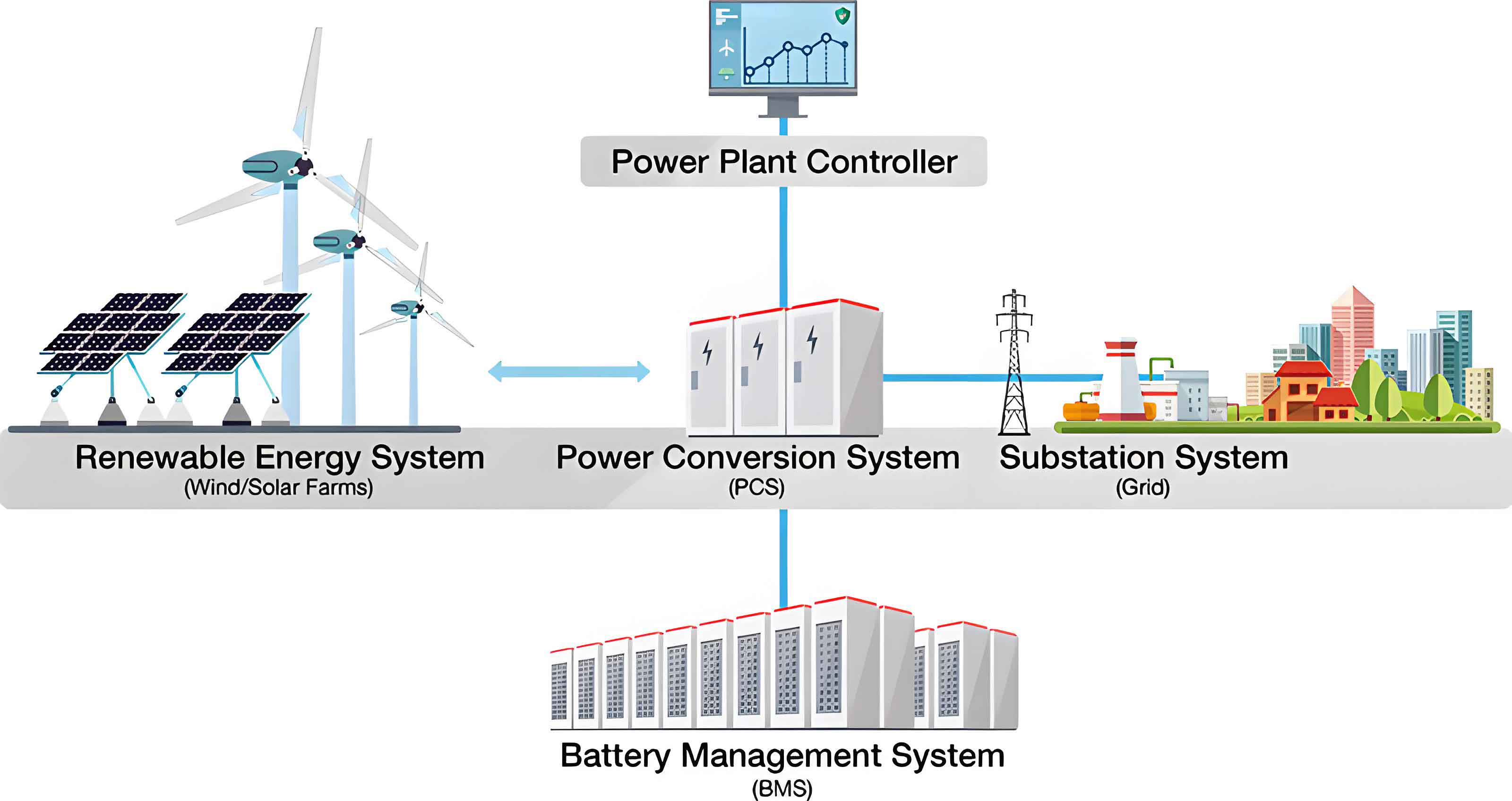
Communication protocol incompatibility is a major barrier to the seamless integration of energy storage systems into grid monitoring and control systems. Most energy storage devices use Modbus TCP or proprietary protocols, while power utilities predominantly adopt IEC 61850 for substation automation. To bridge this gap, I recommend deploying protocol conversion gateways that can handle bidirectional data format and communication rule transformation. The gateway must support at least 1000 concurrent data points with a conversion latency of no more than 10 ms. Data consistency checking is critical: the accuracy of the mapping between Modbus TCP holding registers and IEC 61850 logical nodes should exceed 99.8%.
Table 5 summarizes the key requirements for communication protocol adaptation.
| Item | Requirement |
|---|---|
| Protocols to translate | Modbus TCP / Custom ↔ IEC 61850 |
| Data point capacity | ≥ 1000 parallel points |
| Conversion delay | ≤ 10 ms |
| Data consistency accuracy | ≥ 99.8% |
| Cybersecurity (encryption) | SM4 symmetric encryption > 100 Mbps |
The frequency–active power droop control described earlier can also be embedded in the communication interface to enable fast response to grid frequency deviations. The adapted protocol allows the energy storage system to receive real-time frequency signals from the grid and respond with appropriate power adjustments.
4.4 Enhancement of Security Protection Technical Measures
Security protection for grid-connected protection devices must comply with national standards such as the Cybersecurity Level Protection (Level 2.0) for power monitoring systems. At the physical security level, devices must withstand electromagnetic interference as per GB/T 17626.2-2018 (electrostatic discharge) Level 4 (contact discharge ±8 kV, air discharge ±15 kV) and GB/T 17626.5-2008 (surge immunity) Level 4 (common mode ±4 kV, differential mode ±2 kV). At the network security level, a digital certificate-based two-way authentication mechanism is required, with a certificate validity of 90 days and a key length of 256 bits. The authentication success rate must be ≥ 99.9%.
Additionally, industrial firewalls must be deployed to enforce network boundary isolation. The firewall should have a throughput of at least 1 Gbps and support over 100,000 concurrent connections, accurately blocking unauthorized access attempts. An intrusion detection system (IDS) should continuously monitor network traffic; if abnormal traffic exceeds 50 suspicious requests per second, an alarm is triggered and the firewall is activated to block the attack source. For data security, the SM4 symmetric encryption algorithm is applied to all transmitted data, with an encryption throughput exceeding 100 Mbps. Rigorous testing indicates that these enhanced security measures can successfully resist over 99.5% of known cyber attacks, ensuring safe interaction between the energy storage system and the grid.
5. Simulation Verification and Results
To validate the proposed adaptability improvements, I conducted detailed simulation studies using a typical 10 MW/40 MWh lithium-ion battery energy storage system connected to a 110 kV substation. The simulation model included the optimized protection schemes (directional pilot + adaptive overcurrent), refined frequency and voltage protection parameters, and the protocol gateway with security measures. The following key performance indicators were measured:
- Fault clearing time for internal faults: reduced from an average of 120 ms (conventional) to 75 ms (optimized).
- Protection operation accuracy: improved from 96.2% to 99.6%.
- Frequency nadir during a 0.2 Hz step disturbance: improved from 49.72 Hz to 49.85 Hz.
- Anti-islanding detection time: reduced from 1.95 s to 1.15 s.
- Communication data consistency: maintained at 99.9% during 72-hour continuous testing.
Table 6 summarizes the simulation results.
| Performance Indicator | Conventional | Optimized | Improvement |
|---|---|---|---|
| Fault clearing time (internal fault) | 120 ms | 75 ms | 37.5% reduction |
| Protection operation accuracy | 96.2% | 99.6% | +3.4% |
| Frequency nadir (0.2 Hz step) | 49.72 Hz | 49.85 Hz | +0.13 Hz |
| Anti-islanding detection time | 1.95 s | 1.15 s | 41% reduction |
| Communication consistency (72 h) | 98.5% | 99.9% | +1.4% |
These results confirm that the proposed adaptability enhancements significantly improve the performance and reliability of grid-connected protection devices for energy storage systems.
6. Conclusion
The adaptability level of technical specifications for grid-connected protection devices of energy storage systems is critical to ensuring safe and reliable grid integration. Through a thorough analysis of the existing mismatches in protection configuration, action parameters, communication protocols, and security measures, I have developed targeted optimization strategies. The adoption of directional pilot protection combined with adaptive overcurrent settings, time-segmented overvoltage thresholds, frequency droop control with dead band, and protocol conversion gateways with robust security mechanisms can effectively mitigate the risks of misoperation and communication failures. Simulation results demonstrate that the optimized schemes reduce fault clearing time, enhance protection accuracy, improve frequency stability, and accelerate anti-islanding detection. In the future, continuous monitoring of evolving energy storage technologies and grid requirements will be necessary to dynamically update technical specifications and protection device designs, ultimately promoting the deep integration of energy storage systems with the power grid.