
In recent years, environmental protection and energy conservation have increasingly become the focus of refrigeration research. Solar energy, as one of the most promising new energy sources in the 21st century, has attracted particular attention. With the rapid development of photovoltaic cells, research on solar photovoltaic DC refrigerator systems has also become a new direction in green refrigeration technology. In this study, we design and investigate a small solar photovoltaic DC car-refrigerator system. Our aim is to explore the performance of such a solar system under practical conditions, analyze its energy distribution, and evaluate its feasibility for real-world applications. This solar system integrates photovoltaic panels, a battery, a controller, and a DC refrigerator into a portable unit, making it suitable for mobile use such as in vehicles or remote areas. The solar system harnesses renewable energy to power refrigeration, reducing reliance on conventional electricity and minimizing carbon emissions.
The solar system we developed consists of several key components: a solar photovoltaic panel, a DC compressor refrigerator, a battery for energy storage, and a control unit to manage power flow. This solar system is designed to operate independently, leveraging solar energy to maintain refrigeration even in off-grid scenarios. We conducted experiments under clear sky conditions in a temperate region to assess the system’s startup characteristics, stable operation, and energy efficiency. The solar system was tested with the refrigerator set to a冷藏 temperature of 0°C, and various parameters such as current, voltage, temperature, and power were recorded. Our analysis focuses on how the solar system matches its components and optimizes energy use. Through this work, we hope to contribute to the advancement of sustainable refrigeration solutions powered by solar systems.
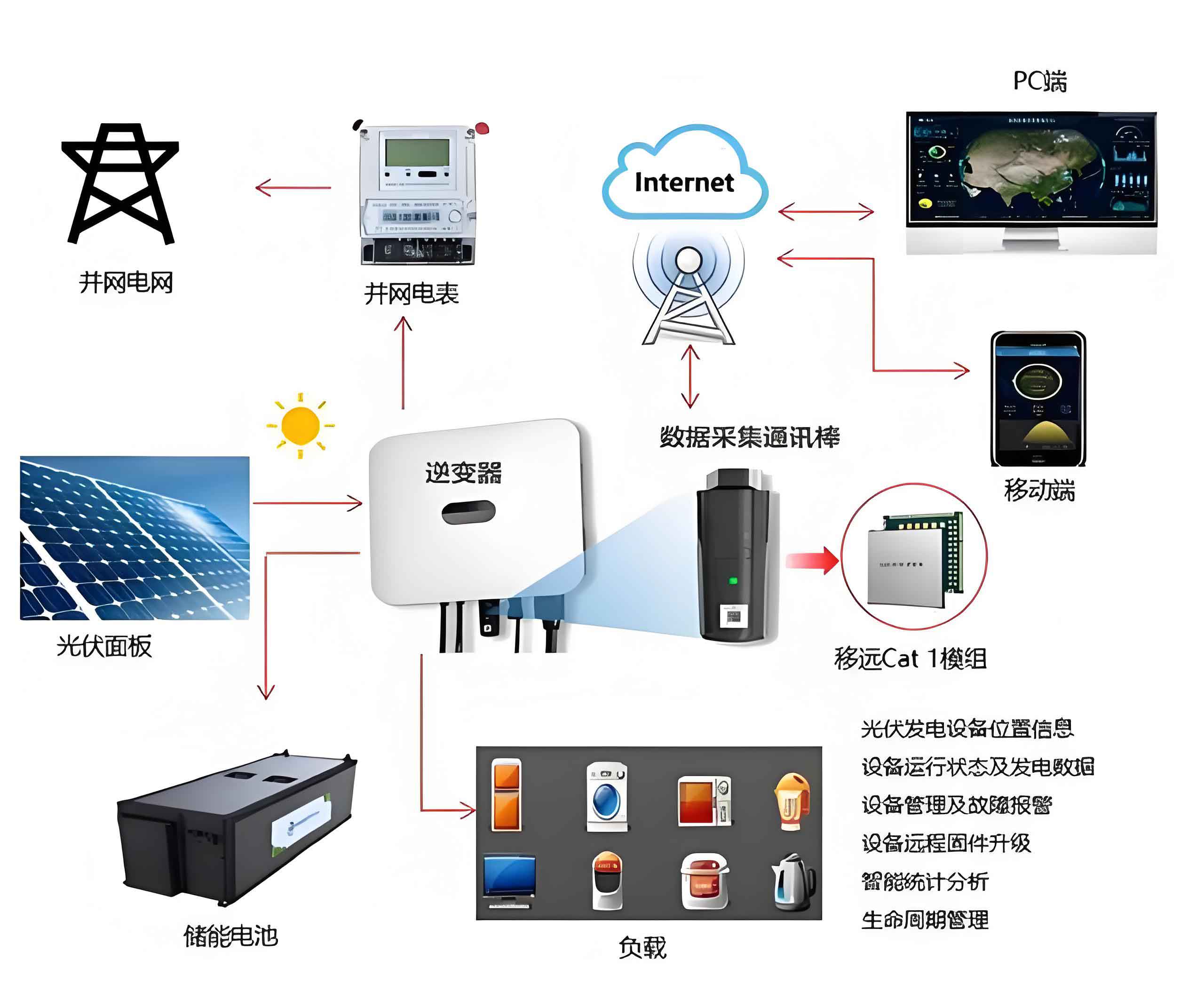
The solar photovoltaic panel in our solar system is selected based on the power requirements of the refrigerator. It converts sunlight into electrical energy, which is then used to charge the battery or directly power the refrigerator. The specifications of the solar panel are summarized in Table 1. This solar system uses a monocrystalline panel with a peak power of 120 W, which provides sufficient energy under typical日照 conditions. The battery acts as an energy buffer, storing excess solar power for use during periods of low or no sunlight. We chose a lead-acid battery with a capacity of 100 Ah to ensure extended operation. The controller plays a crucial role in this solar system by regulating voltage and current, preventing overcharging or deep discharge of the battery. Table 2 and Table 3 detail the battery and controller parameters, respectively. The refrigerator is a DC-powered unit with a volume of 45 L, using R134a as the refrigerant, and it operates on 12-24 V DC with an average power consumption of 60 W. This integrated solar system is compact and portable, ideal for车载 applications.
| Peak Power (Wp/W) | Optimal Current (Im/A) | Optimal Voltage (Vm/V) | Open-Circuit Voltage (Voc/V) | Short-Circuit Current (Isc/A) |
|---|---|---|---|---|
| 120 | 7.2 | 17.2 | 20.8 | 7.6 |
| Model | Discharge Rate (HR) | Standard Capacity (A·h) | Low-Temperature Starting Current (A) | Dimensions (L×W×H, mm) |
|---|---|---|---|---|
| DIN60038 | 20 | 100 | 804 | 349×174×175 |
| Rated Voltage (V) | Maximum Load Current (A) | Full Charge Disconnect Voltage (V) | Under-Voltage Disconnect (V) | Temperature Compensation per Cell (mV/°C) |
|---|---|---|---|---|
| 12/24 (auto-recognition) | ≤50 | 13.7/27.4 | 10.5/21 | −3 |
Our experimental setup involved monitoring the solar system over several consecutive sunny days. We measured the refrigerator current, interior temperature, battery voltage, and load power from startup until stable operation. The solar system was initialized with the refrigerator set to 0°C, and data was logged at regular intervals. The solar irradiance varied throughout the day, affecting the charging and discharging cycles of the solar system. We analyzed how the solar system adapts to these changes and maintains refrigeration performance. The key metrics we focused on include the compressor run time, temperature fluctuations, and energy flows within the solar system. By understanding these dynamics, we can optimize the design of such solar systems for better reliability and efficiency.
Figure 2 shows the changes in refrigerator current, temperature, battery voltage, and load power from startup to stable operation. Initially, the refrigerator current spikes as the compressor starts, then it cycles on and off to maintain the set temperature. The temperature drops from ambient to around 0°C, with oscillations between -3°C and 5°C during stable operation. The battery voltage fluctuates with charging and discharging, while the load power reflects the compressor’s activity. These patterns demonstrate how the solar system manages energy balance. The solar system’s controller ensures that the battery is charged when solar power is available and that the refrigerator operates only when necessary, conserving energy. This intelligent management is crucial for the longevity and effectiveness of the solar system.
During stable operation, we observed consistent cycling of the refrigerator. The compressor run time averaged 56%, meaning it operated for about 56% of each cycle. For instance, in one cycle from 10:56 to 11:41, the run time was 21 minutes and the off time was 24 minutes. The load power during compressor operation showed a slight increasing trend from 62 W to 75 W over several cycles, likely due to rising ambient temperature. The temperature control was effective, with the refrigerator stopping at 0°C and restarting when the temperature rose to 4°C, though some hysteresis was noted. The solar system maintained stable performance throughout the day, with the battery providing backup power during brief periods of reduced solar input. This resilience highlights the robustness of the solar system in real-world conditions.
The battery charging current, as shown in Figure 4, varies based on solar irradiance and load demand. When the solar panel generates excess power, the charging current increases, replenishing the battery. Conversely, when the refrigerator is running, the charging current decreases as more power is diverted to the load. This dynamic interaction is central to the solar system’s operation. The solar system must continuously balance energy production, storage, and consumption to ensure uninterrupted refrigeration. Our data indicates that the solar system can sustain the refrigerator for up to 34 hours solely on battery power under no-sunshine conditions, meeting practical requirements for mobile or emergency use. This capability makes the solar system a reliable solution for off-grid refrigeration.
To deeper understand the energy dynamics, we conducted a detailed energy analysis of the solar system. The power consumption of the load (compressor) is given by:
$$P_l = I_l U_l$$
where $I_l$ is the refrigerator current and $U_l$ is the voltage. From our experiments, the average values are $I_l = 4.67\,\text{A}$ and $U_l = 12.4\,\text{V}$, so:
$$P_l = 4.67 \times 12.4 = 57.91\,\text{W}$$
The battery charging power is:
$$P_b = I_b U_b$$
where $I_b$ is the charging current and $U_b$ is the battery voltage. The averages are $I_b = 3.02\,\text{A}$ and $U_b = 12.4\,\text{V}$, thus:
$$P_b = 3.02 \times 12.4 = 37.45\,\text{W}$$
The solar panel output power is:
$$P_s = I_s U_s$$
with $I_s = I_l + I_b$ being the total current from the panel, and $U_s$ the panel operating voltage. Taking $I_s = 7.69\,\text{A}$ (average) and $U_s = 17.2\,\text{V}$ (optimal voltage), we have:
$$P_s = 7.69 \times 17.2 = 132.27\,\text{W}$$
The power loss in the controller and wiring, denoted as $P_c$, is derived from the balance:
$$P_c = P_s – P_l – P_b$$
Substituting the values:
$$P_c = 132.27 – 57.91 – 37.45 = 36.91\,\text{W}$$
This energy distribution is summarized in Table 4, which illustrates how the solar system allocates power among its components. The solar system’s efficiency can be assessed from these figures, showing that about 43.8% of the solar output directly powers the refrigerator, while 28.3% charges the battery, and 27.9% is lost in control and transmission. Improving the controller efficiency could enhance the overall performance of the solar system.
| Parameter | Solar Panel Output | Load (Compressor) | Battery Charging | Controller & Wiring Loss |
|---|---|---|---|---|
| Average Power (W) | 132.27 | 57.91 | 37.45 | 36.91 |
| Percentage of Total Output (%) | 100 | 43.8 | 28.3 | 27.9 |
Further analysis of the solar system involves considering the daily energy yield. The solar irradiance profile affects the total energy harvested. On a typical sunny day, the solar system can generate enough power to run the refrigerator and fully charge the battery. We estimate the daily energy production using the formula:
$$E_s = P_s \times t_{\text{sun}}$$
where $t_{\text{sun}}$ is the effective sunshine hours. Assuming $t_{\text{sun}} = 5\,\text{h}$ and $P_s = 132.27\,\text{W}$, the daily energy is $E_s = 661.35\,\text{Wh}$. The refrigerator’s daily energy consumption is:
$$E_l = P_l \times t_{\text{run}}$$
with $t_{\text{run}}$ as the total run time. Given the 56% run rate over 24 hours, $t_{\text{run}} = 0.56 \times 24 = 13.44\,\text{h}$, so $E_l = 57.91 \times 13.44 = 778.5\,\text{Wh}$. The battery bridges the gap by storing excess solar energy during the day and supplying it at night. This solar system design ensures that the net energy balance is positive over a full day, making it sustainable. The solar system’s ability to store energy is critical for continuous operation, especially in variable weather conditions.
We also explored the impact of temperature on the solar system’s performance. The efficiency of photovoltaic panels decreases slightly with rising temperature, which can affect the solar system’s output. The temperature coefficient of the panel is approximately -0.4% per °C, meaning that on hotter days, the power output may drop. However, our solar system includes a temperature-compensated controller that adjusts charging voltages to mitigate this effect. Additionally, the refrigerator’s cooling capacity varies with ambient temperature, influencing the compressor run time. Our data shows that during midday when temperatures are higher, the compressor runs longer, increasing energy demand. The solar system must accommodate these fluctuations by optimizing the battery usage. Future improvements to the solar system could incorporate cooling mechanisms for the panels or more efficient compressors to reduce energy consumption.
The portability of this solar system makes it suitable for various applications beyond车载 use. For example, in remote areas without grid electricity, such as mountainous regions or边防哨所, the solar system can provide reliable refrigeration for food preservation and medical supplies. The solar system’s design emphasizes ease of transport and setup, with lightweight components and simple connections. In disaster relief scenarios, the solar system can be rapidly deployed to cool vaccines or perishable goods. The versatility of the solar system underscores its potential as a sustainable solution for global cooling needs. By harnessing solar energy, this solar system reduces dependence on fossil fuels and minimizes environmental impact.
To enhance the solar system’s performance, we propose several modifications. First, using higher-efficiency photovoltaic panels, such as those with multi-junction cells, could increase energy harvest. Second, integrating a maximum power point tracking (MPPT) controller would optimize the power extraction from the panels, boosting the solar system’s overall efficiency. Third, employing a lithium-ion battery instead of lead-acid could reduce weight and improve energy density, making the solar system more portable. Fourth, adding insulation to the refrigerator cabinet would decrease thermal losses, lowering the compressor workload. These upgrades would make the solar system more robust and energy-efficient, further expanding its applicability. We plan to test these enhancements in future iterations of the solar system.
In conclusion, our experimental study demonstrates that the small solar photovoltaic DC car-refrigerator system operates stably and meets practical refrigeration requirements. The solar system effectively integrates solar energy capture, storage, and consumption, maintaining a temperature around 0°C with minimal fluctuations. Under no-sunshine conditions, the solar system can run continuously for 34 hours on battery power, ensuring reliability. The energy analysis reveals that the solar system allocates power efficiently, though losses in the controller and wiring offer room for improvement. This solar system represents a promising step toward sustainable refrigeration, with potential applications in mobile, off-grid, and emergency settings. By continuing to refine such solar systems, we can contribute to a greener future powered by renewable energy.
Throughout this work, we have emphasized the importance of the solar system as a holistic solution. The solar system not only provides cooling but also exemplifies how renewable energy can be harnessed for everyday needs. The solar system’s design principles—simplicity, efficiency, and portability—can be applied to other appliances, promoting widespread adoption of solar technology. As solar costs decline and efficiency improves, solar systems like ours will become increasingly viable. We encourage further research into optimizing solar systems for various climates and loads, ultimately making sustainable living accessible to all. The solar system is more than just a refrigerator; it is a testament to the power of innovation in addressing global challenges.