
As a researcher deeply engaged in the field of electrochemical energy storage, I have witnessed the rapid growth of lithium-ion battery energy storage systems (LiBESS) over the past decade. The global push toward carbon neutrality and the urgent need for renewable energy integration have positioned LiBESS as the most mature and widely deployed energy storage technology. However, the increasing number of fire and explosion incidents worldwide has raised critical concerns about the safety of these systems. In this paper, I present a comprehensive review of the research progress on safety prevention and control technologies for LiBESS, covering intrinsic safety of the energy storage cell, thermal runaway propagation and suppression, early warning and detection, thermal management, and multi-level safety protection frameworks. The goal is to provide a systematic understanding of current challenges and future directions for ensuring the safe operation of large-scale LiBESS.
The energy storage cell is the fundamental building block of any LiBESS. Its inherent safety directly determines the overall system risk. Over the past few years, numerous studies have focused on improving the intrinsic safety of the energy storage cell through modifications of electrolytes, separators, and electrode materials. For instance, flame-retardant additives such as phosphorous-based compounds (e.g., DMMP, PFPN) and fluorinated solvents have been widely investigated to reduce electrolyte flammability. Table 1 summarizes key findings from recent research on electrolyte additives for safer energy storage cells.
| Additive | Concentration | Effect on Flammability | Key Reference |
|---|---|---|---|
| DMMP | 5–20% wt | Reduces flame size and burning rate | Yin et al., 2021 |
| PFPN | 5% wt | Non-flammable | Xia et al., 2015 |
| TMMP | 50% vol | Completely non-flammable | Naoi et al., 2010 |
| PFMP+DMAC+FS | Variable | Dual safety (self-cooling + flame retardant) | Jiang et al., 2018 |
Similarly, separators with high thermal stability have been developed using polyimide (PI), polyacrylonitrile (PAN), and ceramic coatings. The thermal shrinkage of polyimide nanofiber separators remains below 1% at 180 °C, whereas conventional polyolefin separators melt at that temperature. Such improvements are crucial for delaying thermal runaway in a tightly packed battery module. The energy storage cell also benefits from cathode surface modifications, such as Al₂O₃ or TiO₂ coatings, which enhance structural stability and suppress oxygen release at high voltages.
One important aspect is the mathematical modeling of the energy storage cell’s thermal behavior. The heat generation rate during abuse conditions can be described by the following adapted energy balance equation:
$$Q_{\text{total}} = Q_{\text{ohmic}} + Q_{\text{reaction}} + Q_{\text{side}}$$
where \(Q_{\text{ohmic}}\) is the joule heating, \(Q_{\text{reaction}}\) is the heat from electrochemical reactions, and \(Q_{\text{side}}\) represents heat from side reactions such as SEI decomposition. The critical condition for thermal runaway onset is when the heat generation exceeds the heat dissipation capacity of the energy storage cell.
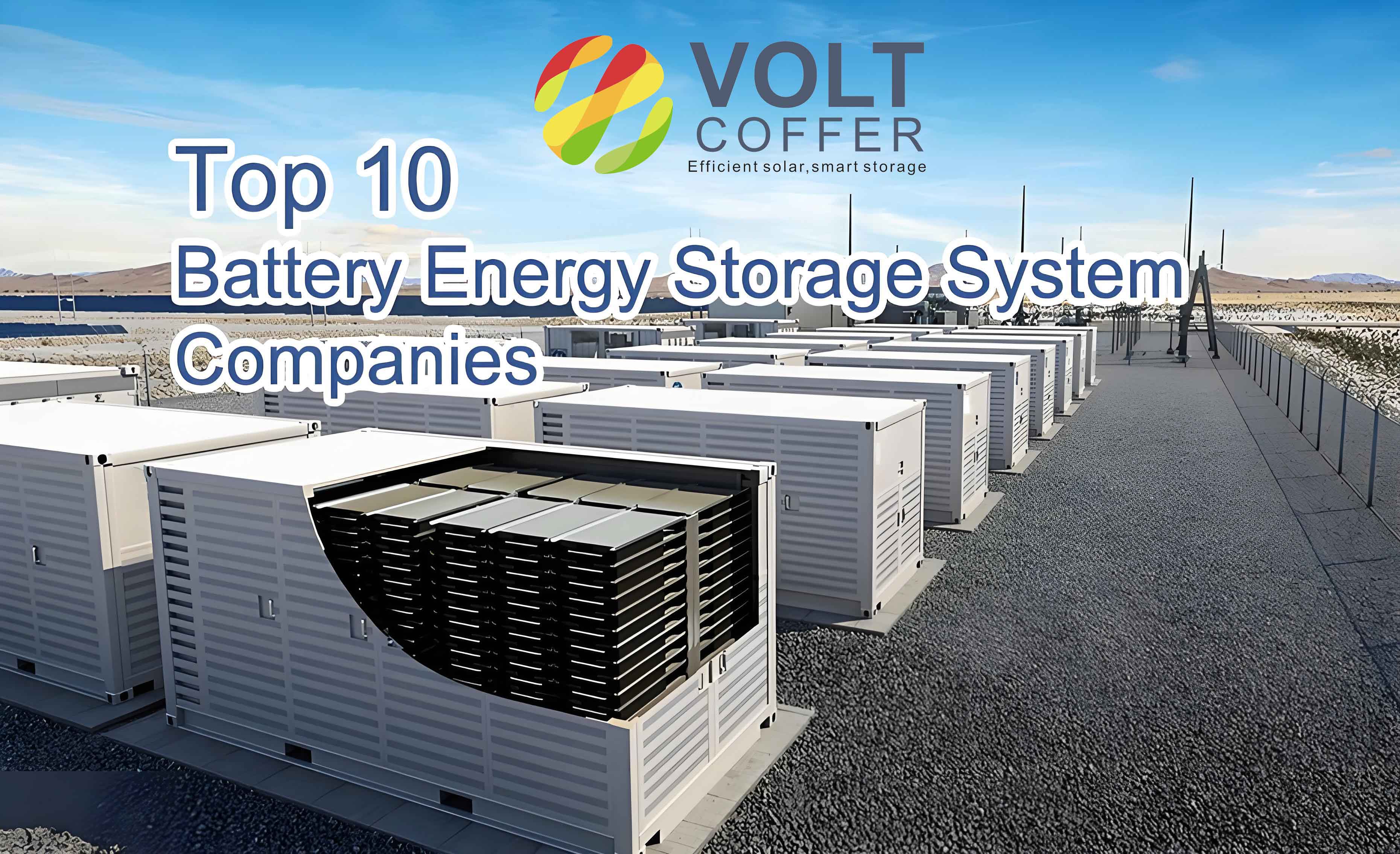
Thermal runaway propagation within a battery module is a major hazard. Once a single energy storage cell enters thermal runaway, the released heat can trigger neighboring cells. To suppress propagation, various cooling agents and extinguishing media have been tested. Our own experimental work compared the cooling effectiveness of medium-pressure water mist, Novec1230, heptafluoropropane, and hexafluoropropane on an 8.8 kWh LFP battery module. The results are presented in Table 2.
| Agent | Flame extinction time (s) | Peak temperature reduction (°C) | Reignition? |
|---|---|---|---|
| Medium-pressure water mist | 3 | 400 | No |
| Novec1230 | 8 | 150 | Yes |
| Heptafluoropropane | 6 | 120 | Yes |
| Hexafluoropropane | >30 | 80 | Yes |
The data clearly show that water mist provides superior cooling and prevents re-ignition, making it one of the most effective suppressants for large-format energy storage cell arrays. However, water-based systems introduce concerns of electrical conductivity and potential short circuits, necessitating careful design. Alternative approaches such as liquid nitrogen cooling have also shown promise in halting thermal propagation in battery packs.
Early detection and warning are critical for preventing catastrophic failures. Traditional smoke and heat detectors respond too slowly for lithium-ion energy storage cell fires, which can escalate from a single cell to a module-level fire in minutes. Modern approaches combine electrical signals (impedance, voltage, current), gas sensors (H₂, CO, VOCs), and optical imaging (visible and infrared) to achieve early detection. Table 3 categorizes the main early warning technologies.
| Method | Measured parameter | Advantage | Limitation |
|---|---|---|---|
| Electrical impedance spectroscopy (EIS) | Impedance at specific frequencies | Directly correlates with internal state; early detection 5 min before thermal runaway | Requires sophisticated hardware; sensitive to noise |
| Gas sensing | H₂, CO, CO₂, HF, etc. | Hydrogen detected 13 min before ignition in some studies | Cross-sensitivity; need for multi-gas fusion |
| AI-based image recognition | Visible/infrared images of vapor plumes | Ultra-fast (1 min after white mist); low cost | Limited to line-of-sight; requires training data |
| Data-model hybrid (CNN-BiGRU-Attention) | Voltage, current, temperature, acoustic | High accuracy (99.7%) | Computationally intensive |
A promising low-cost method uses single-frequency impedance measurement (e.g., at 1 Hz and 100 Hz) to estimate internal temperature of the energy storage cell. The relationship between impedance modulus and temperature can be expressed as:
$$|Z| = A \cdot \exp\left( \frac{E_a}{RT} \right)$$
where \(A\) is a pre-exponential factor, \(E_a\) is the activation energy, \(R\) is the gas constant, and \(T\) is the internal temperature. By monitoring \(|Z|\) over time, we can detect abnormal temperature rises that precede thermal runaway. In our laboratory, we have successfully demonstrated a multi-stage warning system that issues an alert at least 5 minutes before critical failure.
Thermal management of the entire energy storage system is another vital layer of safety. In a containerized LiBESS, thousands of energy storage cells are densely packed. The heat generated during operation must be efficiently removed to avoid hotspots and thermal imbalances. Air cooling (forced convection) is the most mature technique, but its effectiveness decreases at high C-rates. Liquid cooling and immersion cooling offer higher heat transfer coefficients. Table 4 compares typical thermal management methods.
| Method | Maximum temperature rise (0.5C) | Temperature uniformity (ΔT) | Cost | Maturity |
|---|---|---|---|---|
| Forced air cooling | ~10 °C | 5 °C | Low | Commercial |
| Liquid cold plate | ~5 °C | 2 °C | Medium | Commercial |
| Immersion cooling (oil) | ~3 °C | <1 °C | High | Prototype |
| Phase change material (PCM) + heat pipe | ~4 °C | 1.5 °C | High | Laboratory |
In a typical 5 MWh containerized station, we implemented an adaptive thermal management strategy based on the planned charging/discharging curve and real-time cell temperatures. The results showed that the energy storage cell temperature difference could be kept under 5 °C, and the air conditioner energy consumption was reduced by 15% compared to a fixed-setpoint strategy. The governing equation for heat transfer in a simplified cell module can be written as:
$$\rho c_p \frac{\partial T}{\partial t} = k \nabla^2 T + \dot{q}_{\text{gen}}$$
where \(\rho\) is density, \(c_p\) is specific heat, \(k\) is thermal conductivity, and \(\dot{q}_{\text{gen}}\) is the volumetric heat generation rate.
The ultimate safety solution for large-scale LiBESS is a multi-level prevention and control system. This concept integrates early warning detection, cluster-level suppression, compartment-level firefighting, and external emergency measures. For example, a two-level fire protection system proposed for LFP battery cabins uses gas-based (e.g., perfluorohexanone) suppression at the cluster level and water-based suppression at the cabin level. The activation logic follows the decision matrix shown in Table 5.
| Warning level | Trigger (e.g., H₂, CO, temperature) | Action |
|---|---|---|
| Level 1 (Pre-alarm) | H₂ > 200 ppm OR CO > 50 ppm | Sound alarm, notify operator |
| Level 2 (Fire alarm) | H₂ > 500 ppm AND temperature > 80 °C | Activate cluster gas suppression (delay 3 min) |
| Level 3 (Cabin fire) | Visible flame OR temperature > 150 °C | Activate cabin water spray system |
Such hierarchical strategies minimize collateral damage. In one of our projects, we deployed a “immersive” fire suppression system that floods the battery compartment with a specialized liquid agent (a perfluorohexanone micro-emulsion) upon detection of thermal runaway. The micro-emulsion droplets encapsulate the energy storage cell, providing both cooling and oxygen displacement, effectively stopping propagation.
Looking ahead, I believe the future of LiBESS safety lies in the integration of artificial intelligence with real-time monitoring and control. Deep learning models can analyze multi-sensor data (voltage, current, temperature, gas concentrations, acoustic emissions) to predict the state of health and remaining useful life of each energy storage cell. Combined with physics-based models, these AI systems can achieve early fault localization and adaptive response. For example, a CNN-BiGRU-Attention hybrid model we developed for fault detection achieved 99.7% accuracy in identifying abnormal energy storage cell behavior before thermal runaway.
Furthermore, emerging solid-state batteries and aqueous batteries promise inherently safer alternatives. However, until these technologies are commercially viable for utility-scale storage, the focus must remain on improving the safety of current lithium-ion systems through the multi-faceted technologies reviewed in this paper.
In conclusion, the safety of lithium-ion battery energy storage systems is a complex challenge that requires coordinated efforts across materials science, electrochemistry, thermal engineering, fire protection, and intelligent control. By optimizing the energy storage cell’s intrinsic materials, implementing robust thermal management, deploying multi-parameter early warning systems, and establishing hierarchical fire suppression strategies, we can significantly reduce the risk of catastrophic failures. Continued research and field validation are essential to build confidence in large-scale deployment of LiBESS for a sustainable energy future.