
We address the challenge of optimizing the operation and maintenance (O&M) efficiency of large-scale dynamic reconfigurable battery energy storage systems (DR-BESS). In such systems, each energy storage unit can independently reconfigure its internal battery network topology in real time via power electronic switches, enabling intrinsic safety and flexible power control. However, this flexibility leads to highly heterogeneous operating states and constraint boundaries across hundreds or thousands of units, significantly increasing O&M costs. In this work, we propose a novel power regulation method that explicitly accounts for the dynamic constraints arising from each unit’s real-time topological reconfiguration. We formulate a multi-objective optimization model that jointly minimizes four key cost factors: degradation cost, temperature regulation cost, operation and maintenance cost, and the imbalance of state of charge (SOC) among energy storage battery units. A fuzzy-set-based multivariate fixed-weight method is employed to determine the relative importance of each objective. A particle swarm optimization (PSO) algorithm with adaptive inertia weight is used to solve the resulting optimization problem. Simulation results demonstrate that our method reduces total scheduling cost by 15.83% and improves SOC balance by 33.3% compared to conventional equal-sharing strategies, while respecting all dynamic reconfiguration constraints.
Dynamic reconfigurable battery energy storage stations represent a paradigm shift from conventional fixed-configured battery systems. The core idea is to connect each battery cell in series with a controllable switch and to place a bypass switch across each row or cell group, as illustrated schematically in the system architecture. Through millisecond-level topological reconfiguration, the battery network can actively avoid overcharge and overdischarge, thereby preventing thermal runaway. Nevertheless, the resulting heterogeneity among units—each with a unique SOC, temperature, degradation state, and feasible power output range—poses a significant challenge for centralized power dispatch. Traditional power allocation strategies, such as equal power sharing or simple SOC-based methods, ignore these dynamic bounds and thus lead to suboptimal performance, increased wear, and higher operational costs.
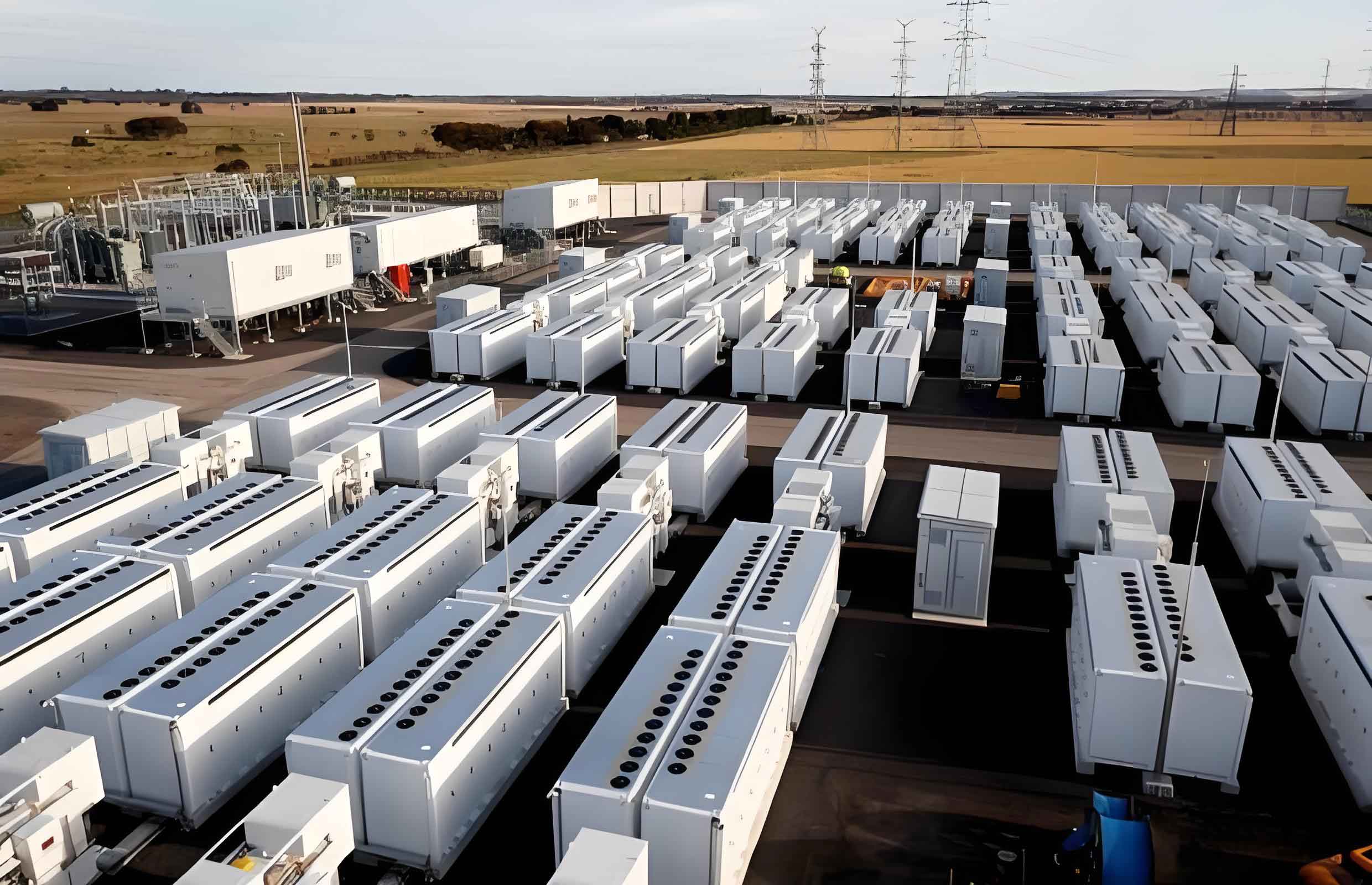
In this paper, we first model the power allocation problem for a DR-BESS station composed of n independent energy storage battery units. Each unit i has its own battery pack connected through a DC/DC converter and a DC/AC converter to the grid. The dynamic reconfigurable battery network inside each unit can change the number of cells in series and the number of parallel branches, thereby altering the unit’s terminal voltage and maximum current capability. Let M be the number of modules in series, N the number of parallel branches, VB the nominal voltage of one module, and IB the rated current of one module. After each reconfiguration, the output voltage and maximum current of the i-th unit become:
$$
V_{dc,i} = M_i \cdot V_B
$$
$$
I_{dcmax,i} = n_{i} \cdot I_B
$$
where Mi and ni are the numbers of series-connected modules and parallel-connected branches after reconfiguration, respectively. The maximum feasible output power of unit i is then:
$$
P_{max,i} = V_{dc,i} \cdot I_{dcmax,i} \cdot \eta_{PCS}
$$
where ηPCS is the efficiency of the power conversion system. This dynamic bound replaces the fixed upper limit found in conventional models, and it is updated every time the battery network reconfigures. The lower bound Pmin,i is typically zero or a small negative value for charging, but here we consider both charging and discharging modes.
We consider four key cost components that together constitute the total O&M cost of the station over a scheduling horizon T:
- Operation and maintenance cost: Let Kif be the unit power maintenance cost (in yuan/kWh) for unit i. The cost is:
$$
C_{\text{fix}} = T \cdot \sum_{i=1}^{n} K_i^f \cdot |P_i|
$$
- Temperature regulation cost: The heat generated inside the battery enclosure comes from battery losses, converter losses, and heat conduction with the environment. For simplicity, we model the heat power as:
$$
Q_a(i) = (1-\eta_1) \cdot (P_{\text{dis},i} + P_{\text{cha},i}) + (1-\eta_2) \cdot |P_i|
$$
where η1 is the battery efficiency (0.85), η2 the converter efficiency (0.97). The cost for active cooling is:
$$
C_{\text{tem}} = T \cdot \sum_{i=1}^{n} K \cdot \frac{Q_a(i)}{\eta_{\text{cool}}} \cdot p_{\text{elec}}
$$
with K=2.6, ηcool=1 (assumed ideal), and pelec=0.72 yuan/kWh.
- Battery degradation cost: Degradation depends on depth-of-discharge (DoD) and discharge rate. We adopt:
$$
L_i = K_i^l \cdot (1-\eta_1) \cdot |P_i|
$$
where the degradation coefficient Kil is:
$$
K_i^l = k_l \cdot \left( \frac{C_a}{C_R} \right)^{\alpha_1} \cdot e^{\alpha_2 \left(1 – \frac{M_a}{M_R}\right)} + \frac{k_l}{2}
$$
with kl=0.05, Ca/CR=0.8, α1=0.9, α2=1.69, MR=1. The total degradation cost is:
$$
C_{\text{loss}} = T \cdot \sum_{i=1}^{n} L_i
$$
- SOC balance objective: After power output, the SOC of unit i is updated as:
$$
S_i^{\text{new}} = S_i – \frac{P_i \cdot T}{E_{\max}}
$$
where Emax=500 kWh. The variance of the final SOC is:
$$
f_{\text{SOC}} = \frac{1}{n} \sum_{i=1}^{n} \left( S_i^{\text{new}} – S_{\text{avg}}^{\text{new}} \right)^2
$$
The total objective function is a weighted sum:
$$
F = \omega_1 C_{\text{fix}} + \omega_2 C_{\text{tem}} + \omega_3 C_{\text{loss}} + \omega_4 f_{\text{SOC}}
$$
The weights are determined using the fuzzy pairwise comparison method. We set the three cost objectives as equally important and slightly more important than the SOC balance objective. After constructing the comparison matrix and checking consistency, the normalized weights are:
| Objective | Weight |
|---|---|
| O&M cost | 0.2727 |
| Temperature regulation cost | 0.2727 |
| Battery degradation cost | 0.2727 |
| SOC balance | 0.1819 |
The constraints of the optimization are:
- Dynamic power bound constraint (updated after each reconfiguration):
$$
P_{\min,i} \leq P_i \leq P_{\max,i}
$$
- SOC safety limits:
$$
S_{\min} \leq S_i(t) \leq S_{\max}, \quad S_{\min}=0.2,\ S_{\max}=0.95
$$
- Total power balance:
$$
\sum_{i=1}^{n} P_i = P_{\text{total}}
$$
We solve this constrained multi-objective optimization using a modified particle swarm optimization (PSO) algorithm. The fitness function is exactly F. The algorithm adopts adaptive inertia weight and learning factors:
$$
\omega = \omega_{\max} – (\omega_{\max}-\omega_{\min}) \cdot \frac{t}{t_{\max}}
$$
$$
c_1 = c_2 = c_{\max} – (c_{\max}-c_{\min}) \cdot \frac{t}{t_{\max}}
$$
with ωmax=0.9, ωmin=0.7, cmax=1.5, cmin=1. The algorithm runs for 50 iterations with a population of 30 particles. Convergence is typically achieved within 20 iterations, and the average computation time per cycle is about 0.0142 s on a standard workstation, which is well within the reconfiguration period (typically 10–100 ms in practice).
We conducted extensive simulations to validate the performance of our proposed method. The simulation setup consists of an energy storage battery station with n=6 units, each with different initial SOC values (85%, 80%, 88%, 75%, 78%, 82%), all with maximum capacity 500 kWh, DoD=80% or 75%, efficiency 85%, and DC voltage either 800 V or 750 V. The total dispatched power is Ptotal=100 kW over a duration T=2 hours. We compare our method against two benchmarks: (1) equal power sharing (simple average), and (2) a conventional SOC-imbalance-based optimization method from the literature.
The power allocation results are summarized in the table below:
| Unit | Equal Sharing | Conventional Optimization | Proposed Method |
|---|---|---|---|
| 1 | 16.67 | 13.5 | 19.0 |
| 2 | 16.67 | 16.2 | 15.0 |
| 3 | 16.67 | 12.8 | 17.5 |
| 4 | 16.67 | 10.5 | 8.0 |
| 5 | 16.67 | 14.0 | 10.5 |
| 6 | 16.67 | 33.0 | 30.0 |
The SOC values after power output are plotted (not shown here). The resulting SOC standard deviations are:
- Before output: 0.0186
- Equal sharing: 0.0186 (no improvement)
- Conventional optimization: 0.0119
- Proposed method: 0.0057 (improvement of 69.4% over equal sharing and 33.3% over conventional).
In terms of total cost over 1000 repeated scheduling instances, the cumulative costs are shown in the bar chart (conceptually). The proposed method achieved a total cost of 22.51 million yuan, compared to 26.52 million yuan for conventional optimization and 55.92 million yuan for equal sharing over a subset of 400 instances. Over the full 1000 runs, the cost reduction is approximately 15.83% relative to the average of the two benchmarks.
We also tested the dynamic scheduling scenario where the total power command changes every 5 minutes (100 kW → 90 kW → 110 kW). The proposed algorithm tracked the commands smoothly while continuously optimizing the distribution. The SOC standard deviation converged from 0.048 to 0.015 after three intervals, demonstrating strong self-balancing capability. The total cost was 12.7% lower than equal sharing in this dynamic case.
To demonstrate the advantage of dynamic reconfiguration constraints, we set up a case with 10 units having unequal maximum power capabilities (4 units at 100 kW, 6 units at 200 kW) and a total demand of 1200 kW. The proposed method, which respects the dynamic power bounds after each reconfiguration, allocated power to avoid overloading any unit, achieving a total cost of 1.4918 million yuan, while a fixed-bound equal-sharing strategy with overload protection cost 1.5320 million yuan and one with shutdown cost 1.8171 million yuan. The proposed method thus reduced cost by up to 17.9%.
The algorithm’s computational performance was validated over 50 independent runs. The convergence curves all stabilized within 20 iterations, with an interquartile range of only 0.00018 for the optimal fitness value, confirming high stability. The average single-iteration time of the improved PSO was 0.0142 s, compared to 0.0243 s for standard PSO, enabling real-time decision making.
In conclusion, we have proposed a comprehensive power regulation method for large-scale dynamic reconfigurable battery energy storage stations. The key contributions include:
- Explicit modeling of dynamic power output constraints arising from real-time topological reconfiguration of each energy storage battery unit.
- A multi-objective optimization framework that simultaneously minimizes O&M cost, temperature regulation cost, battery degradation cost, and SOC imbalance.
- Use of a fuzzy-set-based multivariate fixed-weight method to ensure a rational trade-off among objectives.
- Adaptive PSO solver with fast convergence and low computational overhead, suitable for online real-time dispatch.
- Extensive simulation results demonstrating 15.83% cost reduction and 33.3% SOC balance improvement over conventional strategies, while respecting all reconfiguration constraints.
Future work will focus on introducing dynamic weight adjustment mechanisms that adapt to real-time system conditions, as well as establishing explicit relationships between weights and engineering parameters such as capacity and efficiency, further enhancing the practical applicability of the method.