
The pervasive integration of lithium-ion batteries into modern technology, from electric vehicles to grid-scale energy storage systems, is a testament to their superior energy density, long cycle life, and reliability.
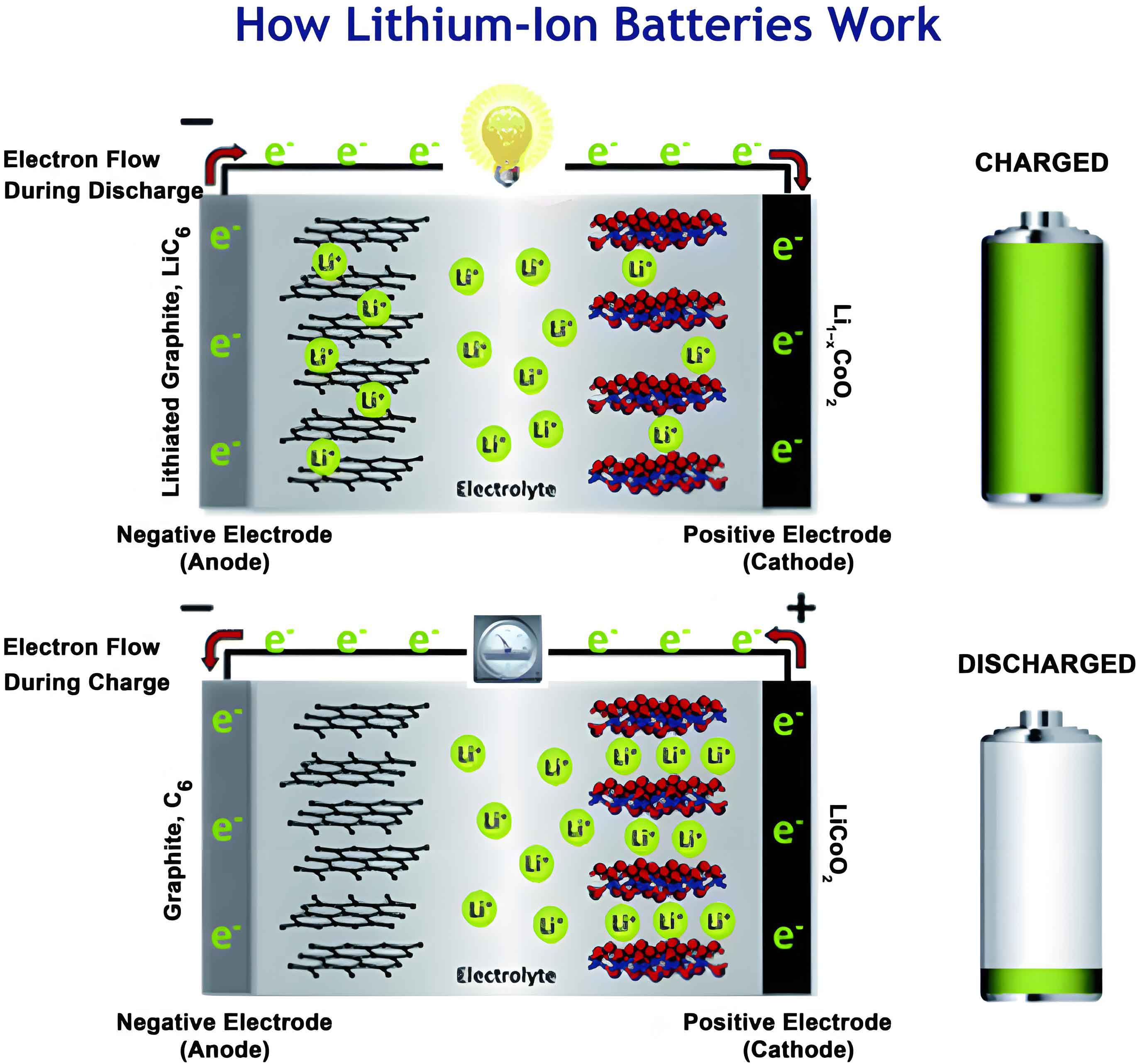
However, this widespread adoption brings into sharp focus the critical safety challenge of thermal runaway. Under abusive conditions such as overcharge, external heating, or internal short circuits, a li ion battery can undergo a catastrophic failure sequence. This involves exothermic decomposition of cell components, rapid gas generation, jetting of flammable electrolytes, and ultimately, fire or explosion. The mitigation of these hazardous events is paramount, necessitating the development of specialized fire extinguishing agents that can effectively intervene in the complex physicochemical processes of a li ion battery thermal runaway.
Traditional fire suppression methods often prove inadequate for lithium-ion battery fires. While agents like ABC dry powder, carbon dioxide (CO₂), or even clean agents like HFC-227ea (heptafluoropropane) can extinguish the initial flame, they frequently fail to address the root cause: the ongoing exothermic reactions within the failed li ion battery. This leads to a high probability of reignition as hot cell materials continue to decompose and emit fresh fuel. Water, with its excellent cooling capacity, seems promising but poses a significant electrical conductivity risk, potentially causing short circuits in adjacent undamaged cells within a module or pack. Therefore, an ideal suppressant for a li ion battery must combine several key properties: rapid flame knockdown, deep cooling capability to quench internal reactions, chemical interference with decomposition pathways, and low electrical conductivity for safe application on energized systems.
This work explores the formulation and efficacy of a novel microemulsion system designed specifically for suppressing thermal runaway in li ion batteries. The approach centers on dodecafluoro-2-methylpentan-3-one (C₆F₁₂O, commonly known as FK-5-1-12 or Novec 1230), a clean fire suppression agent known for its excellent flame-extinguishing properties and low environmental impact. However, its cooling capacity is limited. To enhance this, we encapsulate water within a continuous phase of C₆F₁₂O, creating a water-in-oil (W/O) microemulsion. This is achieved using a fluorocarbon surfactant, sodium perfluorooctanoate, and a co-surfactant, perfluorobutanol. The resulting microemulsion aims to synergistically combine the rapid fire suppression of C₆F₁₂O with the superior heat absorption of water, while the microstructure minimizes the bulk electrical conductivity, addressing a major drawback of plain water mist.
1. Experimental Methodology: Formulation and Testing
The core of this investigation lies in creating stable microemulsions and rigorously testing their performance against li ion battery thermal runaway. A commercial 50 Ah LiFePO₄ (LFP) prismatic cell was selected for all experiments due to its widespread use in energy storage and electric vehicles. All cells were conditioned to 100% State of Charge (SOC) prior to testing.
1.1 Microemulsion Preparation and Characterization
Microemulsions are thermodynamically stable, isotropic dispersions of two immiscible liquids (here, water and C₆F₁₂O) stabilized by an interfacial film of surfactant molecules. The formulation process was systematic:
- Surfactant System: Sodium perfluorooctanoate (C₈F₁₅O₂Na) was chosen as the primary fluorosurfactant due to its affinity for both fluorocarbon and hydrocarbon/water interfaces. Perfluorobutanol (C₄H₃F₇O) was employed as a co-surfactant to improve flexibility at the interface and facilitate the formation of the W/O microstructure. They were pre-mixed at a fixed mass ratio of 2:1.
- Oil Phase Preparation: A calculated amount of the surfactant/co-surfactant blend was dissolved in C₆F₁₂O under constant magnetic stirring for 10 minutes to ensure homogeneity.
- Microemulsification: Deionized water was added dropwise to the oil-surfactant mixture. After each addition, the system was subjected to ultrasonic processing for 3 minutes to facilitate the formation of fine water droplets encapsulated by the surfactant film within the C₆F₁₂O continuum.
Three distinct microemulsion compositions, labeled PM1, PM2, and PM3, were prepared by varying the mass ratios of C₆F₁₂O, water, and the surfactant blend. A critical safety parameter for any liquid applied to a li ion battery system is electrical conductivity. High conductivity can lead to creeping currents and short circuits between cell terminals or busbars. The conductivity of each formulation was measured.
| Microemulsion ID | C₆F₁₂O (wt%) | Water (wt%) | Surfactant Blend (wt%) | Electrical Conductivity (µS/cm) |
|---|---|---|---|---|
| PM1 | 61.2 | 26.5 | 12.3 | 3.92 ± 0.15 |
| PM2 | 66.7 | 20.0 | 13.3 | 3.89 ± 0.20 |
| PM3 | 73.2 | 12.2 | 14.6 | 3.75 ± 0.16 |
The data shows that all microemulsions possess extremely low conductivity, several orders of magnitude lower than that of pure water (~380 µS/cm). This confirms that the water phase is effectively encapsulated, preventing the formation of a conductive network, thereby making these agents much safer for use on electrically live li ion battery systems.
1.2 Thermal Runaway Induction and Suppression Protocol
A dedicated test chamber was constructed for safe experimentation. A single LFP cell was placed inside a module box equipped with a controllable electric heater on one side to induce thermal runaway. An array of K-type thermocouples (T1 to T7) monitored temperatures at critical locations: on the heated surface, the opposite surface, and the sides. A fire suppression system with a high-pressure (5.5 MPa) fine mist nozzle was mounted above the cell.
The experimental sequence was as follows:
- Heating Phase: The external heater was activated to gradually heat the li ion battery.
- Thermal Runaway Onset: Heating continued until the cell’s safety vent ruptured, releasing hot gas and ejecta. A pilot igniter was used to ignite the ejected gases, creating a stable flame.
- Suppression Trigger: The heater was turned off. Suppression was initiated automatically when any of the key thermocouple readings (T1, T2, T3) exceeded 150°C with a temperature rise rate >1°C/s, indicating the progression into vigorous thermal runaway.
- Agent Discharge: A fixed mass (1 kg) of the test agent was discharged through the nozzle onto the burning li ion battery.
The following test matrix was executed, with each condition repeated three times for statistical significance.
| Test # | Suppression Agent | Mass (kg) | Pressure (MPa) | Conductivity (µS/cm) |
|---|---|---|---|---|
| #1 | No Agent (Control) | – | – | – |
| #2 | Pure C₆F₁₂O | 1 | 5.5 | ~0 |
| #3 | Water (for reference) | 1 | 5.5 | 380 ± 2.4 |
| #4 | Microemulsion PM1 | 1 | 5.5 | 3.92 ± 0.15 |
| #5 | Microemulsion PM2 | 1 | 5.5 | 3.89 ± 0.20 |
| #6 | Microemulsion PM3 | 1 | 5.5 | 3.75 ± 0.16 |
Data collected included high-speed video, full temperature profiles, and real-time gas analysis (focusing on CO and CO₂ concentrations) in the exhaust stream.
2. Results and Discussion: Performance Metrics
The effectiveness of a suppressant for a li ion battery fire must be evaluated on multiple fronts: flame knockdown time, cooling performance, prevention of reignition, and mitigation of toxic gas production.
2.1 Thermal Response and Cooling Efficacy
The thermal runaway and suppression process can be delineated into four characteristic stages for analysis:
- Gas Release: Initial venting and ignition.
- Stable Combustion: Burning of ejected gases and electrolytes.
- Vigorous Combustion/Thermal Runaway: Rapid temperature escalation due to intense internal cell reactions.
- Suppression & Aftermath: Period during and after agent application.
The temperature on the long face of the cell (average of T2, T3, T4, denoted as $\bar{T}_{2,3,4}$) represents the overall thermal state. Figure 1 (data plot described) shows the evolution of $\bar{T}_{2,3,4}$ for all test conditions. Upon agent discharge, all suppressants caused an immediate temperature drop. However, the minimum temperature reached and the subsequent temperature rise (indicative of residual internal reactions) varied significantly.
The key thermal metrics are summarized below:
| Parameter | No Agent | Pure C₆F₁₂O | Water | PM1 | PM2 | PM3 |
|---|---|---|---|---|---|---|
| Peak $\bar{T}_{2,3,4}$ (°C) | 378.5 ± 4.4 | 346.5 ± 5.3 | 314.6 ± 3.2 | 296.5 ± 1.5 | 310.8 ± 4.6 | 337.3 ± 5.0 |
| $\Delta T_a$: Reduction vs. Control (°C) | – | -32.0 ± 3.0 | -63.9 ± 3.0 | -82.0 ± 4.1 | -67.8 ± 1.6 | -41.3 ± 2.4 |
| $\Delta T_b$: Post-suppression Temp. Rise (°C)* | N/A | 200.8 ± 7.3 | 215.4 ± 2.7 | 163.6 ± 2.5 | 172.3 ± 4.6 | 176.1 ± 4.1 |
*$\Delta T_b$ is the temperature increase from the point where $\bar{T}_{2,3,4}$ begins to rise again after the initial agent-induced cooling to its subsequent peak. A smaller $\Delta T_b$ indicates better suppression of internal reactions.
The analysis reveals several critical insights:
- Peak Temperature Suppression: Microemulsion PM1 achieved the lowest peak surface temperature, reducing it by 82.0°C compared to the control. This surpasses both pure C₆F₁₂O (-32.0°C) and water (-63.9°C). The ranking is PM1 > PM2 > Water > PM3 > C₆F₁₂O. This demonstrates a clear synergistic effect when water is microencapsulated within C₆F₁₂O.
- Inhibition of Internal Reactions: The parameter $\Delta T_b$ is crucial for assessing the lingering threat of reignition. A smaller $\Delta T_b$ means the agent more effectively quenched the internal exothermic reactions of the failed li ion battery. Here, PM1 again performed best (163.6°C), followed by PM2 and PM3. Notably, while water achieved a lower peak temperature than pure C₆F₁₂O, its $\Delta T_b$ was higher, indicating that C₆F₁₂O is more effective at chemically interrupting the decomposition chain reactions inside the li ion battery. The microemulsions leverage both mechanisms.
- Instantaneous Cooling Power: The temperature on the side of the cell directly exposed to the spray (T5) showcases the instantaneous cooling capacity. The maximum cooling rate followed the order: Water > PM1 > PM2 > PM3 > C₆F₁₂O, correlating directly with the water content of the agent. PM1 reduced the side peak temperature by 147.5°C relative to the control case.
The superior performance of the PM1 microemulsion can be attributed to a sequential multi-mode action: First, the continuous C₆F₁₂O phase rapidly vaporizes, extinguishing the flame and creating an inert atmosphere. Simultaneously, the fine water droplets, upon contacting the hot cell surfaces, undergo intense vaporization, absorbing a massive amount of latent heat ($\Delta H_{vap} \approx 2260 \text{ kJ/kg}$). This rapid cooling quenches the surface and, through thermal conduction, mitigates reactions deeper within the li ion battery jelly roll. Furthermore, the C₆F₁₂O component, now in closer contact with the cooled cell (as the flame plume is suppressed), can more effectively interfere with free-radical reactions in the gas phase and possibly on heated solid surfaces.
2.2 Toxic Gas Production and Overall Hazard Mitigation
Suppressing a li ion battery fire is not only about stopping the flame but also about managing the release of toxic gases, primarily carbon monoxide (CO) and carbon dioxide (CO₂). The real-time concentration profiles of these gases were analyzed.
An important and potentially adverse finding was that the use of pure C₆F₁₂O led to a significant increase in the volume fraction of CO compared to the unsuppressed control fire. This is hypothesized to occur through two pathways: 1) The suppression of the flame leads to incomplete combustion of carbonaceous gases and electrolytes, increasing CO yield. 2) At high temperatures (>700°C), C₆F₁₂O itself can undergo thermal decomposition, potentially forming CO as a product:
$$ \text{C}_6\text{F}_{12}\text{O} + \text{Heat} \rightarrow \text{Fragments (CF}_x\text{, CF}_x\text{O)} + \text{CO} + \ldots $$
In contrast, the microemulsions, particularly PM1 and PM2, generated less CO than pure C₆F₁₂O, though still more than water alone, due to their contained C₆F₁₂O fraction. All suppressants reduced the total yield and peak concentration of CO₂, indicating a curtailment of the overall combustion and decomposition processes within the failing li ion battery.
To quantitatively assess the life safety hazard from gas toxicity, the Fractional Effective Dose (FED) model from ISO 13571 was employed. The FED sums the cumulative toxic effects of major asphyxiants (CO, HCN) over the exposure time, with CO₂ acting as a synergistic multiplier by increasing respiration rate. The model is given by:
$$ \text{XFED} = \sum_{t_1}^{t_2} \frac{\phi_{CO}}{V_{CO_2} \cdot 35{,}000} \Delta t + \sum_{t_1}^{t_2} \frac{\phi_{HCN}}{V_{CO_2}^{1.2} \cdot 2.36 \times 10^6} \Delta t $$
where $\phi_i$ is the volume fraction of gas $i$ (ppm), $\Delta t$ is the time increment (minutes), and $V_{CO_2}$ is a CO₂-induced hyperventilation factor:
$$ V_{CO_2} = \exp\left(\frac{[CO_2]}{5}\right) $$
Here, $[CO_2]$ is the percent volume concentration of CO₂. An XFED value of 1.0 is estimated to be lethal to 50% of exposed individuals.
Calculating the XFED over the test duration for each condition yielded the following comparative risk assessment:
| Suppression Agent | Maximum XFED Value | Relative Change vs. Pure C₆F₁₂O | Notes |
|---|---|---|---|
| No Agent (Control) | 0.0694 | N/A | Baseline toxicity from the li ion battery fire itself. |
| Pure C₆F₁₂O | 0.1450 | 0% (Reference) | Increased CO production nearly doubles the toxic hazard. |
| Water | ~0.07* | ~ -52% | Toxicity primarily from fire products, similar to control. |
| Microemulsion PM1 | 0.0718 | -50.5% | Effectively mitigates the added toxicity of C₆F₁₂O. |
| Microemulsion PM2 | 0.0917 | -36.8% | Substantial reduction, but less effective than PM1. |
| Microemulsion PM3 | 0.1088 | -25.0% | Moderate reduction in added toxicity. |
*Estimated from trend data.
This analysis reveals a critical trade-off. While pure C₆F₁₂O is an effective flame suppressant for a li ion battery, it can exacerbate the toxicity hazard by increasing CO generation. The microemulsion formulation, especially PM1, successfully decouples this issue. It retains the excellent fire suppression and chemical inhibition properties of C₆F₁₂O while leveraging the cooling power of water to lower the system temperature, thereby reducing the thermal decomposition of both battery components and the C₆F₁₂O itself. Consequently, the XFED for PM1 is reduced by 50.5% compared to pure C₆F₁₂O and is nearly equivalent to the baseline toxicity of the unsuppressed fire, representing a major safety advancement.
3. Theoretical Modeling and Mechanistic Insights
The observed performance can be framed within theoretical models of suppression. The extinguishment of a li ion battery fire involves breaking the fire tetrahedron: heat, fuel, oxygen, and the chemical chain reaction.
1. Cooling Theory (Heat Removal): The dominant cooling mechanism for the microemulsion is the vaporization of water. The heat absorbed ($Q_{cool}$) can be modeled as:
$$ Q_{cool} = m_w [C_{p,w} \Delta T_{w} + \Delta H_{vap}] + m_{FK} [C_{p,FK} \Delta T_{FK} + \Delta H_{vap,FK}] $$
where $m$ is mass, $C_p$ is specific heat capacity, $\Delta T$ is temperature change, and $\Delta H_{vap}$ is latent heat of vaporization. For water, $\Delta H_{vap}$ (~2260 kJ/kg) is an order of magnitude larger than that of C₆F₁₂O (~88 kJ/kg). This explains why even a modest fraction of microencapsulated water (26.5% in PM1) provides a dramatic cooling advantage over pure C₆F₁₂O, more effectively removing heat from the li ion battery casing and contents.
2. Radical Interception Theory (Chemical Inhibition): C₆F₁₂O operates as a chemical suppressant by intercepting free radicals (H•, OH•, O•) essential for flame propagation. The overall inhibition reaction can be simplified as:
$$ \text{C}_6\text{F}_{12}\text{O} + \text{OH}^\bullet / \text{H}^\bullet \rightarrow \text{Stable Products} (\text{e.g., HF, COF}_2) + \text{Less Reactive Radicals} $$
The efficiency of this process is temperature-dependent. The microemulsion’s superior cooling brings the hot fuel-rich zone around the failing li ion battery to a temperature where C₆F₁₂O’s radical scavenging efficiency is higher, and its own thermal decomposition is minimized.
3. Microemulsion Stability and Delivery: The stability of the W/O microstructure is governed by the interplay of interfacial tension and entropy. The free energy change for microemulsion formation is:
$$ \Delta G_f = \gamma \Delta A – T \Delta S $$
where $\gamma$ is the interfacial tension, $\Delta A$ is the change in interfacial area, $T$ is temperature, and $\Delta S$ is the change in entropy. The surfactant blend reduces $\gamma$ to near zero, making the $\Delta S$ term (which is large and positive due to dispersion of small droplets) dominant, ensuring spontaneous formation and thermal stability. This stable nanostructure is key to maintaining low conductivity and ensuring both agent components arrive at the fire zone intact.
4. Conclusion and Implications for Li Ion Battery Safety
This study successfully developed and validated a novel water-in-C₆F₁₂O microemulsion as a highly effective suppression agent for lithium-ion battery thermal runaway. The core achievement is the synergistic combination of the radical-inhibiting, rapid-flame-knockdown properties of C₆F₁₂O with the unparalleled latent heat cooling capacity of water, all while encapsulating the water to maintain a very low electrical conductivity suitable for use on energized li ion battery systems.
Key findings include:
- The microemulsion formulation PM1 (61.2% C₆F₁₂O, 26.5% Water, 12.3% Surfactant) demonstrated the best overall performance. It reduced the peak surface temperature of the li ion battery by 82.0°C and the side temperature by 147.5°C compared to an unsuppressed fire, figures superior to either pure component alone.
- The microemulsion effectively curtailed the post-suppression temperature rise ($\Delta T_b$), indicating a deeper suppression of internal exothermic reactions within the li ion battery, thereby significantly lowering the risk of reignition.
- A critical safety benefit was the mitigation of toxic gas hazard. While pure C₆F₁₂O increased the CO-based toxic threat (XFED) by approximately 109%, the PM1 microemulsion reduced this added toxicity by 50.5%, bringing the overall hazard level back to near that of the baseline fire.
- The extremely low electrical conductivity (below 4 µS/cm) of all microemulsion formulations addresses a major practical barrier for deploying liquid suppressants on large-scale li ion battery energy storage systems (BESS) or electric vehicle battery packs.
The implications of this work are significant for the design of next-generation fire protection systems for li ion battery applications. It provides a template for engineering multi-functional suppressants that target the unique multi-stage failure process of a li ion battery. Future work should focus on optimizing the surfactant system for cost and environmental impact, testing the microemulsion on larger module or pack-level li ion battery fires, and investigating its long-term stability and compatibility with system materials. By addressing the dual challenges of effective thermal runaway suppression and minimal added toxicity, this microemulsion strategy represents a promising direction for enhancing the safety paradigm of ubiquitous li ion battery technology.