
According to recent statistics from the International Energy Agency, fossil energy still accounts for over 80% of global consumption, with annual carbon dioxide emissions reaching 36.4 billion tons, severely exacerbating ecological and environmental issues. Accelerating the development of renewable energy has become a key pathway to address energy security and climate change. Wind power, as a crucial green energy source, possesses abundant resources, wide distribution, and low cost. However, the inherent intermittency and uncertainty of wind energy cause grid fluctuations, power quality degradation, and wind curtailment, restricting large-scale consumption and stable output. Establishing an efficient wind power energy storage system has become a critical means to ensure wind power integration, grid safety, and improve wind energy utilization efficiency. The energy storage battery plays an essential role in smoothing wind power output, peak shaving, frequency regulation, and improving overall operational efficiency and economy.
In this paper, I systematically review the development and applicability of traditional battery technologies for wind power energy storage, analyze the application status of typical wind farm energy storage systems domestically and internationally, identify key bottlenecks faced by various batteries, and discuss future development directions and trends. Furthermore, integrating the operational characteristics of wind farms, I explore the feasibility and development trends of emerging energy storage technologies, providing technical pathways for constructing efficient and stable wind power energy storage systems to support the realization of the dual-carbon goals.
1 Characteristics of Wind Power and Its Energy Storage Needs
1.1 Wind Power Characteristics
Wind power converts wind energy into electricity. It is the most mature, easily accessible, low-cost, and highly potential renewable energy conversion technology after hydropower. Wind farms typically consist of multiple wind turbines arranged sequentially. When wind drives the blades to rotate, the hub and gearbox drive the generator to convert wind energy into electricity, which is then connected to the grid. Wind farms are generally deployed in plateaus, coastal areas, islands, and offshore regions. The turbine layout is optimized according to prevailing wind direction and terrain conditions to minimize wake effects.
Wind power exhibits natural volatility and unpredictability, making it difficult to meet grid connection requirements steadily. It can cause grid frequency fluctuations, power quality degradation, and even wind energy curtailment. Therefore, developing energy storage technologies adapted to distributed wind power systems is a key path to improving wind energy utilization and ensuring grid safety.
1.2 Current Status of Wind Power Development
In recent years, driven by global attention to energy security, environmental governance, and climate change, the wind power industry has entered a rapid development phase. According to the Global Wind Report 2025 by the Global Wind Energy Council, by the end of 2024, total global installed wind power capacity reached 1,148 GW, with an annual addition of 117 GW and a growth rate of 10.19%. China, the United States, Germany, India, and Brazil ranked among the top five. China has abundant wind energy resources. In 2024, its cumulative installed wind power capacity reached 442 GW, accounting for over 40% of the global total, with annual wind power generation reaching 991.6 billion kWh, a year-on-year increase of 16%. However, wind curtailment remains a global challenge. In 2024, the wind curtailment rates in Xinjiang, Tibet, and Gansu in China were 18.3%, 17.0%, and 16.9%, respectively. In Europe, Greece, the United Kingdom, and Ireland had curtailment rates of 10%, 9%, and 7%, respectively. Improving wind energy utilization is a global issue.
1.3 Energy Storage Technologies for Wind Power
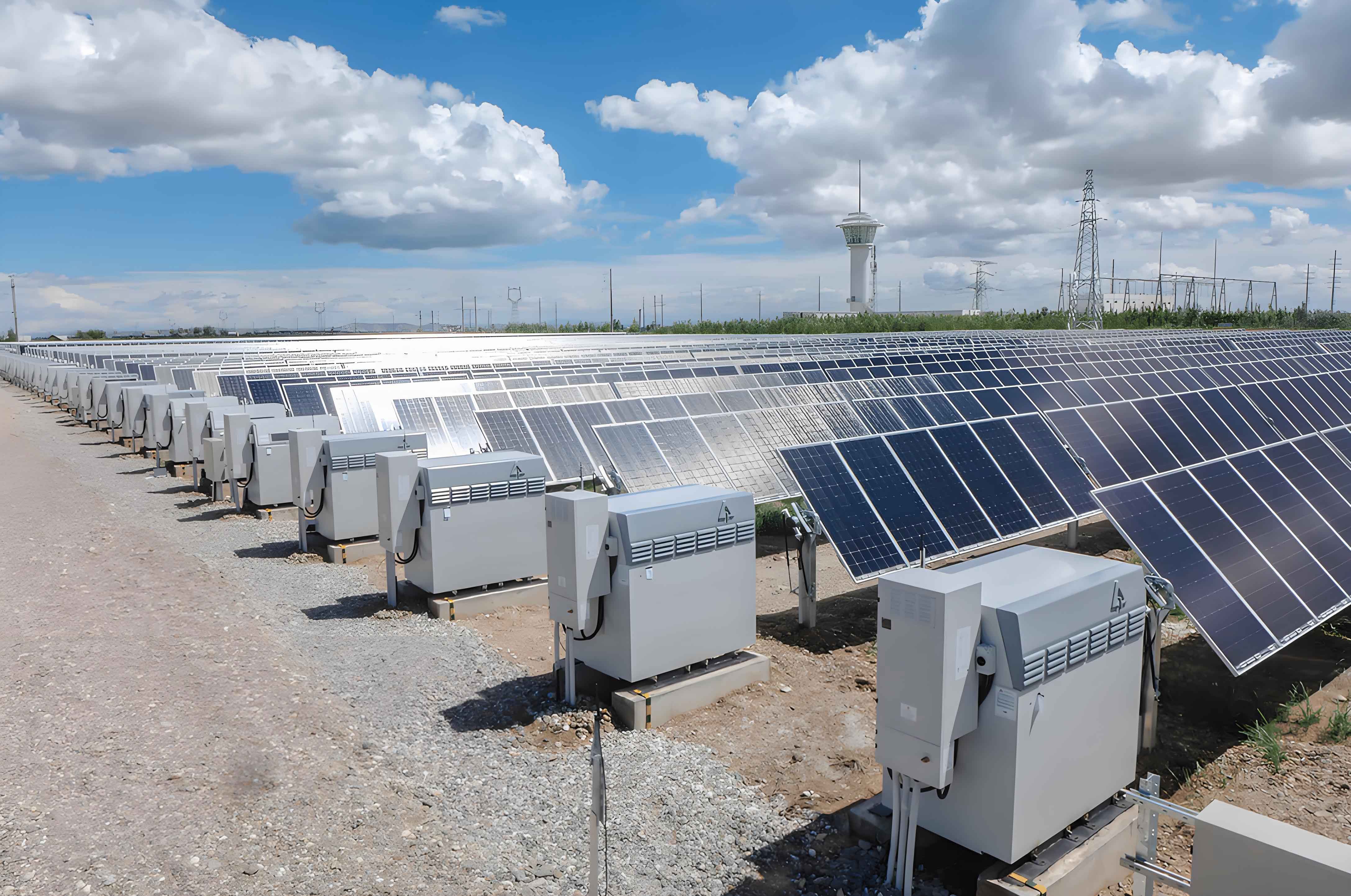
Energy storage technology is widely considered the key solution to mitigate wind power volatility and curtailment. By regulating wind power output through energy storage systems, grid fluctuations can be effectively suppressed, and power quality improved. An ideal energy storage battery system should possess fast response capability and capacity regulation functionality to meet dynamic load demands under varying wind power output. Currently, energy storage technologies used in wind farms are mainly divided into physical energy storage and electrochemical energy storage. The former includes pumped hydro storage, flywheel energy storage, and compressed air energy storage, offering long life and high capacity for large-scale applications. The latter, represented by lead-acid batteries and lithium-ion batteries, features fast response (less than 100 ms), flexible deployment, and high energy density, showing broad application prospects in the wind power sector.
2 Demand Analysis and Application of Energy Storage Battery for Wind Farms
2.1 Demand Analysis of Battery Storage in Wind Farms
The energy storage system greatly alleviates the negative impacts of wind power instability on the grid and power quality. The battery energy storage technology can flexibly overcome the low-quality power transmission caused by wind instability. On the generation side, battery storage can smooth intermittent power and participate in frequency regulation, enabling continuous and stable power output from wind energy. On the grid transmission and distribution side, it can improve power quality and delay capacity upgrade needs. On the user side, it enhances power supply reliability. The following table summarizes the key performance parameters and economic indicators of different electrochemical energy storage technologies used in wind farms.
| Battery Type | Energy Density (Wh/kg) | Energy Efficiency (%) | Cycle Life (cycles) | Storage Cost (RMB/kWh) | Response Time |
|---|---|---|---|---|---|
| Lead-Acid | <50 | 75–85 | 500–1,200 | 800–1,000 | ms |
| Lithium-ion | <200 | 90–94 | 1,000–10,000 | 2,500–4,500 | ms |
| Sodium-Sulfur (NaS) | <240 | 75–86 | 2,500–4,000 | 2,000–3,000 | ms |
| All-Vanadium Redox Flow | <30 | 70–85 | 12,000–18,000 | 4,500–6,000 | ms |
2.2 Detailed Analysis of Traditional Energy Storage Battery Technologies
2.2.1 Lead-acid Battery
Lead-acid batteries are mature, economical, and safe. They occupy a significant share in small-scale wind power systems. The structure consists of lead dioxide (PbO₂) positive electrode, sponge lead (Pb) negative electrode, and sulfuric acid (H₂SO₄) electrolyte. The discharge and charge reactions are as follows:
$$ \text{PbO}_2 + \text{Pb} + 2\text{H}_2\text{SO}_4 \rightleftharpoons 2\text{PbSO}_4 + 2\text{H}_2\text{O} $$
During discharge, both electrodes convert to lead sulfate, releasing electrical energy. During charging, the reaction reverses. The advantages include low cost and high safety, but limitations are short cycle life (500–1,200 cycles), low energy density (below 50 Wh/kg), and environmental pollution from lead. Recent improvements include using reticulated vitreous carbon as a substrate for lead plating to reduce weight and improve active material utilization. The development of lead-carbon batteries by introducing activated carbon significantly enhances rate performance and cycle life. For example, using polyurethane foam-derived foam lead grids can increase energy density to 43.5 Wh/kg, about 14.5% higher than conventional lead-acid batteries. Despite progress, the need for higher energy density and environmental friendliness remains.
2.2.2 Lithium-ion Battery
Lithium-ion batteries have become the most mature electrochemical storage technology in wind power systems due to high energy density (150–200 Wh/kg), long cycle life (1,000–10,000 cycles), high efficiency (>90%), and fast response. The basic reaction mechanism involves intercalation of lithium ions between the positive and negative electrodes:
$$ \text{LiCoO}_2 + 6\text{C} \rightleftharpoons \text{Li}_{1-x}\text{CoO}_2 + \text{Li}_x\text{C}_6 $$
In wind farms, lithium-ion batteries have been deployed in numerous demonstration projects. For instance, a 30 MW wind farm in Hawaii is paired with a 1.5 MW/1 MWh lithium-ion system, and a 21 MW wind farm with a 10 MW/20 MWh system. These systems smooth wind power fluctuations and improve grid stability. However, key challenges include safety concerns (flammable organic electrolytes, thermal runaway risk) and high cost due to lithium resource dependence. Research focuses on solid-state batteries, low-cost material alternatives, and AI-based battery management systems for accurate state-of-charge (SOC), state-of-health (SOH), and remaining useful life (RUL) prediction.
2.2.3 Sodium-Sulfur Battery
The sodium-sulfur (NaS) battery operates at high temperature (around 350°C) using molten sodium (Na) as negative electrode, molten sulfur (S) as positive electrode, and beta-alumina ceramic as solid electrolyte. The discharge reaction is:
$$ 2\text{Na} + x\text{S} \rightarrow \text{Na}_2\text{S}_x $$
Advantages include high energy density (up to 248 Wh/kg), long life (>15 years), and high material recyclability (99%). A notable example is the 51 MW Futamata wind farm in Japan, deploying 34 MW of NaS storage, reducing output fluctuation to within 2%. However, the high operating temperature poses safety risks: if the ceramic separator breaks, molten sodium and sulfur react exothermically (enthalpy -420 kJ/mol), causing thermal runaway. Also, corrosive molten sulfur damages electrodes and housing. Current research aims to lower operating temperature to room temperature. Room-temperature NaS batteries face challenges like polysulfide shuttling and sodium dendrite growth. Using high-concentration NaTFSI electrolyte (2 mol/L) can suppress polysulfide dissolution and form a stable SEI layer, improving reversible capacity from 680 mAh/g to 907 mAh/g at 0.1C after 100 cycles.
2.2.4 All-Vanadium Redox Flow Battery (VRFB)
The VRFB uses vanadium ions in different oxidation states for reversible redox reactions in an aqueous electrolyte. The reactions at positive and negative sides are:
Positive: $\text{VO}^{2+} + \text{H}_2\text{O} \rightleftharpoons \text{VO}_2^{+} + 2\text{H}^{+} + e^{-}$
Negative: $\text{V}^{3+} + e^{-} \rightleftharpoons \text{V}^{2+}$
VRFB features decoupled power and capacity, long cycle life (12,000–18,000 cycles), excellent deep discharge capability, and intrinsic safety. For example, the 38 MW VRFB system at Sorne Hill wind farm in Ireland provides 3 MW pulse power for 10 minutes to smooth wind output. However, low energy density (below 30 Wh/kg), high system complexity, and high cost limit application in small wind farms. Research focuses on improving bipolar plates. Using polypropylene (PP) instead of polyvinylidene fluoride (PVDF) with gradient PP content in expanded graphite/PP bipolar plates achieved 77.71% energy efficiency at 200 mA/cm².
3 Emerging Energy Storage Battery Technologies for Wind Farms
3.1 Aqueous Zinc-ion Battery (AZIB)
3.1.1 Principle
Aqueous zinc-ion batteries use zinc metal as the negative electrode, MnO₂ as the positive electrode, and a neutral aqueous Zn²⁺ electrolyte. The working principle is based on reversible Zn²⁺ intercalation/deintercalation in MnO₂ tunnels and Zn dissolution/deposition:
Positive: $\text{MnO}_2 + \text{Zn}^{2+} + 2e^{-} \rightleftharpoons \text{ZnMn}_2\text{O}_4$
Negative: $\text{Zn} \rightleftharpoons \text{Zn}^{2+} + 2e^{-}$
AZIBs offer high safety (non-flammable aqueous electrolyte), low cost (abundant zinc), and excellent rate performance due to two orders of magnitude higher ionic conductivity compared to organic electrolytes. They can achieve energy density up to 320 Wh/kg at 12 kW/kg power density, combining fast response and high capacity suitable for wind power smoothing.
3.1.2 Application Feasibility and Trends
AZIBs address key shortcomings of traditional batteries: no thermal runaway risk, no lead pollution, and low manufacturing cost. However, limited energy density and cycle life hinder large-scale deployment. Research focuses on widening the electrochemical stability window using hybrid aqueous electrolytes, ionic additives (e.g., Mg²⁺), or gel polymer electrolytes. For instance, a composite aqueous electrolyte without organic solvents achieved 97.7% initial Coulombic efficiency and 5,600 h cycle life at -20°C. To mitigate zinc dendrite growth, strategies like artificial protrusions on the anode (to induce uniform nucleation) and alloying designs improve Coulombic efficiency to 99.85% over 3,000 cycles. Future work will enhance energy density and low-temperature performance, making AZIBs a promising candidate for wind farm energy storage battery.
3.2 Sodium-ion Battery (SIB)
3.2.1 Principle
Sodium-ion batteries operate on a similar “rocking-chair” mechanism to lithium-ion batteries, using Na⁺ as charge carriers. The positive electrode typically employs layered transition metal oxides or polyanionic compounds, while the negative electrode is usually hard carbon. The overall reaction is:
$$ \text{Na}_x\text{MO}_y + \text{C} \rightleftharpoons \text{Na}_{x-z}\text{MO}_y + \text{Na}_z\text{C} $$
3.2.2 Application Feasibility and Trends
SIBs offer abundant sodium resources (from seawater and earth’s crust), lower cost than lithium, and good low-temperature performance, making them suitable for high-altitude and cold wind farm environments. They also have intrinsically higher thermal stability than lithium-ion batteries. Recent progress: HiNa Battery (China) achieved 120 Wh/kg with over 2,000 cycles using Na-Cu-Fe-Mn-O cathode and soft carbon anode. In April 2025, CATL released a new-generation SIB with 175 Wh/kg, approaching lithium-ion levels. Challenges include lower energy density and immature supply chain. Research focuses on: (1) high-performance layered oxide cathodes with controlled elemental composition and defects to enhance Na⁺ diffusion; (2) hard carbon anodes optimized via precursor design and surface modification; (3) advanced electrolytes with high-concentration or gel formulations for wide temperature range; (4) cost reduction – in early 2024, SIB unit cost dropped 25% year-on-year to 0.6 RMB/Wh. Additionally, hybrid systems combining SIB and LIB in a single pack (AB solution by CATL) can leverage strengths of both. As the technology matures, SIBs will become an important energy storage battery for wind power.
4 Conclusion
Wind power and other renewable energy sources exhibit volatility, intermittency, and randomness during grid connection, leading to power quality fluctuations and system stability issues. Building a joint wind-storage power generation system using large-scale electrochemical energy storage technology is a crucial approach to improving wind power integration stability and wind energy utilization efficiency. This paper systematically reviews key issues of wind farm energy storage systems from the perspectives of development status, application demand, and technology trends, proposing demand-oriented pathways for emerging battery storage technologies. The selection of energy storage battery for wind farms must comprehensively evaluate safety, storage characteristics, scenario adaptability, and economy over the full life cycle. Currently, lithium-ion, lead-acid, sodium-sulfur, and all-vanadium redox flow batteries have played significant roles, effectively mitigating power quality degradation and wind curtailment caused by grid fluctuations. However, safety and economy remain key barriers to further large-scale deployment. As energy storage technology evolves, emerging systems such as aqueous zinc-ion batteries and sodium-ion batteries, with their high safety, low cost, and good environmental adaptability, are gradually gaining prominence. In the future, these technologies are expected to complement and partially replace existing systems, supporting efficient energy storage for diverse wind power integration scenarios. Electrochemical energy storage, as a critical enabler for large-scale renewable energy development, will play a greater role in constructing safe, efficient, and green wind power energy storage systems, providing strong technical support for achieving the dual-carbon goals.