
As an industry analyst deeply involved in the energy sector, I have witnessed firsthand the transformative journey of energy storage battery technology over the past two decades. The ability to store energy through various media and devices, releasing it when needed, has become a cornerstone of modern power systems. Broadly, energy storage technologies fall into three categories: thermal storage, electrical storage (including electrochemical, mechanical, and electromagnetic), and hydrogen (ammonia) storage. Currently, pumped hydro remains the dominant form of utility-scale storage, but novel storage types—especially electrochemical energy storage battery systems—are expanding at an unprecedented pace. Among these, lithium-ion batteries, particularly lithium iron phosphate (LFP) variants, account for 88.7% of China’s cumulative electrochemical storage capacity as of 2022, due to their fast response, high energy density, low environmental impact, and long cycle life. This article offers my personal analysis of the energy storage battery industry’s history, present status, and future trajectory, supported by quantitative data and strategic insights.
Evolution of the Energy Storage Battery Market
The development of China’s energy storage battery market can be divided into four distinct phases, each characterized by specific milestones and technological advancements. The following table summarizes these phases:
| Phase | Period | Key Characteristics | Energy Storage Battery Role |
|---|---|---|---|
| Technology Validation | 2000–2010 | Basic R&D, small-scale demonstration projects; early battery chemistries tested | Proof-of-concept for energy storage battery viability |
| Demonstration & Application | 2011–2015 | Rapid performance improvement; application scenarios defined; value recognized | Pilot deployments in grid and renewable integration |
| Early Commercialization | 2016–2020 | Policy support; market mechanisms emerging; multi-sector penetration | Cost reduction and scale-up of energy storage battery systems |
| Large-Scale Industrialization | 2021–2025 | Widespread deployment; technology maturity; complete industrial chain formed | Primary flexibility resource for new power systems |
In the context of China’s “carbon peak and carbon neutrality” goals, novel storage systems—led by electrochemical energy storage battery technologies—are poised to become crucial grid flexibility resources. The transition from early commercialization to full marketization is expected by 2030, with policy frameworks such as those listed in the original article (e.g., National Energy Administration directives) accelerating this shift. The compound annual growth rate (CAGR) of global energy storage battery installations illustrates this momentum:
$$ CAGR = \left( \frac{\text{Installations}_{2023}}{\text{Installations}_{2017}} \right)^{\frac{1}{6}} – 1 = \left( \frac{103.5\ \text{GWh}}{2.7\ \text{GWh}} \right)^{\frac{1}{6}} – 1 \approx 83\% $$
This exponential growth underscores the central role of energy storage battery technologies in the global energy transition.
Energy Storage Battery Industry Chain
The energy storage battery value chain is extensive, involving upstream raw materials and equipment, midstream cell manufacturing and system integration, and downstream application segments. The following table details the key components:
| Segment | Components | Examples |
|---|---|---|
| Upstream | Cathode materials, anode materials, electrolyte, separator, production equipment | Lithium carbonate, graphite, LiPF₆, PP/PE films, coating machines |
| Midstream | Battery cells, battery management system (BMS), battery pack (PACK), power conversion system (PCS), energy management system (EMS) | LFP cells, BMS modules, containerized systems |
| Downstream | Generation side, grid side, user side (C&I, residential), backup power (telecom, data centers, emergency) | Solar-plus-storage plants, frequency regulation, UPS, portable power stations |
The diversity of downstream applications demands tailored energy storage battery solutions. For instance, utility-scale projects require large-capacity systems with long cycle life, while portable emergency power stations prioritize high energy density and safety.
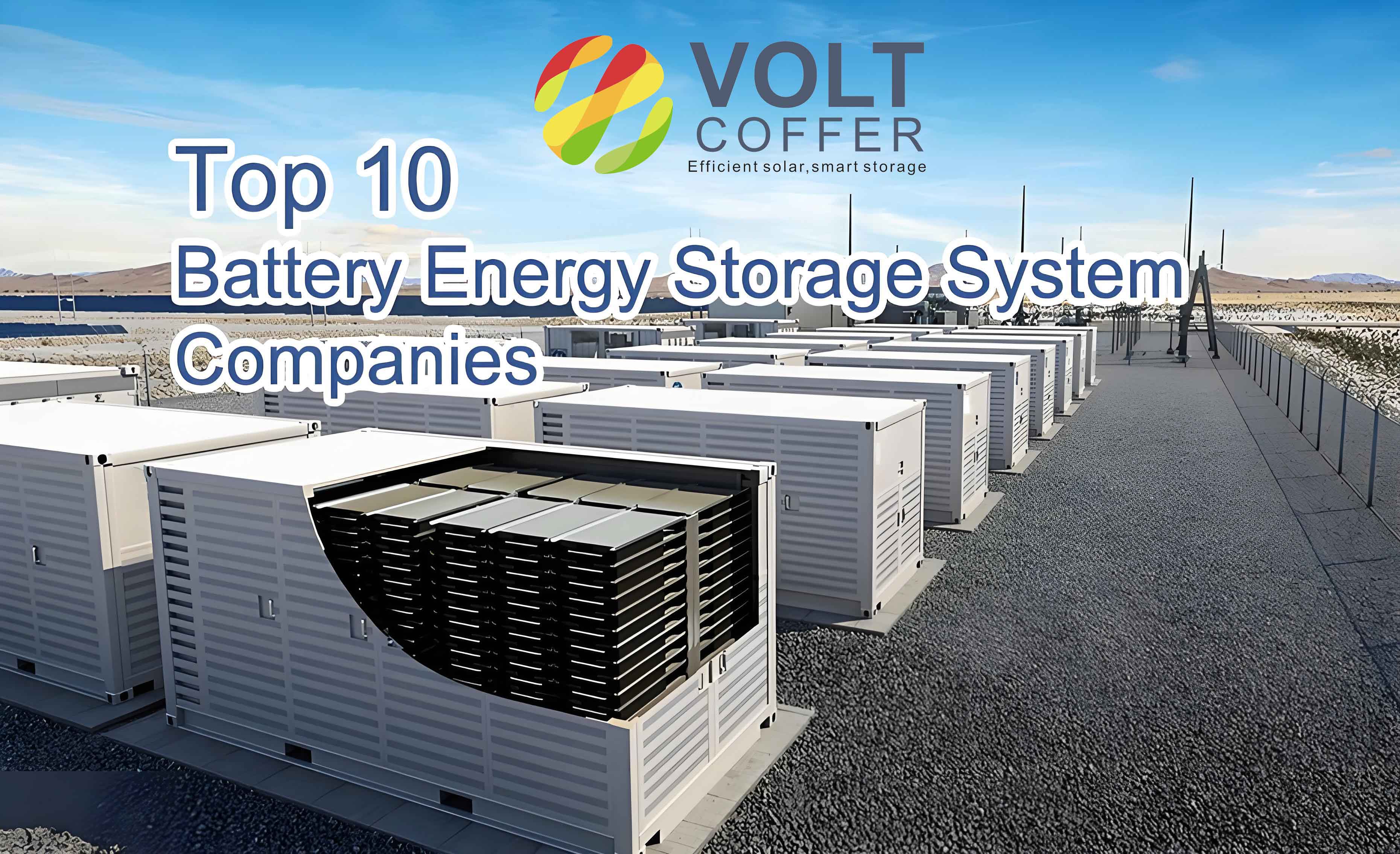
This image illustrates a modern energy storage battery installation, highlighting the modular design and integration of battery packs within a containerized system.
Current State of the Energy Storage Battery Market
As of 2023, global new energy storage battery installations reached 103.5 GWh, surpassing the cumulative historical total prior to that year. China alone contributed 51 GWh, nearly 49% of global additions. China’s cumulative installed capacity of novel energy storage battery systems (excluding pumped hydro) hit 34.5 GW / 74.5 GWh by year-end 2023, with year-on-year growth exceeding 150% in both power and energy metrics. The following table compares regional contributions:
| Region | New Installations (GWh) | Share (%) | Key Driver |
|---|---|---|---|
| China | 51.0 | 49.3% | Mandatory renewable + storage policies |
| United States | 24.5 | 23.7% | IRA incentives, utility-scale projects |
| Europe | 15.2 | 14.7% | Residential storage, grid balancing |
| Rest of World | 12.8 | 12.3% | Emerging markets, off-grid applications |
| Total | 103.5 | 100% |
Notably, lithium-ion energy storage battery chemistry accounted for 97% of new installations in 2023, up from 94% in 2022. Non-lithium technologies such as compressed air, sodium-ion, flow batteries, and flywheels are gaining traction, offering diverse options for specific use cases. The growth trajectory can be modeled by a logistic function:
$$ P(t) = \frac{K}{1 + e^{-r(t – t_0)}} $$
where \(K\) is the saturation capacity, \(r\) the growth rate, and \(t_0\) the inflection point. Current data suggest we are in the steep exponential phase for energy storage battery deployment.
Emergency and Portable Energy Storage Battery Market
Emergency power storage, also known as portable power stations, is a rapidly growing niche within the energy storage battery ecosystem. These devices, with capacities ranging from 100 Wh to 3000 Wh, replace small fossil-fuel generators and serve outdoor recreation, disaster relief, medical rescue, and mining operations. China’s market size for emergency energy storage battery products expanded from RMB 3.7 billion in 2018 to RMB 137.8 billion in 2023, with projections reaching RMB 176.34 billion by 2025. The market segmentation is detailed below:
| Application Scenario | Market Share (%) | Key Characteristics |
|---|---|---|
| Disaster Relief & Public Safety | 55–60% | High reliability, rapid deployment, government procurement |
| Outdoor Recreation (Camping, RV) | 15–20% | Consumer-grade, brand-driven, lightweight design |
| Medical Rescue (Hospitals, Mobile Clinics) | 11–16% | Rigid demand, medical-grade certification |
| Mining & Industrial Operations | 5–8% | Customized solutions, early-stage adoption |
The compound annual growth rate for emergency energy storage battery market in China from 2018 to 2023 is:
$$ CAGR_{emergency} = \left( \frac{137.8}{3.7} \right)^{\frac{1}{5}} – 1 \approx 106\% $$
This highlights the explosive demand for portable energy storage battery solutions driven by lifestyle changes and increased disaster preparedness.
Future Outlook and Challenges
The energy storage battery industry stands at a pivotal juncture. While policy tailwinds and decarbonization imperatives propel growth, several challenges remain. The most pressing issues are commercial viability (economic competitiveness) and operational safety (thermal runaway, fire risks). Moreover, market mechanisms for ancillary services and capacity payments are still evolving in many regions. The following table summarizes the key success factors for energy storage battery players in different market segments:
| Application Segment | Target Customer | Critical Success Factors |
|---|---|---|
| Residential Storage (Primary overseas) | ToC (Consumers) | Brand recognition, distribution channels, local service network, product safety |
| Utility-Scale (Generation/Grid/Commercial & Industrial) | ToB (Enterprises) | System integration capability, cost control, long-term O&M contracts, safety compliance |
| Emergency & Portable Power | Mixed (ToC + ToG) | Product reliability, certification, marketing agility, after-sales support |
For Chinese energy storage battery manufacturers, the residential market is largely export-oriented, requiring deep localization strategies. In contrast, the domestic utility-scale market demands strong relationships with grid operators and renewable developers. The levelized cost of storage (LCOS) remains a critical metric:
$$ LCOS = \frac{C_{initial} + \sum_{t=1}^{T} \frac{O\&M_t + C_{charge,t}}{(1+r)^t}}{\sum_{t=1}^{T} \frac{E_{discharge,t}}{(1+r)^t}} $$
where \(C_{initial}\) is the upfront investment, \(O\&M_t\) annual operations and maintenance, \(C_{charge,t}\) electricity charging costs, \(E_{discharge,t}\) annual discharged energy, \(r\) discount rate, and \(T\) system lifetime. As energy storage battery costs continue to decline — lithium-ion cell prices have fallen below $100/kWh — LCOS is becoming competitive with traditional peaker plants and pumped hydro in many markets.
Safety innovations, such as solid-state electrolytes, advanced thermal management, and intelligent BMS, will further mitigate risks. The next decade will likely see energy storage battery technologies diversify, with sodium-ion and flow batteries carving out niches where lithium is less suitable (e.g., ultra-long duration storage).
Conclusion
From my perspective, the energy storage battery industry is entering a golden era. The convergence of renewable energy expansion, electrification of transport, and digitalization of power grids creates an insatiable demand for storage. China’s leadership in manufacturing scale and policy support positions it as the global epicenter of energy storage battery innovation. However, sustained investment in safety, recycling, and grid integration will be essential. The emergency power segment alone, growing at over 100% CAGR, demonstrates the vast untapped potential. As we move toward 2030, energy storage battery systems will become as ubiquitous as transformers, reshaping how we generate, distribute, and consume energy. The journey from laboratory curiosity to indispensable infrastructure is nearly complete, and I am excited to witness — and analyze — the next chapter.