
As a researcher in the field of energy storage, I have witnessed the rapid adoption of lithium-ion batteries across various sectors, including electric vehicles, portable electronics, and grid storage systems. The performance and safety of these batteries are paramount, and accurate life prediction is a critical component of battery management. Traditional methods for predicting the remaining useful life (RUL) of lithium-ion batteries often rely on complex feature engineering or physical models, which can be time-consuming and may not adequately quantify prediction uncertainty. In this article, I propose a novel data-driven framework that integrates ensemble learning and quantile regression to address these limitations. This framework requires only processed capacity sequences as input, avoiding intricate feature extraction, and provides both point predictions and prediction intervals with confidence levels. The approach is validated on degradation data from lithium-ion batteries with different capacity specifications, demonstrating superior accuracy and robustness compared to conventional models. Throughout this discussion, I will emphasize the importance of lithium-ion battery reliability and how this framework enhances prediction capabilities.
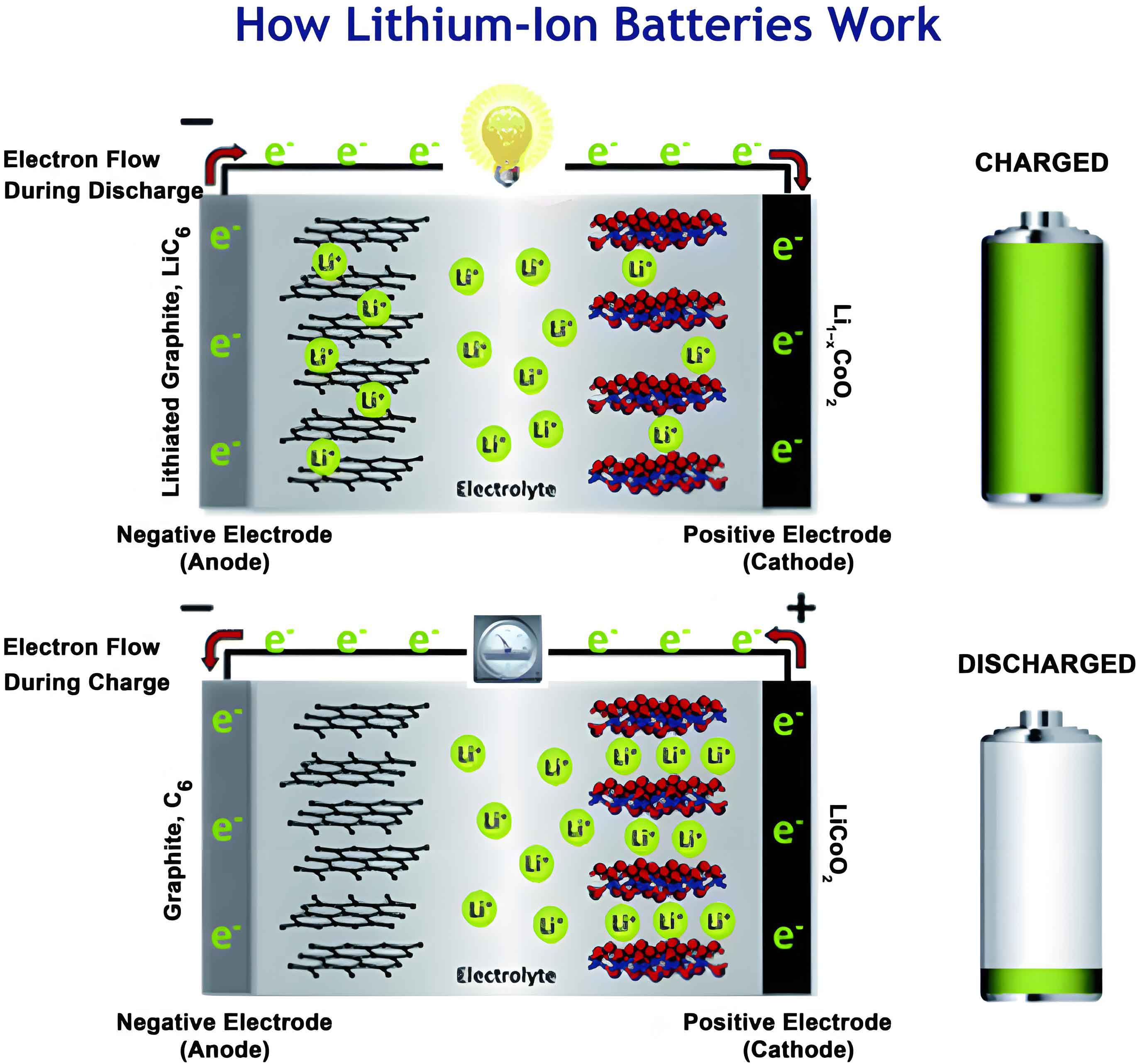
The widespread use of lithium-ion batteries is driven by their high energy density, long cycle life, and decreasing costs. However, as these batteries age, internal electrochemical changes—such as active material loss, solid electrolyte interface (SEI) growth, and increased internal resistance—can lead to performance degradation and safety risks like thermal runaway. Predicting the RUL of a lithium-ion battery, defined as the remaining cycles or time until a failure threshold (e.g., 80% of initial capacity), is essential for preventive maintenance and safety assurance. Data-driven methods have gained prominence in lithium-ion battery life prediction due to their ability to learn patterns from historical data without requiring detailed physical models. Common approaches include support vector regression, Gaussian process regression, and neural networks. Yet, many of these methods produce only point estimates, lacking uncertainty quantification, which is crucial for risk assessment in real-world applications. Moreover, they may suffer from overfitting or sensitivity to noise in lithium-ion battery data. To overcome these issues, I have developed a framework that combines ensemble learning, which improves generalization through model aggregation, with quantile regression, which directly outputs prediction intervals. This fusion enables high-precision point predictions while quantifying uncertainty, offering a comprehensive solution for lithium-ion battery life management.
My framework begins with data processing using a sliding window algorithm. For a lithium-ion battery capacity degradation sequence ${C_1, C_2, \ldots, C_n}$, where $C_i$ represents the capacity at cycle $i$, a window of size $W$ slides over the sequence to generate input-output pairs. Specifically, each input is a subsequence $[C_i, C_{i+1}, \ldots, C_{i+W-1}]$, and the corresponding output is the next capacity value $C_{i+W}$. This transforms the time-series data into supervised learning samples, capturing temporal dependencies without manual feature engineering. The window size $W$ is optimized as a hyperparameter based on validation performance, balancing short-term fluctuations and long-term trends in lithium-ion battery degradation. This preprocessing step is applied independently to each lithium-ion battery dataset to preserve temporal integrity.
The core of the framework is an ensemble of base learners, each implemented as an Attention-Gated Recurrent Unit (Attention-GRU) model. The GRU is a type of recurrent neural network that processes sequential data through gating mechanisms, such as reset and update gates, to retain long-term dependencies. For a lithium-ion battery capacity sequence, the GRU extracts temporal features from the input window. The attention mechanism is then applied to weight these features based on their relevance to the prediction task, focusing on critical degradation phases. Mathematically, the attention weights are computed using the scaled dot-product formula:
$$ \text{Attention}(Q, K, V) = \text{softmax}\left(\frac{QK^T}{\sqrt{d}}\right) V $$
where $Q$, $K$, and $V$ are query, key, and value matrices derived from the GRU output, and $d$ is the dimensionality. This allows the model to emphasize cycles where capacity changes significantly, enhancing prediction accuracy for lithium-ion battery life.
To incorporate uncertainty quantification, I integrate quantile regression into the base learner. Instead of a single output layer, the model has three separate heads corresponding to quantiles $\tau = 0.025$, $\tau = 0.5$ (median), and $\tau = 0.975$. The loss function for each quantile is the quantile loss:
$$ L_\tau(y, \hat{y}) = \sum_{i: y_i \geq \hat{y}_i} \tau |y_i – \hat{y}_i| + \sum_{i: y_i < \hat{y}_i} (1 – \tau) |y_i – \hat{y}_i| $$
where $y_i$ is the true capacity and $\hat{y}_i$ is the predicted capacity. Minimizing this loss yields predictions for the lower bound, median, and upper bound, forming a 95% prediction interval. This approach directly models the conditional distribution of lithium-ion battery capacity, providing insights into prediction uncertainty without assuming data normality.
Ensemble learning is implemented using the Bootstrap Aggregating (Bagging) strategy. For a dataset of lithium-ion battery capacity sequences, I generate multiple training subsets via bootstrapping—random sampling with replacement—where each subset corresponds to a full battery’s processed data. Each subset trains an independent Attention-GRU base learner. During prediction, the outputs from all base learners are averaged for each quantile, resulting in a consolidated prediction interval and median point estimate. This reduces variance and improves robustness, as the ensemble mitigates overfitting and noise sensitivity inherent in single models for lithium-ion battery data.
The model architecture details are as follows: each GRU layer has 64 hidden units, the attention dimension is 64, and a dropout rate of 0.2 is used to prevent overfitting. Training employs the Adam optimizer with an initial learning rate of 0.001, a batch size of 64, and early stopping to halt training if validation performance plateaus. The ensemble consists of 10 base learners. These parameters were tuned through validation on lithium-ion battery datasets to ensure optimal performance.
I validated the framework on degradation data from five commercial lithium-ion batteries with different rated capacities, as summarized in Table 1. Each lithium-ion battery underwent cycling under controlled conditions, and capacity values were recorded until failure or a predefined endpoint. The data highlights the nonlinear degradation patterns common in lithium-ion batteries, including initial capacity rise due to graphite anode expansion and rapid decline near end-of-life from SEI thickening.
| Rated Capacity (Ah) | Number of Cells | Average Cycle Life | Chemistry |
|---|---|---|---|
| 3.0 | 7 | 3048 | Lithium Iron Phosphate (LFP) |
| 3.4 | 9 | 2738 | Lithium Iron Phosphate (LFP) |
| 3.6 | 15 | 3676 | Lithium Iron Phosphate (LFP) |
| 3.8 | 11 | 3468 | Lithium Iron Phosphate (LFP) |
| 4.0 | 14 | 1957 | Lithium Iron Phosphate (LFP) |
For each lithium-ion battery type, I selected one cell’s late-cycle data as the test set and used the rest for training. The framework was applied to predict capacities over multiple steps, using a recursive strategy: starting from the last $W$ known capacities, the model predicts the next capacity, updates the window with the prediction, and repeats until reaching the failure threshold. Prediction performance was evaluated using root mean square error (RMSE), mean absolute error (MAE), and mean absolute percentage error (MAPE), defined as:
$$ \text{RMSE} = \sqrt{\frac{1}{N} \sum_{i=1}^N (\hat{C}_i – C_i)^2} $$
$$ \text{MAE} = \frac{1}{N} \sum_{i=1}^N |\hat{C}_i – C_i| $$
$$ \text{MAPE} = \frac{100\%}{N} \sum_{i=1}^N \left| \frac{\hat{C}_i – C_i}{C_i} \right| $$
where $N$ is the prediction horizon, $\hat{C}_i$ is the predicted capacity, and $C_i$ is the true capacity. Lower values indicate better accuracy for lithium-ion battery life prediction.
The results demonstrate the framework’s effectiveness across different prediction horizons. For a horizon of 300 cycles, the median point predictions closely align with actual capacity values for all lithium-ion batteries, and the 95% prediction intervals successfully cover most true values, indicating reliable uncertainty quantification. As an example, for the 3.6 Ah lithium-ion battery, the RMSE, MAE, and MAPE were 0.4097%, 0.3246%, and 0.1104%, respectively, showcasing high precision. In contrast, a traditional point prediction model—using the same Attention-GRU structure but with a linear output layer and mean squared error loss—exhibited higher errors, such as an RMSE of 1.4759% for the same battery. This underscores the advantage of quantile regression in enhancing point prediction robustness through its loss function.
To further assess the framework, I compared it with two baseline models: a single Attention-GRU model (without ensemble) and a standard GRU model (without attention). Each model was run five times with different random seeds, and average metrics were computed. The ensemble framework consistently outperformed the baselines in both accuracy and stability. Table 2 presents the RMSE, MAE, and MAPE for the 300-cycle horizon across lithium-ion battery types, highlighting the superior performance of the proposed approach.
| Capacity (Ah) | Model | RMSE (%) | MAE (%) | MAPE (%) |
|---|---|---|---|---|
| 3.0 | Ensemble Attention-GRU | 0.4304 | 0.3580 | 0.1350 |
| Attention-GRU (Single) | 0.6173 | 0.5797 | 0.2023 | |
| Standard GRU | 0.6437 | 0.5929 | 0.2299 | |
| 3.4 | Ensemble Attention-GRU | 0.9572 | 0.8040 | 0.2914 |
| Attention-GRU (Single) | 2.0195 | 1.7758 | 0.6434 | |
| Standard GRU | 2.0372 | 1.8420 | 0.6682 | |
| 3.6 | Ensemble Attention-GRU | 0.8026 | 0.6617 | 0.2250 |
| Attention-GRU (Single) | 3.0603 | 2.5845 | 0.8792 | |
| Standard GRU | 2.1034 | 1.8470 | 0.6286 | |
| 3.8 | Ensemble Attention-GRU | 1.9866 | 1.7452 | 0.5670 |
| Attention-GRU (Single) | 2.3166 | 2.0281 | 0.6601 | |
| Standard GRU | 3.2249 | 2.8704 | 0.9367 | |
| 4.0 | Ensemble Attention-GRU | 5.3816 | 4.0879 | 1.2401 |
| Attention-GRU (Single) | 7.3177 | 5.5163 | 1.6764 | |
| Standard GRU | 7.6175 | 6.0890 | 1.8430 |
The ensemble framework’s prediction intervals also achieved higher coverage rates—the proportion of true values within the interval—compared to baselines. For instance, on the 3.6 Ah lithium-ion battery, the coverage was over 95% for the ensemble, whereas single models often fell below 90%. This confirms the framework’s ability to quantify uncertainty effectively for lithium-ion battery capacity predictions. The improvement stems from the Bagging strategy, which reduces variance by averaging multiple models, and the attention mechanism, which focuses on informative degradation stages. Additionally, the quantile regression loss function’s robustness to outliers contributes to stable interval estimation, crucial for handling noisy lithium-ion battery data.
I also investigated the impact of prediction horizon length on accuracy. Shorter horizons (e.g., 100 cycles) generally yielded lower errors, as the model relies more on recent data. For example, on the 4.0 Ah lithium-ion battery, the RMSE decreased from 2.7344% at 300 cycles to 0.9617% at 100 cycles. However, even at longer horizons, the framework maintained competitive performance, demonstrating its capability to capture long-term degradation trends in lithium-ion batteries. The sliding window size played a key role here; optimal values varied by battery type, as shown in Table 3, which summarizes the best window sizes for different horizons based on validation.
| Capacity (Ah) | Prediction Horizon (Cycles) | Window Size (W) |
|---|---|---|
| 3.0 | 300 | 16 |
| 200 | 12 | |
| 100 | 32 | |
| 3.4 | 300 | 16 |
| 200 | 12 | |
| 100 | 12 | |
| 3.6 | 300 | 16 |
| 200 | 16 | |
| 100 | 16 | |
| 3.8 | 300 | 20 |
| 200 | 20 | |
| 100 | 24 | |
| 4.0 | 300 | 20 |
| 200 | 12 | |
| 100 | 16 |
The framework’s simplicity in input requirements is another advantage. By using only capacity sequences processed via sliding windows, it eliminates the need for manual feature extraction from charge-discharge curves, such as voltage plateaus or internal resistance estimates. This reduces computational overhead and makes the approach applicable to various lithium-ion battery types without extensive domain knowledge. Moreover, the model’s ability to handle mid-life predictions—as shown with the 3.0 Ah lithium-ion battery that hadn’t reached failure—underscores its generalization potential for real-world scenarios where full degradation data may be unavailable.
In terms of computational efficiency, the ensemble training is parallelizable, as each base learner trains independently on a bootstrapped subset. For a typical lithium-ion battery dataset with thousands of cycles, training time ranges from minutes to hours on standard hardware, depending on the number of base learners and epochs. Prediction is fast, involving forward passes through the ensemble, making it suitable for online monitoring systems. The framework’s scalability allows it to adapt to larger datasets or more complex lithium-ion battery chemistries, such as nickel-manganese-cobalt (NMC) or lithium titanate (LTO), by adjusting model parameters.
Looking ahead, there are several directions for enhancing this framework. First, incorporating additional data sources, like temperature or current profiles, could improve prediction accuracy for lithium-ion batteries under dynamic operating conditions. Second, extending the quantile regression to more granular confidence levels (e.g., 90% or 99%) would provide finer uncertainty assessments. Third, exploring advanced ensemble techniques, such as stacking or boosting, might further boost performance for lithium-ion battery life prediction. Finally, real-time implementation in battery management systems (BMS) would require optimization for low-power devices, possibly through model compression or lightweight architectures.
In conclusion, the fusion of ensemble learning and quantile regression offers a robust and comprehensive solution for lithium-ion battery life prediction. My framework achieves high-precision point estimates and reliable prediction intervals, addressing the limitations of traditional data-driven methods. Validation on multiple lithium-ion battery capacities confirms its effectiveness across different degradation patterns and prediction horizons. By simplifying input requirements and quantifying uncertainty, this approach supports safer and more efficient battery management, contributing to the longevity and reliability of lithium-ion batteries in critical applications. As the demand for energy storage grows, such advanced predictive tools will become increasingly vital for ensuring the sustainable use of lithium-ion batteries worldwide.