
As we explore the frontiers of modern electrochemistry, the development of high-performance energy storage battery systems has become a cornerstone of technological progress. The energy storage battery is not merely a component; it is the heart of portable electronics, electric vehicles, and grid-scale energy management. Traditional manufacturing methods for these energy storage battery systems, such as slurry casting and stacking, are reaching their limits in terms of geometry control, material utilization, and performance optimization. It is here that we see 3D printing, also known as additive manufacturing, emerging as a revolutionary paradigm shift. By allowing us to build complex architectures layer-by-layer, 3D printing offers unprecedented control over the structure and composition of every part of an energy storage battery. This capability addresses critical bottlenecks such as low energy density, poor ion transport, and mechanical instability. In our review, we systematically examine the most promising 3D printing technologies—including Direct Ink Writing (DIW), Fused Deposition Modeling (FDM), Stereolithography (SLA), and Digital Light Processing (DLP)—and their specific applications in crafting electrodes, current collectors, and electrolytes for the next generation of energy storage battery systems.
The fundamental appeal of 3D printing lies in its ability to realize geometries that are impossible with subtractive or conventional formative methods. For an energy storage battery, this translates directly into enhanced performance. We can design high-aspect-ratio electrodes that shorten ion diffusion paths, create porous structures with high surface area for reactions, and directly integrate solid-state electrolytes with minimal interfacial resistance. In the following sections, we delve into the specifics of each printing technique, the properties of relevant materials, and the electrochemical outcomes that define the current state of the art.
Common 3D Printing Technologies for Energy Storage Batteries
The selection of a suitable 3D printing technology is critical for the successful fabrication of an energy storage battery. Each method operates on a distinct principle and imposes unique constraints on the ink or feedstock material. We have summarized the most representative techniques used in our field.
Direct Ink Writing (DIW) is arguably the most versatile technique for energy storage battery fabrication. It operates by extruding a viscoelastic ink through a nozzle to create a 3D structure. The key requirement for DIW is the ink’s shear-thinning behavior. In our work, we prepare inks with a high yield stress that allows them to maintain their shape after extrusion. This technique is ideal for printing thick, high-loading electrodes. The critical rheological parameters can be described by the Herschel-Bulkley model:
$$ \tau = \tau_y + K \dot{\gamma}^n $$
where $\tau$ is the shear stress, $\tau_y$ is the yield stress, $K$ is the consistency index, $\dot{\gamma}$ is the shear rate, and $n$ is the power-law index (n < 1 for shear-thinning fluids). By tuning these parameters, we can ensure the ink flows smoothly during extrusion but solidifies instantly upon deposition, enabling the construction of tall, porous structures that are highly beneficial for an energy storage battery.
Fused Deposition Modeling (FDM) offers a different approach for the energy storage battery. Here, a thermoplastic filament is melted and extruded layer-by-layer. This process is fast, scalable, and environmentally robust. We have successfully developed composite filaments by mixing active battery materials (like LFP or PLA/rGO) with thermoplastic binders. The solvent-free nature of FDM is a major advantage over DIW, as it eliminates the need for post-processing to remove solvents, which can cause structural collapse. However, the challenge lies in achieving sufficient loading of active material within the filament to ensure high energy density in the final energy storage battery. The electrical conductivity of the printed part is a key metric, often described by percolation theory.
Stereolithography (SLA) and its high-speed variant Digital Light Processing (DLP) utilize light to cure liquid photopolymer resins. These are nozzle-free techniques, which bypass issues like nozzle clogging that plague DIW and FDM. For the energy storage battery, SLA and DLP are exceptionally good at producing high-resolution, smooth components. We use these methods primarily for printing solid polymer electrolytes (SPEs) with intricate geometries. The resolution can reach tens of micrometers, allowing for precise control over channel dimensions in 3D electrodes. The curing kinetics are governed by the Beer-Lambert law as applied to photopolymerization:
$$ C_d = D_p \ln\left(\frac{E}{E_c}\right) $$
where $C_d$ is the cure depth, $D_p$ is the penetration depth of the resin, $E$ is the exposure energy, and $E_c$ is the critical energy to initiate polymerization. By precisely controlling the UV exposure, we can create highly detailed scaffolds for our energy storage battery.
| Technology | Material Form | Key Advantage | Key Disadvantage | Primary Battery Application |
|---|---|---|---|---|
| Direct Ink Writing (DIW) | Paste/Ink | High material loading, simple | Requires post-processing | Thick Electrodes, Full Cells |
| Fused Deposition (FDM) | Filament | Solvent-free, fast, robust | Limited to thermoplastics | Structural Electrodes, Cases |
| Stereolithography (SLA) | Resin | High resolution, smooth finish | Brittle materials, slow | Solid Electrolytes, Micro-batteries |
| Digital Light Processing (DLP) | Resin | Very fast printing, high precision | Costly materials | Complex 3D Electrodes, Electrolytes |
3D Printing of Electrodes for Energy Storage Batteries
The electrode is where the electrochemical action takes place in an energy storage battery. Its architecture dictates the power and energy density. We have devoted significant effort to optimizing both the cathode and anode structures using 3D printing. The primary goal is to overcome the limitations of thin-film electrodes by creating thick, porous networks that facilitate rapid ion transport while maintaining high mass loading.
3D Printed Cathodes are crucial for high-energy energy storage battery systems. We often utilize materials like Lithium Iron Phosphate (LFP), Lithium Nickel Cobalt Manganese Oxide (NCM), and Lithium Cobalt Oxide (LCO). In one approach using DIW, we formulated a printable ink containing LFP nanoparticles. The resulting 3D interdigitated architecture dramatically shortened the ion transport pathway compared to a traditional planar design. The enhanced performance can be quantified by the higher areal capacity. The specific capacity $Q$ of the LFP electrode is a function of the discharge rate $C$:
$$ Q = Q_0 – k \cdot \sqrt{t} $$
where $Q_0$ is the theoretical capacity, $k$ is a diffusion constant, and $t$ is the time. By creating 3D structures, we significantly reduce the diffusion distance $L$, thus minimizing the capacity loss at high rates. Another study focusing on flexible energy storage battery designs integrated LFP with a thermoplastic polyurethane (TPU) matrix using FDM. The TPU provided mechanical compliance, absorbing the volume changes during cycling. This led to exceptional stability, with the electrode retaining 100% capacity after 300 cycles at 1 C. The stress-strain behavior of the composite was crucial here.
3D Printed Anodes are equally important. We have explored materials like Lithium Titanate (LTO), Silicon/Carbon composites, and various conversion-type anodes. A significant challenge with high-capacity anodes like silicon is the massive volume expansion (~300%). To combat this, we designed a 3D porous scaffold using DIW. This scaffold provides empty space for the silicon to expand into without damaging the overall electrode structure. For instance, we printed a hybrid ink of Graphene Oxide (GO), Silver Nanowires (AgNWs), and LTO. The conductivity of the composite was dramatically improved. The underlying principle for the conductivity enhancement in composites can be expressed by percolation theory, where the conductivity $\sigma$ scales as:
$$ \sigma \propto (\phi – \phi_c)^t $$
where $\phi$ is the volume fraction of conductive filler, $\phi_c$ is the percolation threshold, and $t$ is the critical exponent. The 3D network of AgNWs lowered $\phi_c$ and enhanced electron transport, making the anode ideal for high-rate energy storage battery applications.
| Material | Electrode Type | Printing Method | Key Performance | Key Formula/Model |
|---|---|---|---|---|
| LFP | Cathode | DIW | 1.2 mAh/cm² at 0.5C | Sand Equation: $ \frac{dQ}{dt} = \frac{D C}{L} $ |
| LFP/TPU | Cathode | FDM | 100% retention after 300 cycles | Stress Model: $ \sigma = E \epsilon $ |
| GO/AgNWs/LTO | Anode | DIW | Conductivity improved 10^3x | Percolation: $ \sigma \propto (\phi – \phi_c)^t $ |
| MoS2/rGO | Anode | DIW | Stable Na+ storage | Diffusion: $ x = \sqrt{2Dt} $ |
| Cu2S@ZnS/C | Anode | DIW | 352 mAh/g at 10 A/g | Reaction Kinetics: $ i_p = k v^{1/2} $ |
3D Printing of Current Collectors and Electrolytes
Beyond the electrodes, the other components of an energy storage battery—the current collector and electrolyte—are also being revolutionized by 3D printing.
Current Collectors are often overlooked but are vital for charge distribution within an energy storage battery. We have used 3D printing to create metal foam current collectors with highly controlled porosity and tortuosity. Unlike traditional foams with random pores, 3D printed nickel foams can have a perfectly ordered lattice structure. This ensures uniform current density distribution, reducing the risk of localized lithium plating. The specific surface area (SSA) of such a structure is a key parameter:
$$ A_{specific} = \frac{A_{surface}}{\rho V} $$
By using octet-truss or gyroid lattice structures, we can maximize $A_{specific}$ while maintaining structural integrity. This allows for a higher loading of active material in the energy storage battery without increasing the internal resistance.
Electrolytes are the medium for ion transport. While liquid electrolytes are common, they pose safety risks. We are focusing heavily on 3D printing Solid-State Electrolytes (SSEs) to realize safer, higher-energy energy storage battery systems. The main challenge for SSEs is their low ionic conductivity and high interfacial resistance. 3D printing offers elegant solutions. For example, we printed thin films of Li7La3Zr2O12 (LLZO) using DIW. The printed structure had a high density and low thickness, minimizing the bulk resistance $R_b$.
$$ R_b = \frac{L}{\sigma A} $$
By controlling the geometry, we lowered $L$ and increased $A$, drastically reducing $R_b$. Another promising approach is printing polymer-based SSEs via SLA. We printed a 3D spiral-structured Polyethylene Oxide (PEO) electrolyte. This 3D architecture created a conformal coating on the electrode, drastically increasing the contact area and reducing the interfacial resistance. The resulting energy storage battery showed stable cycling at 25°C with a conductivity of 3.7 × 10^{-4} S/cm. The ionic conductivity $\sigma$ follows the Vogel-Tammann-Fulcher (VTF) relationship:
$$ \sigma = \sigma_0 \exp\left(-\frac{B}{T – T_0}\right) $$
which describes the ion motion in polymer matrices. By incorporating MOFs (Metal-Organic Frameworks) into the PEO matrix via 3D printing, we significantly enhanced the lithium transference number and dendrite suppression capability.
| Component | Material | Printing Method | Performance Metric | Formula/Relationship |
|---|---|---|---|---|
| Current Collector | Nickel Foam | DIW + Sintering | High Porosity & SSA | $ A_{specific} = \frac{A_{surface}}{\rho V} $ |
| Solid Electrolyte | LLZO | DIW | Low Bulk Resistance | $ R_b = \frac{L}{\sigma A} $ |
| Polymer Electrolyte | PEO/MOFs | DLP/SLA | 3.7e-4 S/cm at 25C | VTF: $ \sigma = \sigma_0 \exp\left(-\frac{B}{T – T_0}\right) $ |
| Composite Electrolyte | PEO/LiTFSI | SLA | 128 mAh/g, stable 250 cycles | Nernst-Einstein: $ \sigma = \frac{D n q^2}{k_B T} $ |
3D Printing for All-Solid-State Batteries (ASSBs)
The ultimate goal for many of us in the field is the fabrication of a fully 3D-printed All-Solid-State Battery (ASSB). This represents the pinnacle of energy storage battery safety and energy density. By printing the cathode, electrolyte, and anode in one continuous process, we can minimize interfacial resistance, which is the primary impediment to ASSB performance.
In our pursuit of the perfect ASSB, we have employed techniques like Aerosol Jet Printing (AJP) and multi-material DIW. A key strategy is to co-print or sequentially print the electrode and electrolyte layers. For instance, we printed a cathode ink composed of LFP, binder, and carbon, followed immediately by printing a polymer electrolyte based on Polyethylene Glycol Diacrylate (PEGDA) directly on top. This creates a seamless, intimate interface. The interfacial resistance $R_{interface}$ is drastically reduced compared to assembled interfaces:
$$ R_{interface} = R_{bulk} + R_{interphase} + R_{charge\_transfer} $$
By curing the electrolyte in situ on the printed cathode, we minimize the void spaces that contribute to $R_{interphase}$ and $R_{charge\_transfer}$. The resulting energy storage battery exhibited a remarkable capacity of over 130 mAh/g and a capacity retention of 97.4% after 150 cycles. This is a direct result of the intimate, 3D-structured interface created by the printing process.
Another exciting frontier is the 3D printing of solid-state Zinc-air microbatteries (ZAmB). We printed interdigitated Zinc electrodes and gel polymer electrolytes. The 3D structure dramatically increased the areal energy density. The electrochemical performance is often limited by the oxygen reduction reaction (ORR) kinetics, but the high surface area of the 3D electrode compensates. The power density $P$ of such an energy storage battery is given by:
$$ P = V \times I $$
where $V$ is the operating voltage and $I$ is the current. By using a 3D geometry, we were able to achieve a high current density $I$ without a significant voltage drop, leading to an excellent power density of 77.2 mWh/cm². This demonstrates the viability of 3D printing for creating high-performance ASSBs.
| Battery Type | Components Printed | Key Achievement | Formula/Model |
|---|---|---|---|
| Li-ion ASSB | Cathode + Electrolyte | 130 mAh/g, 97.4% retention | Interface Model: $ R_{int} = R_{ct} + R_{diff} $ |
| Solid-state Li-S | Cathode + Electrolyte | Dendrite suppression | Sand’s Capacity: $ Q_s = \frac{\pi D C_0}{2J_a} $ |
| Zn-air Microbattery | Anode + Electrolyte | 77.2 mWh/cm² areal energy | Power: $ P = I \cdot V $ |
| Na-ion ASSB | Anode + Electrolyte | Stable long-term cycling | Diffusion overpotential: $ \eta = \frac{RT}{nF} \ln\left(1 – \frac{i}{i_L}\right) $ |
Mathematical Modeling and Performance Analysis
To truly understand and optimize the 3D printed energy storage battery, we rely heavily on mathematical modeling. The structure we print directly influences the electrochemical dynamics. For instance, the porosity and tortuosity of a printed electrode dictate its effective ionic conductivity $\sigma_{eff}$:
$$ \sigma_{eff} = \sigma_0 \frac{\epsilon}{\tau} $$
where $\sigma_0$ is the bulk conductivity of the electrolyte, $\epsilon$ is the porosity, and $\tau$ is the tortuosity. By designing 3D printed structures with low tortuosity (e.g., using aligned channels), we maximize $\sigma_{eff}$, leading to higher rate capability in the energy storage battery.
The rate capability is also governed by the characteristic diffusion time $t_D$:
$$ t_D = \frac{L^2}{D} $$
In a planar electrode, $L$ is the full thickness. In a 3D interdigitated electrode, $L$ is reduced to the half-distance between the fingers. This square-law dependence means that a 10x reduction in diffusion distance yields a 100x reduction in diffusion time. This is the fundamental reason why 3D printed energy storage battery geometries can achieve such high power densities. We can also model the capacity fade due to mechanical degradation using fracture mechanics:
$$ \Delta G = G – 2\gamma $$
where $\Delta G$ is the energy release rate, $G$ is the elastic strain energy, and $\gamma$ is the surface energy. The 3D printed flexible electrodes (like TPU-LFP) have a high fracture toughness, resisting crack propagation and ensuring long cycle life.
Challenges and Future Directions
Despite the immense progress, challenges remain in the 3D printing of energy storage battery systems. The scalability of these methods is a primary concern. While we can print intricate laboratory-scale prototypes, translating this to roll-to-roll industrial production for large-format energy storage battery packs is non-trivial. The speed of printing (especially in SLA) and the cost of specialized inks (especially for DIW) need to be addressed.
Material innovation remains the key. We are constantly on the lookout for new printable inks. High-entropy oxides, 2D MXenes, and single-atom catalysts are exciting candidates for future energy storage battery electrodes. For electrolytes, the holy grail is a printable material that combines the processability of polymers with the ionic conductivity of ceramics. Future research must also focus on multi-nozzle printing and machine learning-assisted process optimization to fine-tune the microstructure of the energy storage battery.
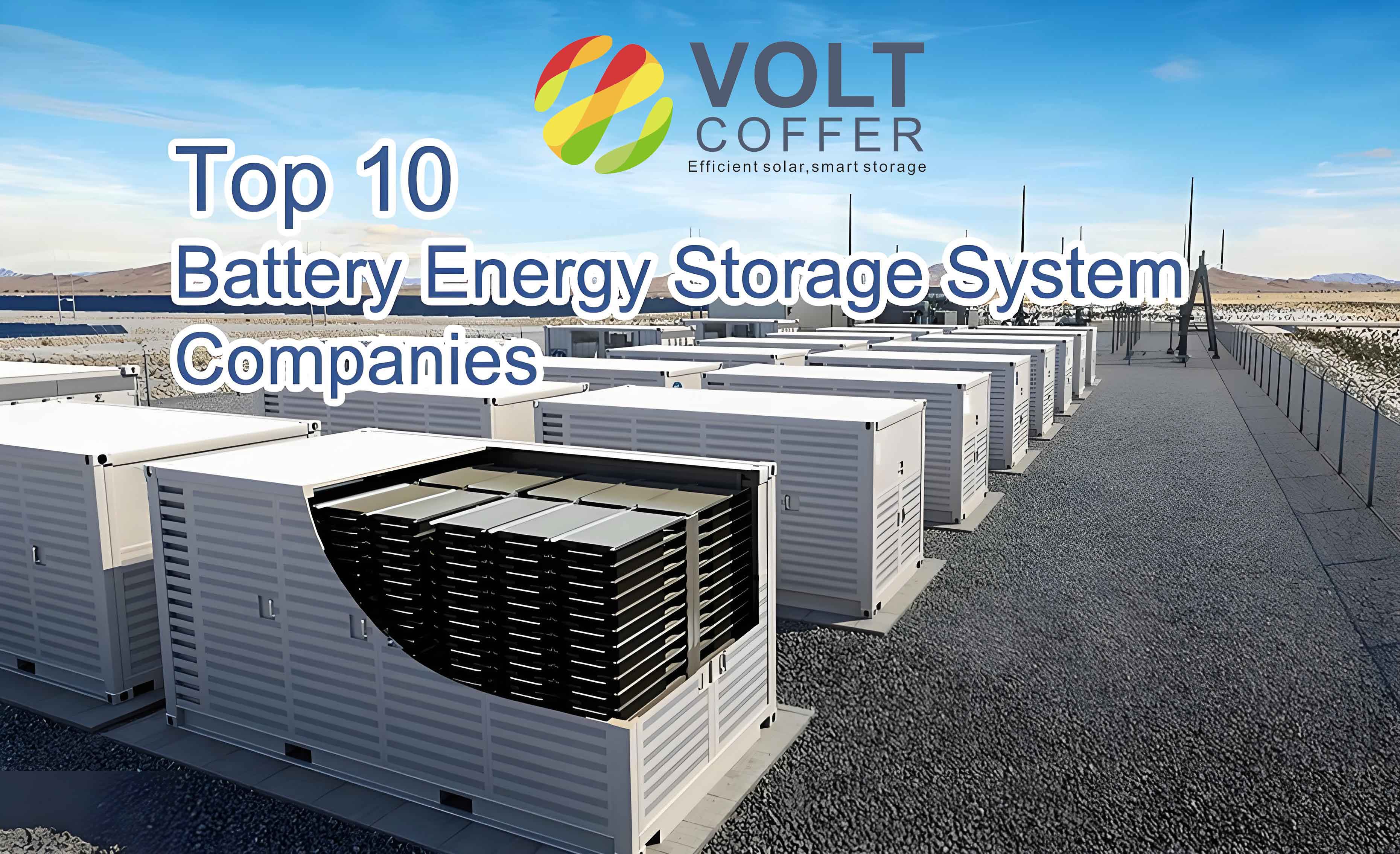
Furthermore, the development of truly multifunctional energy storage battery structures is on the horizon. We envision printing batteries that are also structural components of a device (e.g., a battery that acts as the chassis of a drone) or that integrate sensors and self-healing capabilities. The ability to print on flexible substrates and textiles paves the way for wearable energy storage battery technology. The integration of the picture link provided here perfectly visualizes the core concept of a modern, high-tech energy storage battery being advanced by these manufacturing technologies.
In conclusion, 3D printing is not just a tool for making batteries; it is a design philosophy that allows us to rethink the very architecture of an energy storage battery. By providing precise control over the electrode, electrolyte, and collector, we can overcome fundamental limitations of traditional cells. We are confident that with continuous research into materials, processes, and modeling, 3D printed energy storage battery systems will transition from laboratory curiosities to ubiquitous power sources driving the future of electronics and transportation.