
As an observer deeply immersed in the renewable energy sector, I have witnessed a remarkable transformation in the solar industry over the past decade. While traditional crystalline silicon panels have dominated the market, the allure of thin film solar panels has never faded. Their lightweight, flexible, and versatile nature has spurred relentless innovation, leading to significant breakthroughs that promise to redefine how we harness solar energy. In this article, I will delve into the recent advancements in thin film solar panel technology, drawing from key developments that highlight their growing impact. From cutting-edge applications to novel materials, the journey of thin film solar panels is one of resilience and ingenuity.
The fundamental appeal of thin film solar panels lies in their unique properties. Unlike bulky silicon-based panels, these devices are fabricated by depositing photovoltaic materials onto substrates like glass, plastic, or metal, resulting in layers that are mere micrometers thick. This process not only reduces material usage but also enables features such as flexibility, transparency, and integration into diverse surfaces. The efficiency of a thin film solar panel can be described by the photoconversion efficiency formula: $$ \eta = \frac{J_{sc} \times V_{oc} \times FF}{P_{in}} \times 100\% $$ where $\eta$ is the efficiency, $J_{sc}$ is the short-circuit current density, $V_{oc}$ is the open-circuit voltage, $FF$ is the fill factor, and $P_{in}$ is the incident light power. Over the years, improvements in materials like copper indium gallium selenide (CIGS), cadmium telluride (CdTe), and organic compounds have pushed these efficiencies higher, making thin film solar panels increasingly competitive.
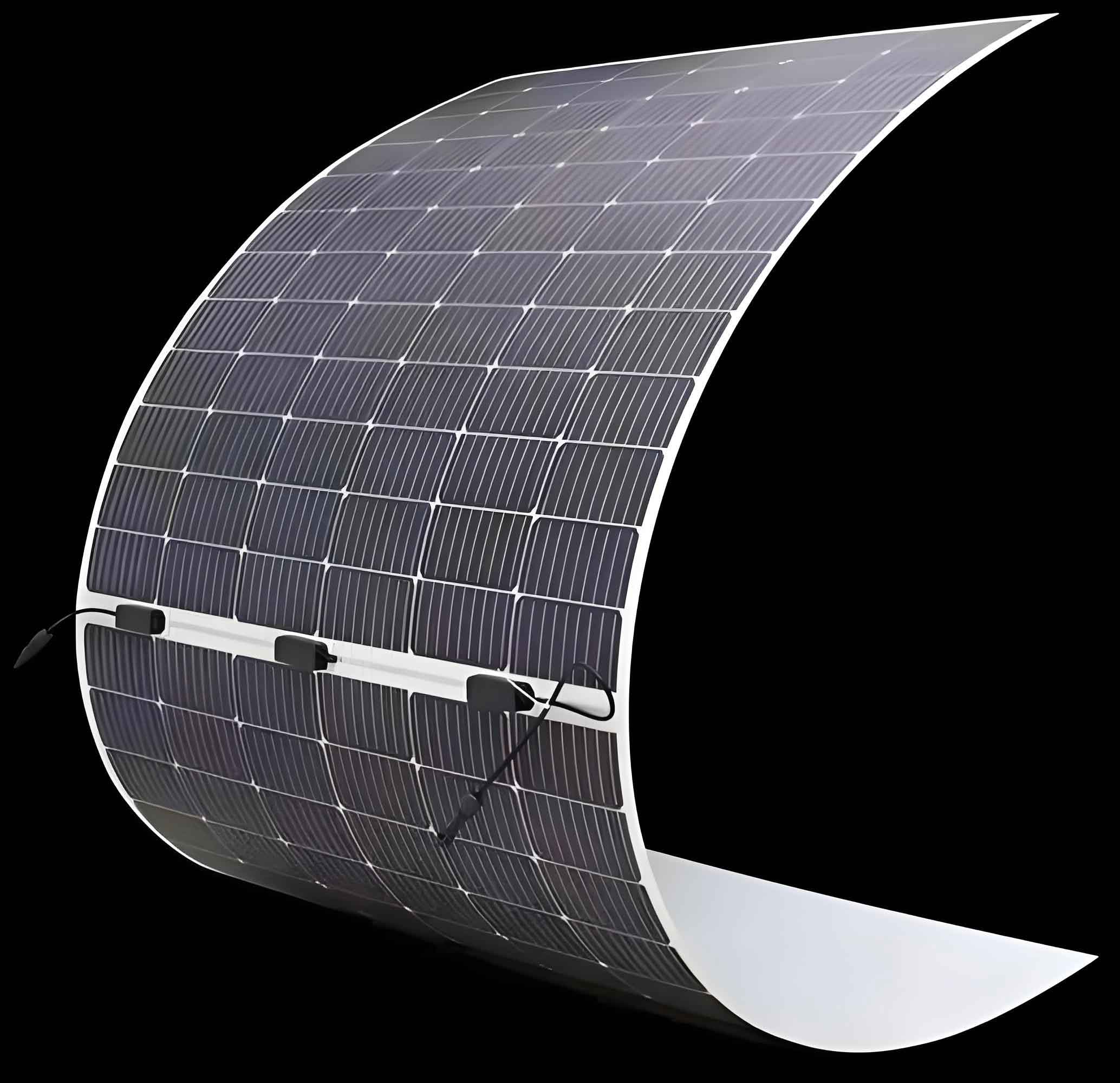
One of the most exciting trends I’ve observed is the integration of thin film solar panels into everyday objects, transforming them into mobile energy sources. For instance, consider the development of solar-powered roofing tiles and umbrellas. These products utilize CIGS-based thin film solar panels to blend seamlessly with architectural designs while generating electricity. The panels are incredibly light, with weights as low as 5.2 kg per unit, and thin, at just 6.5 mm in thickness, allowing for easy installation and aesthetic appeal. Their durability is enhanced through tempered glass coatings, enabling them to withstand harsh weather and even physical impacts. This innovation turns passive structures into active power generators, a leap forward for building-integrated photovoltaics (BIPV).
Moreover, the advent of portable energy solutions has been revolutionized by thin film solar panels. Products like solar charging papers and backpacks embed flexible CIGS modules that can harvest energy under various lighting conditions. These devices often incorporate smart features, such as light-sensing capabilities to optimize charging, and fast-charging technologies that deliver currents up to 2.0 A. For example, a typical thin film solar panel backpack might include dual USB ports and foldable panels, allowing users to charge electronics on the go. This mobility addresses a critical gap in renewable energy access, especially in remote or outdoor settings.
Perhaps the most groundbreaking application I’ve seen is in the transportation sector. Imagine vehicles powered entirely by thin film solar panels, eliminating the need for frequent charging stations. Recent prototypes have integrated flexible gallium arsenide (GaAs) thin film solar panels onto car roofs and bodies, covering areas of 3.5 to 7.5 square meters. Under optimal sunlight, these panels can generate 8 to 10 kWh daily, sufficient to drive approximately 80 km. This extends the concept of “infinite driving” for short to medium distances, reducing reliance on grid electricity. The energy harvested can be modeled as: $$ E_{daily} = A \times \eta \times I \times t $$ where $E_{daily}$ is the daily energy output, $A$ is the panel area, $\eta$ is the efficiency, $I$ is the solar irradiance, and $t$ is the exposure time. With advancements in thin film solar panel efficiency, such vehicles are inching toward commercial viability.
| Technology Type | Typical Efficiency Range (%) | Key Advantages | Common Applications | Material Thickness (μm) |
|---|---|---|---|---|
| CIGS (Copper Indium Gallium Selenide) | 15-22 | High efficiency, flexibility, lightweight | Roofing tiles, portable chargers, vehicles | 2-3 |
| CdTe (Cadmium Telluride) | 10-18 | Low-cost production, good temperature performance | Large-scale power plants, building facades | 3-5 |
| Organic Solar Cells (with Graphene) | 5-12 | Flexibility, color tunability, weak-light operation | Indoor electronics, wearable devices | 0.1-1 |
| GaAs (Gallium Arsenide) | 20-30 | Very high efficiency, radiation resistance | Space satellites, high-end mobility | 1-2 |
Another area that has captured my attention is the emergence of graphene-enhanced organic thin film solar panels. These devices represent a fusion of nanotechnology and photovoltaics, offering unprecedented flexibility and functionality. By incorporating graphene as a conductive layer, these panels can achieve enhanced charge transport and stability. What sets them apart is their ability to operate efficiently under weak light, such as indoor illumination, thanks to a broad absorption spectrum. The photocurrent generation in such panels can be expressed as: $$ J_{ph} = q \times G \times L_{diff} $$ where $J_{ph}$ is the photocurrent density, $q$ is the electron charge, $G$ is the generation rate of charge carriers, and $L_{diff}$ is the diffusion length. This enables applications like battery replacements for small electronics, with lifespans extending up to 10 years. The production of these thin film solar panels on automated lines marks a step toward mass adoption, potentially reducing electronic waste.
The manufacturing progress in thin film solar panels is equally impressive. Large-scale production techniques have evolved to deposit uniform layers over expansive substrates, such as glass sheets measuring several square meters. For instance, CdTe thin film solar panels are now produced using close-spaced sublimation or vapor transport deposition, achieving efficiencies that rival traditional panels. The cost dynamics can be analyzed using the learning curve model: $$ C_t = C_0 \times (Cumulative Production)^{-b} $$ where $C_t$ is the cost at time $t$, $C_0$ is the initial cost, and $b$ is the learning rate. As cumulative production of thin film solar panels increases, economies of scale drive down prices, making them more accessible. This is complemented by advancements in encapsulation methods that enhance durability against environmental degradation.
Looking at the broader landscape, the integration of thin film solar panels into the Internet of Things (IoT) and smart cities is a trend I find particularly promising. These panels can power sensors, communication devices, and lighting systems autonomously, reducing grid dependency. For example, in collaborative projects with logistics and mobility services, thin film solar panels have been embedded into delivery vehicles and shared bicycles to extend battery life. This synergy creates a distributed energy network where every surface can contribute to power generation. The potential energy yield from such integrations can be estimated using the formula: $$ P_{total} = \sum_{i=1}^{n} A_i \times \eta_i \times I_i $$ where $P_{total}$ is the total power output, $A_i$ is the area of each thin film solar panel, $\eta_i$ is its efficiency, and $I_i$ is the local irradiance.
| Application | Panel Type | Average Power Output (W) | Key Features | Estimated Lifespan (years) |
|---|---|---|---|---|
| Solar Roofing Tiles | CIGS | 50-100 per square meter | Weather-resistant, aesthetic integration | 20-25 |
| Portable Chargers | CIGS/GaAs | 10-20 per unit | Flexible, fast-charging, lightweight | 5-10 |
| Vehicle Integration | GaAs | 200-500 per vehicle | High efficiency, durable under motion | 15-20 |
| Indoor Electronics | Organic with Graphene | 1-5 per device | Weak-light operation, color customizable | 8-12 |
| Large-Scale Plants | CdTe | Megawatt-scale arrays | Low levelized cost of energy (LCOE) | 25-30 |
From a technical standpoint, the efficiency limitations of thin film solar panels are being addressed through multi-junction designs and perovskite hybrids. Perovskite materials, in particular, have shown rapid efficiency improvements, with laboratory cells exceeding 25%. When combined with thin film solar panels in tandem structures, they can capture a broader spectrum of sunlight. The theoretical maximum efficiency for a multi-junction cell is given by the Shockley-Queisser limit extended model: $$ \eta_{max} = 1 – \frac{\int_{0}^{E_g1} \phi(E) dE}{\int_{0}^{\infty} \phi(E) dE} + \sum_{i=2}^{n} \left(1 – \frac{E_{gi-1}}{E_{gi}}\right) $$ where $\phi(E)$ is the photon flux density, and $E_g$ are the bandgap energies of the layers. Such innovations could propel thin film solar panels to new heights, challenging silicon dominance.
The environmental and economic implications of thin film solar panels are profound. Their low material usage reduces the carbon footprint associated with production, and their flexibility minimizes installation costs. In regions with space constraints or aesthetic requirements, thin film solar panels offer a viable alternative. Moreover, the ability to recycle materials like cadmium in CdTe panels mitigates toxicity concerns. Lifecycle analysis often reveals that thin film solar panels have energy payback times as short as one year, meaning they generate more energy over their lifetime than consumed in manufacturing. This sustainability angle is crucial for global energy transitions.
Reflecting on the future, I believe thin film solar panels will play a pivotal role in the democratization of energy. As costs decline and efficiencies rise, we may see them embedded in everything from clothing to urban infrastructure. The concept of “mobile energy” — where power generation is decentralized and omnipresent — aligns with trends toward electrification and digitalization. In this vision, every thin film solar panel contributes to a resilient grid, reducing fossil fuel dependence and enhancing energy security. The ongoing research into scalable printing techniques and bio-inspired designs only amplifies this potential.
In conclusion, the advancements in thin film solar panel technology represent a quiet revolution in the renewable energy arena. Through continuous innovation in materials, manufacturing, and application, these panels are breaking free from niche roles to mainstream adoption. Whether it’s powering homes, vehicles, or gadgets, thin film solar panels embody the promise of a cleaner, more connected world. As I follow these developments, I am optimistic that the integration of thin film solar panels into our daily lives will accelerate, driven by their inherent advantages and the relentless pursuit of efficiency. The journey is far from over, but the progress so far underscores a future where solar energy is not just abundant but seamlessly woven into the fabric of society.