
In the rapidly evolving landscape of renewable energy, thin-film solar panels, particularly those based on copper indium gallium selenide (CIGS) technology, have emerged as a promising alternative to traditional crystalline silicon photovoltaic systems. As a research team engaged in industrial automation, we have developed an advanced automated classification and stacking process for CIGS thin-film solar panels, addressing the critical need for efficient post-production handling. The motivation stems from the inherent advantages of thin-film solar panels, such as lower production costs, reduced environmental impact, excellent weak-light performance, and superior stability, which make them ideal for building-integrated photovoltaics (BIPV) and large-scale solar farms. However, the manual stacking and packaging of these panels have become a bottleneck, leading to increased labor costs, safety risks, and inconsistent throughput. Our automated system leverages industrial robots, machine vision, and intelligent control to streamline the workflow, ensuring high-speed, flexible, and reliable operations. This article details our design methodology, system architecture, and key innovations, emphasizing the integration of automation to enhance the competitiveness of thin-film solar panel manufacturing.
The core challenge in handling thin-film solar panels lies in their fragility and the requirement for precise classification based on power output. Traditionally, human operators manually sorted and stacked panels, a process prone to errors, fatigue, and damage. With the rise of Industry 4.0, we aimed to replace this labor-intensive approach with a fully automated solution. Our system not only automates the stacking but also incorporates real-time quality assessment and adaptive sorting, enabling a seamless transition from production to logistics. Below, we present a comparative analysis of manual versus automated stacking, highlighting the transformative impact of our technology on the thin-film solar panel industry.
| Aspect | Manual Stacking | Automated Stacking |
|---|---|---|
| Labor Requirement | High: Multiple operators needed for lifting and sorting | Low: Fully automated with minimal supervision |
| Efficiency | Slow: Subject to human fatigue and variability | Fast: Continuous operation at speeds up to 600 panels per hour |
| Accuracy | Error-prone: Misclassification due to manual inspection | High: Precision vision systems ensure exact power grading |
| Safety | Risky: Potential for injuries and panel breakage | Safe: Enclosed robotic cells with safety interlocks |
| Flexibility | Limited: Difficulty adapting to different panel sizes or grades | High: Programmable robots handle varied configurations |
| Cost Over Time | High: Recurring wages and training expenses | Lower: Initial investment offset by reduced operational costs |
From this comparison, it is evident that automated stacking offers substantial benefits, particularly for thin-film solar panels, where consistency and throughput are paramount. Our system is designed to maximize these advantages through a modular architecture, as described in the following sections. The transition to automation is not merely a replacement of human labor but an enhancement of the entire supply chain, from production to distribution.
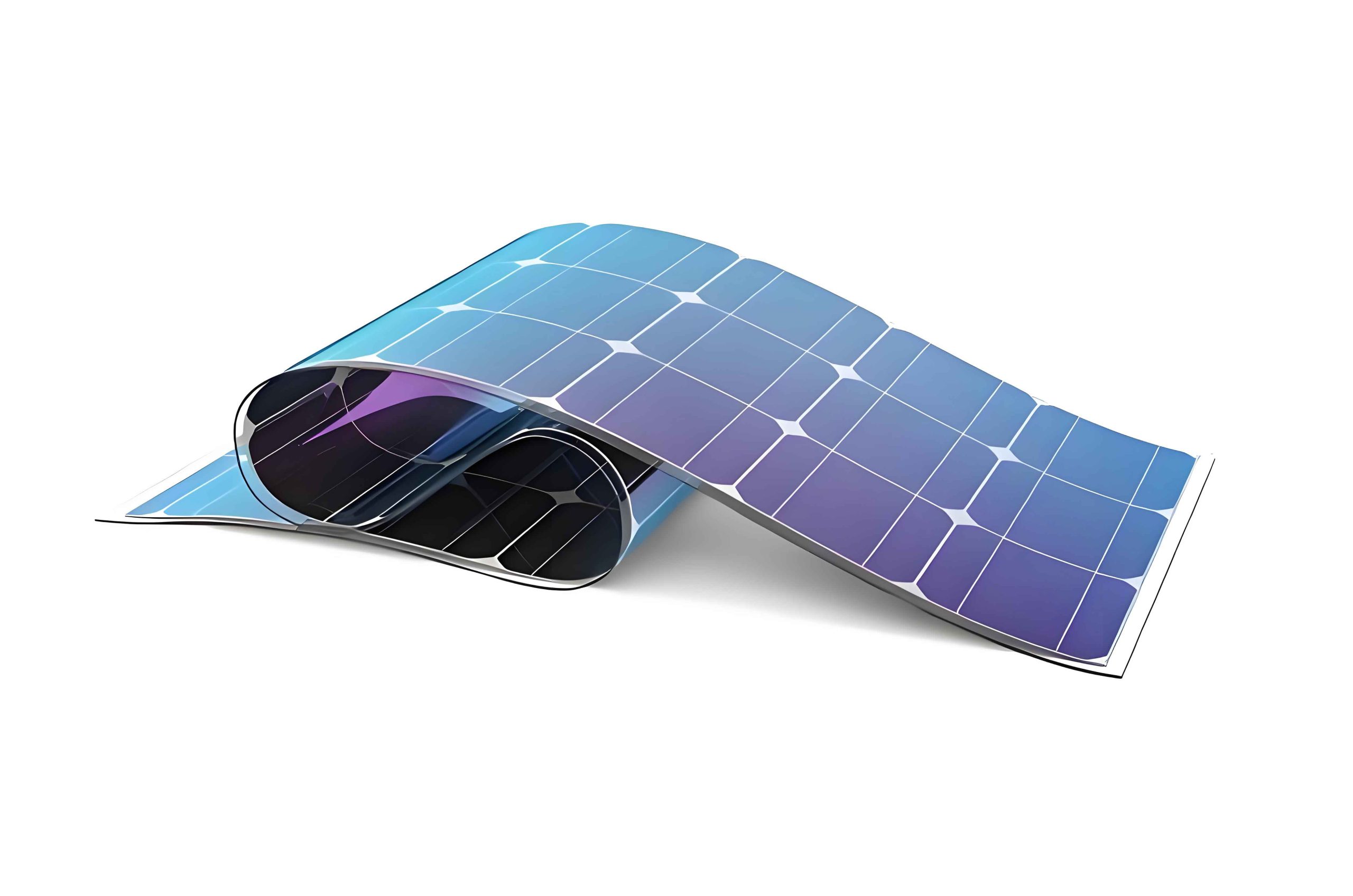
The visual representation above illustrates the sleek and uniform appearance of thin-film solar panels, which our automated system handles with care. These panels, typically characterized by their lightweight and flexible nature, require delicate manipulation to avoid micro-cracks that could degrade performance. In our process, each panel undergoes rigorous inspection and sorting before being stacked into wooden crates for shipment. The integration of robotics ensures that the panels are aligned precisely, minimizing stress and maximizing packing density.
Our automated classification and stacking system comprises several key components: an inbound conveyor, robotic arms, a caching rack, a positioning mechanism, a palletizing robot with vision, and a wooden pallet handling line. The overall layout is optimized for minimal footprint and maximum flow, as summarized in the table below:
| Component | Function | Key Specifications |
|---|---|---|
| Inbound Conveyor | Transports finished thin-film solar panels from previous station | Speed: 1 m/s; Positioning accuracy: ±1 mm |
| Inbound Robot | Picks panels from conveyor and places them into cache rack | 6-axis + linear track; Payload: 20 kg; Repeatability: ±0.1 mm |
| Cache Rack | Temporarily stores panels for power-based classification | Capacity: 120 panels (6 columns × 20 rows) |
| Outbound Robot | Retrieves classified panels from cache for further processing | Similar to inbound robot; Equipped with vacuum gripper |
| Positioning Mechanism | Orients panels alternately (front/back) for stacking | Gravity-based alignment; Four rolling supports |
| Palletizing Robot with Vision | Stacks panels into wooden crates using visual guidance | 6-axis; Vision system accuracy: ±0.5 mm; Speed: 4 s/panel |
| Wooden Pallet Line | Handles empty and full crates, including labeling and fixing | Conveyor speed: 0.5 m/s; Pallet size: 1200 mm × 1000 mm |
The workflow begins with panels arriving on the inbound conveyor after undergoing electrical tests. The inbound robot, equipped with a custom end-effector, grasps each thin-film solar panel using vacuum suction cups to prevent damage. The robot’s trajectory is programmed to minimize acceleration and ensure smooth motion, reducing mechanical stress on the panels. Once placed in the cache rack, panels are sorted by their power output, which is pre-determined from earlier quality checks. This classification is critical because thin-film solar panels often exhibit slight variations in efficiency due to the deposition process. Our system categorizes them into bins, ensuring that each wooden crate contains panels of uniform performance, a key selling point for customers.
The caching strategy employs a first-in, first-out (FIFO) logic, but with priority given to power grades that have accumulated sufficient quantity for a full crate. We model this using a queueing theory approach, where the arrival rate of panels $\lambda$ and the service rate of the robots $\mu$ determine system throughput. For optimal performance, we aim to maintain $\lambda < \mu$ to avoid bottlenecks. The number of panels per power grade $n$ required for a full crate is set based on customer specifications, typically ranging from 10 to 30 panels. The robot’s decision algorithm can be expressed as:
$$ \text{Action} = \begin{cases}
\text{Retrieve from cache} & \text{if } n_{\text{grade}} \geq n_{\text{threshold}} \\
\text{Continue caching} & \text{otherwise}
\end{cases} $$
where $n_{\text{grade}}$ is the count of panels in a specific power grade, and $n_{\text{threshold}}$ is the required number for stacking. This dynamic allocation allows the system to adapt to varying production rates, a common scenario in thin-film solar panel manufacturing due to process fluctuations.
After classification, the outbound robot transfers panels to the positioning mechanism. This device uses gravity to align each thin-film solar panel precisely, with rollers ensuring minimal friction. Since the panels have a back rail on one side, they must be stacked alternately to fit into the crate’s foam slots. The positioning mechanism rotates or flips panels as needed, achieving an orientation accuracy of $\pm 0.2$ mm. The force exerted on the panel during this process is controlled to avoid bending, which is crucial for maintaining the structural integrity of thin-film solar panels. We calculate the allowable deflection $\delta$ using the beam bending formula:
$$ \delta = \frac{F L^3}{3 E I} $$
where $F$ is the applied force, $L$ is the panel length, $E$ is the Young’s modulus of the glass substrate, and $I$ is the moment of inertia. By keeping $\delta$ below 1 mm, we prevent micro-cracks that could compromise the panel’s efficiency.
The heart of our system is the palletizing robot integrated with a machine vision system. This robot picks panels from the positioning mechanism and places them into wooden crates. The vision system, mounted on the robot’s wrist, captures images of the crate’s foam slots to compensate for positioning errors. These errors arise from pallet manufacturing tolerances and conveyor misalignment, which can be up to $\pm 5$ mm. Using edge detection and pattern matching algorithms, the vision system calculates the offset $(\Delta x, \Delta y, \Delta \theta)$ and transmits this to the robot controller. The transformation is applied in real-time, ensuring each thin-film solar panel is placed accurately within the foam slots. The vision processing time $t_v$ is critical for cycle time and is given by:
$$ t_v = t_{\text{acquisition}} + t_{\text{processing}} + t_{\text{communication}} $$
where $t_{\text{acquisition}} \approx 100$ ms, $t_{\text{processing}} \approx 50$ ms, and $t_{\text{communication}} \approx 10$ ms, resulting in a total of 160 ms per panel. This allows the robot to maintain a cycle time of 4 seconds, including motion. The vision system’s accuracy is validated through repeated tests, showing a standard deviation of $\sigma = 0.3$ mm in placement error, well within the acceptable range of $\pm 1$ mm for thin-film solar panel stacking.
The wooden pallet handling line manages the flow of crates throughout the process. Empty crates are fed into the system manually or via an automated feeder, then positioned precisely using pneumatic actuators. Once a crate is filled with thin-film solar panels, it is conveyed to a labeling and fixing station, where barcode labels are applied and strapping is added for stability. The entire line is synchronized using a programmable logic controller (PLC), which coordinates conveyors, robots, and sensors. The PLC implements a state machine that tracks each crate’s status, from empty to filled to shipped. We use Modbus TCP/IP for communication between the PLC and robotic controllers, enabling seamless integration. The system’s overall efficiency $\eta_{\text{system}}$ can be expressed as:
$$ \eta_{\text{system}} = \frac{N_{\text{stacked}}}{N_{\text{input}}} \times 100\% $$
where $N_{\text{stacked}}$ is the number of thin-film solar panels successfully stacked per hour, and $N_{\text{input}}$ is the number arriving from production. In trials, we achieved $\eta_{\text{system}} = 98.5\%$, with losses mainly due to occasional vision misreads or panel defects.
From an electrical control perspective, the system relies on a centralized PLC that oversees all motor drives, sensors, and safety interlocks. The control algorithm incorporates predictive maintenance features, monitoring robot joint temperatures and conveyor wear to preempt failures. For instance, the current draw of each robot axis is analyzed to detect anomalies, using a threshold model:
$$ I_{\text{alarm}} = \bar{I} + 3\sigma_I $$
where $\bar{I}$ is the average current and $\sigma_I$ is the standard deviation under normal operation. This proactive approach minimizes downtime, essential for continuous production of thin-film solar panels. Additionally, the system interfaces with a manufacturing execution system (MES) to log data such as power grades, stack counts, and quality metrics, enabling traceability and process optimization.
In conclusion, our automated classification and stacking process represents a significant advancement in the handling of CIGS thin-film solar panels. By replacing manual labor with robotics and vision, we have achieved higher efficiency, improved accuracy, and enhanced safety, all while reducing operational costs. The modular design allows for scalability, accommodating future increases in production volume or changes in panel dimensions. As the demand for thin-film solar panels grows, driven by their superior performance in diverse environments, such automation solutions will become indispensable. Our system not only streamlines post-production logistics but also contributes to the broader adoption of thin-film solar technology by making it more economically viable. We envision further integration with artificial intelligence for adaptive learning, potentially optimizing stacking patterns in real-time based on crate dimensions and panel specifications. Ultimately, this work underscores the transformative potential of automation in renewable energy manufacturing, paving the way for smarter, more sustainable production lines.
To quantify the benefits, we conducted a cost-benefit analysis over a five-year period, considering factors like labor savings, energy consumption, and maintenance. The results are summarized below:
| Year | Manual Stacking Cost (USD) | Automated Stacking Cost (USD) | Savings (USD) |
|---|---|---|---|
| 1 | 200,000 | 350,000 (including capital investment) | -150,000 |
| 2 | 210,000 | 50,000 | 160,000 |
| 3 | 220,000 | 55,000 | 165,000 |
| 4 | 231,000 | 60,000 | 171,000 |
| 5 | 243,000 | 65,000 | 178,000 |
The initial investment in automation is recouped by the second year, with cumulative savings reaching over $500,000 by year five. This economic advantage, coupled with technical benefits, makes a compelling case for adopting automated systems in thin-film solar panel facilities worldwide.
Looking ahead, we plan to enhance the vision system with deep learning algorithms for defect detection, allowing real-time rejection of substandard thin-film solar panels during stacking. Additionally, we are exploring collaborative robots (cobots) for tasks like crate sealing, which could further reduce human intervention. The continuous improvement of thin-film solar panel technology, with efficiencies now exceeding 22% in lab settings, necessitates equally advanced handling solutions. Our automated process is a step toward that future, ensuring that the promise of thin-film solar panels is fully realized from factory to field.