
As an industry analyst and advocate for sustainable technology, I have been closely monitoring the dynamic shifts in the glass and renewable energy sectors. The recent developments highlight a concerted effort to elevate quality standards, foster innovation, and ensure consumer safety. In this comprehensive overview, I will delve into the key trends, with a particular focus on the advancements in thin film solar panels, which are revolutionizing the solar energy landscape. This article aims to provide an in-depth analysis using data summaries, tables, and formulas to elucidate the critical aspects of these industries.
The glass industry has consistently demonstrated a commitment to excellence, with leading companies setting higher benchmarks for product quality and service. These entities are not only refining their technical processes but also actively contributing to the establishment of robust industry standards. By prioritizing rigorous testing and consumer-centric approaches, they ensure that decorative glass products exceed expectations. This drive for perfection is essential in building trust and promoting sustainable growth within the market. As part of this evolution, the integration of advanced materials and manufacturing techniques has become paramount, paving the way for innovations that extend into renewable energy applications, such as thin film solar panels.
One of the most significant breakthroughs in recent years is the advancement of thin film solar panel technology. Unlike traditional silicon-based photovoltaic cells, thin film solar panels offer advantages in flexibility, weight, and production efficiency. The development of copper indium gallium selenide (CIGS) based thin film solar panels, for instance, represents a leap forward in solar energy harnessing. These panels are manufactured through sophisticated processes that deposit thin layers of photovoltaic material onto substrates, resulting in modules that are both efficient and versatile. The proliferation of thin film solar panels is reshaping the global energy market, as they provide a viable alternative to conventional solar solutions, especially in applications where space and weight constraints are critical.
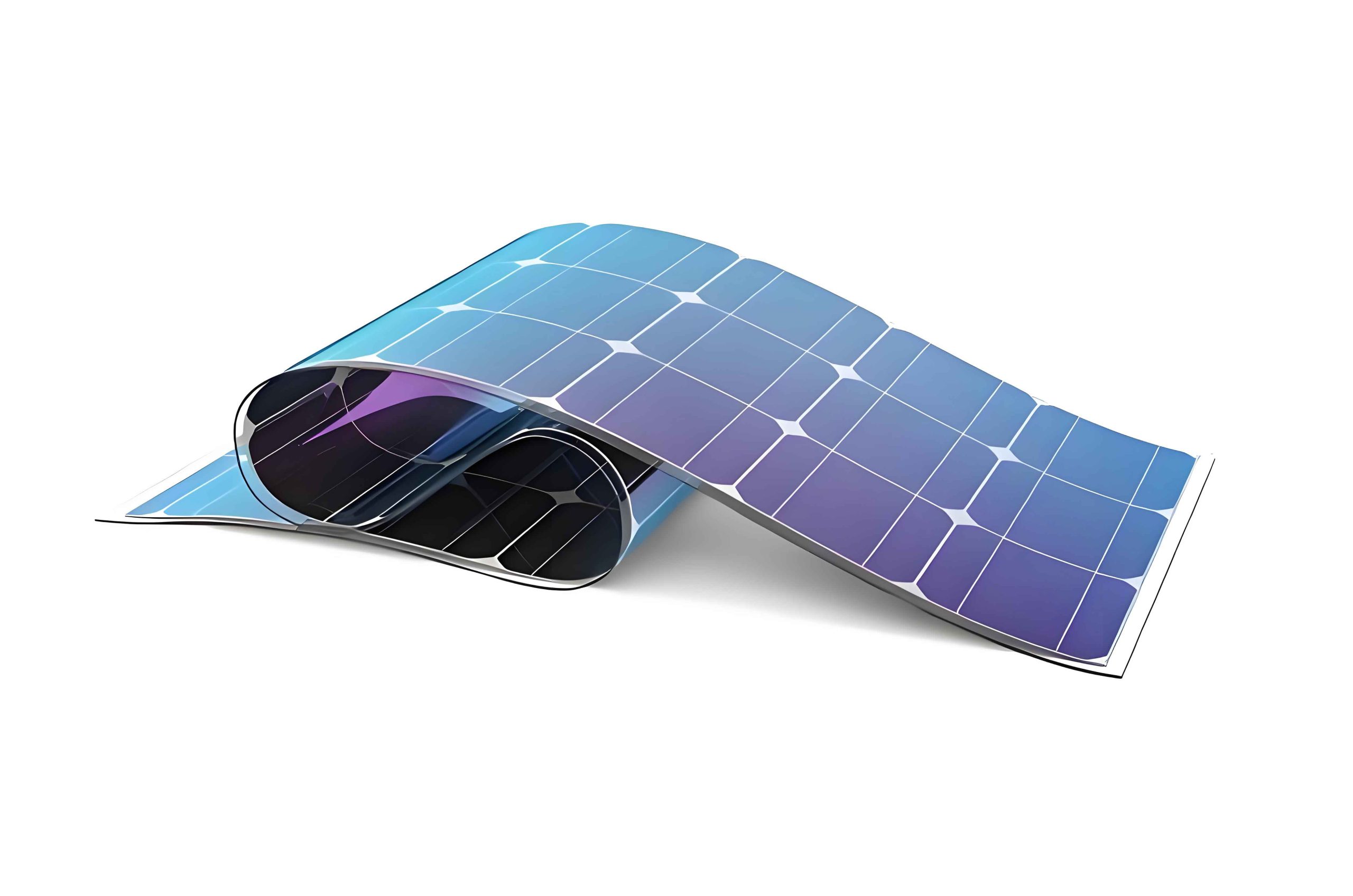
The efficiency of thin film solar panels is a key metric that determines their viability. The conversion efficiency, denoted by η, is calculated using the formula: $$ \eta = \frac{P_{\text{out}}}{P_{\text{in}}} \times 100\% $$ where \( P_{\text{out}} \) is the electrical power output and \( P_{\text{in}} \) is the solar irradiance input. For thin film solar panels, typical efficiency values range from 10% to 15%, with ongoing research aiming to push these boundaries further. The improvement in efficiency is closely tied to material science innovations, such as optimizing the bandgap of CIGS layers. The bandgap energy \( E_g \) can be expressed as: $$ E_g = h \nu $$ where \( h \) is Planck’s constant and \( \nu \) is the frequency of incident light. By engineering materials with tailored bandgaps, thin film solar panels can achieve higher absorption rates and better performance under varying light conditions.
To illustrate the comparative advantages of thin film solar panels, consider the following table summarizing key characteristics against traditional silicon panels:
| Feature | Thin Film Solar Panels | Monocrystalline Silicon Panels |
|---|---|---|
| Material Thickness | 1-3 micrometers | 150-200 micrometers |
| Weight | Lightweight (approx. 10 kg/m²) | Heavier (approx. 20 kg/m²) |
| Flexibility | High (can be bent) | Low (rigid) |
| Efficiency Range | 10%-15% | 15%-22% |
| Production Cost | Lower due to less material use | Higher due to silicon purity requirements |
| Application Suitability | Building-integrated PV, portable devices | Rooftop installations, solar farms |
The deployment of thin film solar panels has been accelerated through international collaborations, such as the Sino-German initiatives that focus on smart manufacturing. These partnerships facilitate knowledge exchange and technological refinement, ensuring that thin film solar panel production lines incorporate cutting-edge automation and quality control measures. The scalability of thin film solar panel manufacturing is another critical factor, as it enables mass production at reduced costs. The annual output of a typical thin film solar panel facility can be modeled using the formula: $$ Q = n \times r \times t $$ where \( Q \) is the total production capacity, \( n \) is the number of production lines, \( r \) is the production rate per line, and \( t \) is the operational time. For instance, a plant with 10 lines producing at 30 MW per line annually can achieve up to 300 MW of thin film solar panels, contributing significantly to the renewable energy supply.
Beyond energy, the glass industry is also witnessing stringent regulatory oversight to ensure product safety and quality. National supervision plans now include glass containers and tableware, reflecting the importance of these items in daily life. The inclusion of such products in mandatory抽查 programs underscores a proactive approach to consumer protection. This aligns with broader trends in quality assurance, where data-driven inspections and standardized testing protocols are employed. The following table outlines the categories of products under the national supervision plan, emphasizing the scope of materials covered:
| Product Category | Number of Products Listed | Examples |
|---|---|---|
| Daily Use & Textiles | 43 | Clothing, household items |
| Electronics & Appliances | 51 | Televisions, refrigerators |
| Light Industrial Products | 28 | Toys, stationery |
| Building & Decorative Materials | 37 | Paints, glass panels |
| Agricultural Production Materials | 9 | Fertilizers, pesticides |
| Machinery & Safety Products | 43 | Tools, protective gear |
| Electrical & Material Products | 32 | Wires, insulation materials |
| Food-Related Products | 24 | Glass bottles, plastic utensils |
The intersection of glass technology and thin film solar panels is particularly noteworthy. Glass substrates are often used in the fabrication of thin film solar panels, due to their transparency, durability, and thermal stability. The optical properties of glass, such as transmittance \( T \), can be described by: $$ T = \frac{I_t}{I_0} $$ where \( I_t \) is the transmitted light intensity and \( I_0 \) is the incident light intensity. High-transmittance glass enhances the performance of thin film solar panels by allowing more sunlight to reach the photovoltaic layers. Moreover, advancements in coated glass, such as anti-reflective coatings, further boost the efficiency of thin film solar panels by reducing light loss. This synergy between glass innovation and thin film solar panel development is driving the creation of integrated building solutions, where windows and facades double as energy-generating surfaces.
In the context of manufacturing excellence, the production of thin film solar panels involves precise control over deposition processes. Techniques like sputtering or chemical vapor deposition are used to apply thin layers of semiconductor materials. The thickness \( d \) of these layers is critical and can be optimized using the formula: $$ d = \frac{m}{\rho A} $$ where \( m \) is the mass of deposited material, \( \rho \) is its density, and \( A \) is the area of deposition. Consistent layer thickness ensures uniform performance across thin film solar panels, minimizing defects and maximizing yield. Quality assurance in thin film solar panel production also relies on statistical process control, where parameters like efficiency variance are monitored. The standard deviation \( \sigma \) of efficiency measurements can be calculated as: $$ \sigma = \sqrt{\frac{1}{N-1} \sum_{i=1}^{N} (x_i – \bar{x})^2} $$ where \( N \) is the number of samples, \( x_i \) is the efficiency of the i-th thin film solar panel, and \( \bar{x} \) is the mean efficiency. Maintaining low \( \sigma \) values indicates high product consistency, which is essential for commercial success.
The environmental impact of thin film solar panels is another area of focus. Lifecycle assessments reveal that thin film solar panels generally have a lower carbon footprint compared to silicon-based panels, due to reduced energy consumption during manufacturing. The energy payback time (EPT), which is the duration required for a thin film solar panel to generate the energy used in its production, can be estimated with: $$ \text{EPT} = \frac{E_{\text{prod}}}{E_{\text{gen}}} $$ where \( E_{\text{prod}} \) is the energy consumed in production and \( E_{\text{gen}} \) is the annual energy generation. For thin film solar panels, EPT values often range from 1 to 2 years, making them a sustainable choice. Additionally, the recyclability of materials in thin film solar panels, such as glass and metals, contributes to circular economy principles. As demand for thin film solar panels grows, efforts to enhance end-of-life recovery processes are intensifying, ensuring that these technologies align with global sustainability goals.
Looking ahead, the future of thin film solar panels appears promising, with research delving into perovskite-based thin films and tandem cell configurations that promise efficiencies exceeding 20%. The integration of smart technologies, such as IoT sensors for real-time monitoring, will further optimize the performance of thin film solar panels in diverse environments. Moreover, policy support and international standards will play a pivotal role in scaling up adoption. It is clear that thin film solar panels are not just a niche product but a cornerstone of the transition to clean energy. Their versatility, coupled with ongoing innovations in glass and material sciences, positions them as a key driver for industrial and environmental progress.
In conclusion, the glass and renewable energy sectors are undergoing transformative changes, driven by a commitment to quality, innovation, and sustainability. Thin film solar panels, in particular, exemplify this evolution, offering efficient and adaptable solutions for energy generation. Through rigorous supervision and collaborative advancements, the industry is poised to meet the challenges of the future. As we continue to explore the potential of thin film solar panels, it is imperative to foster an ecosystem that supports research, standardization, and consumer awareness, ensuring that these technologies realize their full potential in creating a greener world.