
As a researcher in the field of energy storage, I have witnessed the growing importance of sodium-ion batteries as a promising alternative to lithium-ion batteries for large-scale applications. The abundance and low cost of sodium resources make sodium-ion batteries highly attractive, especially for grid storage and electric vehicles. However, one critical challenge that hinders their widespread adoption is the significant performance degradation at low temperatures. In extreme environments, such as high-altitude regions or space exploration, operating temperatures can drop as low as -100°C, where conventional sodium-ion batteries often fail. This review delves into the recent progress in designing electrolytes to overcome these low-temperature limitations, focusing on the fundamental mechanisms, innovative strategies, and future directions. The core of the discussion revolves around optimizing electrolyte formulations to enhance ion transport kinetics and interfacial stability, thereby enabling reliable operation of sodium-ion batteries under harsh cold conditions.
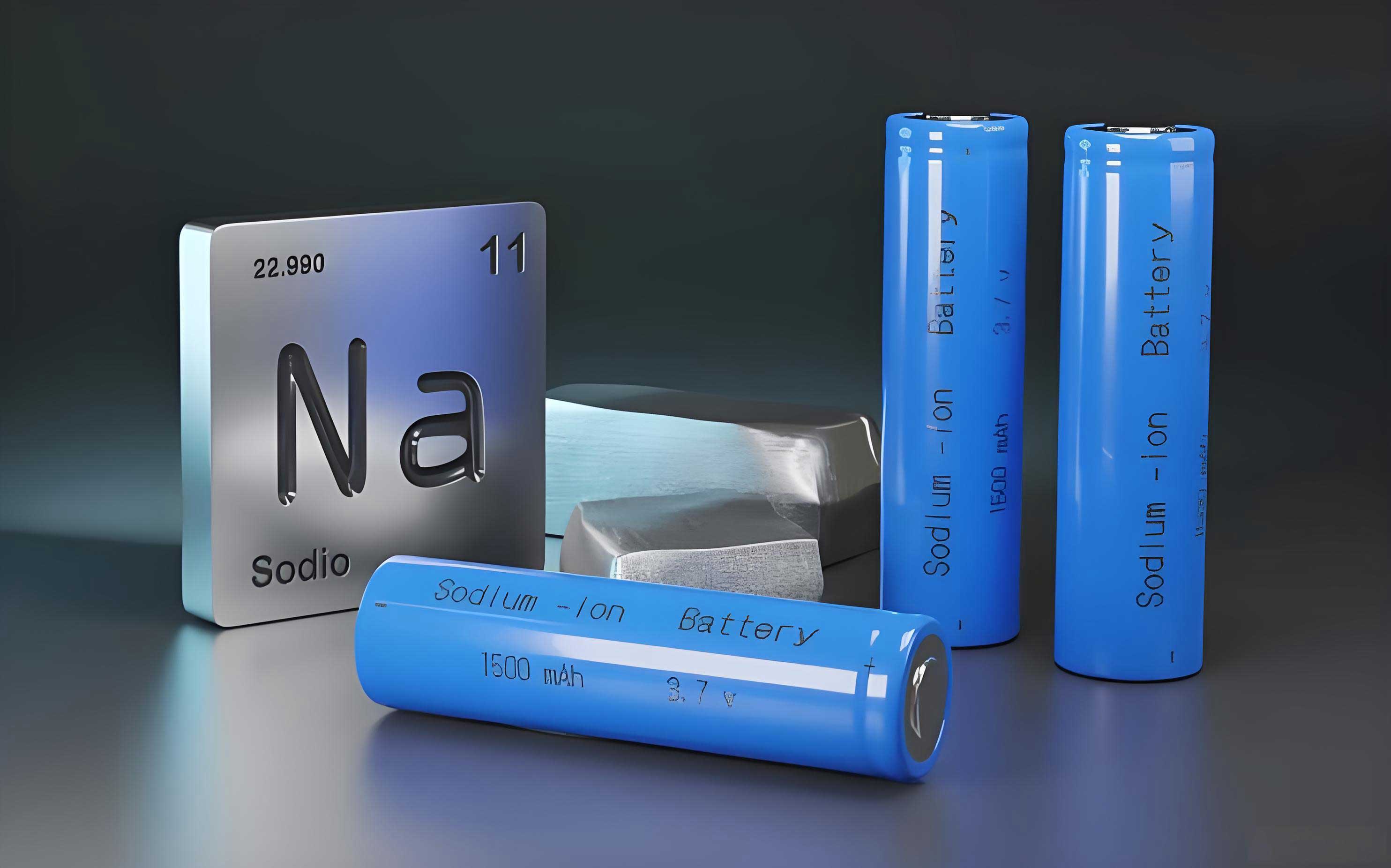
The performance of sodium-ion batteries at low temperatures is primarily governed by the electrolyte, which dictates ion diffusion, charge transfer, and interfacial reactions. When the temperature decreases, several kinetic barriers emerge: reduced ionic conductivity in the bulk electrolyte, increased desolvation energy at the electrode-electrolyte interface, and sluggish sodium-ion diffusion through the solid electrolyte interphase (SEI) and cathode electrolyte interphase (CEI). These factors collectively lead to high polarization, capacity loss, and poor cycle life. To address these issues, researchers have explored various electrolyte design approaches, including solvent selection, additive engineering, and novel systems like high-entropy electrolytes and ionic liquids. In this article, I will systematically analyze these advancements, incorporating tables and equations to summarize key findings. The goal is to provide a comprehensive perspective on how electrolyte chemistry can be tailored to unlock the full potential of sodium-ion batteries in low-temperature applications.
First, let’s examine the mechanistic reasons behind the low-temperature failure of sodium-ion batteries. The ionic conductivity (σ) of an electrolyte is a critical parameter, as it determines the rate of sodium-ion movement in the bulk. In an ideal dilute solution, the conductivity can be expressed as:
$$\sigma = \sum n_i \mu_i Z_i e$$
where \(n_i\) is the carrier number, \(\mu_i\) is the ion mobility, \(Z_i\) is the valence state, and \(e\) is the elementary charge. At low temperatures, the ion mobility decreases significantly due to increased viscosity (η) of the solvent, which follows the Vogel-Fulcher-Tammann (VFT) equation:
$$\eta = \eta_0 \exp\left[\frac{B}{T – T_0}\right]$$
Here, \(\eta_0\), \(B\), and \(T_0\) are empirical constants. As \(T\) drops, η rises sharply, leading to a decline in σ. For instance, in ethylene carbonate (EC)-based electrolytes, the viscosity can surge below -10°C, causing ionic conductivity to plummet. Additionally, the desolvation process, where solvated sodium ions shed their solvent shells before entering the electrode, becomes energetically unfavorable. The desolvation energy (ΔG_desolv) increases at lower temperatures, creating a kinetic bottleneck. For example, in a diglyme-based electrolyte, ΔG_desolv can rise from 4.16 kJ/mol at 25°C to 24.74 kJ/mol at -40°C. This highlights the need for weak solvation interactions to mitigate this barrier. Furthermore, sodium-ion diffusion through the SEI/CEI is hindered, as these interfaces often become less conductive in the cold. A thin, inorganic-rich SEI (e.g., containing NaF or Na3N) is desirable for faster ion transport, but typical electrolytes form organic-dominated layers with high resistance. The table below summarizes these key challenges and their impact on sodium-ion battery performance at low temperatures.
| Challenge | Description | Effect on Sodium-Ion Batteries |
|---|---|---|
| Low Ionic Conductivity | Increased viscosity reduces ion mobility. | High polarization, poor rate capability. |
| High Desolvation Energy | Strong solvent-Na+ interactions hinder desolvation. | Slow charge transfer, capacity fade. |
| Sluggish SEI/CEI Diffusion | Thick or organic-rich interfaces impede Na+ transport. | Reduced cycle life, especially at high rates. |
To combat these issues, electrolyte design must focus on three principles: (1) maintaining low freezing points and high ionic conductivity at sub-zero temperatures, (2) weakening the solvation energy to ease desolvation, and (3) fostering inorganic-rich, thin SEI/CEI layers for rapid ion diffusion. Over the years, numerous strategies have emerged, which I will categorize into organic solvent optimization, additive incorporation, and novel electrolyte systems. Each approach aims to enhance the low-temperature performance of sodium-ion batteries by tuning the electrolyte’s physicochemical properties.
Starting with organic solvents, they are the backbone of any electrolyte, responsible for dissolving salts and shaping the solvation structure. Two main classes are commonly used: carbonate-based and ether-based solvents. Carbonate solvents, such as ethylene carbonate (EC) and propylene carbonate (PC), are prevalent in commercial sodium-ion batteries due to their high dielectric constant and good SEI-forming ability. However, EC has a high freezing point of 36.4°C, making it unsuitable for low-temperature applications. To address this, researchers blend EC with low-freezing-point co-solvents like PC (freezing point -49°C), dimethyl carbonate (DMC, freezing point 4.6°C), or diethyl carbonate (DEC, freezing point -43°C). For example, a 1 M NaClO4 in EC-PC electrolyte exhibits a glass transition near -95°C, enabling operation down to -30°C. The ionic conductivity (σ) and viscosity (η) of such blends can be modeled using the Arrhenius equation for conductivity:
$$\sigma = A \exp\left(-\frac{E_a}{kT}\right)$$
where \(A\) is a pre-exponential factor, \(E_a\) is the activation energy, \(k\) is Boltzmann’s constant, and \(T\) is temperature. Studies show that EC-PC blends achieve σ ~1 mS/cm at -40°C, compared to near-zero for pure EC. However, carbonate-based electrolytes still suffer from high desolvation energies (over 200 kJ/mol) and tend to form resistive SEI layers, limiting performance below -30°C. In contrast, ether-based solvents, such as diethylene glycol dimethyl ether (DEGDME) and tetrahydrofuran (THF), offer lower freezing points (e.g., DEGDME freezes at -64°C) and weaker solvation power. The desolvation energy in ether electrolytes can be as low as 100 kJ/mol, thanks to the less nucleophilic ether oxygen atoms. Moreover, ethers facilitate the formation of inorganic-rich SEI layers with high ionic conductivity. For instance, a 1 M NaPF6 in DEGDME electrolyte enables a sodium-ion battery to retain 90% of its room-temperature capacity at -25°C. The table below compares key properties of common solvents for low-temperature sodium-ion batteries.
| Solvent Type | Examples | Freezing Point (°C) | Desolvation Energy (kJ/mol) | Typical σ at -40°C (mS/cm) |
|---|---|---|---|---|
| Carbonate | EC, PC, DMC | 36.4 to -49 | 200-250 | 0.5-1.0 |
| Ether | DEGDME, THF, DME | -64 to -95 | 100-150 | 1.0-2.0 |
| Fluorinated | FEC, FEMC | -44 to 20 | 150-200 | 1.2-1.8 |
Beyond solvents, additives play a pivotal role in fine-tuning electrolyte behavior for low-temperature sodium-ion batteries. Even small amounts (typically 1-5 wt%) of functional additives can dramatically alter solvation structures and interface chemistry. One common strategy is to introduce additives that weaken solvation, such as ethylene sulfate (ES) or trifluoroacetate (TFA-). These molecules compete with solvents for coordination with Na+, reducing the number of solvent molecules in the solvation shell and lowering desolvation energy. For example, adding ES to a 1 M NaFSI-EC-PC-DEC electrolyte changes the primary solvation structure from Na+(EC)1(PC)1(DEC)2 to Na+(EC)1(PC)1(DEC)1(ES)1, decreasing ΔG_desolv from 253.2 kJ/mol to 157.5 kJ/mol. This is quantified by the binding energy (E_bind) between Na+ and solvent/additive, which can be calculated using density functional theory (DFT):
$$E_{\text{bind}} = E_{\text{Na-solvent}} – (E_{\text{Na}} + E_{\text{solvent}})$$
where lower E_bind indicates weaker interactions. Another critical function of additives is SEI/CEI modification. Fluorinated additives like fluoroethylene carbonate (FEC) decompose preferentially to form NaF-rich interfaces, which have high ionic conductivity. However, NaF can still pose diffusion barriers at very low temperatures. Therefore, novel additives like tris(trimethylsilyl) phosphite (TMSPi) or adiponitrile (ADN) are explored to create hybrid organic-inorganic layers with optimized Na+ transport. The effectiveness of additives can be summarized by their impact on interfacial resistance (R_SEI), which follows an exponential decay with improved SEI quality:
$$R_{\text{SEI}} = R_0 \exp\left(-\frac{\Delta G_{\text{SEI}}}{kT}\right)$$
where \(R_0\) is the initial resistance and \(\Delta G_{\text{SEI}}\) is the activation energy for ion diffusion through the SEI. In practice, additive cocktails (e.g., FEC + TMSPi) synergistically enhance low-temperature performance, enabling sodium-ion batteries to cycle stably at -25°C with over 500 cycles. The table below lists some prominent additives and their roles in low-temperature sodium-ion battery electrolytes.
| Additive | Function | Optimal Concentration | Effect on Low-Temperature Performance |
|---|---|---|---|
| FEC | SEI formation (NaF-rich) | 2-5% | Improves cycle life at -20°C |
| ES | Weakens solvation | 1-3% | Reduces polarization at -40°C |
| TMSPi | HF scavenger, SEI modifier | 0.5-2% | Enhances stability at -25°C |
| ADN | CEI formation (NaCN-rich) | 3% | Boosts cathode performance at low T |
| NaDFOB | Dual anode/cathode protection | 0.1 M | Enables operation down to -45°C |
In recent years, novel electrolyte design concepts have emerged to push the boundaries of low-temperature sodium-ion batteries. One promising approach is high-entropy electrolytes, which utilize multiple solvents or salts to increase the system’s entropy (S), thereby depressing the freezing point and preventing salt precipitation. The entropy of mixing (ΔS_mix) for an ideal solution is given by:
$$\Delta S_{\text{mix}} = -R \sum x_i \ln x_i$$
where \(R\) is the gas constant and \(x_i\) is the mole fraction of component i. By combining solvents with varying solvation strengths (e.g., THF for strong solvation and DEGDME for weak solvation), the electrolyte maintains a disordered solvation structure even at low temperatures, ensuring high ionic conductivity. For instance, a 1 M NaPF6 in DEGDME-THF electrolyte remains liquid at -70°C and powers a sodium-ion battery with 90% capacity retention after 400 cycles at -40°C. Another innovative system is ionic liquid (IL)-based electrolytes. ILs, such as 1-methyl-1-propylpyrrolidinium bis(fluorosulfonyl)imide ([Py13][FSI]), have negligible vapor pressure and wide liquid ranges, making them ideal for extreme temperatures. When mixed with sodium salts like NaTFSI, IL-based electrolytes exhibit robust interfacial stability and low desolvation energy. The ionic conductivity of IL electrolytes can be described by the Vogel-Tammann-Fulcher (VTF) equation adapted for concentrated systems:
$$\sigma = \sigma_0 \exp\left[-\frac{B}{T – T_g}\right]$$
where \(T_g\) is the glass transition temperature. With IL electrolytes, sodium-ion batteries have demonstrated operation at -20°C with high coulombic efficiency (99.6%) and long cycle life (over 1000 cycles). These advanced electrolytes represent a paradigm shift, moving beyond traditional formulations to address the core kinetic issues in low-temperature sodium-ion batteries.
To quantify the progress in low-temperature sodium-ion battery electrolytes, I have compiled key performance metrics from various studies in the table below. This includes operating temperature ranges, electrolyte compositions, and specific capacities achieved. The data underscores how tailored electrolyte design can extend the functionality of sodium-ion batteries into the cryogenic realm.
| Electrolyte Composition | Operating Temperature (°C) | Capacity Retention (vs. RT) | Cycle Life at Low T | Key Features |
|---|---|---|---|---|
| 1 M NaClO4 in EC-PC | -30 to 25 | 85% at -20°C | 200 cycles | Low freezing point, good conductivity |
| 1 M NaPF6 in DEGDME | -40 to 25 | 90% at -25°C | 500 cycles | Weak solvation, inorganic SEI |
| 0.3 M NaPF6 in EC-PC (ULCE) | -30 to 25 | 93% at -25°C | 1000 cycles | Ultra-low concentration, cost-effective |
| 1 M NaFSI in FEC-FEMC-FB | -50 to 60 | 73% at -20°C | 500 cycles | Fluorinated, wide temperature range |
| 0.5 M NaOTf in DEGDME-DOL | -60 to 20 | 76% at -60°C | 100 cycles | Weak solvation, ultra-low T operation |
| 1 M NaPF6 in DEGDME-THF (High-entropy) | -70 to 25 | 91% at -40°C | 400 cycles | Entropy-driven, salt precipitation resistance |
| IL-based: NaTFSI in [Py13][FSI] | -20 to 80 | 80% at -20°C | 1000 cycles | Non-flammable, stable interfaces |
Looking ahead, the development of low-temperature electrolytes for sodium-ion batteries faces several exciting frontiers. First, a deeper understanding of solvation structures at varying temperatures is crucial. Most current studies assume static solvation shells, but in reality, the coordination environment dynamically changes with temperature. Advanced in situ techniques, such as nuclear magnetic resonance (NMR) and X-ray absorption spectroscopy, could reveal these transitions, guiding the design of temperature-adaptive electrolytes. Second, interfacial ion migration mechanisms need further elucidation. While SEI/CEI composition is often analyzed post-mortem, real-time monitoring of Na+ diffusion across interfaces at low temperatures remains challenging. Computational models, like molecular dynamics simulations with machine learning potentials, could bridge this gap by predicting ion transport barriers. For instance, the diffusion coefficient (D) of Na+ in SEI can be modeled using the Nernst-Einstein relation:
$$D = \frac{kT \mu}{q}$$
where \(\mu\) is the mobility and \(q\) is the charge. Third, high-entropy electrolytes warrant more exploration. The relationship between solvent diversity, entropy, and low-temperature performance is not yet fully quantified. Systematic studies could establish design rules, such as optimizing the number of solvent components to maximize entropy without compromising ionic conductivity. Fourth, sustainability aspects should be integrated. As sodium-ion batteries target green energy storage, electrolytes must evolve to be eco-friendly—for example, using bio-derived solvents or recyclable ionic liquids. Finally, synergy between electrolyte and electrode materials is key. For instance, pairing ether-based electrolytes with high-voltage cathodes (e.g., Na3V2(PO4)2O2F) requires additives that suppress oxidation, enabling operation at both low temperatures and high voltages. In conclusion, the journey toward all-climate sodium-ion batteries is fueled by innovative electrolyte engineering. By embracing a holistic approach that combines solvent science, additive chemistry, and novel systems, we can overcome the cold barrier and unlock the full potential of sodium-ion batteries for a sustainable energy future. The progress so far is promising, but continued research will be essential to translate lab-scale breakthroughs into commercial realities, ensuring that sodium-ion batteries perform reliably from the tropics to the poles.
In summary, I have discussed the multifaceted strategies to enhance low-temperature electrolytes for sodium-ion batteries. From traditional carbonate-ether blends to cutting-edge high-entropy and ionic liquid systems, each advancement brings us closer to robust energy storage in extreme environments. The integration of tables and equations throughout this review highlights the quantitative aspects of these improvements. As research progresses, the focus should remain on fundamental mechanisms, practical scalability, and environmental impact. With concerted efforts, sodium-ion batteries equipped with advanced electrolytes could soon power everything from electric vehicles in snowy regions to off-grid storage in Arctic stations, marking a significant step forward in the global transition to renewable energy.