
As a researcher focused on industrial hygiene and occupational safety, I have undertaken a comprehensive study to identify and analyze the occupational hazards associated with the manufacturing processes of thin film solar panels. The rapid expansion of the photovoltaic industry, driven by the demand for renewable energy, has highlighted the need to address worker health and safety in thin film solar panel production facilities. Thin film solar panels, known for their cost-effectiveness and efficiency under low-light conditions, involve complex manufacturing steps that expose workers to various chemical and physical hazards. In this article, I will detail the typical processes used in thin film solar panel fabrication, systematically identify the associated hazards, and propose mitigation strategies based on occupational exposure limits and best practices.
The manufacturing of thin film solar panels typically involves several sequential stages: PECVD (Plasma-Enhanced Chemical Vapor Deposition) front-end processes, PECVD deposition processes, sputtering processes, and welding and encapsulation processes. Each stage comprises multiple steps where workers may encounter hazards such as dust, toxic gases, noise, and laser radiation. My analysis draws on process evaluations, hazard assessments, and regulatory guidelines to provide a thorough overview. To illustrate the context, consider the following visual representation of a thin film solar panel production line:
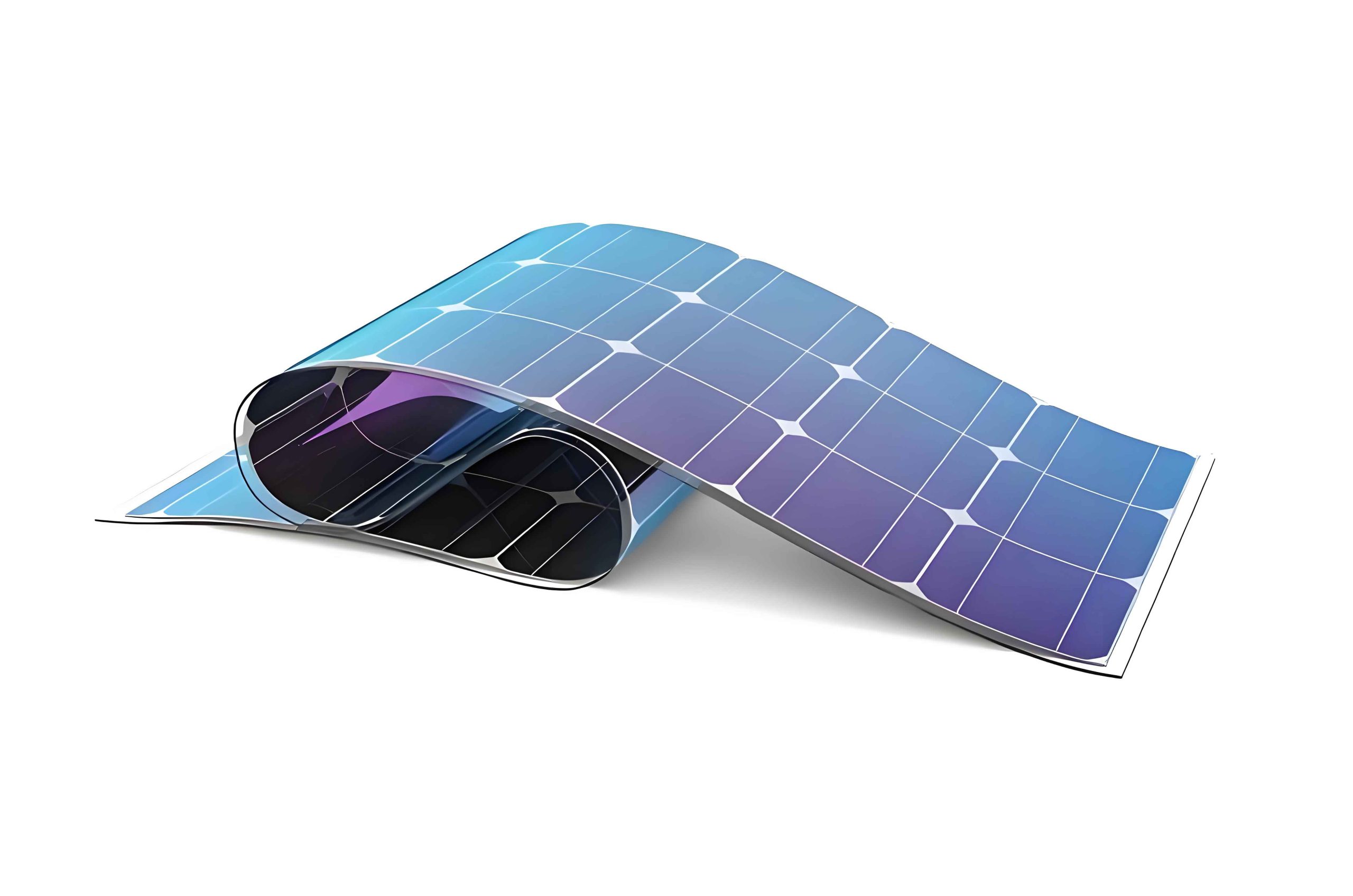
This image depicts the scale and complexity of thin film solar panel manufacturing, underscoring the importance of hazard control. Throughout this discussion, I will emphasize the term “thin film solar panel” to maintain focus on this specific technology. The hazards identified are not only relevant to occupational health but also impact productivity and sustainability in the thin film solar panel industry.
Overview of Thin Film Solar Panel Manufacturing Processes
The production of thin film solar panels begins with substrate preparation and proceeds through layer deposition, patterning, and assembly. The core technology relies on PECVD to deposit amorphous silicon layers, which form the photovoltaic cells. Below, I outline the key processes:
- PECVD Front-end Processes: This includes TCO (Transparent Conductive Oxide) glass grinding, cleaning, and initial laser etching.
- PECVD Deposition Processes: Here, P-I-N (P-type, Intrinsic, N-type) silicon layers are deposited using gas mixtures in plasma-enhanced chambers.
- Sputtering Processes: This involves depositing back-contact layers like AZO (Aluminum-doped Zinc Oxide) and aluminum through magnetron sputtering.
- Welding and Encapsulation Processes: Final steps include attaching busbars, laminating with protective layers, and assembling junction boxes.
Each process step introduces specific hazards, which I will dissect in the following sections. The thin film solar panel manufacturing chain is highly automated, but manual interventions and maintenance activities still pose risks to workers.
Identification of Occupational Hazards
Occupational hazards in thin film solar panel production can be categorized into chemical and physical factors. Chemical hazards arise from raw materials, process gases, and by-products, while physical hazards include noise, radiation, and ergonomic stresses. I have compiled data from exposure assessments and regulatory standards to create Table 1, which summarizes the primary hazards and their occupational exposure limits (OELs).
| Hazard Type | Specific Agent | Process Step | Occupational Exposure Limit (OEL) | Health Effects |
|---|---|---|---|---|
| Chemical | Silica dust (SiO₂) | TCO glass grinding | PC-TWA: 0.5 mg/m³ (total dust), 0.2 mg/m³ (respirable dust) for >80% free silica | Silicosis, lung damage |
| Silane (SiH₄) | PECVD deposition | No established OEL; highly toxic and flammable | Respiratory irritation, systemic toxicity | |
| Diborane (B₂H₆) | PECVD for P-layer | PC-TWA: 0.1 mg/m³ | Liver and kidney damage | |
| Chemical | Phosphine (PH₃) | PECVD for N-layer | No established OEL; highly toxic and flammable | Neurotoxicity, cardiorespiratory failure |
| Physical | Noise | Grinding, material handling | 85 dB(A) for 8-hour TWA | Hearing loss, stress |
| Physical | Laser radiation (1064 nm, 532 nm) | Laser etching steps | See Table 2 for exposure limits | Eye and skin damage |
| Physical | Infrared radiation | Drying steps | 0.1 W/cm² for far-infrared | Thermal burns, eye damage |
In addition to these hazards, workers may encounter flammable and explosive gases, such as hydrogen and methane, used in PECVD processes. The thin film solar panel industry must address these risks through engineering controls and personal protective equipment (PPE).
Detailed Process Analysis and Hazard Assessment
I will now delve into each manufacturing stage, highlighting the specific hazards and their implications for worker health. The analysis is based on my observations and evaluations in typical thin film solar panel facilities.
PECVD Front-end Processes
The front-end processes prepare the TCO glass substrate for subsequent deposition. Key steps include:
- TCO Glass Grinding and Edge Chamfering: Automated grinders use compressed air and water cooling to remove glass fragments. This generates silica dust, a known pneumoconiotic agent. The dust concentration can be estimated using the formula for airborne particulate matter: $$C = \frac{M}{V \cdot t}$$ where \( C \) is the concentration (mg/m³), \( M \) is the mass of dust generated (mg), \( V \) is the air volume (m³), and \( t \) is the time (hours). To comply with OELs, local exhaust ventilation is crucial. Noise levels from grinding equipment often exceed 85 dB(A), requiring hearing protection. The equivalent continuous sound level can be calculated as: $$L_{eq} = 10 \log_{10} \left( \frac{1}{T} \int_0^T 10^{L(t)/10} dt \right)$$ where \( L_{eq} \) is the equivalent sound level, \( T \) is the total time, and \( L(t) \) is the instantaneous sound level.
- Cleaning Steps: Acidic (e.g., HCl) and alkaline (e.g., NaOH) solutions are used to remove contaminants. Exposure to mists can cause respiratory irritation. The pH of these solutions affects their hazard potential; for instance, dilute HCl with pH 4-6 has a lower risk compared to concentrated forms. The concentration of hydrogen chloride in air can be derived from its vapor pressure, but in practice, exposure is controlled by enclosure and ventilation.
- Laser Etching (P1): A 1064 nm infrared laser etches insulating lines on TCO glass, producing metal oxide fumes (e.g., SnO₂). Laser safety is paramount; the maximum permissible exposure (MPE) for infrared lasers depends on wavelength and exposure duration. Table 2 summarizes laser radiation limits relevant to thin film solar panel manufacturing.
| Laser Type | Wavelength (nm) | Exposure Duration | MPE (J/cm² or W/cm²) | Affected Tissue |
|---|---|---|---|---|
| Infrared laser | 1064 | 3×10⁻⁵ to 10³ s | 12.5 \( t^{3/4} \) × 10⁻³ J/cm² (eye) | Cornea, retina |
| Green laser | 532 | 1.2×10⁻⁵ to 10 s | 2.5 \( t^{3/4} \) × 10⁻³ J/cm² (eye) | Retina |
| Far-infrared | 1400-10⁶ | >10 s | 0.1 W/cm² (skin) | Skin, eyes |
These limits guide the design of laser enclosures and the use of protective eyewear in thin film solar panel production.
PECVD Deposition Processes
The heart of thin film solar panel fabrication, PECVD deposits the photovoltaic layers. Gases like silane, diborane, phosphine, hydrogen, and methane are used. These pose significant chemical hazards:
- Silane (SiH₄): This pyrophoric gas ignites spontaneously in air. Its toxicity is mediated through hydrolysis to silicic acid, which can cause pulmonary edema. Although no OEL is set, I recommend treating it as a severe respiratory hazard with an action level below 1 ppm. The risk assessment can involve the following formula for gas concentration: $$C_g = \frac{P \cdot M}{R \cdot T}$$ where \( C_g \) is the concentration (g/m³), \( P \) is the partial pressure (Pa), \( M \) is the molar mass (g/mol), \( R \) is the gas constant (8.314 J/mol·K), and \( T \) is the temperature (K). In practice, continuous gas monitoring is essential.
- Diborane (B₂H₆) and Phosphine (PH₃): Both are highly toxic and flammable. Diborane affects the liver and kidneys, while phosphine inhibits cellular respiration. Engineering controls, such as gas cabinets and leak detection systems, are critical. The lower explosive limits (LEL) for these gases must be considered to prevent fires and explosions.
The PECVD chambers operate at elevated temperatures and pressures, adding thermal and physical hazards. Workers involved in maintenance may face residual gas exposure, emphasizing the need for lockout-tagout procedures.
Sputtering Processes
Sputtering deposits back-contact layers using magnetron sources. Hazards include:
- Laser Etching (P2, P3, P4, P5): Multiple laser etching steps use green (532 nm) and infrared (1064 nm) lasers to pattern the layers. The MPE values from Table 2 apply. Additionally, laser ablation generates nanoparticles of silicon and aluminum oxides, which may pose inhalation risks. The particle size distribution affects deposition in the respiratory tract; for spherical particles, the aerodynamic diameter \( d_a \) can be estimated as: $$d_a = d_p \sqrt{\frac{\rho_p}{\rho_0}}$$ where \( d_p \) is the physical diameter, \( \rho_p \) is the particle density, and \( \rho_0 \) is the reference density (1 g/cm³).
- Sputtering Discharge: The glow discharge emits visible light and ultraviolet radiation, which can cause eye discomfort. Enclosure of sputtering chambers and use of tinted viewing windows mitigate this.
These processes underscore the integrated nature of hazards in thin film solar panel manufacturing.
Welding and Encapsulation Processes
Final assembly involves welding busbars and laminating the panels:
- Welding: Resistance welding of aluminum busbars produces fumes containing aluminum oxides and, if soldering is used, tin-lead particles. The OEL for welding fume (total dust) is 4 mg/m³, and it is classified as a possible human carcinogen. Local exhaust ventilation at the weld point is effective.
- Encapsulation: Lamination uses PVB (polyvinyl butyral) films heated under vacuum. Thermal decomposition of PVB may release organic vapors above 200°C, but typical process temperatures (135-140°C) minimize this. However, workers should be monitored for exposure to plasticizers.
- Adhesive Application: Epoxy resins used for junction boxes can emit volatile organic compounds (VOCs). While specific OELs may not exist, general ventilation and PPE like respirators are advised.
Throughout these steps, ergonomic hazards from manual handling of glass panels and materials are also present, but they are beyond the scope of this chemical/physical focus.
Risk Mitigation Strategies for Thin Film Solar Panel Manufacturing
Based on my analysis, I propose a hierarchy of controls to reduce occupational hazards in thin film solar panel production. The strategies align with the “8-character approach” mentioned in the source material: reform technology, wet methods, enclosure, ventilation, protection, management, education, and inspection. Below, I elaborate on these with specific examples.
Engineering Controls
Engineering solutions are preferred to eliminate hazards at the source. For thin film solar panel facilities:
- Enclosure and Automation: Enclose grinding, laser etching, and PECVD chambers to contain dust, gases, and radiation. Automated material handling reduces worker proximity. For instance, robotic arms can load TCO glass, minimizing exposure to noise and dust.
- Local Exhaust Ventilation (LEV): Install LEV systems at points of emission, such as grinding stations, welding areas, and gas delivery points. The capture velocity \( v_c \) for a hood can be calculated using: $$v_c = \frac{Q}{A}$$ where \( Q \) is the airflow rate (m³/s) and \( A \) is the hood face area (m²). Design standards recommend \( v_c \) of 0.5-1 m/s for low-speed emissions.
- Wet Methods: Use water spray during grinding to suppress dust. This reduces airborne concentrations significantly, as shown by the dust suppression efficiency \( \eta \): $$\eta = \left(1 – \frac{C_{wet}}{C_{dry}}\right) \times 100\%$$ where \( C_{wet} \) and \( C_{dry} \) are dust concentrations with and without wet suppression.
Administrative Controls
Management practices enhance safety culture:
- Training and Education: Conduct regular training on hazards specific to thin film solar panel manufacturing, including gas handling, laser safety, and emergency response. Use simulations and drills.
- Exposure Monitoring: Implement routine air sampling for dust, gases, and noise. Compare results with OELs using statistical tools. For example, the confidence interval for a mean concentration \( \bar{x} \) can be calculated as: $$\bar{x} \pm t_{\alpha/2} \frac{s}{\sqrt{n}}$$ where \( s \) is the sample standard deviation, \( n \) is the sample size, and \( t_{\alpha/2} \) is the t-value for a given confidence level.
- Job Rotation: Rotate workers to limit cumulative exposure to noise or chemicals.
Personal Protective Equipment (PPE)
PPE serves as a last line of defense:
- Respiratory Protection: Use N95 masks for dust, and supplied-air respirators for toxic gases like silane and phosphine during maintenance.
- Hearing Protection: Provide earplugs or earmuffs with adequate noise reduction ratings (NRR). The protected exposure level \( L_{protected} \) can be estimated as: $$L_{protected} = L_{unprotected} – \text{NRR}$$ where NRR is in dB.
- Eye and Face Protection: Laser safety goggles with appropriate optical densities for 532 nm and 1064 nm lasers. For infrared radiation, use heat-resistant face shields.
- Chemical Protective Clothing: Wear gloves and aprons when handling acids, alkalis, or epoxy resins.
These measures, combined with a robust occupational health management system, can significantly reduce risks in thin film solar panel plants.
Conclusion
In this study, I have systematically identified and evaluated occupational hazards in thin film solar panel manufacturing processes. The key hazards include silica dust from grinding, toxic gases like silane and phosphine from PECVD, noise from machinery, and laser radiation from etching steps. These hazards pose risks of respiratory diseases, poisoning, hearing loss, and ocular damage. Through the application of engineering controls, administrative measures, and PPE, these risks can be mitigated. The thin film solar panel industry must prioritize worker health to ensure sustainable growth. Future research should focus on developing safer alternative materials and more enclosed automation technologies. By adhering to occupational exposure limits and implementing proactive safety programs, manufacturers can protect their workforce while advancing the production of thin film solar panels.
The continued evolution of thin film solar panel technology will likely introduce new processes and hazards, necessitating ongoing hazard assessments. I recommend that companies adopt a dynamic risk management approach, integrating real-time monitoring and feedback loops. Collaboration between industry, academia, and regulatory bodies is essential to establish comprehensive guidelines for thin film solar panel manufacturing. Ultimately, a safe working environment not only safeguards employees but also enhances operational efficiency and product quality in the thin film solar panel sector.