
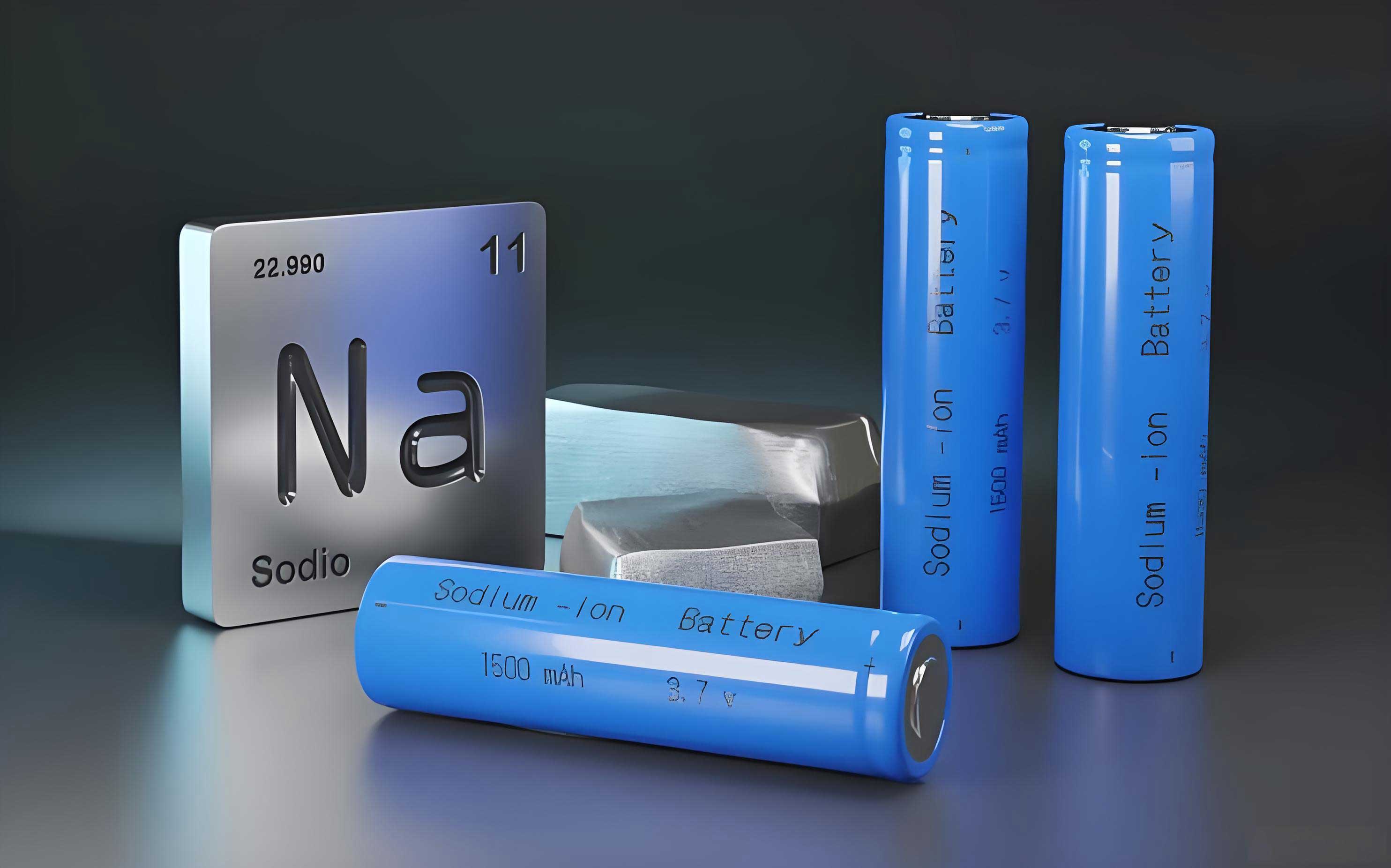
With the escalating global demand for green energy, efficient energy storage devices have become a research hotspot and application focus in the energy sector. Among these, lithium-ion batteries (LIBs) and sodium-ion batteries (SIBs) stand out as two of the most crucial energy storage systems. Currently, LIBs are extensively utilized in daily life, transportation, consumer electronics, grid-scale energy storage, and industrial equipment, including electric vehicles, smartphones, energy storage power stations, and drones. However, the scarcity and uneven global distribution of lithium resources impose limitations on the development of lithium-ion batteries. In contrast, sodium-ion batteries have garnered significant attention due to the abundance of sodium resources. Nevertheless, the larger ionic radius of sodium ions often results in inferior rate capability and cycling performance for SIBs. To achieve high energy density for both LIBs and SIBs, the development of high-capacity electrode materials, particularly anode materials, is paramount.
Among various candidates, tin sulfide (SnS) has attracted widespread interest as a promising anode material due to its unique crystal structure and high theoretical specific capacity. However, in practical applications, SnS faces several critical challenges: significant volume expansion during charge-discharge cycles, low intrinsic electrical conductivity, and the dissolution and shuttle effect of polysulfides. These issues severely compromise structural stability, rate performance, and cycling life, hindering its real-world deployment. This article comprehensively reviews the recent research progress on SnS as an anode material for lithium-ion and sodium-ion batteries, with a focus on performance enhancement strategies. I will delve into the mechanisms and advancements in nanostructure design, composite material construction, element doping, and hierarchical hollow structure engineering. Furthermore, I will incorporate tables and formulas to summarize key findings and theoretical aspects, aiming to provide insights for the practical application and future development of SnS-based anodes in energy storage systems.
The operation of a sodium-ion battery, like its lithium counterpart, relies on the reversible insertion and extraction of ions between the cathode and anode. The theoretical capacity of an electrode material is a fundamental parameter. For alloying-type materials like SnS, the capacity can be estimated based on the electrochemical reactions involved. The overall reaction for SnS in a sodium-ion battery can be described as a combination of conversion and alloying mechanisms:
$$ \text{SnS} + 2\text{Na}^+ + 2\text{e}^- \rightarrow \text{Sn} + \text{Na}_2\text{S} $$
$$ \text{Sn} + x\text{Na}^+ + x\text{e}^- \leftrightarrow \text{Na}_x\text{Sn} \quad (0 \le x \le 3.75) $$
The theoretical specific capacity (Cth) can be calculated using the formula:
$$ C_{th} = \frac{nF}{3.6M} $$
where \(n\) is the number of electrons transferred per formula unit, \(F\) is Faraday’s constant (96485 C mol-1), and \(M\) is the molar mass of the active material (g mol-1). For SnS, considering the full conversion to Na2S and Sn and the subsequent alloying of Sn to Na3.75Sn, the total electron transfer is substantial, leading to a high theoretical capacity of approximately 1022 mAh g-1 for sodium storage. A similar process applies to lithium-ion batteries, yielding a comparable high theoretical value.
Despite this high theoretical promise, the practical implementation of SnS anodes is hampered by intrinsic material challenges. The first major issue is the enormous volume change associated with the alloying reaction. The volume expansion (ΔV/V0) can be quantitatively expressed as:
$$ \frac{\Delta V}{V_0} = \frac{V_{\text{final}} – V_{\text{initial}}}{V_{\text{initial}}} \times 100\% $$
For the alloying of Sn to Na3.75Sn, the volume expansion can exceed 300%. This repetitive pulverization during cycling leads to loss of electrical contact, continuous solid electrolyte interphase (SEI) growth, and rapid capacity fade. The second critical challenge is the low intrinsic electrical conductivity of SnS. Its band gap (Eg) ranges from 1.0 to 1.3 eV, which classifies it as a semiconductor. The electrical conductivity (σ) is related to the carrier concentration (n) and mobility (μ) by:
$$ \sigma = n e \mu $$
The low carrier concentration in SnS results in poor electronic transport, causing significant polarization at high current densities and limiting rate performance. The third challenge is the shuttle effect, particularly relevant in ether-based electrolytes. During the discharge process, intermediate polysulfides (Na2Sx, 2 < x ≤ 8) dissolve and migrate between electrodes, leading to active material loss and low coulombic efficiency.
To overcome these hurdles, researchers have developed various strategic approaches. One primary strategy is the design of nanoscale structures. Nanostructuring reduces the absolute volume change stress, shortens the ion diffusion path, and increases the electrode-electrolyte contact area. The diffusion time (τ) for ions in a spherical particle is governed by the equation:
$$ \tau = \frac{L^2}{D} $$
where \(L\) is the diffusion length and \(D\) is the diffusion coefficient. By reducing the particle size to the nanoscale (L → small), the diffusion time decreases dramatically, enhancing rate capability. Various SnS nanostructures, such as nanosheets, nanoflowers, and nanoparticles, have been synthesized via solvothermal, hydrothermal, and other methods. For instance, SnS nanoflowers provide a large surface area and porous structure, facilitating electrolyte penetration and accommodating volume changes.
Another highly effective strategy is constructing composites, particularly with carbonaceous materials. Carbon matrices, such as graphene, carbon nanotubes (CNTs), and porous carbon, serve multiple roles: they enhance electronic conductivity, buffer volume expansion, and prevent particle aggregation. The synergistic effect in composites can be described by percolation theory for electrical conduction. When the conductive filler (carbon) volume fraction (φ) exceeds the percolation threshold (φc), a continuous conductive network forms, drastically improving the overall conductivity of the composite electrode. Furthermore, building heterostructures, such as SnS/ZnS or SnS/MoS2, can create built-in electric fields at interfaces, promoting charge transfer and providing additional active sites. The interface engineering in heterostructures can significantly improve the kinetics of the sodium-ion battery anode.
Element doping is a powerful method to intrinsically modify the electronic and crystal structure of SnS. Doping with elements like nitrogen, selenium, or transition metals can introduce defects, widen the interlayer spacing, and increase the carrier concentration. The change in carrier concentration due to doping can be estimated using semiconductor physics principles. For example, nitrogen doping in carbon coatings or within the SnS lattice can create n-type conductivity, enhancing electronic transport. Selenium doping in SnS1-xSex can tune the lattice parameters and act as a buffer matrix, improving structural stability during cycling in sodium-ion batteries.
Designing hierarchical hollow structures represents an advanced architectural strategy. These structures, such as hollow nanofibers or nanotubes, provide internal void space to accommodate volume expansion radially and circumferentially. The mechanical stress (σm) within a hollow sphere during lithiation/sodiation can be analyzed using thin-shell theory. The presence of voids reduces the effective stress on the active material shell, preventing fracture. Moreover, the hierarchical porosity ensures efficient electrolyte infiltration and shortens ion transport distances. Materials like SnS/C hollow nanofibers have demonstrated exceptional long-term cycling stability in sodium-ion batteries.
To systematically compare the electrochemical performance of SnS-based materials developed through these strategies, I have compiled the following table. It summarizes key parameters such as synthesis method, specific capacity, cycling stability, and rate performance for both lithium-ion and sodium-ion battery applications.
| Material Architecture | Synthesis Method | Battery Type | Specific Capacity (mAh g-1) / Current Density | Cycling Performance (Capacity Retention / Cycles) | Rate Performance |
|---|---|---|---|---|---|
| SnS Nanoflowers | Solvothermal | Sodium-ion battery | ~420 / 0.5 A g-1 | High retention / 100 cycles | Moderate |
| N-doped Graphene-SnS Microflowers | Hydrothermal & Carbonization | Lithium-ion battery | 1438 / 0.05C, 790 / 0.5C | 790 mAh g-1 after 900 cycles at 0.5C | 378 mAh g-1 at 5C |
| MBene-SnS@C Nanosheets | Hydrothermal & Carbonization | Sodium-ion battery | 420 / 0.5 A g-1 | Stable / 100 cycles | Improved |
| SnS@CNT Film | Not specified | Sodium-ion battery | High | High retention | Good |
| MnS/SnS-Graphite Composite | Solid-state & Ball-milling | Lithium-ion battery | 802 / 0.1 A g-1 | 83.4% after 500 cycles at 1 A g-1 | Good |
| SnS@C@rGO | One-pot synthesis | Sodium-ion battery | 383.5 / 1 A g-1 | Stable / 100 cycles | Enhanced |
| SnS/ZnS@C Heterostructure | In-situ conversion | Sodium-ion battery | High | Improved stability | Good |
| SnO2/SnS/NSGA | Thiourea-assisted assembly | Sodium-ion battery | 501 / 0.1 A g-1 | Stable / 300 cycles | 204 mAh g-1 at 2 A g-1 |
| a-SnS@N-C | Precipitation-Annealing | Lithium-ion battery | High | Improved | Enhanced |
| MoS2/SnS@BP-HMCFs | Electrospinning & Hydrothermal | Lithium-ion battery | 854.4 / 0.5 A g-1 | Stable / 500 cycles | Good |
| SnS0.9Se0.1@CNFs | Electrospinning | Lithium-ion battery | High | Excellent stability | Better than undoped |
| Biomimetic SnS/C Nanofibers | Natural cellulose template | Lithium-ion battery | High | Enhanced | Good |
| MoS2/SnS Hierarchical NS | Hydrothermal | Lithium-ion battery | 989.7 / 0.2 A g-1 | Stable / 60 cycles | 675 mAh g-1 at 5.0 A g-1 |
| SnS Hollow Nanofibers (HNFs) | Simple process | Sodium-ion battery | High | Ultra-long cycling | Good |
| MoS2/SnS@C Hollow Nanotubes | Solvothermal | Sodium-ion battery | ~325 / 15 A g-1 | ~292 mAh g-1 after 2000 cycles at 5 A g-1 | Excellent |
The performance data in the table underscores the effectiveness of composite and structural engineering. For the sodium-ion battery anode, in particular, strategies that combine carbon confinement with hollow or porous morphology yield the most impressive long-term cycling results. The development of a high-performance sodium-ion battery is crucial for large-scale energy storage due to sodium’s abundance. The kinetic aspects of sodium-ion insertion into SnS can be further analyzed using the Butler-Volmer equation for charge transfer and the Nernst equation for equilibrium potential. The current density (i) for an electrochemical reaction is given by:
$$ i = i_0 \left[ \exp\left(\frac{\alpha n F \eta}{RT}\right) – \exp\left(-\frac{(1-\alpha) n F \eta}{RT}\right) \right] $$
where \(i_0\) is the exchange current density, \(\alpha\) is the charge transfer coefficient, \(\eta\) is the overpotential, \(R\) is the gas constant, and \(T\) is the temperature. Enhancing \(i_0\) through improved conductivity and active surface area is key to achieving high rate capability in sodium-ion batteries.
Furthermore, the contribution of capacitive behavior versus diffusion-controlled behavior in SnS-based anodes can be assessed using Dunn’s method by analyzing cyclic voltammetry (CV) data at different scan rates (v). The current response (i) obeys a power-law relationship:
$$ i = a v^b $$
where \(a\) and \(b\) are constants. A b-value of 0.5 indicates a diffusion-controlled process, while a b-value of 1.0 signifies a capacitive process. Nanostructured and composite SnS materials often exhibit increased b-values, indicating a larger contribution from surface-driven capacitive storage, which is highly beneficial for fast charging in sodium-ion batteries.
In addition to electrochemical kinetics, the mechanical integrity of the electrode is vital. The strain energy (U) stored in a spherical particle due to volume expansion can be approximated by:
$$ U = \frac{2 E \epsilon^2 V}{9(1-\nu)} $$
where \(E\) is Young’s modulus, \(\epsilon\) is the strain, \(V\) is the volume, and \(\nu\) is Poisson’s ratio. Nanostructuring and compositing effectively reduce \(V\) or introduce compliant buffers (carbon) to absorb \(U\), thereby mitigating crack propagation.
Looking forward, the research on SnS anode materials is poised to advance in several directions. First, a deeper exploration of doping elements—their types, concentrations, and spatial distributions—will enable precise tuning of electronic properties and lattice parameters. Computational methods like Density Functional Theory (DFT) can predict the formation energies of defects and the influence of dopants on the sodium-ion diffusion barrier within SnS. The diffusion coefficient (D) for sodium ions in doped SnS can be estimated using the Arrhenius equation:
$$ D = D_0 \exp\left(-\frac{E_a}{kT}\right) $$
where \(D_0\) is the pre-exponential factor, \(E_a\) is the activation energy, \(k\) is Boltzmann’s constant, and \(T\) is the temperature. Doping aims to lower \(E_a\), thereby enhancing D. Second, the composite strategy should expand to include novel material combinations, such as integrating SnS with two-dimensional materials beyond graphene (e.g., MXenes, phosphorene) or with metal-organic framework (MOF)-derived porous carbons and metal sulfides. These hybrids could offer synergistic effects like optimized pore structures for electrolyte access and enhanced interfacial charge transfer. Third, the scalability and cost-effectiveness of synthesis methods must be addressed. While laboratory-scale techniques like solvothermal and electrospinning are versatile, developing scalable, low-energy, and environmentally benign processes is essential for the commercial viability of SnS-based anodes, especially for large-scale sodium-ion battery production. Fourth, in-depth mechanistic studies using in-situ or operando characterization techniques (e.g., TEM, XRD, XPS) are needed to directly observe the structural evolution, SEI formation, and polysulfide behavior during cycling. This knowledge will guide the rational design of more robust electrode architectures. Finally, the integration of SnS anodes with compatible high-voltage cathodes and stable electrolytes to form full sodium-ion battery cells requires extensive testing to evaluate practical energy density, cycle life, and safety under realistic conditions.
In conclusion, tin sulfide stands as a highly promising high-capacity anode material for both lithium-ion and sodium-ion batteries. Its major drawbacks—substantial volume expansion, poor conductivity, and polysulfide shuttle—have been actively addressed through innovative material design strategies. Nanostructuring reduces diffusion lengths and mechanical stress, carbon compositing enhances electronic wiring and provides buffering, element doping modifies intrinsic electronic structure, and hierarchical hollow construction offers intelligent stress management. The continuous evolution of these strategies, coupled with advanced characterization and computational design, holds great potential for unlocking the full performance of SnS. As research progresses, we can anticipate the emergence of SnS-based anodes that combine high capacity, long cycle life, and excellent rate capability, contributing significantly to the development of next-generation, cost-effective, and high-energy-density sodium-ion batteries for widespread energy storage applications. The journey towards optimizing this material for the sodium-ion battery platform is a compelling testament to the power of materials engineering in overcoming fundamental electrochemical challenges.