
In recent years, the increasing global energy consumption and environmental concerns have driven the development of innovative air conditioning technologies. As a researcher focused on sustainable energy solutions, I have been exploring the integration of renewable energy sources with advanced HVAC systems. Among these, liquid desiccant air conditioning (LDAC) systems have garnered significant attention due to their potential for energy savings and improved indoor air quality. In this study, we propose and analyze a solar-driven thin film liquid desiccant air conditioning (S-TF-LDAC) system, which combines the benefits of liquid desiccant dehumidification with solar thermal energy harvested using thin film solar panels. The system employs liquid-to-air membrane energy exchangers (LAMEEs) to overcome the limitations of traditional direct-contact systems, such as desiccant droplet carryover, making it more practical for commercial and residential applications. This article delves into the system’s design, performance, economic viability, and future prospects, emphasizing the role of thin film solar panels in enhancing sustainability.
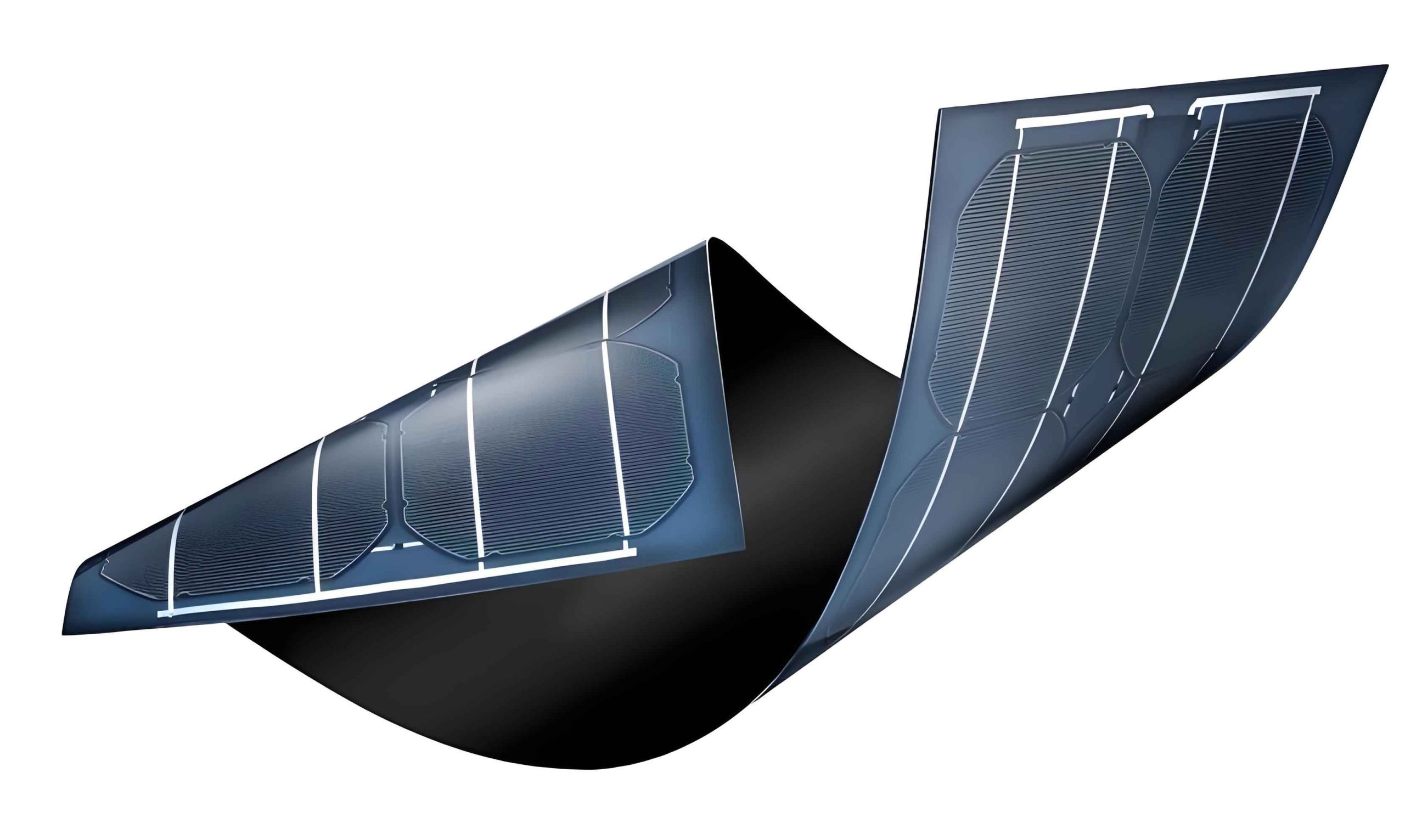
The core innovation of our S-TF-LDAC system lies in its use of thin film solar panels for thermal energy collection. Unlike conventional photovoltaic systems, thin film solar panels are lightweight, flexible, and cost-effective, making them ideal for integrating into building façades or rooftops to drive the regeneration process of the desiccant solution. These panels can efficiently capture solar radiation even in diffuse light conditions, ensuring a reliable low-grade heat source. By leveraging thin film solar panels, we reduce dependency on fossil fuels and lower greenhouse gas emissions. The system operates at regeneration temperatures as low as 45–65°C, which aligns perfectly with the thermal output of thin film solar panels, thereby maximizing solar energy utilization. Below, we include a visual representation of such panels to illustrate their application in our system.
The S-TF-LDAC system consists of several key components: an air-side processing unit, a liquid desiccant loop, a solar thermal heating system, and membrane-based exchangers. On the air side, outdoor humid air is first preconditioned through an energy recovery ventilator (ERV) to reduce cooling loads. The dehumidifier, a LAMEE, then removes moisture from the ventilation air to handle latent loads, while a sensible cooling coil cools the return air to meet the remaining thermal loads. This separation of latent and sensible cooling allows for higher evaporator temperatures, improving the coefficient of performance (COP). The liquid desiccant loop uses a solution like lithium chloride or calcium chloride, which absorbs moisture in the dehumidifier and is regenerated in a regenerator LAMEE using heated outdoor air. The heating is provided by a solar thermal system equipped with thin film solar panels, which heat a water-glycol mixture circulated through a heat exchanger to warm the desiccant solution. The LAMEEs employ semi-permeable membranes to separate air and liquid streams, enabling simultaneous heat and mass transfer without direct contact, thus eliminating droplet carryover and enhancing indoor air quality.
To quantify the system’s performance, we developed mathematical models based on heat and mass transfer principles. The energy balance for the dehumidifier can be expressed as:
$$ \dot{m}_a (h_{a,in} – h_{a,out}) = \dot{m}_s (h_{s,out} – h_{s,in}) + Q_{loss} $$
where $\dot{m}_a$ is the air mass flow rate, $h$ denotes enthalpy, $\dot{m}_s$ is the solution mass flow rate, and $Q_{loss}$ represents heat losses. The mass transfer rate of water vapor is governed by:
$$ \dot{m}_w = K \cdot A \cdot (P_{v,a} – P_{v,s}) $$
Here, $\dot{m}_w$ is the moisture transfer rate, $K$ is the overall mass transfer coefficient, $A$ is the membrane surface area, and $P_{v}$ denotes vapor pressure of air and solution. For the regeneration process driven by thin film solar panels, the thermal energy collected can be calculated using the steady-state efficiency model:
$$ \eta = \eta_0 – a_1 \frac{(T_{in} – T_{amb})}{G} – a_2 \frac{(T_{in} – T_{amb})^2}{G} $$
where $\eta_0$ is the optical efficiency (e.g., 0.78 for thin film solar panels), $a_1$ and $a_2$ are heat loss coefficients, $T_{in}$ is the inlet fluid temperature, $T_{amb}$ is ambient temperature, and $G$ is solar irradiance. The COP of the overall system is defined as:
$$ COP_{sys} = \frac{Q_{cooling}}{W_{comp} + W_{pump} + W_{fan}} $$
with $Q_{cooling}$ as the total cooling capacity, and $W$ representing electrical power for compressors, pumps, and fans. Given the high evaporation temperature of the sensible cooling coil, we assume a COP of 5.5 for cooling and 7 for the desiccant cooling loop, compared to 4 for conventional AC systems.
We conducted a comparative analysis between the S-TF-LDAC system and traditional vapor compression systems, summarized in Table 1. The data highlights the advantages of integrating thin film solar panels and membrane exchangers.
| Parameter | S-TF-LDAC System | Conventional AC System |
|---|---|---|
| Energy Source | Solar thermal (thin film solar panels) + electricity | Electricity only |
| Regeneration Temperature | 45–65°C | N/A |
| Cooling COP (Sensible) | 5.5 | 4.0 |
| Latent Handling | Separate dehumidification via LAMEE | Condensation on cooling coil |
| Indoor Air Quality | Improved (no mold risk, pollutant absorption) | Potential mold growth |
| Environmental Impact | Lower GHG emissions due to solar integration | Higher emissions |
| Droplet Carryover | Eliminated (membrane-based) | Possible in direct-contact systems |
The economic feasibility of the S-TF-LDAC system is enhanced by the use of thin film solar panels, which are cheaper to manufacture and install compared to crystalline silicon panels. The system operates at atmospheric pressure, reducing material costs for components like plastic exchangers. We estimate the initial investment and operational savings over a 20-year lifespan, as shown in Table 2. The calculations assume a solar fraction of 60% for regeneration, with thin film solar panels covering 30 m² area and a cost of $150/m². The payback period is competitive, especially in regions with high solar insolation.
| Cost Component | Estimate (USD) | Notes |
|---|---|---|
| Thin film solar panel array | 4,500 | 30 m² at $150/m² |
| LAMEE units (dehumidifier/regenerator) | 3,000 | Polymer membranes |
| Pumps, fans, controls | 2,000 | High-efficiency models |
| Installation & miscellaneous | 2,500 | Includes piping and insulation |
| Total Initial Cost | 12,000 | |
| Annual Energy Savings | 1,200 | Compared to conventional AC |
| Annual Maintenance | 200 | Low due to minimal moving parts |
| Payback Period | 10 years | Based on savings |
The application prospects for S-TF-LDAC systems are vast, particularly in sunny and humid climates where solar resources align with cooling demands. Thin film solar panels can be deployed on building surfaces, making them suitable for urban environments. The system’s ability to provide 100% fresh air with independent temperature and humidity control makes it ideal for hospitals, schools, and offices. Moreover, the desiccant solution can absorb airborne pollutants, enhancing indoor air quality—a critical factor post-pandemic. We project that as thin film solar panel efficiency improves and costs decline, adoption will accelerate. Research directions include optimizing membrane materials for higher permeability and integrating phase change materials for thermal storage, further leveraging thin film solar panel output.
In conclusion, our analysis demonstrates that the solar thin film liquid desiccant air conditioning system offers a sustainable alternative to conventional AC. By combining liquid desiccant technology with thin film solar panels, we achieve significant energy savings, reduced environmental impact, and improved comfort. The use of liquid-to-air membrane energy exchangers addresses practical limitations, making the system commercially viable. Future work will focus on field trials and lifecycle assessments to validate long-term benefits. As global energy transitions prioritize renewables, innovations like thin film solar panels will play a pivotal role in shaping next-generation HVAC systems.