
The continuous advancement and innovation across eras have catalyzed rapid socio-economic development, propelling progress in numerous fields, including the critical domain of photovoltaic technology. This progress is inextricably linked to the evolution of the thin film solar panel. As society advances, there are escalating demands for higher performance and efficiency from solar energy conversion devices. Consequently, research into optimizing the components of these devices, particularly the buffer layer in inverted kesterite copper zinc tin sulfide (CZTS) thin film solar panels, has become paramount. Understanding the influence of the buffer layer is crucial for subsequent performance enhancement, directly impacting metrics such as power conversion efficiency (PCE). This, in turn, holds significant importance for the future development of the sustainable energy sector. In this article, I will elaborate on the impact of buffer layers on the performance of inverted CZTS thin film solar panels, providing a detailed analysis of the experimental methodology, results, and their implications for future research and development in this promising photovoltaic technology.
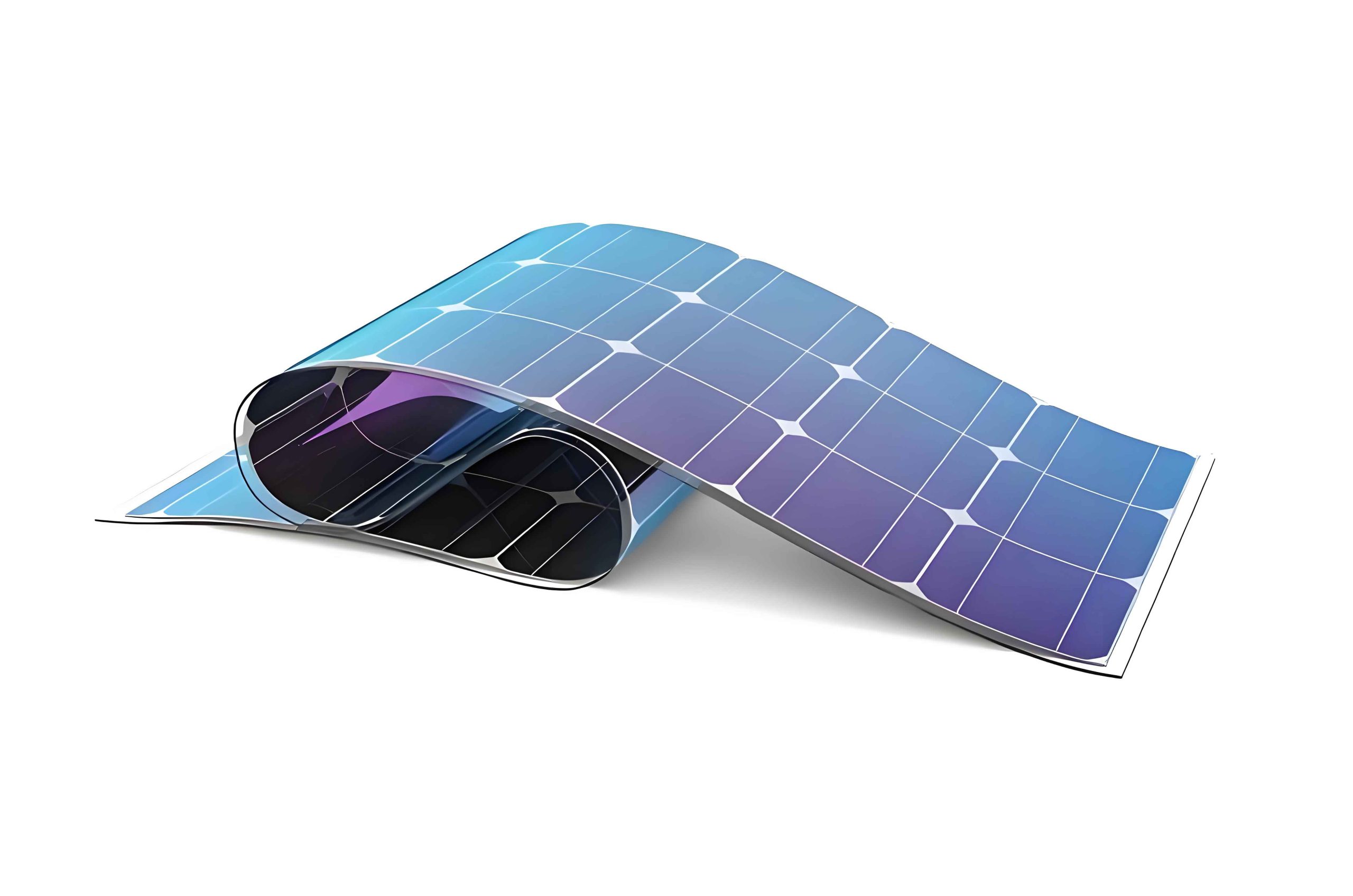
The quest for efficient, low-cost, and non-toxic photovoltaic materials has led to significant interest in kesterite CZTS as an absorber layer for thin film solar panels. Its optimal bandgap and high absorption coefficient make it a theoretically excellent candidate. However, the performance of a complete solar cell is not governed by the absorber alone; interfaces play a decisive role. The buffer layer, situated between the electron transport layer (ETL) and the light-absorbing layer, is critical for forming a high-quality heterojunction. It influences band alignment, reduces interfacial recombination, and facilitates efficient charge carrier extraction. Therefore, investigating different buffer materials is a fundamental step in unlocking the full potential of CZTS-based thin film solar panels.
1. Experimental Materials and Methodology
To ensure the accuracy and reliability of this investigation into buffer layer effects, meticulous attention was paid to the selection of experimental materials and the definition of precise fabrication procedures for the inverted thin film solar panel structure.
1.1 Selection of Instruments and Reagents
High-precision instrumentation was employed throughout the study to guarantee reproducible and valid characterization data. The key instruments utilized are summarized in the table below:
| Instrument Category | Specific Model / Type | Primary Function |
|---|---|---|
| Electrochemical Analysis | CHI660E Electrochemical Workstation; Solartron 1287/1260 System | Current-Voltage (J-V), Impedance Spectroscopy (EIS) |
| Structural & Compositional Analysis | D8 ADVANCE XRD; AXIS ULTRA DLD XPS; Horiba Micro-Raman | Crystal structure, elemental composition/valence, phase identification |
| Optical Characterization | UV-2600 UV-Vis Spectrophotometer; CIMPS-2 Pro IMPS | Absorption spectra, optical bandgap, carrier transport dynamics |
| Sample Preparation | XQM-0.4 Ball Mill; Q/SGYM 1009 Muffle Furnace; SL91100-60 Tube Furnace | Paste preparation, annealing, sulfurization heat treatment |
The chemical reagents were selected to be of analytical grade to maintain purity. Key materials included: Titanium isopropoxide, silicon dioxide (SiO₂) nanoparticles, butanol, Triton X-100, zinc sulfate, sodium sulfide, absolute ethanol, anhydrous stannous chloride (SnCl₂), thiourea, titanium tetrachloride (TiCl₄), cadmium sulfate, ammonia solution, anhydrous cupric chloride (CuCl₂), zinc chloride dihydrate (ZnCl₂·2H₂O), dimethylformamide (DMF), poly(3-hexylthiophene-2,5-diyl) (P3HT), chloroform, sulfur powder, copper target material, and high-purity nitrogen gas.
1.2 Fabrication of the Buffer Layers
Two distinct buffer layers, CdS and ZnS, were prepared using chemical bath deposition (CBD), a technique well-suited for conformal coating in thin film solar panel fabrication.
Mesoporous TiO₂ Film (Electron Transport Layer): Prior to buffer layer deposition, a mesoporous TiO₂ film was fabricated as the ETL. A paste was formed by mixing 3 mL of butanol, a surfactant (Triton X-100), and 0.2 g of P25 TiO₂ powder, followed by ball-milling for 4 hours and stirring for 12 hours. This paste was then spin-coated onto cleaned FTO glass at 3000 rpm and subsequently sintered to form a robust, porous nanocrystalline film.
CdS Buffer Layer: The CdS layer was deposited via CBD. The FTO/TiO₂ substrate was immersed in an aqueous bath containing cadmium sulfate and thiourea as the Cd and S sources, respectively, with ammonia providing a basic environment. The bath was maintained at a controlled temperature. After a deposition time of 15 minutes, the substrate was removed, thoroughly rinsed with deionized water, and dried with nitrogen, yielding a uniform CdS film.
ZnS Buffer Layer: A similar CBD process was employed for ZnS. An aqueous solution containing 0.035 M zinc sulfate and ammonia was prepared. After one minute, 0.27 M thiourea was added to initiate the reaction. The FTO/TiO₂ substrate was immersed in this bath for a designated period, followed by rinsing and drying, resulting in the ZnS buffer layer.
1.3 Fabrication of the Inverted CZTS Thin Film Solar Panel
The fabrication of the complete inverted solar cell device followed a sequential layer-by-layer process. The device architecture was FTO / compact-TiO₂ / mesoporous-TiO₂ / Buffer Layer (CdS or ZnS) / CZTS absorber / P3HT hole-transport layer (HTL) / Cu electrode.
1. CZTS Precursor Solution Preparation: A homogeneous precursor solution was formulated by dissolving metal salts and a sulfur source in a mixed solvent. The molar concentrations in a 1:1 (v/v) ethanol/DMF solvent were: 0.35 M CuCl₂, 0.24 M ZnCl₂·2H₂O, 0.20 M SnCl₂, and 1.32 M thiourea (CH₄N₂S). The solution appeared as a transparent light-yellow liquid.
2. CZTS Absorber Layer Deposition and Sulfurization: The precursor solution was spin-coated onto the prepared buffer layer substrates. A two-step spin-coating program was used: 800 rpm for 5 seconds for spreading, followed by 3500 rpm for 20 seconds for thinning and rapid solvent evaporation. The wet film was immediately transferred to a hotplate at 160°C for 2 minutes to remove residual solvents. This spin-coating and drying cycle was repeated 2-3 times to achieve the desired film thickness. The CZTS precursor film was then subjected to a sulfurization anneal. It was placed in a covered crucible along with sulfur powder and heated in a tube furnace under a flowing nitrogen atmosphere. The typical annealing profile involved ramping to 550-580°C, holding for 30 minutes, and then cooling to room temperature. This process crystallizes the CZTS and compensates for sulfur loss.
3. Completion of the Solar Cell: After sulfurization, the CZTS absorber was obtained. A solution of P3HT in chlorobenzene was spin-coated onto the CZTS layer to form the organic HTL. Finally, a 40 nm thick copper layer was thermally evaporated onto the P3HT under high vacuum to serve as the back electrical contact, completing the fabrication of the inverted thin film solar panel.
2. Results and Discussion
2.1 Band Structure Analysis of Buffer Layers and CZTS
The electronic band structure alignment between the buffer layer and the absorber is a fundamental factor determining the performance of a thin film solar panel. The optical bandgap ($E_g$) of the deposited CZTS film was determined from UV-Vis absorption data using the Tauc plot method. The relationship between the absorption coefficient (α) and photon energy (hν) for a direct bandgap semiconductor is given by:
$$(αhν)^2 = A(hν – E_g)$$
where $A$ is a constant. Plotting $(αhν)^2$ versus $hν$ and extrapolating the linear region to the energy axis yields the direct bandgap. Analysis confirmed the CZTS film had a bandgap of approximately 1.56 eV, which is near the theoretical optimum for a single-junction solar cell absorber. This value is critical for maximizing photon absorption from the solar spectrum in a thin film solar panel.
Furthermore, the conduction band minimum (CBM) and valence band maximum (VBM) positions of CdS and ZnS relative to CZTS were investigated. It was found that the CBM of the CdS buffer layer is situated between that of the TiO₂ ETL and the CZTS absorber, creating a “staircase” or favorable offset that promotes the smooth transfer of photogenerated electrons from the absorber to the electrode while blocking holes. This favorable band alignment is less pronounced or even unfavorable in the case of the ZnS buffer layer, which can lead to a larger interface barrier and increased charge recombination, ultimately limiting the efficiency of the thin film solar panel.
2.2 Characterization of the CZTS Absorber Layer
The quality of the CZTS absorber is paramount for the final device. X-ray diffraction (XRD) and Raman spectroscopy were used to confirm phase formation and purity. The XRD pattern showed characteristic peaks corresponding to the kesterite crystal structure of CZTS. Crucially, Raman spectroscopy, which is more sensitive to secondary phases, confirmed the dominant peak of pure kesterite CZTS around 338 cm⁻¹, with minimal signals from binary or ternary sulfide impurities like Cu₂SnS₃ or ZnS.
X-ray photoelectron spectroscopy (XPS) provided insights into the chemical states of the elements within the CZTS film. The binding energies for Cu 2p, Zn 2p, Sn 3d, and S 2p core levels were analyzed. The data indicated a shift in the oxidation states of Cu and Sn from their initial +2 state in the precursor salts. The table below summarizes the key XPS findings:
| Element | Precursor State | Final State in CZTS Film (from XPS) | Implication |
|---|---|---|---|
| Copper (Cu) | Cu²⁺ | Cu⁺ | Reduction occurred during sulfurization. |
| Tin (Sn) | Sn²⁺ | Sn⁴⁺ | Oxidation occurred during sulfurization. |
| Zinc (Zn) | Zn²⁺ | Zn²⁺ | Oxidation state remained unchanged. |
| Sulfur (S) | S²⁻ (in thiourea) | S²⁻ | Formed metal-sulfide bonds. |
This change in oxidation states, particularly the reduction of Cu²⁺ to Cu⁺ and the oxidation of Sn²⁺ to Sn⁴⁺, is consistent with the formation of the desired kesterite Cu₂ZnSnS₄ phase, which is essential for a functional absorber in a high-performance thin film solar panel.
2.3 Photovoltaic Performance of Inverted CZTS Thin Film Solar Panels with Different Buffer Layers
The ultimate test of buffer layer efficacy is the performance of the complete photovoltaic device. Current density-voltage (J-V) measurements under simulated AM 1.5G illumination were conducted on devices with CdS and ZnS buffer layers. Key parameters extracted from the J-V curves include the open-circuit voltage ($V_{OC}$), short-circuit current density ($J_{SC}$), fill factor (FF), and power conversion efficiency (PCE). The performance data is summarized in the following table:
| Buffer Layer | $V_{OC}$ (V) | $J_{SC}$ (mA/cm²) | Fill Factor (FF) | PCE (%) |
|---|---|---|---|---|
| CdS | 0.52 | 18.2 | 0.58 | 5.48 |
| ZnS | 0.41 | 14.7 | 0.49 | 2.95 |
The device with the CdS buffer layer demonstrated superior performance across all parameters. The higher $V_{OC}$ suggests reduced recombination losses, the higher $J_{SC}$ indicates more efficient charge carrier collection, and the improved FF points to better series and shunt resistance properties. This comprehensive enhancement leads to a PCE that is significantly higher for the CdS-buffered thin film solar panel.
To delve deeper into the interfacial phenomena, electrochemical impedance spectroscopy (EIS) was performed. The Nyquist plots typically show a semicircle, the diameter of which is related to the recombination resistance ($R_{rec}$) at the interface. A larger semicircle diameter indicates higher $R_{rec}$ and lower recombination. The EIS data clearly showed that the device with the CdS buffer layer had a significantly larger recombination resistance compared to the ZnS-buffered device, corroborating the $V_{OC}$ trend and confirming the role of CdS in suppressing interfacial recombination.
Intensity-modulated photocurrent spectroscopy (IMPS) provided further insight into carrier transport dynamics. The characteristic frequency ($f_{min}$) in an IMPS plot is inversely related to the electron transport time ($τ_t$) through the device: $τ_t = 1/(2πf_{min})$. The IMPS results revealed a lower $f_{min}$ (and thus a longer $τ_t$) for the ZnS-based device, indicating slower electron transport. In contrast, the CdS-based thin film solar panel exhibited faster electron transport, which is consistent with its higher $J_{SC}$ and more favorable band alignment, facilitating swift carrier extraction and reducing the chance for recombination within the absorber.
The overall performance can be linked to the quality of the heterojunction. The CdS buffer layer appears to form a more intimate and chemically compatible interface with the CZTS absorber. This high-quality interface, combined with the optimal “spike-like” conduction band offset, creates an efficient pathway for electrons while reflecting holes back into the absorber. This synergy minimizes non-radiative recombination sites and maximizes the collection of photogenerated carriers, which is the cornerstone of an efficient thin film solar panel.
3. Conclusion
This investigation systematically elucidated the profound impact of the buffer layer on the performance of inverted kesterite CZTS thin film solar panels. Through the fabrication and comparative analysis of devices incorporating CdS and ZnS buffer layers, it was conclusively demonstrated that the electronic and interfacial properties of the buffer are critical determinants of final device efficiency. The CdS buffer layer, with its suitable band alignment (a conduction band positioned between TiO₂ and CZTS), forms a high-quality heterojunction with the CZTS absorber. This configuration promotes efficient charge separation, accelerates electron transport, and most importantly, significantly suppresses interfacial recombination. These advantages manifest directly in superior photovoltaic parameters: higher open-circuit voltage, short-circuit current density, fill factor, and ultimately, a dramatically enhanced power conversion efficiency compared to the ZnS-buffered counterpart.
The findings underscore that optimizing the buffer layer is not merely a supplementary step but a central strategy in the development of high-performance CZTS thin film solar panels. Future work should explore further refinement of CdS deposition parameters, investigation of alternative buffer materials with tunable band edges (e.g., Cd₁₋₂Zn₂S), and interface passivation techniques to push the efficiency of this environmentally friendly and cost-effective photovoltaic technology closer to its theoretical limits. The continuous engineering of this critical component will play a vital role in advancing the commercial viability and widespread adoption of kesterite-based thin film solar panels in the global renewable energy landscape.