
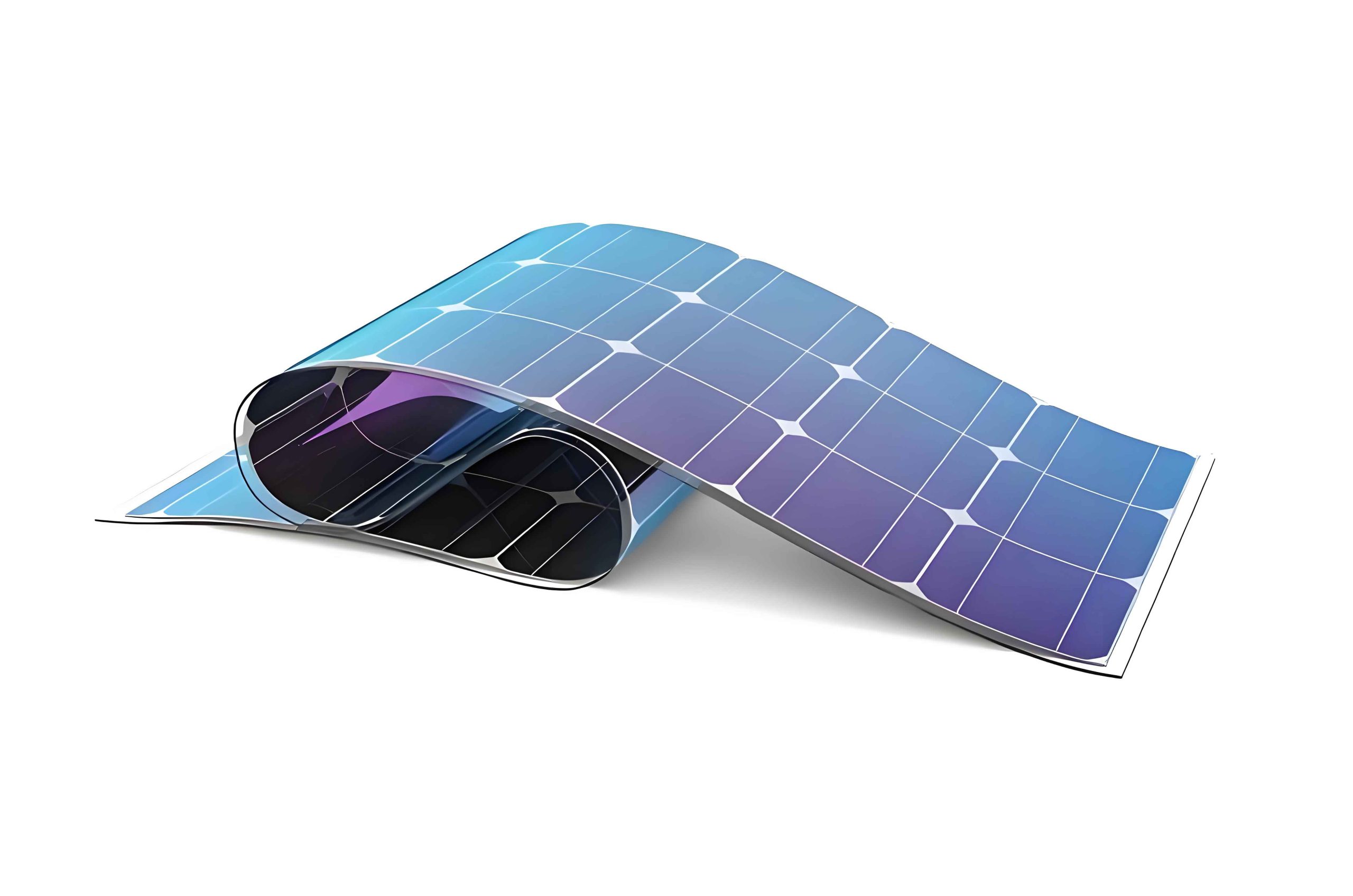
The global pursuit of sustainable energy solutions has placed solar power at the forefront of renewable energy technologies. Among various photovoltaic (PV) devices, thin film solar panels have emerged as a pivotal innovation, offering advantages such as flexibility, lightweight design, and the potential for lower production costs compared to traditional crystalline silicon cells. As the world intensifies efforts to mitigate the energy crisis, the development trajectory of thin film solar panels warrants a systematic investigation. This article, adopting a first-person research perspective, employs bibliometric analysis, patent mapping, and content analysis to dissect the evolution, current hotspots, and future prospects of thin film solar panels, with a particular focus on the research landscape. The objective is to map the intellectual structure of the field, identify key technological trajectories, and offer insights to guide future research and development.
Methodological Framework and Data Curation
To ensure a robust and comprehensive analysis, a multi-method approach was utilized. Bibliometric analysis was conducted to quantify and visualize academic research patterns, while patent analysis was employed to track technological innovation and commercial interests. The core dataset for scholarly publications was sourced from a major academic database, using “thin film solar cell*” or “thin film solar panel*” as primary search terms in the article title, spanning the period from 1980 to the present. Initial retrieval yielded a significant number of records. Through rigorous data cleaning—removing non-research items like conference notices, news articles, and brief technical reports—a refined corpus of over 2,000 relevant research articles was established for in-depth analysis.
Patent data was extracted from a comprehensive global patent database (Innopat) using similar keyword strategies related to thin film solar panels. Analytical tools included spreadsheet software for statistical calculations, network analysis software for co-word mapping, and built-in visualization systems within the databases. The process involved stages of data retrieval, cleaning, keyword extraction, frequency analysis, and network visualization to uncover underlying patterns.
Bibliometric Analysis of Research Trajectory
Annual Publication Volume and Growth Trends
The analysis of annual publication output serves as a reliable indicator of research activity and interest. The evolution of research on thin film solar panels can be distinctly divided into three phases, as reflected in the publication count.
| Phase | Time Period | Characteristic | Key Driver/Context |
|---|---|---|---|
| I. Embryonic Phase | 1980 – 2002 | Low, sporadic publication output | Fundamental exploration and early-stage R&D |
| II. Growth Phase | 2003 – 2011 | Steady, gradual increase in publications | Growing global interest in renewables; policy support begins |
| III. Acceleration Phase | 2012 – Present | Rapid, exponential growth in output | Strong policy mandates (e.g., national renewable energy targets), technological breakthroughs, and industrial scaling efforts |
The transition into the Acceleration Phase post-2012 is particularly striking, correlating with global and national commitments to carbon neutrality and the explicit inclusion of distributed solar PV targets in strategic plans. This trend unequivocally demonstrates that research on thin film solar panels has entered a period of intense activity, with the academic community playing a crucial role in advancing the field.
Core Research Authors and Collaboration Networks
Identifying prolific contributors is essential for understanding the field’s intellectual backbone. According to Price’s Law, the minimum number of publications (m) for core authors can be calculated as:
$$ m = 0.749 \times \sqrt{n_{max}} $$
where \( n_{max} \) is the publication count of the most productive author. In this dataset, with the top author publishing 101 papers, the threshold m ≈ 7.5. Authors exceeding this threshold are considered core contributors. A weighted statistical analysis, which accounts for citation impact and collaboration frequency alongside pure publication count, was also performed to provide a more nuanced view of influence.
| Rank (By Publication Count) | Author | Number of Papers | Rank (By Weighted Score) | Author | Weighted Score |
|---|---|---|---|---|---|
| 1 | Researcher A | 101 | 1 | Researcher A | 16.36 |
| 2 | Researcher B | 63 | 2 | Researcher C | 13.83 |
| 3 | Researcher C | 59 | 3 | Researcher B | 11.42 |
| 4 | Researcher D | 58 | 4 | Researcher E | 9.25 |
| 5 | Researcher F | 57 | 5 | Researcher G | 8.91 |
The analysis confirms that a stable core author group has formed. The collective output of the top 50 authors accounts for nearly 70% of the total publications, far exceeding the 50% benchmark suggested by Price’s Law for a mature research front. This indicates a concentrated yet productive research community driving the advancement of thin film solar panels.
Research Hotspots and Thematic Evolution
Keyword co-occurrence analysis reveals the central themes and their interconnections within the field. After standardizing synonyms (e.g., “solar cell” and “solar battery”), high-frequency keywords (occurring 30 times or more) were identified. The thematic focus has broadened from a singular interest in basic device concepts to a multifaceted exploration of materials, processes, and performance metrics.
| Primary Research Theme | High-Frequency Keywords (Examples) | Implied Research Focus |
|---|---|---|
| Device Types & Materials | CIGS (Cu(In,Ga)Se₂), CdTe, Dye-sensitized, Perovskite, Amorphous Silicon (a-Si), CZTS (Cu₂ZnSnS₄) | Exploration of alternative absorber materials beyond silicon. |
| Fabrication Processes | Magnetron Sputtering, PECVD (Plasma-Enhanced Chemical Vapor Deposition), Electrodeposition | Development of scalable and cost-effective thin film deposition techniques. |
| Performance & Properties | Conversion Efficiency, Photoelectric Properties, Heterojunction, Buffer Layer (e.g., CdS) | Optimization of device architecture for higher efficiency and stability. |
The emergence of “perovskite solar cells” and “CZTS” as high-frequency keywords in recent years signals a dynamic shift towards next-generation, potentially less toxic, and more abundant materials for thin film solar panels.
Core Journals and Institutional Contributions
The distribution of publications across journals and institutions highlights the primary channels for knowledge dissemination and the key players in the field. Research on thin film solar panels is predominantly published in specialized materials science, physics, and energy engineering journals.
| Core Journal Name | Number of Publications | Subject Area |
|---|---|---|
| Journal of Solar Energy | 106 | Renewable Energy, Engineering |
| Solar Energy | 62 | Energy & Fuels |
| Power Source Technology | 50 | Electrochemistry, Materials Science |
| Journal of Synthetic Crystals | 41 | Materials Science, Condensed Matter |
| Acta Physica Sinica | 40 | Physics |
An analysis of institutional affiliations shows a clear pattern: universities are the dominant force in fundamental and applied research on thin film solar panels. Key contributing institutions include University A (146 papers), University B (49 papers), and University C (48 papers). Research institutes and corporate R&D centers also contribute significantly but to a lesser extent in the academic literature, underscoring the academy’s role in pioneering research.
Patent Landscape and Technological Innovation
Patent analysis complements bibliometric study by revealing the trajectory of commercializable technology development. A search of patent filings from 2000 onwards indicates a surge in innovation activity, with China becoming a major contributor to the global patent pool for thin film solar panels.
The geographical distribution of patent applications within China shows concentrated innovation in economically developed and industrially active regions:
| Region/Province | Share of Patent Applications (%) |
|---|---|
| Jiangsu | 14.55 |
| Guangdong | 10.18 |
| Beijing | 9.91 |
| Shanghai | 9.43 |
| Zhejiang | 6.20 |
In contrast to the academic sector, the primary patent applicants are technology companies, highlighting the industry’s focus on protecting commercial innovations. Top assignees include “New Energy Tech Co., Ltd.” and “Create Technology Development Co., Ltd.” Universities appear on this list as well, indicating active technology transfer and industry-academia collaboration.
Analyzing patents by International Patent Classification (IPC) codes reveals the technological focus areas. The overwhelming majority of inventions fall under the “H” section (Electricity), specifically subclass H01L (Semiconductor Devices). This is the core area for thin film solar panel device structure and manufacturing. Significant activity is also found in “C23C” (Coating Metallic Material), which relates to deposition processes crucial for thin film fabrication.
| IPC Section (Top 5) | Description | Approximate Share (%) |
|---|---|---|
| H01L | Semiconductor Devices; Electric Solid-State Devices | >70 (within H-section) |
| C23C | Coating Metallic Material; Chemical Vapor Deposition | ~14.5 |
| H02S / H02J | PV Systems; Circuit Arrangements for Power Supply | ~8 (combined) |
| B23K | Soldering, Welding | ~4 |
Technical Deep Dive: Efficiency and Material Considerations
The fundamental performance metric for any solar cell, including thin film solar panels, is the power conversion efficiency (η). It is defined as the ratio of the maximum electrical power output (\(P_{max}\)) to the incident solar power (\(P_{in}\)):
$$ \eta = \frac{P_{max}}{P_{in}} = \frac{J_{sc} \times V_{oc} \times FF}{P_{in}} $$
where \(J_{sc}\) is the short-circuit current density, \(V_{oc}\) is the open-circuit voltage, and \(FF\) is the fill factor. Research on thin film solar panels relentlessly seeks to optimize these parameters. For thin film absorbers, the theoretical maximum efficiency is governed by the Shockley-Queisser limit, which depends on the material’s bandgap (\(E_g\)). The optimal bandgap for a single-junction cell under the AM1.5 solar spectrum is approximately 1.34 eV. This is why materials like CIGS (with a tunable bandgap from ~1.0 to ~1.7 eV) and CdTe (~1.45 eV) are so prominent.
The kinetics of thin film growth during deposition processes like sputtering or co-evaporation critically affect the film’s microstructure, defect density, and ultimately, the device performance. Models often describe film growth in terms of surface diffusion and nucleation. A simplified representation of the growth rate (\(G\)) can be given by:
$$ G \propto \frac{F \cdot \alpha}{N_s} $$
where \(F\) is the flux of incident atoms/molecules, \(\alpha\) is the sticking coefficient, and \(N_s\) is the density of nucleation sites. Controlling these parameters is essential for producing high-quality, uniform absorber layers for efficient thin film solar panels.
The search for non-toxic, abundant materials has led to increased research on kesterite CZTS and its derivatives (e.g., CZTSe). The bandgap of CZTS can be approximated by:
$$ E_{g}^{(CZTS)} \approx 1.5 \text{ eV} $$
making it a promising candidate. However, efficiency is currently limited by open-circuit voltage deficits caused by interface and bulk defects, a key area of ongoing research for the next generation of thin film solar panels.
Synthesis, Future Trajectories, and Strategic Outlook
The converging evidence from publication and patent analyses paints a clear picture: thin film solar panels are a dynamic and rapidly evolving field. The research community has matured, with established core groups driving innovation across a spectrum of materials—from established front-runners like CIGS and CdTe to emerging contenders like perovskites and kesterites. The industrial sector is actively translating this research into protected inventions, with a strong focus on manufacturing processes and device integration.
Looking forward, the trajectory for thin film solar panels will be shaped by several critical, interconnected frontiers:
- Efficiency-Stability-Cost Triangle: The perennial challenge. Future work must simultaneously push laboratory efficiency closer to theoretical limits (e.g., for perovskites), solve long-term operational stability issues (especially for moisture- and heat-sensitive materials), and develop ultra-low-cost, scalable fabrication routes like roll-to-roll printing or advanced electrodeposition.
- Abundance and Environmental Sustainability: Research will intensify on earth-abundant, non-toxic materials like CZTS, FeS₂ (pyrite), and Sb₂Se₃. Life-cycle analysis (LCA) will become a standard tool for evaluating new thin film solar panel technologies, guiding development towards truly sustainable solutions.
- Novel Device Architectures and Integration: This includes tandem cells combining different thin film absorbers (e.g., perovskite on CIGS) to better utilize the solar spectrum, as well as the development of flexible, lightweight thin film solar panels for building-integrated photovoltaics (BIPV), vehicle-integrated PV, and portable electronics.
- Advanced Characterization and AI-Driven Discovery: Using high-throughput experimentation combined with machine learning to accelerate the discovery of new absorber materials, buffer layers, and device configurations for thin film solar panels. This data-driven approach can drastically reduce R&D timelines.
In conclusion, thin film solar panels represent a vital and vibrant pathway in the global transition to sustainable energy. While significant progress has been made in understanding and developing various material systems, the journey is far from complete. The future lies in a holistic approach that marries fundamental materials science with scalable engineering, always mindful of the economic and environmental imperatives. The continued synergy between robust academic research, strategic industrial innovation, and supportive policy frameworks will determine the pace at which the next generation of high-performance, durable, and cost-effective thin film solar panels becomes a ubiquitous part of our energy landscape.