
As a researcher in the field of photovoltaics, I have witnessed the rapid evolution of thin film solar panels, particularly those based on copper indium gallium selenide (CIGS). These flexible thin film solar panels offer unique advantages over traditional crystalline silicon cells, such as lightweight, bendability, and suitability for diverse applications like aerospace, wearable devices, and portable energy sources. In this article, I will delve into the development, current status, and future prospects of flexible CIGS thin film solar panels, emphasizing key technologies and industrial trends. Throughout, I will highlight the importance of thin film solar panels in advancing renewable energy solutions.
The structure of flexible CIGS thin film solar panels is similar to their glass-substrate counterparts but adapted for flexible substrates. A typical device consists of a flexible substrate (e.g., metal foil or polymer), a molybdenum (Mo) back electrode, a p-type CIGS absorber layer, an n-type cadmium sulfide (CdS) buffer layer, a high-resistivity intrinsic zinc oxide (i-ZnO) layer, a transparent conductive oxide (TCO) layer like aluminum-doped zinc oxide (ZnO:Al), and a front grid electrode (e.g., Ni/Al/Ni). An anti-reflection coating, such as magnesium fluoride (MgF2), is often applied to enhance light absorption. The operation involves photon absorption in the CIGS layer, generation of electron-hole pairs, and charge separation at the p-n junction formed between CIGS and CdS, leading to photocurrent collection. This design enables thin film solar panels to achieve high efficiency while maintaining flexibility.
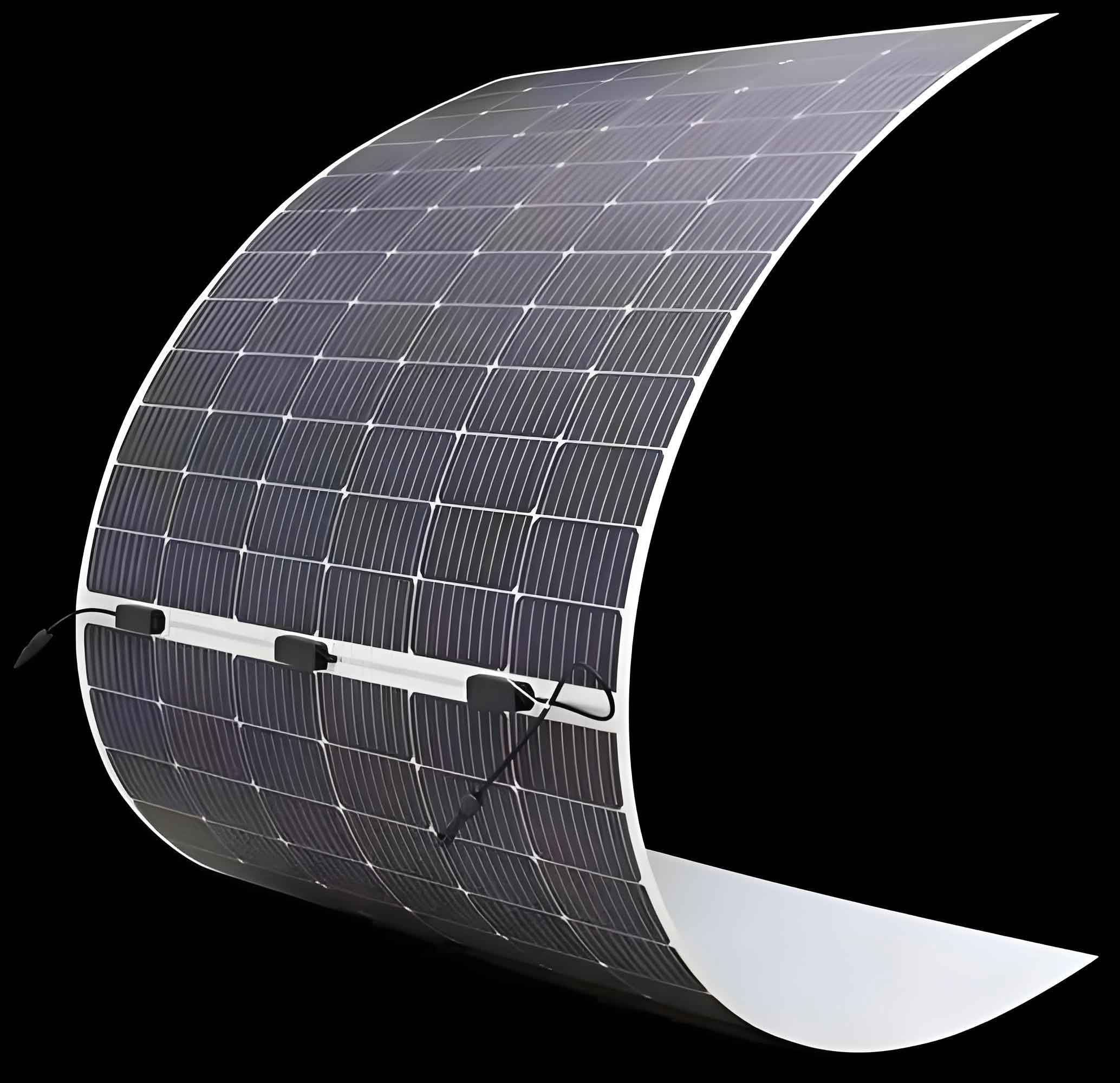
The choice of flexible substrate is critical for the performance of thin film solar panels. Substrates must exhibit thermal stability, chemical inertness, and matched thermal expansion coefficients with the CIGS layer to prevent delamination or stress-induced defects. Researchers have explored various materials, including stainless steel, titanium, polyimide (PI), and others. Below is a table summarizing laboratory achievements for flexible CIGS thin film solar panels on different substrates, showcasing efficiency progress over time.
| Substrate | Deposition Method | Efficiency (%) | Key Features | Year |
|---|---|---|---|---|
| Stainless Steel | Co-evaporation | 11.65 | Sodium doping control | 2002 |
| Stainless Steel | Co-evaporation with SiO2 barrier | 12.4 | No sodium addition | 2003 |
| Stainless Steel | Low-temperature co-evaporation with NaF post-treatment | 17.3 | Enhanced alkali metal incorporation | 2011 |
| Stainless Steel | Sputtering | 19.4 | Record efficiency for metal substrates | 2017 |
| Polyimide (PI) | Co-evaporation with NaCl layer | 12.8 | Early demonstration on polymer | 1999 |
| Polyimide (PI) | Co-evaporation with NaF post-treatment | 13.2 | Improved low-temperature growth | 2004 |
| Polyimide (PI) | Co-evaporation with alkali-silicate glass | 14.7 | Sodium source integration | 2008 |
| Polyimide (PI) | Co-evaporation with Ga gradient and KF post-treatment | 20.4 | Breakthrough in efficiency | 2013 |
| Polyimide (PI) | Co-evaporation with NaF and RbF post-treatment | 20.8 | Current record for flexible CIGS | 2019 |
This table illustrates the steady improvement in flexible thin film solar panels, driven by advancements in substrate engineering and deposition techniques. The efficiency gains are particularly notable for polyimide substrates, which enable lightweight and highly bendable thin film solar panels for mobile applications.
Key technologies have been pivotal in advancing flexible CIGS thin film solar panels. I will discuss three core aspects: sodium doping on flexible substrates, low-temperature deposition of the absorber layer, and module fabrication techniques.
First, sodium doping is essential for enhancing the electronic properties of CIGS absorbers. On flexible substrates, sodium must be introduced externally since they lack inherent sodium sources like soda-lime glass. The doping process can be modeled using diffusion equations. For instance, the sodium concentration profile in the CIGS layer can be described by Fick’s second law: $$ \frac{\partial C}{\partial t} = D \nabla^2 C $$ where \( C \) is the sodium concentration, \( t \) is time, and \( D \) is the diffusion coefficient. In practice, methods include pre-deposition of NaF on the back electrode, co-evaporation during CIGS growth, or post-deposition treatment. The post-treatment approach, often involving NaF, KF, or RbF, has proven most effective, as it allows precise control and minimizes adhesion issues. For example, the efficiency boost in polyimide-based thin film solar panels to over 20% is attributed to alkali metal post-treatment, which passivates defects and optimizes band alignment.
Second, low-temperature deposition is crucial for polymer substrates that cannot withstand high temperatures above 450°C. The growth of high-quality CIGS at reduced temperatures involves challenges like smaller grain sizes and increased defects. The crystallinity can be related to the Arrhenius equation for grain growth: $$ G = G_0 \exp\left(-\frac{E_a}{kT}\right) $$ where \( G \) is the grain size, \( G_0 \) is a pre-exponential factor, \( E_a \) is the activation energy, \( k \) is Boltzmann’s constant, and \( T \) is the substrate temperature. To compensate, techniques such as radio-frequency (RF) plasma cracking of selenium radicals have been employed to increase reactant activity. For instance, using an RF-cracked Se source at 450°C, efficiencies of 15.0% have been achieved, demonstrating that low-temperature processes can still yield competitive thin film solar panels. Additionally, adjusting gallium gradients during deposition helps tailor the bandgap profile, enhancing carrier collection. The bandgap energy \( E_g \) of CIGS can be expressed as: $$ E_g(x) = (1-x)E_{g,CuInSe2} + xE_{g,CuGaSe2} – bx(1-x) $$ where \( x \) is the gallium fraction and \( b \) is a bowing parameter. By optimizing \( x \) depth-wise, open-circuit voltage and fill factor improve, contributing to higher efficiency in flexible thin film solar panels.
Third, module fabrication on flexible substrates requires specialized patterning for monolithic interconnection. The process involves three laser scribes (P1, P2, P3) to isolate cells and series-connect them. The dead zone area between cells reduces the active area, impacting module efficiency. The geometric fill factor (GFF) can be defined as: $$ \text{GFF} = \frac{A_{\text{active}}}{A_{\text{total}}} $$ where \( A_{\text{active}} \) is the light-absorbing area and \( A_{\text{total}} \) is the total module area. For flexible thin film solar panels, non-contact laser scribing is preferred to avoid damage to sensitive layers on rough or curved surfaces. However, on metal substrates, achieving precise scribing without harming underlying barriers remains a challenge, highlighting the need for further innovation in manufacturing processes.
The industrialization of flexible CIGS thin film solar panels is gaining momentum, with several companies and institutes leading the way. Below is a table summarizing the current landscape, focusing on substrate types, efficiencies, and production capacities.
| Company/Institution | Primary Substrate | Lab Efficiency (%) (Cell) | Mass Production Efficiency (%) (Module) | Module Thickness (mm) | Annual Capacity (MW) |
|---|---|---|---|---|---|
| Company A | Stainless Steel | 19.4 | ~12 | 2.5 | Not specified |
| Company B | Stainless Steel | 17.44 | ~15 | <3.0 | 50 |
| Company C | Polyimide | 16.5 | 7–10 | 0.4–2.0 | 30 |
| Research Institute D | Polyimide | 20.8 | Not applicable | Laboratory scale | R&D focused |
| Company E | Polyimide | Not specified | ~10 | 1.0–2.0 | 15 |
This table shows that stainless steel substrates tend to yield higher efficiency modules, but polyimide-based thin film solar panels offer superior flexibility and lower weight, making them ideal for niche applications. The production capacities indicate a growing market for flexible thin film solar panels, though scaling up remains a work in progress.
Looking ahead, several technical hurdles must be addressed to enable widespread adoption of flexible CIGS thin film solar panels. First, developing low-temperature deposition processes that maintain high absorber quality is essential. This involves optimizing alkali metal doping kinetics and using auxiliary methods like plasma activation. The reaction rate for CIGS formation can be modeled as: $$ r = k [\text{Cu}]^\alpha [\text{In}]^\beta [\text{Ga}]^\gamma [\text{Se}]^\delta $$ where \( r \) is the rate, \( k \) is the rate constant, and \( \alpha, \beta, \gamma, \delta \) are reaction orders. By enhancing selenium radical activity at low temperatures, crystallization improves, benefiting thin film solar panels on heat-sensitive substrates.
Second, novel flexible substrate materials are needed to balance cost, thermal stability, and mechanical properties. For instance, ceramic-polymer composites could offer higher temperature tolerance than pure polyimide. The thermal expansion mismatch between substrate and CIGS layer, denoted by \( \Delta \alpha = \alpha_{\text{substrate}} – \alpha_{\text{CIGS}} \), should be minimized to prevent stress-induced cracks. Ideally, \( \Delta \alpha \approx 0 \) for robust adhesion during thermal cycling.
Third, industrial integration of roll-to-roll manufacturing lines requires precision equipment for deposition, patterning, and encapsulation. The throughput of such lines can be estimated by: $$ \text{Throughput} = v \times w \times \eta $$ where \( v \) is the web speed, \( w \) is the substrate width, and \( \eta \) is the process yield. Achieving high yield while maintaining efficiency is critical for cost-effective production of thin film solar panels.
In conclusion, flexible CIGS thin film solar panels have made remarkable strides, with laboratory efficiencies surpassing 20% and industrialization efforts underway. The unique flexibility of these thin film solar panels opens doors to innovative applications beyond traditional solar farms, such as integrated building materials, vehicle-integrated photovoltaics, and portable chargers. Continued research into low-temperature processes, alkali metal engineering, and scalable manufacturing will drive further improvements. As the demand for lightweight and versatile energy solutions grows, flexible thin film solar panels based on CIGS technology are poised to play a pivotal role in the global transition to renewable energy. Their potential to reduce carbon footprints while enabling new product designs makes them a exciting area for ongoing innovation.