
In the pursuit of sustainable energy solutions, thin film solar panels have emerged as a promising technology due to their potential for low-cost, large-scale production and flexibility. Among these, copper zinc tin sulfur selenium (Cu2ZnSn(S,Se)4, or CZTSSe) thin film solar panels stand out because of their earth-abundant, low-toxic constituents, tunable bandgap, and high absorption coefficient exceeding 104 cm−1. However, the practical efficiency of CZTSSe-based thin film solar panels remains limited, primarily due to high defect densities in the absorber layer and low open-circuit voltages in devices. To address these challenges, researchers have developed cation substitution strategies, where partial replacement of native cations (Cu+, Zn2+, or Sn4+) with other cations can modify defect profiles, crystal structures, and band alignments, thereby enhancing the performance of thin film solar panels. In this review, we delve into the recent advancements in optimizing CZTSSe thin film solar panels through both equivalent and inequivalent cation substitutions, summarizing key findings, mechanisms, and future directions for this critical field in renewable energy.
The structure of conventional CZTSSe thin film solar panels typically consists of a soda-lime glass (SLG) substrate, a molybdenum (Mo) back contact, a CZTSSe absorber layer, a cadmium sulfide (CdS) buffer layer, intrinsic zinc oxide (i-ZnO) and indium tin oxide (ITO) window layers, and an aluminum (Al) front electrode. The absorber layer is the heart of these thin film solar panels, and its properties dictate overall device efficiency. One major bottleneck is the disorder between Cu+ and Zn2+ ions, which have similar ionic radii (approximately 0.074 nm), leading to the formation of detrimental anti-site defects like CuZn. These defects act as recombination centers, reducing carrier lifetimes and limiting the efficiency of thin film solar panels. Additionally, the band offset at the CZTSSe/CdS interface often results in voltage deficits, further hampering performance. Cation substitution offers a pathway to mitigate these issues by tailoring the electronic and structural properties of the absorber layer in thin film solar panels.
We categorize cation substitution approaches into two main types: equivalent substitution, where the substituting cation has the same valence state as the host cation (e.g., Ag+ for Cu+, Cd2+ for Zn2+, Ge4+ for Sn4+), and inequivalent substitution, where the valence states differ (e.g., Ga3+ for Zn2+ and Sn4+, In3+ for Zn2+). Each strategy impacts the thin film solar panels differently, influencing defect thermodynamics, bandgap engineering, and grain growth. Below, we explore these substitutions in detail, supported by tables and formulas to encapsulate the progress in enhancing thin film solar panels.
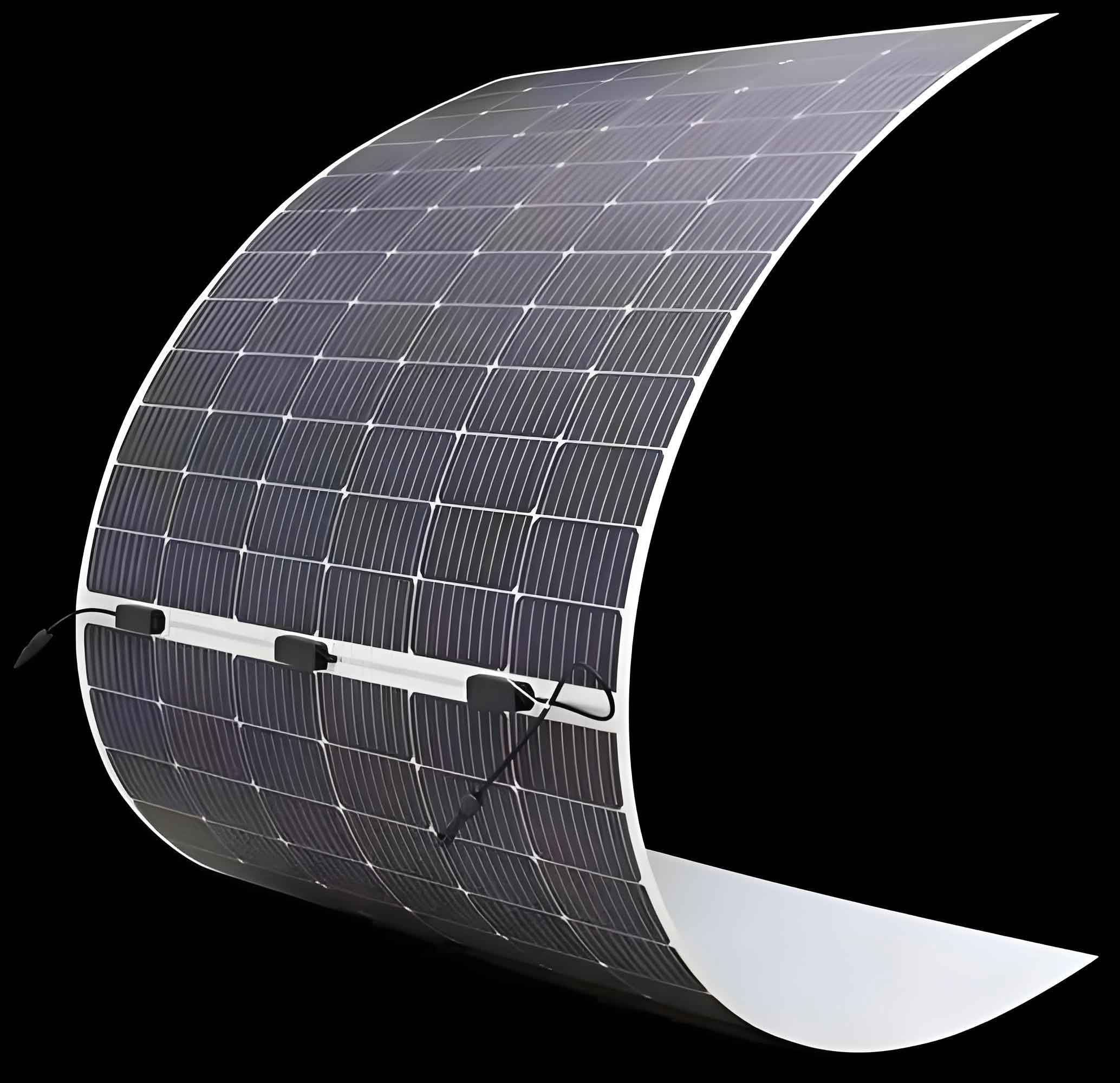
Equivalent cation substitution involves replacing ions with those of similar charge but potentially different ionic radii or electronic properties. This approach aims to reduce disorder and defect densities in thin film solar panels. For instance, substituting Cu+ with monovalent cations like Li+ or Ag+ can suppress CuZn anti-site defects. The formation energy of such defects can be expressed in terms of the substitution energy ΔEsub:
$$\Delta E_{\text{sub}} = E_{\text{doped}} – E_{\text{host}} – \sum_i \mu_i \Delta N_i$$
where Edoped and Ehost are the total energies of the doped and host systems, μi is the chemical potential of species i, and ΔNi is the change in number of atoms. For Li+ substitution, studies show a low substitution energy of about 0.25 eV, making it feasible for thin film solar panels. However, Li+ doping is often incompatible with sodium diffusion from SLG substrates, limiting its application in standard thin film solar panels. In contrast, Ag+ substitution not only curtails Cu/Zn disorder but also modulates the bandgap, improving open-circuit voltage in thin film solar panels. A summary of key equivalent substitutions is provided in Table 1, highlighting their effects on device parameters for thin film solar panels.
| Substitution Type | Optimal Composition | Efficiency (%) | Open-Circuit Voltage (mV) | Short-Circuit Current Density (mA/cm2) | Fill Factor (%) | Key Impact on Thin Film Solar Panels |
|---|---|---|---|---|---|---|
| Ag+ for Cu+ | (Ag0.05Cu0.95)2ZnSn(S,Se)4 | 12.5 | 540 | 32.1 | 72.0 | Bandgap widening, defect suppression |
| Cd2+ for Zn2+ | Cu2Zn0.6Cd0.4SnS4 | 12.6 | 640 | 27.8 | 71.0 | Grain growth, reduced recombination |
| Ge4+ for Sn4+ | Cu2ZnSn0.78Ge0.22S4 | 12.3 | 527 | 32.2 | 72.7 | Bandgap tuning, improved carrier collection |
| Mg2+ for Zn2+ | Cu2Mg0.0357Zn0.9643Sn(S,Se)4 | 7.76 | 400 | 33.5 | 57.9 | Enhanced hole mobility, shallow acceptor defects |
| Mn2+ for Zn2+ | Cu2Mn0.05Zn0.95SnS4 | 8.90 | 418 | 33.7 | 63.3 | Defect density reduction, phase stabilization |
Divalent cation substitution for Zn2+ is particularly impactful for thin film solar panels. For example, Cd2+ substitution has been shown to significantly boost efficiency by reducing ZnS secondary phases and promoting larger grain sizes, which minimize carrier recombination in thin film solar panels. The bandgap evolution with Cd content x in Cu2Zn1-xCdxSnS4 can be modeled using a bowing parameter b:
$$E_g(x) = x E_g(\text{CCTS}) + (1-x) E_g(\text{CZTS}) – b x(1-x)$$
where Eg(CCTS) and Eg(CZTS) are the bandgaps of Cu2CdSnS4 and Cu2ZnSnS4, respectively. This tunability allows for optimized light absorption in thin film solar panels. However, the toxicity of Cd poses environmental concerns, driving research into alternatives like Mg2+ or Mn2+ for eco-friendly thin film solar panels. Mg2+ substitution, with an ionic radius of 0.072 nm similar to Zn2+ (0.074 nm), introduces shallow acceptor defects and improves hole concentrations, beneficial for thin film solar panels. Similarly, Mn2+ doping enhances grain growth and reduces interface defect densities, as evidenced by increased carrier lifetimes in thin film solar panels.
Moving to tetravalent substitutions, Ge4+ for Sn4+ has proven effective in widening the bandgap and improving open-circuit voltage in thin film solar panels. The incorporation of Ge4+ alters the conduction band minimum, primarily composed of Sn 5s and S 3p orbitals, leading to a bandgap increase that can be expressed as:
$$\Delta E_g = k \cdot x$$
where k is a proportionality constant and x is the Ge fraction. This linear approximation holds for low doping levels in thin film solar panels. Ge-substituted absorbers also exhibit better stability against phase decomposition, crucial for long-term performance of thin film solar panels. The non-toxic and abundant nature of Ge makes it a sustainable choice for advancing thin film solar panels.
Inequivalent cation substitution involves ions with different valence states, which can introduce complex defect clusters or modify charge balances in thin film solar panels. For instance, Ga3+ substitution for both Zn2+ and Sn4+ (i.e., two Ga3+ ions replacing one Zn2+ and one Sn4+) has been proposed to suppress deep-level SnZn defects. This creates acceptor defect clusters like GaZn + CuZn or GaZn + GaSn, which enhance p-type conductivity and reduce non-radiative recombination in thin film solar panels. The defect formation energy for such clusters can be calculated using density functional theory (DFT), showing a reduction compared to native defects. Similarly, In3+ substitution for Zn2+ lowers hole carrier concentrations but improves transport properties, albeit with efficiency trade-offs in thin film solar panels. The rarity of In limits its scalability for mass-produced thin film solar panels.
To quantify the benefits of these substitutions, we can analyze the defect density reduction using the formula:
$$N_d = N_0 \exp\left(-\frac{E_a}{k_B T}\right)$$
where Nd is the defect density, N0 is a pre-exponential factor, Ea is the activation energy for defect formation, kB is Boltzmann’s constant, and T is the temperature. Cation substitutions that increase Ea for harmful defects like CuZn directly lower Nd, leading to better performance in thin film solar panels. Additionally, the band alignment at the CZTSSe/CdS interface can be adjusted through substitution, modifying the conduction band offset ΔEC:
$$\Delta E_C = E_C(\text{CZTSSe}) – E_C(\text{CdS})$$
A near-zero or slightly positive ΔEC is ideal for efficient electron injection in thin film solar panels. Substitutions like Ag+ or Ge4+ shift the band edges, optimizing this offset for thin film solar panels.
In practice, the fabrication of these advanced absorbers for thin film solar panels often involves solution-based methods or vacuum deposition, followed by selenization or sulfurization. For example, in solution-processed thin film solar panels, precursor inks containing metal salts and chalcogens are coated and annealed to form crystalline films. Cation substitution can be integrated by adding dopant sources to the ink, enabling precise control over composition in thin film solar panels. However, challenges like impurity phases and inhomogeneous doping require careful optimization of processing parameters for thin film solar panels.
Looking ahead, the future of CZTSSe thin film solar panels lies in multi-cation substitution strategies. Combining approaches, such as Ge4+ for Sn4+ and Cd2+ for Zn2+, could synergistically address both defect and bandgap issues in thin film solar panels. Machine learning predictions suggest that optimal doping ratios can be identified to maximize efficiency in thin film solar panels. Moreover, eco-friendly substitutions using abundant elements like Mg or Mn are essential for sustainable thin film solar panels. Research should also focus on interface engineering and scalable manufacturing to translate laboratory successes into commercial thin film solar panels.
In conclusion, partial cation substitution is a powerful tool for enhancing the performance of CZTSSe thin film solar panels. Through equivalent and inequivalent substitutions, researchers have achieved significant improvements in efficiency, open-circuit voltage, and stability of thin film solar panels. Each substitution offers unique advantages: Ag+ and Ge4+ for bandgap tuning, Cd2+ for grain growth, and Ga3+ for defect suppression in thin film solar panels. However, trade-offs exist, such as toxicity with Cd or incompatibility with Na for Li, necessitating further innovation. As we continue to refine these strategies, thin film solar panels based on CZTSSe hold great promise for contributing to a renewable energy future, offering a blend of efficiency, affordability, and environmental friendliness. The ongoing exploration of cation substitutions will undoubtedly drive the next generation of thin film solar panels toward higher performances and broader applications.