
In the realm of electrochemical energy storage, lithium-ion batteries have established themselves as the cornerstone technology for portable electronics, electric vehicles, and grid-scale storage systems. However, the persistent challenge of enhancing energy density and cycle life remains a critical frontier. The commercial graphite anode, with its theoretical capacity limited to 372 mAh g⁻¹, is increasingly inadequate for meeting the escalating demands of modern applications. This has spurred intensive research into alternative anode materials that can offer higher specific capacities, improved rate capabilities, and superior structural stability. Among the myriad of candidates, materials derived from metal-organic frameworks (MOFs) have emerged as a particularly promising class. MOFs, characterized by their tunable porous structures, high surface areas, and compositional diversity, serve as excellent precursors for synthesizing transition metal oxide/carbon (TMO/C) composites. In this comprehensive review, we delve into the synthesis, characterization, and electrochemical performance of MOF-derived TMO/C composites when employed as anodes in lithium-ion batteries. We will explore single-metal systems such as those based on Co, Fe, Zn, Mn, and Cu, as well as more complex bimetallic derivatives, highlighting how the unique architecture of MOF precursors translates into enhanced lithium storage properties. The integration of carbon matrices, often inherent from the organic ligands of the MOFs, plays a pivotal role in mitigating the inherent issues of poor conductivity and large volume changes associated with transition metal oxides. Throughout this discussion, we will incorporate fundamental electrochemical principles, performance data summarized in tables, and relevant mathematical models to provide a thorough understanding of the subject. The ultimate goal is to present a clear perspective on why these materials are considered pivotal for the next generation of lithium-ion battery technologies.
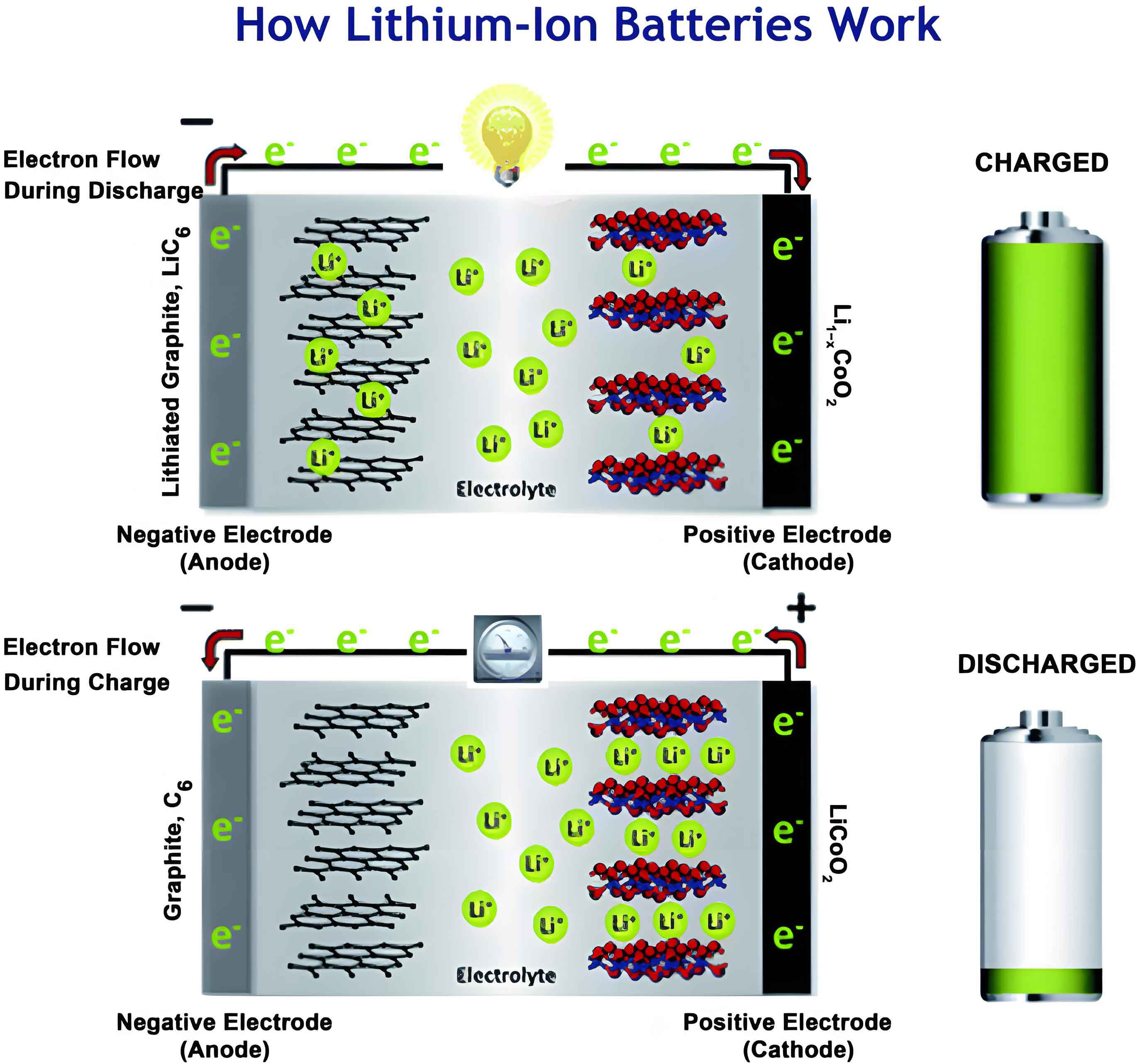
The fundamental operation of a lithium-ion battery relies on the reversible shuttling of lithium ions between the cathode and anode. The anode’s capacity is a primary determinant of the overall energy density. The theoretical capacity (C_theoretical) of an electrode material can be expressed as:
$$C_{\text{theoretical}} = \frac{nF}{M}$$
where \( n \) is the number of electrons transferred per formula unit during lithiation, \( F \) is Faraday’s constant (96485 C mol⁻¹), and \( M \) is the molar mass (g mol⁻¹). For graphite (C₆), \( n=1 \) per C₆ unit, leading to its well-known limit. In contrast, many transition metal oxides (TMOs) undergo conversion reactions, typically involving multiple electrons, which grant them much higher theoretical capacities. For instance, the reaction for Co₃O₄ can be represented as:
$$\text{Co}_3\text{O}_4 + 8\text{Li}^+ + 8e^- \leftrightarrow 3\text{Co} + 4\text{Li}_2\text{O}$$
This reaction involves 8 electrons per formula unit, contributing to its high theoretical capacity of approximately 890 mAh g⁻¹. However, the practical implementation of such materials in a lithium-ion battery is hampered by significant volume expansion during cycling (often >200%) and low intrinsic electronic conductivity, leading to rapid capacity fading and poor rate performance. This is where the strategic use of MOF precursors offers a transformative solution.
MOFs are crystalline materials formed by the coordination of metal ions or clusters with multidentate organic linkers. Their synthesis can be tailored to control pore size, surface area, and morphology. When subjected to controlled thermal treatment in inert or reactive atmospheres, MOFs can be converted into porous TMO/C composites. The organic linkers pyrolyze to form a conductive carbon matrix that embeds or encapsulates the newly formed metal oxide nanoparticles. This process often preserves the original morphological features of the MOF (e.g., cubes, polyhedra, rods), resulting in hierarchical structures beneficial for electrolyte penetration and ion diffusion. The general synthesis pathway can be summarized as:
$$\text{MOF (M}^{n+} + \text{Organic Ligand)} \xrightarrow{\Delta, \text{Inert/Reactive Atmosphere}} \text{TMO/C Composite}$$
The properties of the final composite—such as the crystallinity of the oxide, the graphitization degree of the carbon, and the porosity—are heavily influenced by the pyrolysis temperature (T), heating rate (β), and atmosphere. The specific surface area (S_BET) and pore volume (V_pore) are critical parameters that can be derived from gas adsorption isotherms using the Brunauer-Emmett-Teller (BET) and Barrett-Joyner-Halenda (BJH) methods, respectively.
To systematically compare the electrochemical performance of various MOF-derived anodes for lithium-ion batteries, we present a comprehensive table summarizing key parameters from recent studies. This includes the specific MOF precursor, the derived composite, test conditions (current density), achieved reversible capacity, and cycle life.
| MOF Precursor | Derived Composite | Current Density (mA g⁻¹) | Reversible Capacity (mAh g⁻¹) | Cycle Number | Key Structural Feature |
|---|---|---|---|---|---|
| ZIF-67 | Co₃O₄/C | 200 | 714 | 200 | Graphene-supported nanocrystals |
| Fe-MOF | Fe₃O₄/C | 100 | 975 | 50 | Porous carbon-decorated microcubes |
| MOF-5 | ZnO/C | 100 | 750 | 100 | Hollow porous nanocages |
| Mn-BTC | MnO/C | 1000 | 596 | 1000 | Hierarchical porous microspheres |
| Cu-BTC | CuO/C | 100 | 1024 | 100 | Porous carbon octahedra |
| ZIF-67@MIL-125 | Co₃O₄/TiO₂ | 1000 | 839 | 600 | Double-shelled nanoboxes |
| ZnCo-MOF | ZnO/ZnCo₂O₄/C | 500 | 669 | 250 | Core-shell porous structures |
This table illustrates the diversity of performance achievable through MOF templating. The capacity retention over many cycles is a testament to the structural stability imparted by the carbon matrix and the tailored porosity. To understand the kinetics of lithium storage in these composites, we often analyze the contribution of diffusion-controlled and surface-capacitive processes. The current (i) response at a fixed potential (V) can be described by the power-law relationship:
$$i = a v^b$$
where \( v \) is the scan rate (V s⁻¹), and \( b \) is an exponent. A value of \( b = 0.5 \) indicates a diffusion-controlled process (typical of bulk intercalation or conversion), while \( b = 1.0 \) suggests a surface-dominated capacitive process. For many MOF-derived TMO/C composites, a mixed mechanism is observed, with the capacitive contribution being significant, especially at high rates, which is beneficial for high-power lithium-ion battery applications.
Let us now examine specific families of MOF-derived anodes in greater detail. Cobalt-based systems are among the most studied. Zeolitic Imidazolate Framework-67 (ZIF-67), composed of Co²⁺ ions and 2-methylimidazole linkers, is a quintessential precursor. Upon thermal oxidation in air, it transforms into porous Co₃O₄ polyhedra. When the pyrolysis is conducted under inert atmosphere, a Co/C composite can form, which may be subsequently oxidized. The capacity of Co₃O₄/C composites often exceeds that of pure Co₃O₄ due to the conductive carbon network. The carbon not only enhances electron transport but also confines the oxide nanoparticles, preventing aggregation. The lithium insertion/extraction process involves phase transformations, and the associated volume change (ΔV) can be estimated from the molar volume change between reactants and products. The carbon buffer layer effectively absorbs the mechanical stress, as described by models for composite electrode mechanics. The effective conductivity (σ_eff) of a composite electrode with a dispersed conductive phase can be approximated by percolation theory:
$$\sigma_{\text{eff}} \propto (p – p_c)^t$$
for \( p > p_c \), where \( p \) is the volume fraction of the conductive phase (carbon), \( p_c \) is the percolation threshold, and \( t \) is a critical exponent. In MOF-derived composites, the carbon is often percolating at low fractions due to its interconnected nature from the pyrolyzed organic framework.
Iron-based MOFs, such as MIL-88 or Fe-BTC, are attractive due to iron’s low cost and abundance. The derived Fe₃O₄/C composites exhibit conversion reaction electrochemistry:
$$\text{Fe}_3\text{O}_4 + 8\text{Li}^+ + 8e^- \leftrightarrow 3\text{Fe} + 4\text{Li}_2\text{O}$$
The theoretical capacity is about 926 mAh g⁻¹. The pyrolysis of Fe-MOFs must be carefully controlled to avoid over-oxidation to Fe₂O₃ or complete reduction to metallic Fe. The resulting composites often show excellent rate capability due to the combined effects of nano-sizing and carbon coating. The diffusion of Li⁺ in such materials can be described by Fick’s laws. The apparent chemical diffusion coefficient of lithium (D_Li) can be estimated from galvanostatic intermittent titration technique (GITT) data using the equation:
$$D_{\text{Li}} = \frac{4}{\pi \tau} \left( \frac{n_m V_m}{A} \right)^2 \left( \frac{\Delta E_s}{\Delta E_\tau} \right)^2$$
where \( \tau \) is the constant current pulse time, \( n_m \) and \( V_m \) are the molar quantity and volume of the active material, \( A \) is the electrode area, and \( \Delta E_s \) and \( \Delta E_\tau \) are voltage changes. For porous Fe₃O₄/C composites, D_Li values are often found to be higher than in bulk Fe₃O₄, facilitating faster charge/discharge in a lithium-ion battery.
Zinc-based MOFs, like MOF-5 (Zn₄O(BDC)₃) or ZIF-8, yield ZnO/C composites upon thermal treatment. ZnO offers a high theoretical capacity (987 mAh g⁻¹) but suffers from severe pulverization. The MOF-derived approach yields structures where ZnO nanoparticles are uniformly dispersed within a carbon matrix. The carbon content and its bonding with ZnO influence the electrochemical performance significantly. The first-cycle irreversible capacity loss (ICL) is a common issue in conversion anodes, often attributed to solid electrolyte interphase (SEI) formation and irreversible side reactions. The ICL can be quantified as:
$$\text{ICL (\%)} = \left(1 – \frac{\text{First Cycle Charge Capacity}}{\text{First Cycle Discharge Capacity}}\right) \times 100\%$$
For ZnO/C composites from MOFs, the ICL is often lower than for pure ZnO, as the carbon can stabilize the SEI. Furthermore, the cycling stability is enhanced. The capacity fading over N cycles can sometimes be modeled by an exponential decay function:
$$C_N = C_0 \exp(-kN) + C_{\infty}$$
where \( C_0 \) is the initial capacity, \( k \) is a fading rate constant, and \( C_{\infty} \) is a steady-state capacity. For well-designed MOF-derived anodes, \( k \) is small, indicating slow capacity decay.
Manganese-based MOFs, such as Mn-BDC or Mn-BTC, are precursors for MnO/C composites. MnO has a theoretical capacity of 756 mAh g⁻¹ and operates via a conversion reaction. The derived composites often exhibit hierarchical porosity, which is advantageous for electrolyte access. The pore size distribution (PSD) can be calculated from adsorption isotherms, and a bimodal distribution (micropores and mesopores) is often desirable. Micropores (<2 nm) provide high surface area for charge storage, while mesopores (2-50 nm) facilitate ion transport. The total pore volume (V_total) and the volume of mesopores (V_meso) are critical parameters. The performance of such anodes in a lithium-ion battery is also influenced by the electrode fabrication process. The mass loading (m) of active material on the current collector affects the areal capacity (C_areal):
$$C_{\text{areal}} = C_{\text{grav}} \times m$$
where C_grav is the gravimetric capacity. High-loading electrodes are needed for practical applications, and MOF-derived powders with good tap density and conductivity are beneficial.
Copper-based MOFs, like Cu-BTC (HKUST-1), yield CuO/C composites. CuO has a high theoretical capacity of 674 mAh g⁻¹. The pyrolysis of Cu-MOFs can lead to interesting morphologies such as hollow polyhedra. The hollow structure provides extra void space to accommodate volume changes. The mechanical stability of such hollow structures can be analyzed using thin-shell theory. The stress (σ) in a spherical shell under uniform pressure due to volume expansion is given by:
$$\sigma = \frac{p r}{2t}$$
where \( p \) is the internal pressure, \( r \) is the radius, and \( t \) is the shell thickness. A thicker carbon shell or a composite shell can reduce stress, preventing fracture. The carbon in these composites also enhances the overall electronic conductivity, which is crucial for high-rate performance in lithium-ion batteries. The electronic conductivity (σ_e) is related to the carrier concentration (n) and mobility (μ) by:
$$\sigma_e = n e \mu$$
where \( e \) is the electron charge. The carbon derived from organic ligands often has a degree of graphitization, providing pathways for electron flow.
The exploration of bimetallic MOF precursors has opened avenues for materials with synergistic effects. For example, a MOF containing both Co and Zn ions can be pyrolyzed to form mixed oxides like ZnCo₂O₄ or composites like ZnO/Co₃O₄. These spinel or composite structures often exhibit enhanced electronic conductivity and richer redox chemistry compared to their single-metal counterparts. The overall capacity can be a weighted sum of the contributions from individual components, but synergistic effects may lead to extra capacity. The Gibbs free energy change (ΔG) for the conversion reaction of a mixed oxide might be more favorable, improving thermodynamics. Furthermore, the presence of two different metal cations can stabilize the structure during cycling. For instance, in a composite like Co₃O₄/TiO₂ derived from a MOF-on-MOF structure, the TiO₂ shell can provide structural integrity and long-term cyclability, while the Co₃O₄ core delivers high capacity. The design of such complex architectures is a key advantage of using MOF precursors.
To further quantify the performance benefits, we can examine parameters like the capacity retention rate (R) after N cycles:
$$R = \frac{C_N}{C_1} \times 100\%$$
where \( C_1 \) is the discharge capacity at the first cycle and \( C_N \) is the capacity at the Nth cycle. For many MOF-derived TMO/C anodes, R remains above 80% even after hundreds of cycles, which is exceptional for conversion-type materials. Another critical metric for a lithium-ion battery anode is the rate capability, often presented as capacity at various current densities. The capacity typically decreases with increasing current density (j) due to kinetic limitations. This relationship can sometimes be fitted to a logarithmic or power-law decay. The high-rate performance of MOF-derived composites is attributed to their short diffusion lengths (L) for Li⁺, given by:
$$L \approx \sqrt{D_{\text{Li}} t}$$
where \( t \) is the characteristic time for diffusion. For nanosized particles and porous structures, L is small, enabling fast charging/discharging.
Beyond the common TMOs, other derivatives like sulfides, phosphides, and selenides can also be obtained from MOF precursors by using appropriate sulfurization, phosphidation, or selenization steps. However, the focus here remains on oxides. The carbon content in the final composite is a crucial variable. Too little carbon may not provide sufficient conductivity or buffering, while too much carbon dilutes the active material and reduces the overall energy density. The optimal carbon content (w_c) can be determined empirically for each system. It is also important to note that the carbon is often doped with heteroatoms (e.g., N, S, P) originating from the organic ligands (e.g., imidazoles, amines), which can further enhance conductivity and provide additional active sites for lithium storage.
The synthesis parameters have a profound impact on the final material’s properties. The pyrolysis temperature (T_p) influences the crystallite size (d) of the metal oxide, which can be estimated using the Scherrer equation from X-ray diffraction (XRD) patterns:
$$d = \frac{K \lambda}{\beta \cos \theta}$$
where \( K \) is the shape factor, \( \lambda \) is the X-ray wavelength, \( \beta \) is the full width at half maximum (FWHM) of the diffraction peak in radians, and \( \theta \) is the Bragg angle. Higher T_p generally leads to larger crystallites and more graphitic carbon but may also cause collapse of the porous structure. Therefore, a balance must be struck. The heating rate and atmosphere (N₂, Ar, air, or mixed gases) also determine the phase composition and porosity.
In terms of electrochemical characterization, cyclic voltammetry (CV) profiles of MOF-derived TMO/C anodes typically show distinct reduction/oxidation peaks corresponding to the conversion reactions and possibly the formation/decomposition of Li₂O and a polymeric gel-like layer. The area under the CV curve is related to the stored charge. Galvanostatic charge/discharge profiles exhibit voltage plateaus associated with these phase transitions. The differential capacity (dQ/dV) plots can resolve these reactions more clearly. For a lithium-ion battery, the average operating voltage of the anode is also important for determining the cell voltage when paired with a cathode.
Despite the significant progress, challenges remain for MOF-derived anodes in practical lithium-ion batteries. The initial coulombic efficiency (ICE) is often low, primarily due to irreversible SEI formation and electrolyte decomposition on the high-surface-area carbon. Strategies to pre-lithiate or form stable SEI are being explored. The volumetric energy density of these porous composites can be lower than that of graphite due to their lower tap density. Engineering denser structures without compromising porosity is an active research area. Furthermore, the scale-up of MOF synthesis and its subsequent pyrolysis needs to be cost-effective for commercialization. The environmental impact of using certain organic solvents in MOF synthesis is also a consideration for green manufacturing.
Looking forward, the field of MOF-derived materials for lithium-ion battery anodes is poised for further innovation. Several promising directions include: (i) the design of multi-metallic MOFs to create complex oxide composites with tailored electronic structures; (ii) the integration of MOF derivatives with other conductive scaffolds like carbon nanotubes or graphene in a more controlled manner during synthesis; (iii) the exploration of MOF-derived materials for other battery chemistries like sodium-ion or potassium-ion batteries, where similar principles apply; (iv) the use of in situ and operando characterization techniques to better understand the structural evolution during cycling; and (v) the development of machine learning models to predict optimal MOF precursors and pyrolysis conditions for desired electrochemical properties.
To encapsulate the performance trends across different metal systems, we present another table focusing on the key electrochemical metrics and the role of carbon. This table reinforces the central theme that the MOF-derived carbon matrix is indispensable for achieving high performance in lithium-ion battery anodes.
| Metal Oxide | Theoretical Capacity (mAh g⁻¹) | Common MOF Precursor | Typical Carbon Content (wt%) | Key Function of Carbon | Typical Capacity Retention after 100 cycles (%) |
|---|---|---|---|---|---|
| Co₃O₄ | 890 | ZIF-67 | 10-30 | Conductivity enhancer, volume buffer | >85 |
| Fe₃O₄ | 926 | MIL-88, Fe-BTC | 15-35 | Prevents aggregation, stabilizes SEI | >80 |
| ZnO | 987 | MOF-5, ZIF-8 | 20-40 | Confines nanoparticles, improves kinetics | >75 |
| MnO | 756 | Mn-BDC, Mn-BTC | 10-25 | Provides porous network, enhances Li⁺ diffusion | >80 |
| CuO | 674 | Cu-BTC (HKUST-1) | 5-20 | Forms conductive shell, maintains morphology | >70 |
| ZnCo₂O₄ | ~900 | ZnCo-MOF | 15-30 | Synergistic support, dual redox activity | >85 |
The carbon content values are approximate and vary based on synthesis conditions. The capacity retention is also indicative and depends on cycling conditions. The overarching narrative is that the intelligent design of the precursor MOF allows for precise control over the composite’s architecture at the nanoscale, which directly translates to superior electrochemical behavior in a lithium-ion battery context.
In conclusion, MOF-derived TMO/C composites represent a paradigm shift in the design of high-performance anodes for lithium-ion batteries. By leveraging the inherent structural advantages of MOFs—such as high surface area, tunable porosity, and molecular-level homogeneity—researchers can fabricate composites that effectively address the cardinal issues of volume expansion and poor conductivity plaguing transition metal oxides. The carbon matrix, derived from the organic ligands, acts as a conductive skeleton and a mechanical buffer, enabling stable cycling and good rate performance. From single-metal systems like Co₃O₄/C and Fe₃O₄/C to more complex bimetallic composites, the versatility of the MOF precursor approach is evident. Continued research into optimizing synthesis parameters, understanding degradation mechanisms, and integrating these materials into full cells will be crucial for their eventual deployment in commercial lithium-ion batteries. As the demand for higher energy density and faster charging batteries grows, MOF-derived materials are likely to play an increasingly prominent role in shaping the future of energy storage technology.
To further illustrate the kinetic advantages, we can consider the relationship between the specific power (P) and specific energy (E) of a battery, often depicted in a Ragone plot. For a lithium-ion battery with a MOF-derived anode, the high-rate capability shifts the plot upwards in the power domain. The mathematical modeling of battery performance often involves coupled partial differential equations for charge conservation and mass transport in porous electrodes (Doyle-Fuller-Newman model). While a detailed exposition is beyond this review’s scope, it is noteworthy that the parameters describing the anode (like solid-phase diffusion coefficient and reaction rate constant) are significantly improved in MOF-derived composites compared to their bulk counterparts. This improvement is a direct consequence of the nanoscale engineering afforded by the MOF templating route. As we advance, interdisciplinary efforts combining materials science, electrochemistry, and computational modeling will unlock even greater potentials for these fascinating materials in the ever-evolving landscape of lithium-ion battery technology.