
In my years of research and practical experience in the renewable energy sector, I have come to realize that the effectiveness of a photovoltaic power station hinges on several interrelated factors. These primarily include station design, equipment performance, and maintenance. However, the most crucial and often overlooked aspect is the operation, maintenance, and management of the equipment. This insight stems from two key observations. Firstly, photovoltaic power stations are generally highly reliable and require infrequent maintenance; they often operate in an unattended state unless a fault occurs. Secondly, solar photovoltaic equipment is inherently delicate, and improper human operation can easily lead to failures, significantly impacting the entire station’s performance. Therefore, I firmly believe that prioritizing the operation and maintenance of solar systems is non-negotiable for enhancing their operational efficiency and longevity. This article delves into the importance of solar technology, the current state of photovoltaic equipment, and detailed strategies for their upkeep and management, all from my first-hand perspective.
The role of solar technology is multifaceted and profound. Energy, defined as the capacity to support human survival and societal development, has evolved remarkably from the earliest use of fire to the contemporary mastery of atomic power. However, my analysis of current conditions reveals that China’s reserves of conventional energy are still below the world average, making energy a critical constraint on economic growth. For achieving sustainable development, renewable energy sources are indispensable. Among these, solar photovoltaic power generation has seen rapid global advancement due to its green and non-polluting nature. The solar system, as a cornerstone of this transition, is receiving increasing research attention worldwide.
Moreover, given China’s vast territory and abundant solar resources due to its geographical location, harnessing solar energy can dramatically boost regional economies. The application of advanced solar power generation technologies directly elevates living standards. Thus, the solar system industry plays a pivotal role in both macroeconomic stability and micro-level quality of life improvements.
Currently, the capability of photovoltaic equipment manufacturers has significantly improved. The entire production chain—from silicon material production and processing, cell and module manufacturing, to environmental treatment, purification, and equipment testing—can now be supplied as complete sets. This integration is a major driver for the solar system industry’s growth. Let me break down the current status across key segments.
In silicon wafer production, economic development has fostered close collaboration among manufacturers, particularly those specializing in wafers. Domestic equipment like multicrystalline silicon casting furnaces and monocrystalline furnaces now match international standards in temperature control and high-efficiency casting processes. Their high cost-performance ratio makes them favored by domestic enterprises. The widespread adoption of diamond wire cutting technology has further boosted the reliability of domestic diamond wire cutting machines, making them a primary choice for many silicon wafer companies. However, wafer sorting equipment still relies heavily on imports, though I anticipate that multifunctional domestic sorting devices will become prevalent in the near future.
For cell production, the dominant process flow for crystalline silicon cells in China involves monocrystalline trough-type texturing / multicrystalline inline texturing, PECVD, and testing/sorting equipment. Previously, multicrystalline inline texturing equipment was imported, but domestic cleaning and texturing devices have now matured and gained widespread use. The development of combined monocrystalline/multicrystalline texturing machines is ongoing both domestically and internationally, with several Chinese companies already collaborating with cell manufacturers. PECVD equipment, a critical component in solar cell production lines, comes in tubular and plate-type configurations. Tubular PECVD is fully localized, offering excellent film uniformity. Cell efficiency testing and sorting equipment have reached a high level of development, with stability nearly on par with international counterparts. With the proliferation of distributed photovoltaic systems in China, requirements for cell quality have intensified, elevating the importance of automatic appearance sorting for cells—now a key step in solar cell manufacturing. Nonetheless, certain areas, such as high-efficiency cell process equipment and cutting-edge technologies, still require optimization.
At the module assembly stage, numerous devices like automatic string welding machines, laminators, and automatic packaging machines have been successfully localized. These domestic photovoltaic equipment are highly popular and widely adopted in the market, underscoring the robustness of the solar system supply chain.
To better summarize the current technological landscape and performance metrics of key equipment in a solar system, I have compiled the following table based on my observations and industry data:
| Production Stage | Key Equipment | Technical Status & Performance Indicators | Localization Level |
|---|---|---|---|
| Silicon Wafer Production | Multicrystalline Casting Furnace, Monocrystalline Furnace | Temperature control precision ±1°C; Casting efficiency >85% | Fully Domestic, Competitive |
| Silicon Wafer Production | Diamond Wire Cutting Machine | Cutting speed 1.5 m/s; Kerf loss < 100 µm | High, Widely Adopted |
| Silicon Wafer Production | Wafer Sorter | Sorting accuracy 99.5%; Throughput 4000 wafers/hour | Primarily Imported |
| Cell Production | Inline Texturing Machine (Multicrystalline) | Surface reflectance < 10%; Uniformity >95% | Mostly Domestic Now |
| Cell Production | PECVD (Tubular) | Film thickness uniformity ±3%; Production capacity 3000 wafers/batch | Fully Domestic |
| Cell Production | Cell Tester/Sorter | Efficiency measurement uncertainty ±0.1%; Sorting speed 3600 cells/hour | High, Near International Level |
| Module Assembly | Automatic String Welder | Welding yield >99.8%; Cycle time < 2 seconds per string | Fully Domestic, Dominant |
| Module Assembly | Laminator | Lamination temperature uniformity ±2°C; Throughput 50 modules/hour | Fully Domestic |
The performance and output of a solar system can be mathematically modeled. A fundamental formula for the DC power output of a photovoltaic module is:
$$ P_{dc} = G_{t} \cdot A_{m} \cdot \eta_{m} \cdot [1 – \beta (T_{c} – T_{stc})] $$
Where \( P_{dc} \) is the DC power output (W), \( G_{t} \) is the solar irradiance on the tilted module plane (W/m²), \( A_{m} \) is the module area (m²), \( \eta_{m} \) is the module efficiency under standard test conditions (STC), \( \beta \) is the temperature coefficient of power (%/°C), \( T_{c} \) is the cell temperature (°C), and \( T_{stc} \) is the temperature at STC (25°C). This equation highlights how equipment efficiency (\( \eta_{m} \)) and operating conditions (like temperature \( T_{c} \)) directly impact the solar system’s yield. Maintaining optimal \( \eta_{m} \) and minimizing losses from temperature rises are core objectives of effective operation and maintenance.
Another critical metric is the system’s performance ratio (PR), a key indicator of overall health and quality:
$$ PR = \frac{Y_{f}}{Y_{r}} = \frac{\text{Actual Specific Yield}}{\text{Theoretical Specific Yield}} $$
Here, \( Y_{f} \) is the final yield (kWh/kWp), calculated as the actual energy output divided by the system’s peak power, and \( Y_{r} \) is the reference yield (kWh/kWp), representing the theoretically available solar energy. A well-maintained solar system typically achieves a PR between 75% and 85%. Factors causing PR degradation—soiling, shading, inverter losses, wiring losses, and module degradation—must be meticulously managed through maintenance.
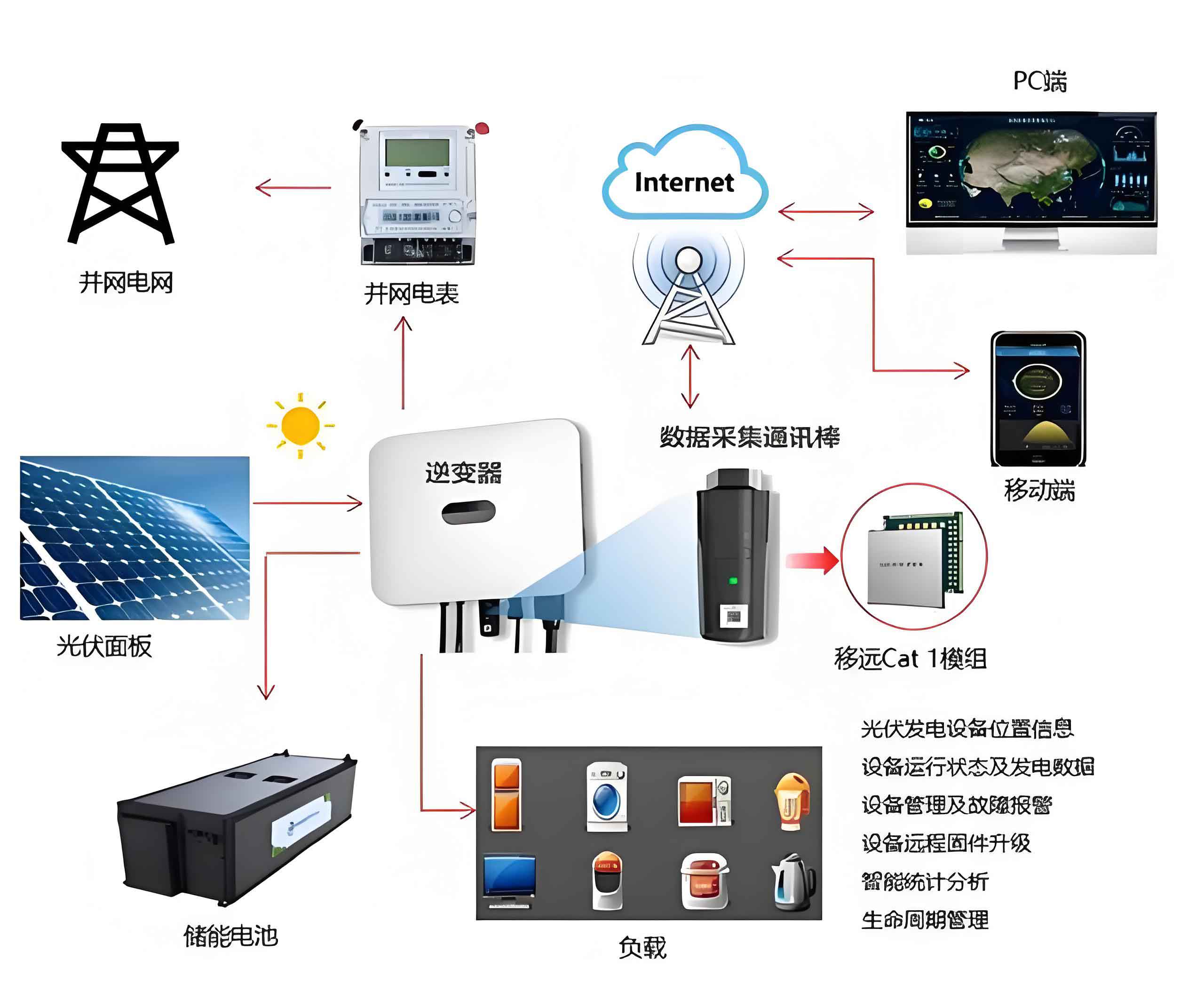
Moving to the core of my discussion, the operation and maintenance of solar systems require systematic approaches. Based on my project involvement, I propose several concrete measures. First, optimizing the technical document management mechanism is essential. The operation of equipment in a solar photovoltaic power station is intrinsically linked to its technical documentation. I advocate for establishing a comprehensive technical file database. This repository should contain all necessary data—equipment manuals, circuit diagrams, communication protocols, and software guides—enabling technicians to make informed decisions and ensure reliable operation of the solar system.
Second, it is crucial to complete equipment archives based on their underlying technology. The archives for a solar power station’s equipment should include drawings, acceptance documents, switch settings, operational instructions, and working principles. Maintenance personnel must diligently update these records, ensuring they reflect the as-built and as-operated state of every component in the solar system. This historical record is invaluable for troubleshooting and lifecycle management.
Third, establishing an informatized equipment management platform is a game-changer. By developing a computer-based management system, we can centralize equipment information, creating a robust database accessible across multiple power stations. The core of this database should encompass operational principles, fault diagnosis trees, maintenance histories, and repair logs. For instance, if a component in the solar system fails, a maintenance engineer can log into the platform, review the device’s past failure patterns and solutions, quickly diagnose the root cause, and implement an effective remedy. Furthermore, the platform should track cumulative operational hours, energy generation data, fault frequency, and mean time between failures (MTBF) for critical assets. The MTBF for a subsystem can be expressed as:
$$ \text{MTBF} = \frac{\text{Total Operational Time}}{\text{Number of Failures}} $$
A high MTBF indicates a reliable solar system, and tracking this metric helps in predictive maintenance planning.
Fourth, creating detailed operational records for each device is fundamental. To monitor the real-time status of a solar system and formulate tailored maintenance plans, it is imperative to maintain a dedicated log for every major piece of equipment. This operational log is the heart of equipment management. Technicians should record operational parameters and states at regular intervals throughout the day. Key measurements include sub-array currents and voltages, battery room temperature, charging/discharging currents and voltages of batteries (if present), inverter input/output parameters, and transformer temperatures. Any factor with a significant influence on the solar system’s performance must be documented. Crucially, when a fault occurs, on-site personnel must immediately inspect the equipment, record the failure phenomena, collaborate with repair teams to resolve the issue, and meticulously fill out a maintenance report detailing the fault cause, actions taken, and parts replaced. This record becomes a vital reference for future maintenance and reliability analysis.
To quantify the impact of maintenance, we can consider the availability of a solar system:
$$ \text{Availability} = \frac{\text{MTBF}}{\text{MTBF} + \text{MTTR}} \times 100\% $$
Here, MTTR is the Mean Time to Repair. Proactive maintenance aims to maximize MTBF and minimize MTTR, thus pushing availability closer to 100%.
Beyond maintenance procedures, effective management of the solar system is equally vital. From a managerial standpoint, I offer the following suggestions. First, clarifying the equipment management framework is paramount. Solar photovoltaic projects often involve substantial initial investment and are frequently located in remote or less developed areas. In the early stages of solar system adoption, companies sometimes underestimated the importance of professional management, leading to operational challenges that hampered commercial viability. Therefore, for such projects, a clear management scheme must be established. This requires not only that the operating entity possesses sufficient financial strength but also that it leverages government incentives and policies effectively. Engaging in the research and development of solar photovoltaic equipment through commercialized management models can enhance equipment quality and accelerate industry growth. A structured management plan should define roles, responsibilities, reporting lines, and performance KPIs for the solar system’s oversight.
Second, perfecting the equipment operation analysis mechanism is necessary. There is often a shortage of skilled personnel proficient in maintaining and managing complex solar systems. Companies must therefore invest in talent development, organizing regular training sessions for existing staff to upgrade their technical and managerial competencies. Additionally, recruiting experienced professionals in solar system maintenance is crucial. To ensure reliable operation, a formal operation analysis mechanism should be instituted. Designated departments or personnel should periodically review equipment performance data, analyze the root causes of any faults or efficiency dips, and implement corrective and preventive actions. This systematic review not only optimizes the current solar system project but also generates valuable lessons learned for future deployments, fostering continuous improvement across the industry.
We can model the economic benefit of effective management using a simple cost-benefit relation. The Levelized Cost of Energy (LCOE) for a solar system is a common metric:
$$ LCOE = \frac{\sum_{t=1}^{n} \frac{I_t + M_t + F_t}{(1+r)^t}}{\sum_{t=1}^{n} \frac{E_t}{(1+r)^t}} $$
Where \( I_t \) is the investment expenditure in year \( t \), \( M_t \) is the maintenance cost, \( F_t \) is the fuel cost (zero for PV), \( E_t \) is the electricity generated, \( r \) is the discount rate, and \( n \) is the system lifetime. Superior maintenance and management reduce \( M_t \) and increase \( E_t \) (by minimizing downtime and performance degradation), thereby lowering the LCOE and improving the solar system’s economic attractiveness.
In conclusion, my extensive involvement in this field has solidified my conviction that the operation, maintenance, and management of solar systems are indispensable for their successful and sustainable operation. We must not only increase our emphasis on these aspects and develop robust maintenance and management protocols but also harness information technology to build intelligent platforms that elevate management efficiency. Through these concerted efforts, we can overcome existing challenges, ensure the reliable and economical performance of photovoltaic power stations, and accelerate the widespread adoption of solar energy, contributing significantly to a sustainable energy future. The journey of every solar system, from manufacturing to decommissioning, must be guided by meticulous care and strategic oversight.