
The relentless growth in global energy demand, particularly for space cooling and heating, presents a profound challenge intertwined with environmental sustainability. Conventional vapor-compression air conditioning systems, while effective, contribute significantly to peak electricity loads and rely on refrigerants with high global warming potential. In this context, the pursuit of alternative, renewable energy-driven cooling solutions has become imperative. One promising avenue is the integration of solar photovoltaic (PV) technology with solid-state thermoelectric (TE) modules to create a novel air conditioning paradigm. This system, often termed a solar photovoltaic thermoelectric air conditioner, represents a clean, modular, and potentially low-maintenance alternative. The core principle involves converting abundant solar radiation into direct current (DC) electricity via PV panels, which subsequently powers TE modules. Exploiting the Peltier effect, these modules pump heat from one side to the other upon electrical excitation, thereby providing cooling or heating to a conditioned space simply by reversing the current direction. The entire solar system operates without moving parts, refrigerants, or complex fluid circuits, offering intrinsic advantages in reliability and environmental compatibility. This article aims to provide a comprehensive review of this integrated technology, analyzing its working principles, key performance factors, current limitations, and potential pathways for improvement, with a particular focus on the coefficient of performance (COP) as the critical metric of efficiency.
The foundational architecture of a typical solar-driven thermoelectric air conditioning system comprises several key components: solar PV panels, power conditioning units (which may include maximum power point trackers, charge controllers, and batteries for energy storage), an array of thermoelectric modules, and dedicated heat exchangers (heat sinks) attached to both the cold and hot sides of the modules. The PV panels form the primary energy harvesting layer of the solar system. Their efficiency in converting incident sunlight into electrical energy directly dictates the available input power for the TE modules. Commercially dominant crystalline silicon (c-Si) panels offer efficiencies in the range of 15-22%, while advanced multi-junction concentrated PV cells have demonstrated laboratory efficiencies exceeding 46%. The choice of PV technology within the solar system involves a trade-off between cost, efficiency, and form factor. The generated DC power is then managed and supplied to the TE modules. A critical aspect of this integrated solar system is ensuring impedance matching between the PV array’s current-voltage characteristics and the operational requirements of the TE cooler for optimal power transfer.
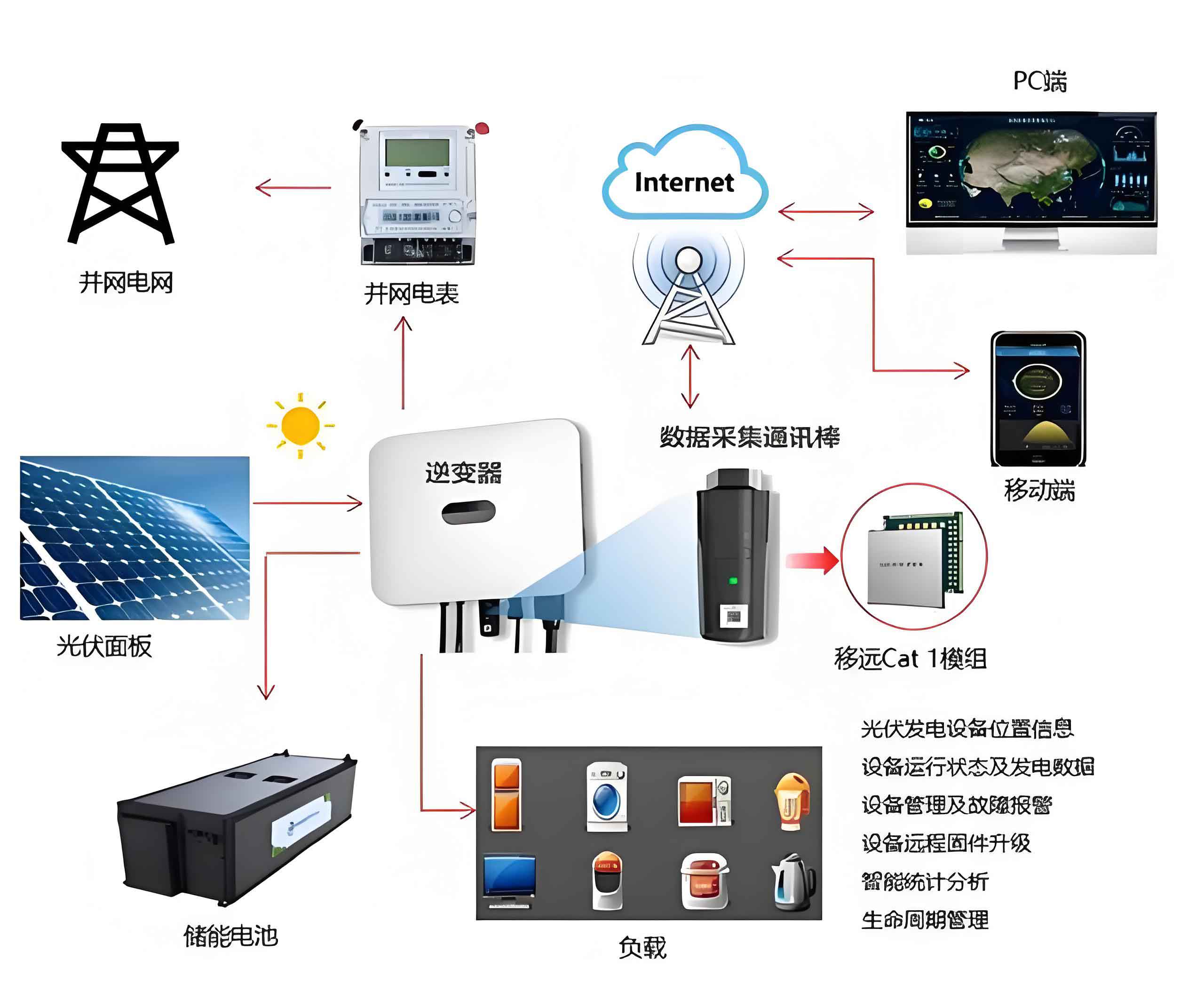
The heart of the cooling/heating function lies in the thermoelectric modules. A standard module consists of numerous n-type and p-type semiconductor thermoelements (typically Bismuth Telluride-based) connected electrically in series and thermally in parallel between two ceramic substrates. When DC current (I) passes through this circuit, heat absorption ($Q_c$) occurs at the cold junction and heat rejection ($Q_h$) at the hot junction, governed by the Peltier effect. The basic energy balance equations for a single-stage TE cooler, ignoring secondary effects initially, are:
$$Q_c = \alpha T_c I – \frac{1}{2} I^2 R – K (T_h – T_c)$$
$$Q_h = \alpha T_h I + \frac{1}{2} I^2 R – K (T_h – T_c)$$
$$V = \alpha (T_h – T_c) + I R$$
$$P_{in} = V I$$
where $\alpha$ is the Seebeck coefficient of the couple, $R$ is the total electrical resistance, $K$ is the total thermal conductance, and $T_h$ and $T_c$ are the hot-side and cold-side absolute temperatures, respectively. The cooling Coefficient of Performance (COP) is then defined as $COP_{cooling} = Q_c / P_{in}$, and the heating COP as $COP_{heating} = Q_h / P_{in}$. It is immediately apparent that the performance is intricately linked to the material properties encapsulated in the figure of merit, $ZT$, for the thermoelectric materials:
$$ZT = \frac{\alpha^2 \sigma}{k} T$$
where $\sigma$ is the electrical conductivity, $k$ is the thermal conductivity, and $T$ is the average absolute temperature. The dimensionless $ZT$ value is the paramount indicator of thermoelectric material efficiency. The maximum cooling COP for an ideal module can be expressed in terms of $ZT$ and the temperature ratio:
$$COP_{max, cool} = \frac{T_c}{T_h – T_c} \cdot \frac{\sqrt{1+ZT_m} – T_h/T_c}{\sqrt{1+ZT_m} + 1}$$
where $T_m = (T_h+T_c)/2$. Commercial Bismuth Telluride modules used near room temperature typically have a $ZT_m$ around 0.8-1.0, which fundamentally limits the achievable COP, especially when a significant temperature lift ($T_h – T_c$) is required, as in air conditioning applications.
| Component | Primary Function | Key Performance Parameters | Typical Value/State |
|---|---|---|---|
| Solar PV Panel | Convert sunlight to DC electricity | Conversion Efficiency ($\eta_{PV}$) | 15%-22% (commercial c-Si) |
| Thermoelectric Module | Pump heat via Peltier effect | Figure of Merit ($ZT$), $\alpha$, $R$, $K$ | $ZT \approx$ 1.0 at 300K |
| Cold-Side Heat Sink | Transfer cooling load to room air | Thermal Resistance ($R_{th,c}$) | 0.5 – 1.0 K/W (forced air) |
| Hot-Side Heat Sink | Dissipate waste heat to ambient | Thermal Resistance ($R_{th,h}$) | 0.1 – 0.7 K/W (depends on design) |
The overall system performance is a product of the efficiency chain from sunlight to cooling effect. The net system COP can be considered as:
$$COP_{system} = \eta_{PV} \cdot \eta_{power} \cdot COP_{TE}$$
where $\eta_{PV}$ is the PV panel efficiency, $\eta_{power}$ is the efficiency of power conditioning and transfer, and $COP_{TE}$ is the coefficient of performance of the thermoelectric cooler assembly under operating conditions. This multiplicative relationship highlights why improvements at every stage are critical. Even with a theoretically perfect $COP_{TE}$, a low $\eta_{PV}$ drastically reduces the overall solar system efficiency. Reported experimental values for complete solar system prototypes in cooling mode often range from 0.2 to 0.6, significantly lower than conventional compression systems, primarily due to the low $ZT$ of materials and thermal management challenges.
Several nuanced factors beyond the ideal equations degrade the practical COP of the TE cooler itself within the solar system. First, the Thomson effect, arising from the temperature dependence of the Seebeck coefficient, can influence performance. The heat balance equation incorporating the Thomson coefficient $\beta$ (where $\beta = T \frac{d\alpha}{dT}$) becomes:
$$Q_c = \alpha T_c I – \frac{1}{2} I^2 R – K (T_h – T_c) – \frac{1}{2} \beta I (T_h – T_c)$$
For materials with a positive $\beta$, the Thomson effect acts as an additional parasitic heat source on the cold side, reducing $Q_c$ and COP. Its impact is more pronounced under large temperature gradients.
Second, and critically, thermal and electrical contact resistances are often the dominant limiting factors in real modules, especially as device size scales down. The effective electrical resistance ($R_{eff}$) and thermal conductance ($K_{eff}$) experienced in operation are:
$$R_{eff} = R_{intrinsic} + R_{contact}$$
$$\frac{1}{K_{eff}} = \frac{1}{K_{intrinsic}} + R_{th, contact}$$
where $R_{contact}$ is the electrical contact resistance and $R_{th, contact}$ is the thermal contact resistance at the interfaces between thermoelements, metallization, and ceramic substrates. These parasitic resistances increase Joule heating and reduce effective heat pumping, leading to a lower module-level $ZT$ than the material $ZT$ would suggest. Optimizing interfacial materials and bonding processes is therefore as crucial as developing better bulk thermoelectric materials for a practical solar system.
Third, the temperature-dependent nature of the material properties ($\alpha(T)$, $\sigma(T)$, $k(T)$) means that the optimal operating current for maximum COP or cooling power shifts with the imposed $T_h$ and $T_c$. A fixed current supplied by the solar system may not coincide with this dynamic optimum, leading to sub-optimal performance under varying solar irradiance and ambient conditions.
| Performance-Limiting Factor | Physical Origin | Impact on COP | Potential Mitigation Strategy |
|---|---|---|---|
| Low Material $ZT$ | Interdependence of $\alpha$, $\sigma$, $k$ | Fundamental limit on $COP_{max}$ | Develop new materials (e.g., nano-structured, low-dimensional). |
| Contact Resistances | Imperfect interfaces in the module | Reduces effective $ZT$, increases $T_h$ | Advanced metallization & bonding techniques. |
| Heat Sink Performance | Finite ability to transfer heat to/from air | Increases $T_h$, reduces $T_c$, lowers $\Delta T$ margin | Optimize fin design, use liquid cooling or heat pipes. |
| Temperature-Dependent Properties | $\alpha$, $\sigma$, $k$ vary with $T$ | Shifts optimum operating point | Implement maximum power point tracking for TE load. |
Thermal management on both sides of the TE module is arguably the most critical engineering challenge for achieving viable cooling capacity and COP in a solar system. The hot-side heat sink must dissipate not only the heat pumped ($Q_c$) but also the Joule heating generated within the module ($I^2R$). Therefore, $Q_h$ is always greater than $Q_c$, making the hot-side thermal resistance ($R_{th,h}$) more critical than the cold-side ($R_{th,c}$). Poor heat rejection causes $T_h$ to rise sharply, which directly reduces the module’s ability to pump heat (see the $K(T_h-T_c)$ term) and lowers COP. Advanced heat rejection methods are essential. While forced-air aluminum fin heat sinks are common, their performance is often insufficient. Integrating two-phase heat transfer devices like heat pipes or vapor chambers into the heat sink can dramatically lower $R_{th,h}$. For larger systems, liquid cooling loops with compact microchannel cold plates offer even greater heat flux management. The design of the solar system must holistically balance the thermal resistances. There exists an optimal allocation of heat exchanger area (or thermal conductance) between the hot and cold sides for a given cooling capacity and module geometry, often found in a ratio $ (UA)_h / (UA)_total $ around 0.4-0.5, where $UA$ is the overall heat transfer coefficient-area product.
The configuration and control of the thermoelectric assembly itself offer degrees of freedom for optimization. For a required total cooling capacity, one can vary the number of modules, their interconnection (series/parallel), and the geometry of individual thermoelements. The length ($L$) and cross-sectional area ($A$) of the thermoelements affect both electrical resistance $R = \rho L / A$ and thermal conductance $K = k A / L$, where $\rho$ is electrical resistivity. The ratio $A/L$ is a key design parameter. A larger $A/L$ (shorter, fatter legs) reduces Joule heating but increases parasitic heat conduction, while a smaller $A/L$ (longer, thinner legs) does the opposite. An optimal $A/L$ exists that maximizes COP for a specific $\Delta T$. Furthermore, segmented or cascaded (multi-stage) modules can be used to maintain a higher average $ZT$ across a wider temperature gradient, though this adds complexity and cost to the solar system.
Looking forward, the evolution of the solar photovoltaic semiconductor air conditioning system hinges on advancements in three interconnected domains: materials science, device engineering, and system integration.
1. Material Development: The quest for higher $ZT$ materials continues to be the primary driver. Promising avenues include nanostructured bulk materials (e.g., nanocomposites, endotaxial inclusions) which scatter phonons more effectively than electrons, thereby reducing lattice thermal conductivity $k_l$ without severely harming electrical conductivity $\sigma$. Low-dimensional systems like superlattices and quantum dots have demonstrated $ZT > 2$ in laboratory settings for thin-film devices, though scaling up production remains a challenge. Novel material classes such as skutterudites, clathrates, and complex chalcogenides are also under intense investigation for mid-to-high temperature ranges, which could benefit hybrid solar system designs incorporating thermal storage.
2. Device and Thermal Engineering: Reducing parasitic losses at interfaces through improved contact materials and bonding techniques is essential to translate high material $ZT$ into high module $ZT$. The development of low thermal resistance, high reliability heat exchangers specifically designed for TE form factors is crucial. Integrating phase change materials (PCMs) as thermal buffers on the hot side could mitigate temperature spikes during periods of high solar irradiance or reduced heat sink performance, stabilizing the solar system operation.
3. System-Level Optimization and Hybridization: Intelligent control algorithms that dynamically adjust the current to the TE array based on real-time PV output, ambient temperature, and cooling demand can maximize the overall solar system COP. Furthermore, the thermoelectric air conditioning system need not operate in isolation. It can be effectively hybridized with other passive or low-energy cooling techniques. For example, a thermoelectric cooling coil could be used to provide dedicated dehumidification or spot cooling within a space primarily conditioned by radiant cooling or evaporative cooling, creating a more efficient and comfortable hybrid solar system. The inherent DC nature of both PV and TE components simplifies integration and avoids conversion losses associated with inverters, making DC microgrids an ideal platform for such systems.
In conclusion, the solar photovoltaic semiconductor air conditioning system embodies a compelling vision for sustainable, solid-state climate control. While its current performance, as measured by COP, lags behind mature vapor-compression technology, its unique advantages—silent operation, absence of environmentally harmful refrigerants, precise controllability, and direct compatibility with solar DC power—secure its niche and future potential. The path to competitiveness lies in a concerted multi-disciplinary effort. Breakthroughs in high-$ZT$ thermoelectric materials, coupled with relentless optimization of thermal management to minimize component-level parasitic losses, are fundamental. Concurrently, intelligent system design that optimally marries PV generation characteristics with TE load requirements, and explores synergistic hybrid configurations, will be key to unlocking practical efficiency. As material science progresses and manufacturing scales, the prospect of a highly efficient, fully renewable, and architecturally integrated solar-powered solid-state cooling and heating system moves closer to reality, promising a significant step forward in reducing the carbon footprint of the built environment.