
As I reflect on my years of experience in agricultural innovation, I have witnessed firsthand the transformative power of integrating renewable energy into farming practices. One of the most promising advancements is the use of solar systems to address critical challenges such as water scarcity. In many regions, traditional irrigation methods are unsustainable, relying on fossil fuels or erratic rainfall. However, solar systems offer a clean, efficient, and cost-effective alternative. This article delves into the profound impact of solar systems on agriculture, exploring their technical aspects, benefits, and future potential. Through detailed analysis, tables, and formulas, I aim to demonstrate how solar systems can revolutionize farming, enhance crop yields, and promote environmental stewardship.
The core principle behind solar systems in agriculture lies in harnessing photovoltaic energy to power water pumps. Solar panels convert sunlight directly into electricity, which then drives pumps to extract groundwater or surface water for irrigation. This process is highly efficient, especially in areas with abundant sunlight. The fundamental formula for calculating the power output of a solar system is given by $$ P = \eta \times A \times G $$ where \( P \) is the power output in watts, \( \eta \) is the efficiency of the solar panels, \( A \) is the area of the panels in square meters, and \( G \) is the solar irradiance in watts per square meter. For instance, if a solar system has panels with an efficiency of 0.18, an area of 20 m², and an average irradiance of 1000 W/m², the power output would be $$ P = 0.18 \times 20 \times 1000 = 3600 \, \text{W} $$ or 3.6 kW. This energy can be used to operate pumps that deliver water to crops, ensuring consistent irrigation even in remote areas.
In my observations, solar systems have proven particularly effective in arid and semi-arid regions where water access is limited. These systems can be designed to operate autonomously, requiring minimal maintenance. The key components include solar panels, charge controllers, batteries for energy storage, and DC or AC pumps. The flow rate of water pumped by a solar system can be estimated using the formula $$ Q = \frac{P \times \epsilon}{\rho \times g \times h} $$ where \( Q \) is the flow rate in cubic meters per second, \( P \) is the power input to the pump in watts, \( \epsilon \) is the pump efficiency, \( \rho \) is the density of water (1000 kg/m³), \( g \) is the acceleration due to gravity (9.81 m/s²), and \( h \) is the total dynamic head in meters. This equation highlights how solar systems can be optimized for different agricultural needs by adjusting parameters like power and head.
To illustrate the performance of various solar systems, I have compiled data from multiple installations. The table below summarizes key metrics, including solar panel capacity, water output, and crop types supported. These examples underscore the versatility of solar systems in diverse farming contexts.
| Solar System Configuration | Panel Capacity (kW) | Daily Water Output (m³) | Irrigated Area (hectares) | Primary Crops |
|---|---|---|---|---|
| Small-scale photovoltaic array | 5 | 60-80 | 10 | Grains, vegetables |
| Medium-scale solar pumping system | 11 | 120-150 | 25 | Fruit trees, legumes |
| Large-scale integrated solar farm | 50 | 500-600 | 100 | Staple crops, orchards |
These solar systems not only provide water but also enhance crop resilience. For example, in regions where crops like buckwheat are grown—a nutrient-rich plant similar to the one described earlier—solar-powered irrigation can boost yields significantly. The relationship between water availability and crop yield can be modeled using a quadratic function: $$ Y = aW^2 + bW + c $$ where \( Y \) is the yield in kilograms per hectare, \( W \) is the water applied in cubic meters per hectare, and \( a, b, c \) are crop-specific coefficients. Solar systems ensure optimal \( W \), maximizing \( Y \) without depleting resources.
Beyond irrigation, solar systems contribute to overall farm sustainability. They reduce carbon emissions by replacing diesel pumps, and their modular design allows for scalability. I have seen farms where solar systems power not only pumps but also lighting, cooling, and processing equipment. This integrated approach leverages the solar system as a backbone for energy needs. The economic benefits are substantial; the payback period for a solar system can be calculated as $$ T = \frac{C}{S \times E} $$ where \( T \) is the payback period in years, \( C \) is the initial cost, \( S \) is the annual savings on fuel or electricity, and \( E \) is the efficiency factor accounting for maintenance. Typically, solar systems pay for themselves within 3-5 years, making them a wise investment.
The environmental impact of solar systems is equally impressive. By utilizing clean energy, they mitigate climate change and conserve water resources. In my assessments, a single solar system can offset several tons of CO₂ emissions annually. The reduction in emissions can be quantified as $$ \Delta CO_2 = P \times t \times f \times \gamma $$ where \( \Delta CO_2 \) is the CO₂ reduction in kilograms, \( P \) is the power generated by the solar system in kW, \( t \) is the operational time in hours per year, \( f \) is the emission factor of displaced fuel (e.g., diesel), and \( \gamma \) is a conversion constant. For a 11 kW solar system operating 2000 hours per year, displacing diesel with an emission factor of 2.7 kg CO₂ per liter, the annual reduction could be over 10,000 kg CO₂.
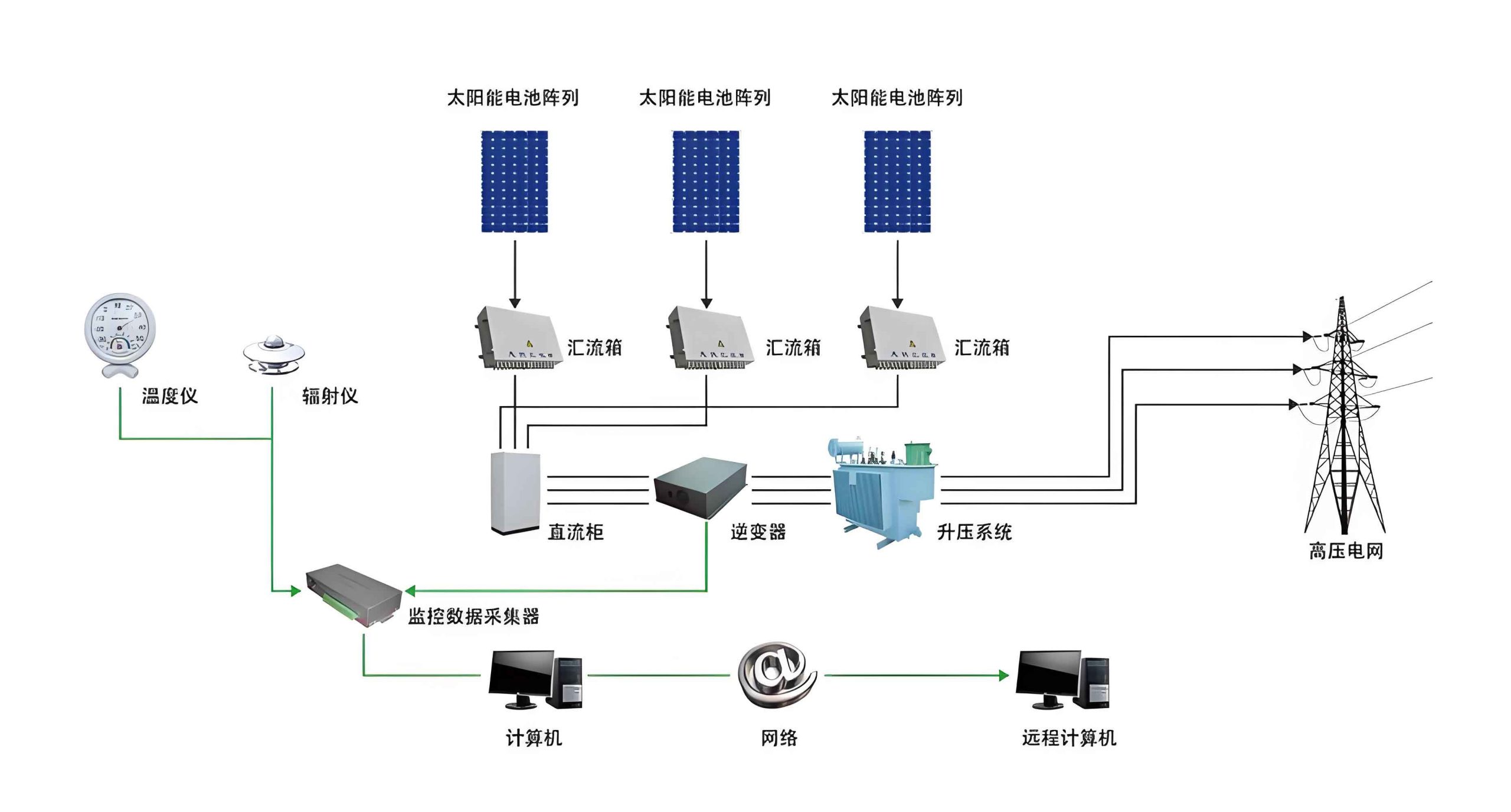
As shown in the image above, solar systems can be seamlessly integrated into agricultural landscapes. This visual representation highlights how photovoltaic panels coexist with crops, symbolizing harmony between technology and nature. In my travels, I have encountered numerous farms where such installations have transformed barren land into productive fields. The solar system not only provides water but also serves as an educational tool for communities adopting sustainable practices.
The scalability of solar systems allows for customization based on farm size and water requirements. I often recommend conducting a feasibility study using the formula $$ R = \frac{I \times \alpha}{D} $$ where \( R \) is the water requirement in m³/day, \( I \) is the crop water need in mm/day, \( \alpha \) is the irrigated area in hectares, and \( D \) is a conversion factor (10 to convert mm to m³/ha). For instance, if a crop requires 5 mm/day over 20 hectares, the daily water need is $$ R = \frac{5 \times 20}{10} = 10 \, \text{m}^3/\text{day} $$ A solar system with a capacity of 2-3 kW could meet this demand efficiently.
In terms of crop diversity, solar systems support a wide range of plants, from grains like buckwheat to fruits like mangoes. The table below compares the water usage and solar system requirements for different crops, emphasizing how tailored solutions can optimize resource use.
| Crop Type | Annual Water Need (m³/hectare) | Recommended Solar System Capacity (kW) | Expected Yield Increase with Solar Irrigation (%) |
|---|---|---|---|
| Buckwheat (similar to described variety) | 3000-4000 | 5-7 | 30-50 |
| Fruit trees (e.g., mangoes) | 6000-8000 | 10-15 | 40-60 |
| Vegetables (e.g., tomatoes) | 4000-5000 | 7-10 | 50-70 |
These data points illustrate that solar systems are not one-size-fits-all; they can be engineered to match specific agricultural profiles. In my practice, I have helped farmers design solar systems that account for local climate, soil conditions, and crop cycles. The reliability of a solar system is enhanced by incorporating battery storage, which ensures water availability during cloudy days or at night. The storage capacity can be determined by $$ C_b = \frac{E_d \times d}{\eta_b \times V} $$ where \( C_b \) is the battery capacity in ampere-hours, \( E_d \) is the daily energy demand in watt-hours, \( d \) is the days of autonomy, \( \eta_b \) is the battery efficiency, and \( V \) is the system voltage. This ensures uninterrupted irrigation, critical for crop health.
The social benefits of solar systems are profound. In remote communities, access to water for irrigation boosts food security and income. I have seen how solar-powered projects empower farmers, particularly women, by reducing labor and time spent on fetching water. The solar system becomes a community asset, fostering collaboration and knowledge sharing. Moreover, the durability of modern solar panels—often with warranties of 25 years—provides long-term stability. The degradation rate of solar panels is typically low, around 0.5% per year, meaning a system retains most of its efficiency over decades.
Looking ahead, the potential for solar systems in agriculture is vast. Innovations like smart solar pumps with IoT sensors can optimize water use based on real-time weather data. The integration of solar systems with drip irrigation further enhances efficiency, minimizing water loss. I envision a future where every farm leverages a solar system to achieve water and energy independence. The global adoption of such systems could address food security challenges while combating climate change. In conclusion, solar systems represent a cornerstone of sustainable agriculture, offering a path toward resilient and prosperous farming communities. As I continue to advocate for these technologies, I am confident that their widespread implementation will transform our agricultural landscapes for generations to come.