
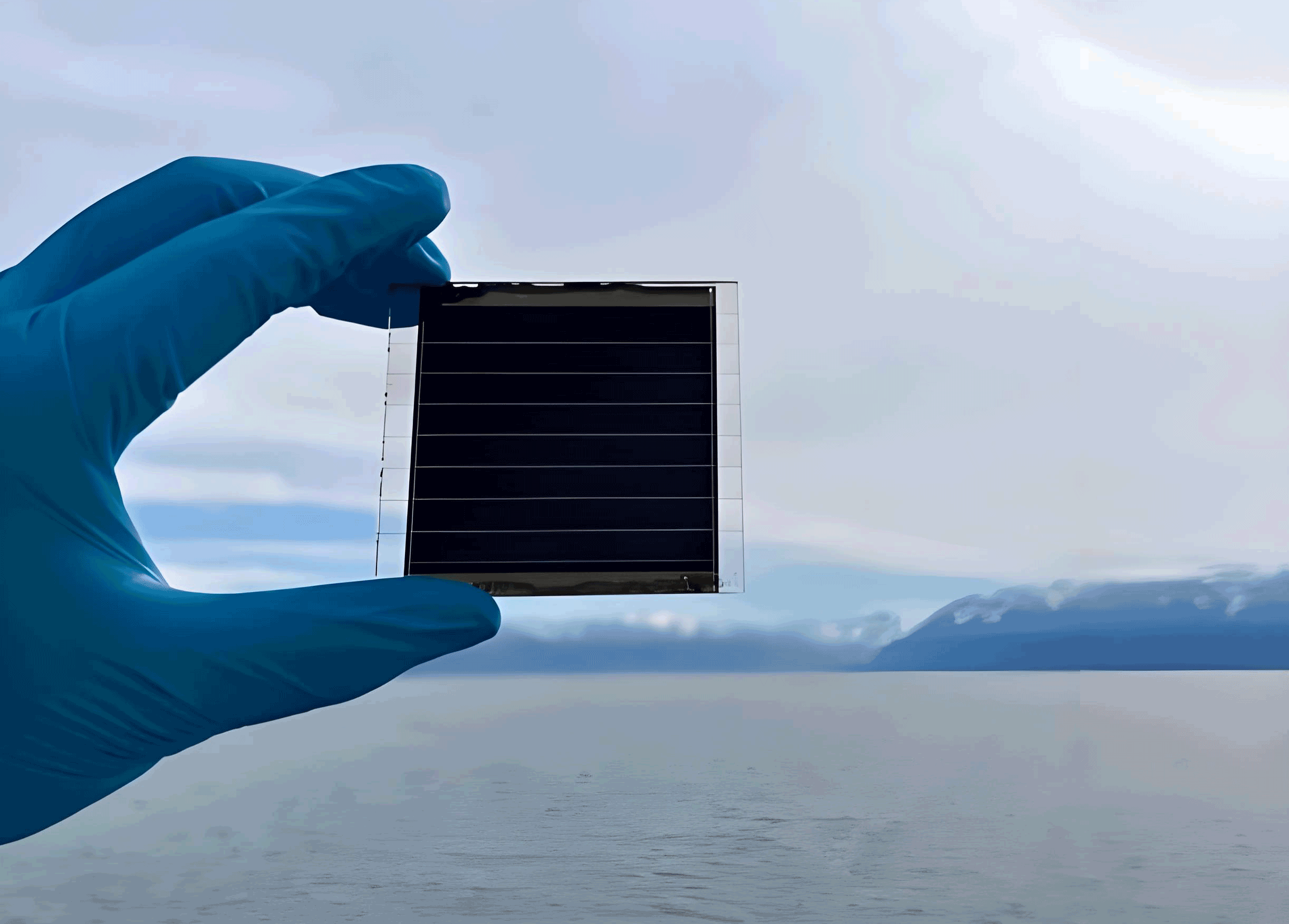
Perovskite solar cells have garnered significant attention due to their rapid improvement in power conversion efficiency (PCE), reaching over 26% within a decade, alongside their low-cost fabrication potential. However, the transition from laboratory research to commercial markets is hindered by stability issues, primarily arising from the inherent weaknesses in the organic-inorganic hybrid structure of perovskite materials. These materials are highly sensitive to environmental factors such as humidity, temperature, light, electric fields, and internal factors like defects, strain, and interfacial reactions. In this article, we discuss the stability challenges faced by perovskite solar cells and explore various strategies, including material modifications, device structure optimization, and encapsulation technologies, that have been developed to enhance their operational lifespan. We also summarize current stability testing standards and provide an outlook on future research directions.
The organic-inorganic hybrid perovskite structure, typically represented by the formula ABX3 (where A is an organic cation like MA+ or FA+, B is a metal cation like Pb2+, and X is a halide anion like I− or Br−), is bound by weak ionic bonds and van der Waals forces. This makes perovskite solar cells susceptible to degradation under various stressors. For instance, the tolerance factor (t), a dimensionless parameter given by $$t = \frac{r_A + r_X}{\sqrt{2}(r_B + r_X)}$$ where rA, rB, and rX are the ionic radii, must ideally be between 0.9 and 1.0 for stable cubic phases. Deviations, as in FAPbI3 (t ≈ 0.99), lead to phase instability, causing transitions from photoactive black phases to non-photoactive yellow phases under ambient conditions.
Humidity-induced degradation is a major concern for perovskite solar cells. Water molecules interact with perovskite crystals, initiating decomposition reactions. For MAPbI3, the hydrolysis process can be described by the following equations:
$$(CH_3NH_3)PbI_3 + H_2O \rightleftharpoons [(CH_3NH_3)_{n-1}(PbI_3)_n][H_3O^+] + CH_3NH_2 \uparrow$$
$$[(CH_3NH_3)_{n-1}(PbI_3)_n][H_3O^+] \rightleftharpoons HI \uparrow + PbI_2 + [(CH_3NH_3)PbI_3]_{n-1} + H_2O$$
Overall: $$(CH_3NH_3)PbI_3 \xrightarrow{H_2O} HI \uparrow + PbI_2 + CH_3NH_2 \uparrow$$
Under UV light, HI further decomposes: $$2HI \xrightarrow{UV} H_2 \uparrow + I_2$$ leading to irreversible degradation. Hydration processes form intermediates like monohydrate (CH3NH3)PbI3·H2O and dihydrate (CH3NH3)4PbI6·2H2O, which eventually decompose into PbO, Pb(OH)2, and PbCO3.
Oxygen, especially under light, accelerates degradation through photo-oxidation. Superoxide ions (O2−) form by capturing photogenerated electrons:
$$O_2 + e^- \rightarrow O_2^-$$
These ions then react with perovskite, leading to decomposition:
$$4(CH_3NH_3)PbI_3^* + O_2^- \rightarrow 4PbI_2 + 2I_2 + 2H_2O + 4CH_3NH_2 \uparrow$$
In the presence of water, the reaction is enhanced:
$$O_2^- + H_2O \rightleftharpoons OH^- + HO_2^•$$
$$(CH_3NH_3)PbI_3 + OH^- \rightarrow PbI_2 + H_2O + CH_3NH_2 \uparrow + I^-$$
Light-induced degradation involves defect formation and ion migration. Under illumination, iodide vacancies (VI) form:
$$I^- + h^+ \rightarrow I^•$$
$$2I^• \rightarrow I_2 + 2V_I$$
These vacancies trap electrons, forming color centers and reducing Pb2+ to Pb0:
$$V_I + e’ \rightarrow V_I e’$$
$$Pb^{2+} + V_I e’ \rightarrow V_I Pb^+$$
$$2Pb^+ \rightarrow Pb^{2+} + Pb^0$$
This not only degrades the perovskite layer but also causes phase segregation in mixed-halide perovskites, reducing VOC and efficiency.
Electric fields and heat further exacerbate instability. Ion migration, particularly of MA+ and I−, occurs under bias, leading to defect accumulation at interfaces. The activation energy for ion migration (Ea) is low, around 0.1–0.6 eV, making it prevalent even at room temperature. Thermal stress induces phase transitions and decomposition; for example, MAPbI3 decomposes at 85°C:
$$(CH_3NH_3)PbI_3 \xrightarrow{\Delta} HI \uparrow + PbI_2 + CH_3NH_2 \uparrow$$
Multi-cation perovskites like Cs0.05(MA0.17FA0.83)0.95Pb(I0.83Br0.17)3 show improved thermal stability but still degrade under prolonged heating.
Internal factors such as defects, strain, and interfacial reactions also play critical roles. Defects at grain boundaries and surfaces, including uncoordinated Pb2+ and I−, act as non-radiative recombination centers and facilitate ion migration. Strain, arising from thermal expansion mismatch or lattice distortion, affects ion migration barriers; compressive strain increases Ea, while tensile strain decreases it. Interfacial reactions, such as between TiO2 and perovskite under UV light, lead to I2 formation and decomposition. Similarly, reactions with ZnO or Spiro-OMeTAD layers cause degradation through deprotonation or halide diffusion.
To quantify and compare stability, standardized testing protocols are essential. The International Summit on Organic Photovoltaic Stability (ISOS) has developed protocols for perovskite solar cells, categorizing tests into dark storage, light exposure, thermal cycling, and outdoor testing. These protocols help ensure reproducibility and comparability across studies. For instance, ISOS-D-1 involves dark storage at room temperature and ambient humidity, while ISOS-L-2 includes light exposure at 65°C with maximum power point tracking. Table 1 summarizes key ISOS protocols for perovskite solar cells.
| Test Type | Level 1 Conditions | Level 2 Conditions | Level 3 Conditions |
|---|---|---|---|
| Dark Storage (ISOS-D) | 23°C, ambient humidity | 65°C or 85°C, ambient humidity | 85°C, 85% RH |
| Light Exposure (ISOS-L) | Room temperature, MPP load | 65°C or 85°C, MPP load | 65°C or 85°C, 50% RH, MPP |
| Thermal Cycling (ISOS-T) | Room temperature cycles | 65°C or 85°C cycles | -40°C to 85°C, <55% RH |
| Outdoor Testing (ISOS-O) | Sunlight, MPP or VOC | Direct sunlight, MPP or VOC | Combined sunlight and simulator |
In terms of material modifications, compositional engineering has been pivotal. Replacing MA+ with more stable cations like FA+ and Cs+ improves thermal and moisture resistance. For example, mixed-cation perovskites (e.g., CsxFA1-xPbI3) exhibit reduced phase segregation and higher decomposition temperatures. Additives such as 5-aminovaleric acid (5-AVA) or formamidinium formate (FAFa) introduce compressive strain, suppressing ion migration and phase transitions. The formation energy of defects (Edef) can be reduced using passivation strategies; for instance, Lewis base molecules (e.g., thiophenes) coordinate with undercoordinated Pb2+, decreasing trap density.
Dimensional reduction to 2D perovskites, such as those with phenethylammonium iodide (PEAI), enhances stability through strong van der Waals interactions. The general formula for 2D perovskites is (A’)2(A)n-1BnX3n+1, where A’ is a bulky organic cation. These structures act as moisture barriers and suppress ion migration. Interface engineering with self-assembled monolayers (SAMs) like MeO-2PACz improves hole transport and thermal stability. The anchoring energy of SAMs can be described by the binding constant Kb, which influences durability.
Device structure optimization, particularly inverted (p-i-n) architectures, where the hole transport layer (HTL) is deposited before the perovskite layer, reduces direct exposure to environmental factors. Inverted perovskite solar cells have demonstrated PCEs over 26% with enhanced stability. Tandem structures, such as perovskite-silicon cells, leverage the broad spectrum absorption; the theoretical efficiency limit for tandem cells is approximately 45%, calculated using the detailed balance principle:
$$\eta_{\text{tandem}} = \frac{\int P_{\text{perovskite}}(E) dE + \int P_{\text{silicon}}(E) dE}{\int P_{\text{AM1.5G}}(E) dE}$$
where P(E) is the power density at photon energy E.
Encapsulation technologies are crucial for blocking moisture and oxygen. Traditional methods use glass-epoxy seals, but advanced materials like atomic-layer-deposited (ALD) Al2O3 or ZnO nanolayers provide superior barrier properties. The water vapor transmission rate (WVTR) for effective encapsulation should be below 10−6 g m−2 day−1. Polymer-based encapsulants, such as polyisobutylene acrylate (PIBi), offer flexibility and full coverage, enabling devices to retain over 95% of initial PCE after 2000 hours in 85% RH.
Our research group has contributed to stability improvements through dynamic resonance modulation and interface engineering. For instance, we developed resonance-bridged hole transport materials (HTMs) that adaptively passivate defects and reduce strain. The resonance energy ΔEres governs the stability enhancement, with higher ΔEres leading to better performance retention. In one study, we used amphiphilic soft molecules to construct perovskite-substrate interfaces, reducing stress and ion migration. Devices maintained 84% of initial PCE after 6200 hours of continuous illumination at 65°C.
To illustrate the progress in perovskite solar cell stability, Table 2 compares the key parameters of silicon, organic, and perovskite solar cells, highlighting the trade-offs between efficiency, cost, and lifetime.
| Parameter | Silicon Solar Cells | Organic Solar Cells | Perovskite Solar Cells |
|---|---|---|---|
| Development Stage | Mature | Early Commercialization | Research and Early Commercialization |
| Cost | High (material and manufacturing) | Medium (low material cost) | Low (solution-processable) |
| PCE (%) | 15–27 | 10–19 | 15–26 |
| Lifetime (years) | 20–25 | 1–2 | 1–15 (depending on encapsulation) |
| Stability Challenges | Minor degradation over time | Photo-oxidation, moisture | Phase instability, ion migration, humidity |
Looking ahead, the future of perovskite solar cells lies in addressing stability through multifunctional strategies. Combining perovskite materials with other systems, such as lithium-ion batteries or supercapacitors, could open new applications in energy storage. For example, perovskite electrodes in batteries may enhance ion conductivity, as described by the Nernst equation for ion transport:
$$E = E^0 – \frac{RT}{nF} \ln Q$$
where E is the cell potential, R is the gas constant, T is temperature, n is the number of electrons, F is Faraday’s constant, and Q is the reaction quotient. Additionally, air-processable perovskite films, fabricated using techniques like rapid-spray deposition, could lower production costs and facilitate scalability.
In conclusion, perovskite solar cells have achieved remarkable efficiencies, but stability remains a critical barrier. Through material engineering, structural design, and advanced encapsulation, significant progress has been made. However, long-term operational stability under real-world conditions requires further innovation. We believe that with continued research, perovskite solar cells will soon meet commercial standards, contributing to a sustainable energy future.