
In recent years, the global economy has been moving toward integration. Against this backdrop, the Chinese economy faces both opportunities and challenges, particularly in the burgeoning new energy sector. Among the many emerging enterprises, solar photovoltaic companies must manage their finances rationally to establish a firm foothold. This article will provide an overview of the solar photovoltaic industry, identify issues in financial risk early warning and prevention for these enterprises, and ultimately propose feasible measures for financial warning and prevention. The focus is on the solar system as a critical component of sustainable energy development, and its integration into financial strategies is essential for long-term viability.
The transition to renewable energy sources, especially solar power, is accelerating worldwide. As a key player in this shift, the solar system industry encompasses the design, manufacturing, installation, and maintenance of photovoltaic panels and related technologies. With abundant solar resources, China has a geographic advantage that supports the growth of solar systems. However, the rapid expansion of this sector brings inherent financial risks, such as market volatility, policy changes, and operational inefficiencies. Therefore, understanding and mitigating these risks through robust early warning systems is paramount for the stability and success of solar photovoltaic enterprises.
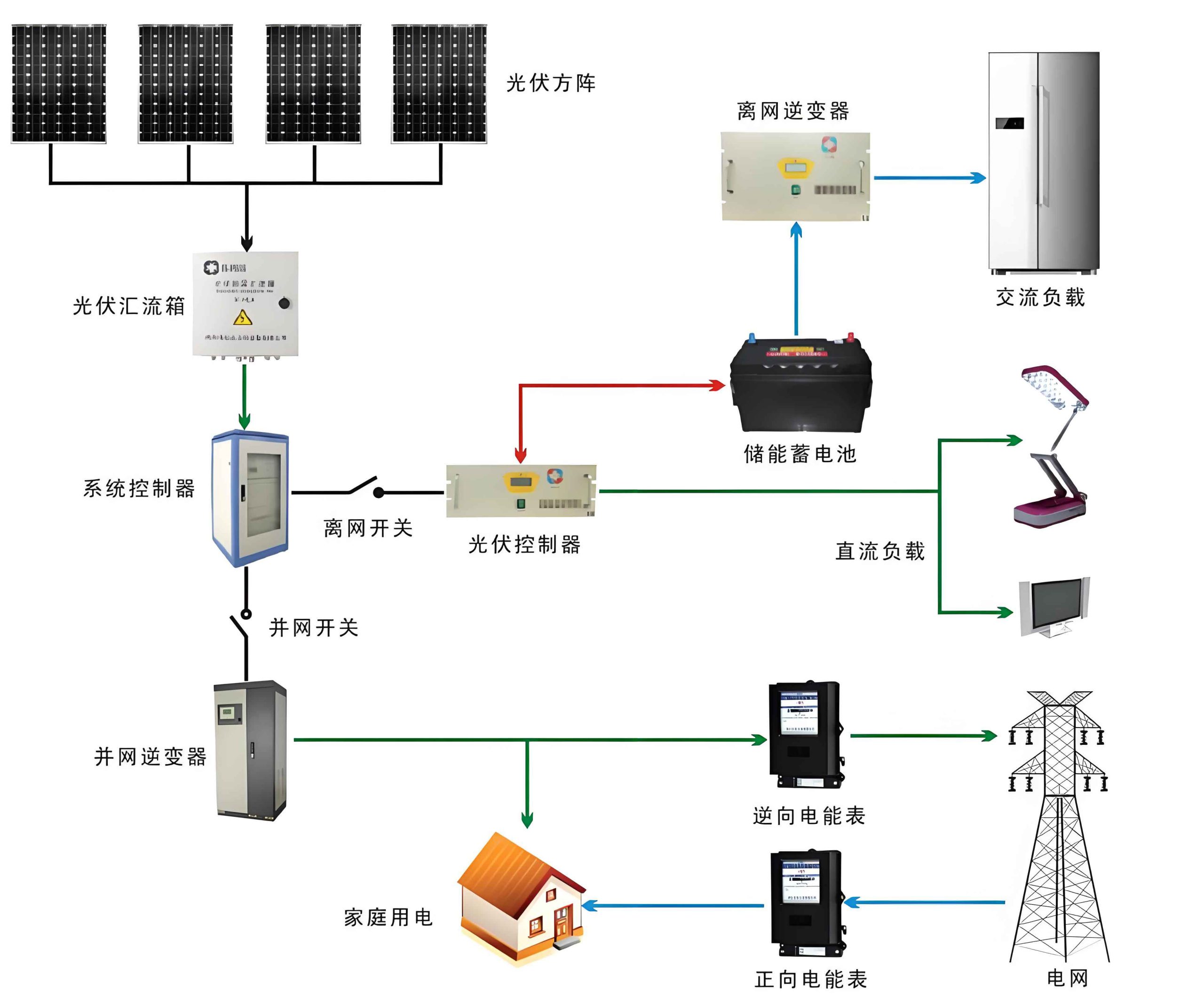
The solar system industry has seen significant technological advancements since the 21st century, garnering favor from various nations and continuously expanding its industrial scale. In terms of energy structure, China relies heavily on coal, oil, and natural gas, whose combustion byproducts are major contributors to environmental degradation. Recognizing the need for change, China has introduced a series of plans and policies to encourage and support the optimization of its energy mix. This favorable political environment, combined with the country’s rich solar resources, creates an excellent development landscape for the solar system sector, offering broad prospects for growth. The deployment of solar systems not only addresses environmental concerns but also drives economic innovation, making it a cornerstone of the global push toward low-carbon sustainability.
Financial risk early warning is based on financial information, achieved by monitoring sensitive financial indicators to alert enterprises to potential risks. This allows for timely understanding and control of risks, enabling adjustments to minimize losses and enhance benefits. In the context of solar photovoltaic enterprises, early warning systems are crucial due to the capital-intensive nature of solar system projects. These systems involve substantial upfront investments in research, development, and infrastructure, which can lead to cash flow challenges if not managed properly. By implementing scientific methods, companies can predict and respond to financial stressors, ensuring the resilience of their solar system operations.
Despite the promising outlook, solar photovoltaic enterprises face several issues in financial risk early warning and prevention. Below, I will detail these problems, emphasizing their impact on the solar system industry.
First, many solar photovoltaic companies lack scientific financial risk warning methods. Without these, it is impossible to effectively warn against and prevent financial risks. However, numerous personnel in China’s solar system enterprises fail to recognize the financial risk warning mechanism from a holistic and systematic perspective, inevitably leading to various issues in the risk prevention process. Particularly, most photovoltaic enterprises do not apply advanced scientific methods, relying instead on traditional qualitative analyses. They overlook the use of sophisticated techniques, such as Monte Carlo simulation, Analytical Hierarchy Process (AHP), and fuzzy mathematics, often due to limitations in computational resources. For instance, Monte Carlo simulation involves generating random variables to model uncertainty, which can be expressed as: $$ P(R) = \int f(x) \, dx $$ where P(R) represents the probability of risk R, and f(x) is the probability density function of financial variables. The absence of such methods hinders accurate risk assessment in solar system investments.
Second, many solar enterprises lack standardized financial risk management information systems. Although they recognize the importance of warning and preventing financial risks, the absence of such systems prevents effective implementation, directly affecting operational stability and economic benefits. A standardized financial risk management information system requires complete and reliable data support to estimate financial risks during operations and make timely adjustments to decisions. However, obtaining reliable and complete data remains challenging for some solar photovoltaic enterprises. This is especially critical in the solar system sector, where data on energy output, maintenance costs, and market demand must be integrated for informed decision-making. Without robust systems, companies may miss early signs of financial distress, such as rising debt levels or declining profitability from solar system sales.
Third, photovoltaic enterprises often lack emphasis on financial risk management. The development of China’s solar photovoltaic industry relies heavily on government support and assistance. Subsidy policies from various governments have created a favorable market for solar systems, which can lead enterprises to overlook market demand, blindly expand their scale, and neglect financial risk management. They may fail to consider the risks posed by changes in government policies. This lack of attention to financial risk management leaves enterprises without corresponding response strategies during crises, exacerbating financial risks. For example, sudden reductions in subsidies for solar system installations can drastically affect revenue streams, highlighting the need for proactive risk assessment.
To address the issues mentioned above, I will introduce several feasible countermeasures for financial risk early warning and prevention in solar photovoltaic enterprises.
First, photovoltaic enterprises must strengthen their internal control systems. The fundamental measure to enhance financial risk management in solar system companies is to bolster internal controls, preventing unnecessary problems in internal governance. Since many Chinese solar photovoltaic enterprises are listed in the United States and subject to the Sarbanes-Oxley Act, establishing internal control systems must comply with this legislation. Internal control construction can focus on the following aspects:
| Aspect | Description |
|---|---|
| Control Environment | Establish a good internal control environment by setting up anti-fraud agencies to prevent false financial reports. Enterprises can conduct专题讲座 or internal training on internal control to ensure every employee understands its importance, fundamentally optimizing the control environment for solar system operations. |
| Risk Assessment Mechanism | Implement daily risk assessment management to promptly understand and grasp financial risks, adjusting business strategies to reduce risks in solar system projects. |
| Information Communication | Create a conducive information communication environment within the enterprise, enabling effective information exchange between management and employees, and among employees themselves, to support data integrity for financial risk management. |
Second, photovoltaic enterprises should enhance enterprise information management. Decisions in solar photovoltaic enterprises are based on information, and financial risk management relies on timely and accurate data. With such information, companies can grasp the direction and key points of technological research and development. Therefore, information quality significantly impacts enterprise operations and development, making it essential to strengthen information management. This can be approached from the following perspectives:
- Conduct precise analysis of research and development investment allocation information. Balance the investment ratio for new technology research and development in the solar system industry, as technical R&D and talent cultivation are key to sustainable development. However, excessive R&D funding can lead to oversized talent reserves, and if the成果转化率 is low, it may result in insufficient cash flow. The allocation can be modeled using: $$ I_{R&D} = \alpha \cdot S + \beta \cdot T $$ where \( I_{R&D} \) is R&D investment, S represents solar system sales, T denotes technological advancement, and α and β are allocation coefficients. Precise analysis ensures balanced investment proportions.
- Establish an online information management platform. In modern society, energy information updates rapidly. Solar photovoltaic enterprises must keep pace with changes in energy demand by building internet-based information platforms. This approach not only facilitates the management and collection of financial information but also integrates multiple sources of data, providing a basis for financial decisions in solar system enterprises.
Third, photovoltaic enterprises must increase their focus on risk management. To address the lack of emphasis on risk management, companies should proceed from both external and internal environments:
| Environment | Measures |
|---|---|
| External Environment | Monitor changes in subsidy policies across countries, adjusting strategies accordingly. Set rational development and expansion goals based on policy shifts to ensure stable growth for solar system deployments. |
| Internal Environment | Pay attention to risks associated with enterprise expansion, such as financing, investment, and operational risks. Establish corresponding risk control departments to continuously monitor financial risk situations in solar system operations. |
In today’s fiercely competitive market environment, solar photovoltaic enterprises must prepare to face risks. Early detection of financial risks and timely adjustments based on actual circumstances can largely prevent enterprise losses. From an enterprise perspective, this enhances overall competitiveness and mitigates losses; from a societal perspective, it conserves resources and avoids environmental pollution. Therefore, the early warning and prevention of financial risks in solar photovoltaic enterprises achieve a combination of economic and social benefits, making them essential for human development. The integration of solar systems into global energy grids underscores the importance of financial resilience, as these systems contribute to sustainable growth and environmental stewardship.
To further elaborate on financial risk models, consider the Altman Z-score for predicting bankruptcy, which can be adapted for solar system enterprises. The formula is: $$ Z = 1.2X_1 + 1.4X_2 + 3.3X_3 + 0.6X_4 + 1.0X_5 $$ where:
– \( X_1 \) = Working Capital / Total Assets
– \( X_2 \) = Retained Earnings / Total Assets
– \( X_3 \) = Earnings Before Interest and Taxes / Total Assets
– \( X_4 \) = Market Value of Equity / Total Liabilities
– \( X_5 \) = Sales / Total Assets
For solar photovoltaic companies, modifying these ratios to account for industry-specific factors, such as government subsidies for solar system installations, can improve accuracy. Additionally, using fuzzy logic approaches can handle uncertainties in solar energy output, expressed as: $$ \mu_A(x) = \frac{1}{1 + \left( \frac{x – c}{a} \right)^{2b}} $$ where μ_A(x) is the membership function for risk level A, x is a financial variable, and a, b, c are parameters derived from solar system performance data.
Another critical aspect is the lifecycle cost analysis of solar systems, which impacts financial planning. The total cost can be calculated as: $$ C_{total} = C_{initial} + \sum_{t=1}^{n} \frac{C_{maintenance,t} + C_{replacement,t}}{(1 + r)^t} $$ where \( C_{initial} \) is the initial investment, \( C_{maintenance,t} \) and \( C_{replacement,t} \) are maintenance and replacement costs in year t, r is the discount rate, and n is the lifespan of the solar system. This formula helps in assessing long-term financial commitments and identifying potential cash flow risks.
Moreover, the volatility of solar system energy production due to weather conditions introduces operational risks. To quantify this, enterprises can use standard deviation metrics: $$ \sigma = \sqrt{ \frac{1}{N} \sum_{i=1}^{N} (E_i – \bar{E})^2 } $$ where σ is the standard deviation of energy output, E_i is the output in period i, and \( \bar{E} \) is the mean output. Higher σ indicates greater unpredictability, necessitating stronger financial buffers.
In terms of policy risk, solar photovoltaic enterprises must model the impact of subsidy changes. A simple linear regression can be applied: $$ R = \beta_0 + \beta_1 P + \epsilon $$ where R is revenue from solar system sales, P represents policy subsidy levels, β_0 and β_1 are coefficients, and ε is the error term. Monitoring such relationships enables proactive adjustments to marketing and production strategies.
To enhance internal controls, enterprises can implement key performance indicators (KPIs) for solar system projects, as shown in the table below:
| KPI | Target | Risk Threshold |
|---|---|---|
| Return on Investment (ROI) | > 15% | < 10% |
| Debt-to-Equity Ratio | < 0.5 | > 0.8 |
| Solar System Efficiency | > 20% | < 15% |
| Cash Flow Coverage | > 1.5 | < 1.0 |
Regularly tracking these KPIs helps in early detection of deviations, allowing for corrective actions before risks escalate. For instance, a decline in solar system efficiency might signal technical issues that could lead to increased maintenance costs and reduced revenue, thereby affecting financial stability.
Information technology plays a pivotal role in risk management. By leveraging big data analytics, solar photovoltaic enterprises can process vast amounts of data from solar system monitors, market trends, and financial reports. Predictive models using machine learning algorithms, such as: $$ y = \theta_0 + \theta_1 x_1 + \theta_2 x_2 + \cdots + \theta_n x_n $$ where y is the predicted risk score, x_i are input features (e.g., solar irradiance, component costs), and θ_i are model parameters, can provide real-time insights. Integrating these with enterprise resource planning (ERP) systems ensures seamless data flow for decision-making.
Furthermore, stakeholder engagement is crucial for risk mitigation. Solar system projects often involve multiple parties, including investors, regulators, and customers. Transparent communication about financial health and risk exposure builds trust and facilitates collaborative problem-solving. For example, sharing risk assessment reports on solar system performance can attract impact investors focused on sustainability.
In conclusion, the solar system industry stands at the forefront of the energy transition, but its financial complexities demand rigorous risk management. By adopting scientific warning methods, standardizing information systems, and fostering a risk-aware culture, solar photovoltaic enterprises can navigate uncertainties and thrive. The continuous innovation in solar technologies, coupled with robust financial strategies, will drive the growth of solar systems worldwide, contributing to a cleaner and more resilient future. As I reflect on these measures, it is clear that proactive financial risk management is not just a corporate necessity but a societal imperative for harnessing the full potential of solar energy.