
In recent years, the integration of renewable energy sources into urban infrastructure has become a critical focus for sustainable development. As an individual engaged in research on building materials and energy systems, I find that solar photovoltaic (PV) glass for buildings represents a transformative innovation. This material combines the structural functionality of architectural glass with the energy-generating capabilities of solar cells, enabling buildings to become active contributors to the power grid. In this article, I will explore the current applications, international standards, and future prospects of building-integrated photovoltaic (BIPV) glass, emphasizing the role of standardized frameworks in promoting global adoption.
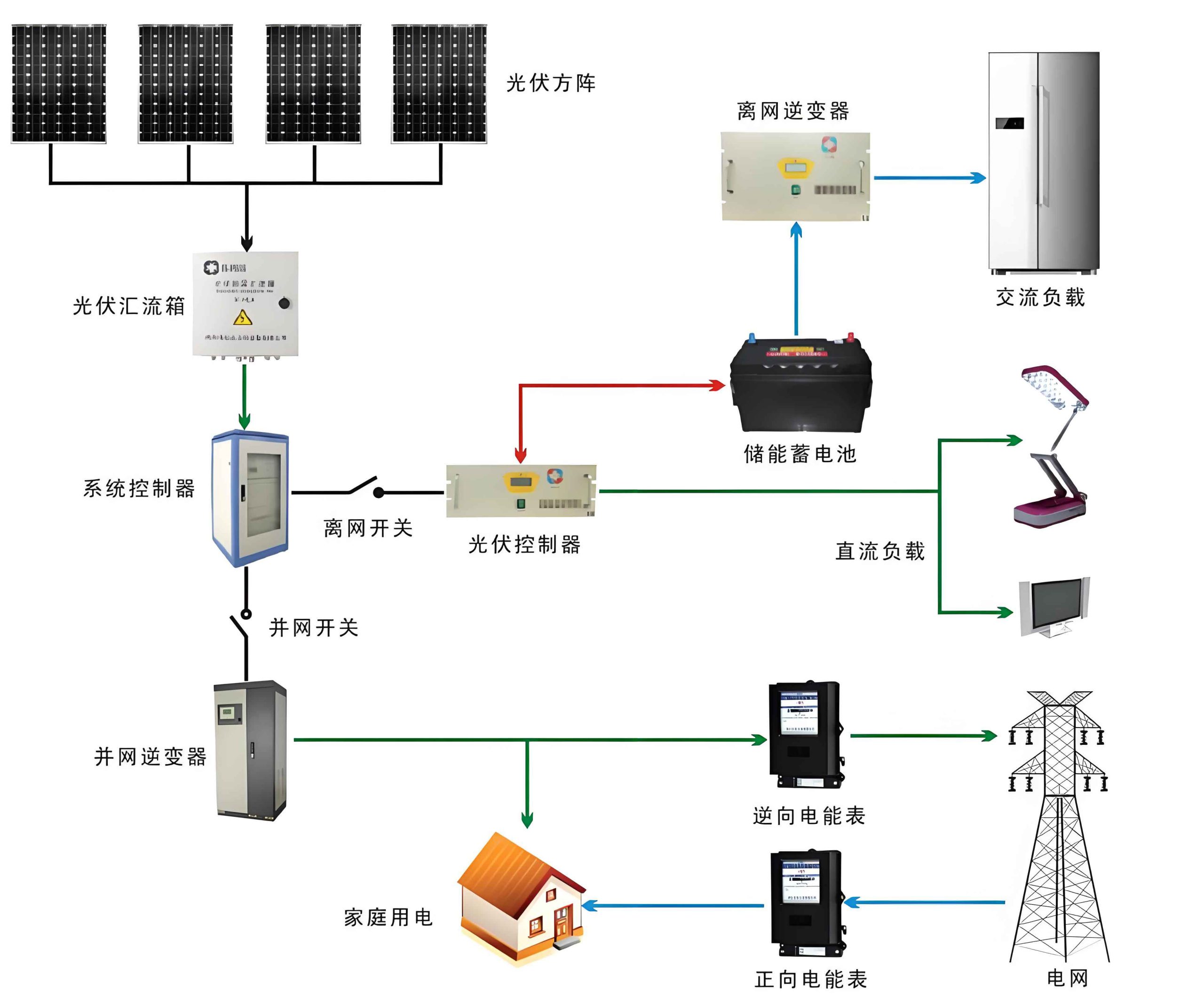
The concept of harnessing solar energy through building envelopes is not new, but advancements in technology have made it increasingly viable. A solar system integrated into glass panels allows for seamless energy production without compromising architectural aesthetics. From my perspective, the adoption of such systems is driven by the urgent need to reduce carbon emissions and reliance on fossil fuels. Globally, the cumulative installed capacity of PV systems has surged, with building applications playing a significant role. For instance, in many countries, policies like feed-in tariffs and green building codes incentivize the use of BIPV technologies. The solar system embedded in glass can be deployed on roofs, facades, skylights, and balustrades, turning entire structures into power plants.
To understand the market dynamics, let’s consider the growth trajectory. According to industry reports, the global BIPV market is projected to expand substantially, driven by declining costs of PV modules and increasing environmental awareness. In my analysis, this growth is underpinned by the dual function of PV glass: it provides thermal insulation, safety, and durability as a building material, while generating electricity through the solar system. The following table summarizes key applications and benefits of solar photovoltaic glass in buildings:
| Application Area | Description | Key Benefits |
|---|---|---|
| Building Facades | PV glass used as curtain walls or cladding | Energy generation, reduced cooling loads, aesthetic design |
| Roofs and Skylights | Integrated into roofing materials or overhead glazing | Maximized solar exposure, weather protection, natural lighting |
| Windows and Glazing | Transparent or semi-transparent PV modules | Daylighting, power production, enhanced privacy |
| Balustrades and Railings | Structural elements with embedded solar cells | Safety, energy harvest from unused spaces |
From a technical standpoint, the performance of a solar system in glass depends on multiple factors, including cell efficiency, glass transparency, and environmental conditions. The power output of a PV glass panel can be expressed using a simplified formula: $$P = \eta \cdot A \cdot G \cdot (1 – \alpha)$$ where \(P\) is the electrical power (in watts), \(\eta\) is the conversion efficiency of the solar cells, \(A\) is the surface area (in m²), \(G\) is the solar irradiance (in W/m²), and \(\alpha\) is the absorption coefficient due to glass layers. This equation highlights how optimizing material properties can enhance energy yield. In practice, manufacturers strive to improve \(\eta\) while maintaining structural integrity, often through innovations like thin-film technologies or bifacial cells.
Turning to standardization, international standards are crucial for ensuring product quality, safety, and interoperability. As I delve into the regulatory landscape, two primary bodies emerge: the International Organization for Standardization (ISO) and the International Electrotechnical Commission (IEC). ISO focuses on building materials, while IEC addresses electrical and photovoltaic aspects. The convergence of these domains is essential for BIPV glass, as it must meet both construction and electrical standards. Below, I present a comparative table of relevant technical committees:
| Technical Committee | Scope | Published Standards | Key Work Areas |
|---|---|---|---|
| ISO/TC 160 (Glass in Building) | Standards for glass used in construction, including terms, performance, and testing | 54 | Product specifications, safety testing, BIPV working group (WG 9) |
| ISO/TC 162 (Doors and Windows) | Standards for doors, windows, and curtain walls | 20 | Mechanical testing, weather resistance, structural performance |
| IEC/TC 82 (Solar Photovoltaic Energy Systems) | Standards for PV systems, from cells to grid integration | 109 | Component reliability, electrical safety, system design for solar systems |
| ISO/TC 180 (Solar Energy) | Standards for solar thermal applications | 19 | Collector performance, climate data, non-PV focus |
In my research, I note that ISO/TC 160/SC 1/WG 9, the BIPV working group, plays a pivotal role in bridging gaps. This group developed ISO/TS 18178, the first international standard specifically for laminated solar photovoltaic glass in buildings. This standard harmonizes requirements from both fields, addressing electrical performance (e.g., insulation, wet leakage current) and building safety (e.g., impact resistance, thermal cycling). For example, it references IEC 61215-2 for PV tests and ISO 12543-4 for glass durability, ensuring comprehensive evaluation. The integration of a solar system into glass necessitates such hybrid standards, as isolated approaches could lead to safety risks or inefficiencies.
The testing protocols for BIPV glass illustrate the interdisciplinary nature. From my examination, key tests include nominal module operating temperature (NMOT), wet leakage current, and ball drop impact. These assess both the solar system components and the glass substrate. For instance, the NMOT test, derived from IEC 61215-2, estimates operating temperatures under realistic conditions, which affects power output and longevity. Mathematically, the temperature coefficient of power can be modeled as: $$\Delta P = P_{\text{STC}} \cdot \beta \cdot (T_{\text{oper}} – T_{\text{STC}})$$ where \(\Delta P\) is the power change, \(P_{\text{STC}}\) is power at standard test conditions, \(\beta\) is the temperature coefficient (typically -0.3% to -0.5% per °C for silicon cells), \(T_{\text{oper}}\) is operating temperature, and \(T_{\text{STC}}\) is 25°C. This formula underscores why thermal management in PV glass is critical for maintaining efficiency in a building-integrated solar system.
To further elaborate on standards, I analyze the specific requirements of ISO/TS 18178. The table below summarizes test methods and their origins, highlighting the blend of PV and glass criteria:
| Test Name | Standard Reference | Purpose | Relevance to Solar System |
|---|---|---|---|
| High Temperature Testing | ISO 12543-4:2011 | Assesses glass durability under heat | Ensures material stability when solar cells generate heat |
| Damp Heat Testing | IEC 61215-2:2016 | Evaluates moisture resistance of PV modules | Protects electrical components in humid environments |
| Radiation Testing | ISO 12543-4:2011 | Checks UV resistance of glass layers | Prolongs lifespan under sun exposure in a solar system |
| Thermal Cycle Testing | IEC 61215-2:2016 | Simulates temperature fluctuations | Verifies reliability of solder joints and encapsulants |
| Ball Drop Impact Test | Specific to ISO/TS 18178 | Mechanical safety against impacts | Combines glass breakage resistance with PV integrity |
From my perspective, the development of such standards facilitates global trade and innovation. As countries adopt BIPV technologies, consistent benchmarks help manufacturers design products that are safe and efficient across different climates. For example, a solar system in glass intended for cold regions might require enhanced thermal cycling tests, while tropical applications focus on damp heat performance. Standardization also reduces costs by streamlining certification processes, ultimately making renewable energy more accessible.
Looking ahead, I believe the future of BIPV glass hinges on continuous improvement in standards and technology. Emerging trends, such as building-integrated photovoltaics with energy storage or smart grid compatibility, will demand new standardizations. The solar system embedded in glass could evolve to include features like dynamic tinting or Internet of Things (IoT) connectivity, requiring updates to existing frameworks. Moreover, international collaboration is key; as I observe, organizations like ISO and IEC must work closely to address interdisciplinary challenges, perhaps through joint working groups or harmonized documents.
In conclusion, solar photovoltaic glass represents a synergistic solution for sustainable architecture. Through my analysis, I emphasize that robust international standards are indispensable for scaling up adoption. By aligning building safety with photovoltaic performance, standards like ISO/TS 18178 pave the way for innovative solar system integrations. As research progresses, I anticipate more advanced materials and standardized protocols that will further enhance the efficiency and affordability of BIPV glass, contributing to a greener built environment globally.