
Thermal runaway in lithium iron phosphate (LiFePO4) batteries represents a critical safety challenge for large-scale electrochemical energy storage systems (ESS). While external parameters like voltage, temperature, and gas emission are commonly monitored for fault detection, their response often lags behind internal failure mechanisms. This inherent delay limits the effectiveness of early warning systems. To address this, we propose an in-situ, non-destructive internal monitoring method for prismatic aluminum-cased LiFePO4 batteries using ultrasonic through-transmission testing. This technique is integrated with a multi-parameter external sensing system measuring temperature, voltage, current, and surface strain to construct a comprehensive internal-external parameter testing platform for battery thermal runaway characterization.
The system enables simultaneous, real-time observation of the spatiotemporal evolution of both internal structural states and external manifestations during battery operation and abuse. We investigate the correlation between ultrasonic signal features and battery internal state under static, normal cycling, and overcharge conditions. The response mechanism of ultrasonic waves to internal structural changes, such as electrode expansion, gas generation, and material property evolution, is discussed. Our findings demonstrate that ultrasonic signal intensity and time-of-flight are highly sensitive indicators of internal state, with signal attenuation serving as a pivotal early warning sign for overcharge-induced thermal runaway, significantly preceding external failure signatures like venting. Based on these insights, an enhanced early warning algorithm is developed, successfully predicting safety vent activation with substantial lead time.
The growing integration of renewable energy sources like wind and solar power necessitates advanced energy storage solutions to mitigate their inherent intermittency and volatility. Among various technologies, lithium-ion battery-based electrochemical energy storage has seen rapid development due to its high efficiency, long cycle life, and geographical flexibility. Within this domain, the lithium iron phosphate (LiFePO4) battery has emerged as a mainstream choice for new energy storage systems, primarily owing to its superior stability, enhanced safety profile, and cost advantages compared to other lithium-ion chemistries like NMC or LCO.
However, the operational safety of LiFePO4 battery energy storage stations (BESS) remains a paramount concern. Issues such as performance degradation over long-term use, inconsistencies among battery cells, and potential protection system failures can lead to abusive conditions like overcharging, which may culminate in thermal runaway—a dangerous, self-accelerating exothermic reaction. Current monitoring strategies in commercial BESS primarily rely on module-level measurements of voltage, current, and temperature, supplemented by cluster or container-level gas and smoke detection. While these methods provide valuable data, they primarily capture external symptoms that manifest only after internal damage has progressed significantly. For instance, gas emission is detected only after the safety vent opens, which is a late-stage event in the thermal runaway chain. Similarly, significant temperature rises and voltage anomalies often occur after substantial internal decomposition reactions have begun.
This diagnostic gap highlights the urgent need for internal state monitoring technologies capable of detecting incipient faults. Ultrasonic testing (UT) presents a promising solution. As a non-destructive evaluation (NDE) technique, UT offers high sensitivity, rapid response, and the unique capability to probe the internal structure and material properties of an object in real time. The propagation of mechanical sound waves is influenced by the medium’s density, elasticity, viscosity, and structural integrity. In a LiFePO4 battery, internal changes such as lithium plating, electrode delamination, electrolyte drying, and gas bubble formation alter the acoustic impedance and attenuation coefficient of the internal components, thereby modulating the ultrasonic signal transmitted through the cell.
Previous research has demonstrated the application of UT for state-of-charge (SOC) and state-of-health (SOH) estimation in small-format pouch cells, where the thin, compliant casing facilitates signal transmission. However, large-format, prismatic aluminum-cased LiFePO4 batteries—the workhorse of grid-scale storage—pose a greater challenge. Their thicker cross-section (often >20 mm) and highly reflective aluminum shell significantly attenuate and reflect ultrasonic energy, making signal acquisition and interpretation more complex. This work bridges this gap by developing a tailored ultrasonic through-transmission methodology for such batteries, correlating acoustic features with internal degradation processes during overcharge, and establishing a robust framework for early thermal runaway warning.
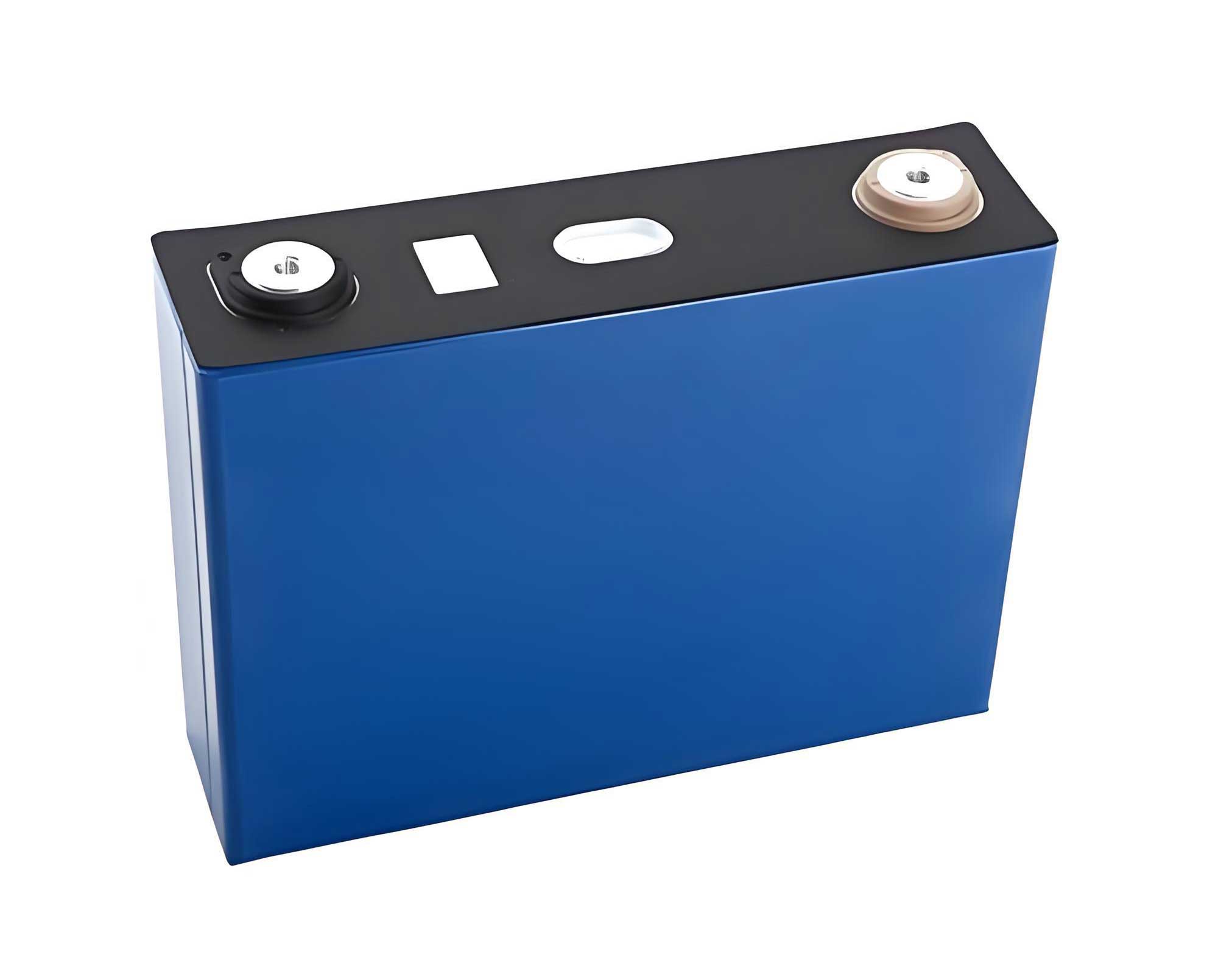
The experimental platform is centered around a custom-built ultrasonic through-transmission system integrated into a comprehensive thermal runaway testing chamber. The core battery sample is a commercial 20 Ah prismatic aluminum-cased LiFePO4 battery. Prior to any test, all cells underwent three conditioning cycles at 0.5C (10A) using constant current-constant voltage (CC-CV) charge and constant current (CC) discharge protocols, followed by a resting period of over 12 hours to ensure initial state consistency.
The ultrasonic system consists of a pair of longitudinal wave contact transducers (selected frequency detailed below), a function generator, a power amplifier, and a digital oscilloscope. The function generator produces a Gaussian-windowed sinusoidal tone burst (e.g., 5 cycles). This signal is amplified to drive the transmitting transducer coupled to one side of the LiFePO4 battery. The receiving transducer, coupled to the opposite side, captures the signal that has propagated through the battery’s internal stack. This received signal is recorded by the oscilloscope for subsequent analysis. Key ultrasonic features extracted are the Root-Mean-Square voltage of the received signal ($U_{rms}$) and the Time-of-Flight ($TOF$). $U_{rms}$ represents the signal energy and is sensitive to attenuation and scattering within the battery. $TOF$ represents the time for the ultrasonic wave to traverse the battery thickness and is sensitive to changes in the effective sound speed and physical thickness.
$$U_{rms} = \sqrt{\frac{1}{N}\sum_{i=1}^{N} U_i^2}$$
where $U_i$ is the voltage of the $i^{th}$ point in the received signal and $N$ is the total number of points.
To facilitate comparison across different tests and cells, normalized indices are defined: Relative $U_{rms}$ ($R_U$) and Relative $TOF$ ($R_T$).
$$R_U(t) = \frac{U_{rms}(t)}{U_{rms}(t_0)}, \quad R_T(t) = \frac{TOF(t)}{TOF(t_0)}$$
where $t_0$ denotes the initial measurement time at the beginning of a test.
The external multi-sensor array includes:
- Electrical Sensors: A battery cycler records terminal voltage and current with high precision.
- Thermal Sensors: Multiple K-type thermocouples are attached to strategic locations: the battery surface near the ultrasonic transducers (central temperature), the positive and negative tabs, and the upper corners.
- Gas Sensors: A sampling pump extracts gas from the vicinity of the safety vent into a collection chamber equipped with electrochemical sensors for CO, $CO_2$, and $H_2$.
- Strain Sensors: High-temperature resistant resistance strain gauges are bonded to the central area and an upper corner of the battery casing to monitor surface deformation caused by internal pressure buildup.
All sensor data is synchronized and recorded by a data acquisition system. For overcharge tests, the battery is charged at a constant current (e.g., 0.5C, 0.75C) beyond its specified voltage limit until thermal runaway is initiated, with all safety protocols enacted within the sealed chamber.
Ultrasonic Response to Battery State under Static Conditions
Temperature Dependence
The influence of temperature on ultrasonic propagation in a LiFePO4 battery is fundamental. Tests were conducted on batteries at different initial SOCs while controlling the ambient temperature. As temperature increases, $R_U$ exhibits a consistent decreasing trend, while $R_T$ increases. This behavior is attributed to changes in the physical properties of internal components. The decrease in $R_U$ is primarily due to increased acoustic impedance mismatch. As temperature rises, the viscosity and density of the electrolyte decrease, lowering its acoustic impedance. This enlarges the impedance difference between the electrolyte and the solid electrodes, reducing the transmission coefficient at these interfaces and causing greater signal reflection and overall attenuation. The increase in $R_T$ is caused by two factors: thermal expansion of the electrodes and separator, which increases the physical path length; and a decrease in the sound speed of the materials, as the elastic moduli of many polymers and composites are temperature-dependent.
A key observation is the significantly higher sensitivity of $R_U$ compared to $R_T$. For instance, when temperature rises from 20°C to 45°C, $R_T$ may increase by approximately 10%, whereas $R_U$ can drop to about 20% of its initial value. This indicates that signal attenuation is a more pronounced indicator of thermal changes than wave speed. Furthermore, both $R_U$ and $R_T$ curves show a distinct inflection point around 35°C. Beyond this point, the rate of $R_U$ decrease accelerates and the $R_T$ increase becomes non-linear. This is likely linked to the phase transition of ethylene carbonate (EC), a primary solvent in the electrolyte, from a solid-like to a liquid state, which involves a significant drop in its elastic modulus and a consequent abrupt change in acoustic properties.
| Condition | Primary Ultrasonic Indicator | Trend | Key Physical Mechanism | Relative Sensitivity (Approx.) |
|---|---|---|---|---|
| Temperature Increase (20°C to 45°C) | $R_U$ (Signal Intensity) | Decrease | Increased impedance mismatch due to electrolyte property change | High (80% drop) |
| Temperature Increase (20°C to 45°C) | $R_T$ (Time-of-Flight) | Increase | Thermal expansion & reduced sound speed | Moderate (10% increase) |
| SOC Increase (0% to 100%) | $R_U$ (Signal Intensity) | Increase then slight decrease | Changing electrode moduli & attenuation | High (~12% max change) |
| SOC Increase (0% to 100%) | $R_T$ (Time-of-Flight) | Decrease | Increased graphite anode wave speed dominates over thickness increase | Low (~0.7% decrease) |
State-of-Charge Dependence
The SOC of a LiFePO4 battery, representing the concentration of lithium ions in the electrodes, significantly affects its mechanical and acoustic properties. Measurements taken on batteries at rest at different SOC levels reveal clear trends. $R_U$ generally increases with SOC, reaching a maximum before slightly declining at very high SOC. $R_T$ shows a near-linear decrease with increasing SOC.
The underlying mechanisms are rooted in lithiation-induced changes. During charging (increasing SOC), lithium ions de-intercalate from the LiFePO4 cathode and intercalate into the graphite anode. This process alters the density and elastic modulus of both electrodes. The graphite anode’s modulus increases with lithiation degree, while the cathode’s modulus decreases. At low SOC, the high cathode modulus and low anode modulus create a large acoustic impedance mismatch, leading to poor transmission and low $R_U$. As SOC increases, the moduli converge, improving impedance matching and signal transmission, hence $R_U$ rises. The subsequent slight decrease at very high SOC may be related to increased acoustic damping from lattice strain. The decrease in $R_T$ indicates that the effective sound speed increases with SOC. Since the graphite anode’s properties dominate the overall wave speed due to its structure and volume, its increasing modulus with lithiation accelerates the sound speed. This effect outweighs the concurrent increase in anode thickness caused by lithium intercalation, leading to a net reduction in $TOF$.
Dynamic Behavior during Normal Charge-Discharge Cycles
Understanding the ultrasonic response under dynamic operational conditions is crucial for differentiating normal cycling from fault conditions. Tests involved cycling the LiFePO4 battery at various C-rates (e.g., 0.25C, 0.5C, 0.75C).
The $R_U$ versus SOC curve during dynamic cycling retains a similar shape to the static curve but exhibits distinct features at the transitions between charge/discharge and rest. Abrupt changes in $R_U$ are observed at the instant current is applied or removed. This is attributed to concentration polarization—the rapid establishment or relaxation of lithium-ion concentration gradients at electrode surfaces—which temporarily alters the local mechanical properties and acoustic interfaces. The magnitude of this transient is C-rate dependent. Once the current stabilizes or during rest, the $R_U$ trend follows the characteristic SOC-dependent path. This confirms that $R_U$ can reliably track SOC even under dynamic conditions, with the transient features themselves being signatures of current activity.
The behavior of $R_T$ during cycling is predominantly governed by temperature changes. Both charging and discharging generate heat, causing the battery temperature to rise. This thermal effect drives a clear increase in $R_T$, mirroring the temperature profile. The influence of SOC-related wave speed changes (observed in static tests) is masked by the stronger effect of thermal expansion and temperature-dependent sound speed reduction. Higher C-rates generate more heat, resulting in larger $R_T$ increases. This highlights that while $R_T$ is a valuable parameter, its interpretation requires concurrent temperature data or must focus on deviations from the expected temperature-correlated baseline.
| Operating Phase / Parameter | Normal Cycling (e.g., 0.5C) | Overcharge Phase I (Early) | Overcharge Phase II (Mid) | Overcharge Phase III (Late, Pre-Vent) |
|---|---|---|---|---|
| Voltage | Follows charge/discharge profile between cut-offs | Steady rise above upper cutoff | Continued rise | Plateau or slight decrease before vent |
| Central Temperature | Gradual rise during current flow | Gradual rise | Accelerated rise | Rapid, exponential rise |
| $R_U$ (Ultrasonic) | Cycles with SOC, transients at current steps | Monotonic, accelerating decrease | Rapid decrease to noise floor | Signal lost in noise |
| $R_T$ (Ultrasonic) | Increases in correlation with temperature | Monotonic increase | Increase until signal lost | Not measurable |
| $H_2$ Gas | None | None detected | None detected | Sharp rise at vent opening |
| Surface Strain | Minor thermal expansion | Minor thermal expansion | Significant increase (gas pressure) | Maximum before vent, drop after |
| Key Internal Process | Reversible Li-ion intercalation | Li plating onset, SEI decomposition | Severe Li plating, electrolyte reaction, gas generation | Catastrophic decomposition, pressure build-up |
Overcharge-Induced Thermal Runaway: A Multi-Parameter Perspective
Overcharging a LiFePO4 battery forces it into a highly abusive state, initiating a chain of exothermic side reactions that can lead to thermal runaway. The synchronized data from our testing platform reveals the progression through distinct phases, with ultrasonic signals providing the earliest warnings.
Phase I (Early Overcharge): After exceeding the normal voltage cutoff, the voltage continues to rise linearly. This is due to lithium plating on the anode surface (as the anode’s intercalation capacity is exhausted) and increasing cell polarization. The central temperature begins a gradual rise from joule heating and early exothermic reactions. Crucially, $R_U$ starts a clear and monotonic decrease, and $R_T$ begins a steady increase. This indicates internal changes: lithium plating alters the anode’s surface properties and acoustic impedance, and the onset of minor gas generation from SEI decomposition begins to scatter ultrasound. External sensors detect no gas, and strain shows only minor thermal expansion.
Phase II (Accelerated Degradation): Voltage continues to climb. The temperature rise rate increases. The most dramatic change is in the ultrasonic signals. The $R_U$ decrease accelerates sharply, and $R_T$ increases more rapidly. This is the direct consequence of massive gas generation within the sealed cell. Reactions such as lithium metal with electrolyte, solvent decomposition, and binder breakdown produce gases like $H_2$, $CO$, and $CO_2$. These gas bubbles are highly effective at scattering and attenuating ultrasonic waves due to the vast impedance difference between gas and liquid/solid. The $R_U$ signal rapidly decays towards the noise floor of the measurement system. Surface strain gauges now show a significant and steady increase, reflecting the buildup of internal pressure from the trapped gas. However, no gas is detected externally as the safety vent remains closed.
Phase III (Pre-Vent to Venting): The voltage may plateau or even drop slightly as internal shorts develop or electrolyte is depleted. Temperature enters a rapid, exponential climb due to intense exothermic reactions. The ultrasonic signal is completely lost, submerged in noise due to extreme attenuation from dense gas and decomposed materials. Surface strain peaks as the casing bulges under maximum pressure. Finally, the safety vent ruptures (venting time, $t_{vent}$). This event is marked by an instantaneous drop in strain and a sudden spike in the concentrations of $H_2$, $CO$, and $CO_2$ measured externally.
The critical finding is the temporal advantage of the ultrasonic indicator. The time at which the ultrasonic signal is completely attenuated ($t_{attenuation}$) occurs significantly earlier than $t_{vent}$. For example, in a 0.5C overcharge test, $t_{attenuation}$ occurred at approximately 586 seconds, while $t_{vent}$ occurred at 2,418 seconds. This provides a warning lead time on the order of **30 minutes** before the battery enters the critical venting stage. Furthermore, $t_{attenuation}$ decreases with increasing overcharge C-rate, demonstrating its sensitivity to the rate of internal degradation.
Development of an Integrated Early Warning Algorithm
Based on the multi-parameter analysis, an early warning algorithm for LiFePO4 battery overcharge is developed. The goal is to fuse the high sensitivity of internal ultrasonic data with the confirmatory trends of external parameters to generate a robust and timely fault diagnosis. The algorithm is based on an Improved Mahalanobis-Taguchi System (IMTS), a pattern recognition method effective for multivariate, imbalanced data.
The IMTS operates by first constructing a baseline “healthy” space using data from normal battery operation (e.g., multiple charge-discharge cycles). For each time step in an operational data stream, a multi-dimensional feature vector $\mathbf{x}$ is formed. For this application, the feature vector includes:
$$\mathbf{x} = [V, T_{center}, U_{rms}, TOF, [H_2], \epsilon_{center}]^T$$
where $V$ is voltage, $T_{center}$ is central temperature, $U_{rms}$ is ultrasonic signal intensity, $TOF$ is ultrasonic time-of-flight, $[H_2]$ is hydrogen concentration (often zero before venting), and $\epsilon_{center}$ is central surface strain.
Data from normal operation are standardized and used to define the healthy space’s mean vector $\boldsymbol{\mu}$ and covariance matrix $\boldsymbol{\Sigma}$. The Mahalanobis Distance ($MD$) of a sample vector $\mathbf{x}$ from this healthy space is calculated as:
$$MD = \sqrt{(\mathbf{x} – \boldsymbol{\mu})^T \boldsymbol{\Sigma}^{-1} (\mathbf{x} – \boldsymbol{\mu})}$$
A high $MD$ indicates significant deviation from normal operation. The standard MTS is improved by assigning feature-specific weights $w_i$ based on their Fisher discriminant ratio (ability to separate normal and fault data) and using a Gram-Schmidt orthogonalization process to ensure numerical stability, resulting in a Weighted Mahalanobis Distance ($WMD$).
A Battery Health Index ($HI$) is then derived from the $WMD$. A threshold $HI_{th}$ is established using statistical process control limits (e.g., 3σ limits) on the $WMD$ values from the healthy dataset. The warning logic is: if the $HI$ value falls below $HI_{th}$ for a consecutive number of samples (e.g., 3 samples to avoid false alarms from noise), an overcharge fault alarm is triggered.
The algorithm was trained on data from normal 0.5C cycling and validated on independent overcharge test data. As shown in the results, the algorithm triggered an overcharge warning at a point when the battery SOC (calculated via coulomb counting) was approximately 104%. At this warning moment, the voltage was only slightly elevated, temperature was just beginning to rise noticeably, $H_2$ was absent, and strain was increasing slowly. Crucially, the ultrasonic $U_{rms}$ and $TOF$ were showing clear abnormal trends. This warning was issued approximately **1,800 seconds (30 minutes)** before the safety vent opened in that test, confirming the effectiveness of the ultrasonic-informed, multi-parameter fusion approach for early warning of thermal runaway in LiFePO4 batteries.
Conclusion
This work establishes ultrasonic through-transmission testing as a powerful tool for the internal state monitoring of large-format, prismatic LiFePO4 batteries. The key ultrasonic parameters, signal intensity ($U_{rms}$) and time-of-flight ($TOF$), provide sensitive, real-time indicators of internal changes caused by temperature, state-of-charge, and degradation processes.
Under normal operation, $U_{rms}$ reliably tracks SOC, while $R_T$ is strongly correlated with temperature. During the abusive condition of overcharge, ultrasonic signals exhibit the earliest and most pronounced changes. The accelerated attenuation of the signal ($R_U$ decrease to zero) serves as a critical early warning indicator, preceding external failure signatures like gas venting by a substantial margin (e.g., 30 minutes at 0.5C overcharge). This is directly linked to the internal generation and accumulation of gas bubbles, which severely scatter and attenuate ultrasonic waves.
The integration of this internal sensing modality with traditional external sensors (voltage, temperature, strain, gas) within a unified testing platform provides a holistic view of thermal runaway evolution. The developed Improved Mahalanobis-Taguchi System-based algorithm successfully fuses these multi-dimensional data streams to achieve reliable early fault diagnosis. By detecting the incipient internal degradation signaled by ultrasonic attenuation, the proposed method offers a significant advance in safety management for LiFePO4 battery energy storage systems, potentially enabling preventive actions to mitigate catastrophic thermal runaway events.
Future work will focus on optimizing the ultrasonic transducer frequency and coupling for different battery form factors, embedding miniaturized sensors for practical deployment, and extending the algorithm’s capability to diagnose other failure modes such as internal short circuits and mechanical abuse in LiFePO4 battery packs.