
In my extensive research into the solar system sector, I have focused on understanding the competitive intelligence needs of enterprises operating within this dynamic field. The solar system industry, particularly photovoltaic (PV) systems, has emerged as a cornerstone of renewable energy strategies globally. As a technology-intensive domain, the solar system landscape demands robust intelligence-gathering mechanisms to navigate fierce competition and rapid technological advancements. This article delves into the competitive intelligence requirements from a first-person perspective, drawing on insights from a comprehensive study I conducted. I will explore how different segments of the solar system supply chain exhibit distinct intelligence needs, and I will utilize tables and formulas to summarize key findings. Throughout this analysis, the term “solar system” will be emphasized to highlight its centrality in driving innovation and market dynamics. The integration of competitive intelligence is crucial for enhancing the competitiveness of solar system enterprises, especially as they strive to optimize operations across the entire value chain.
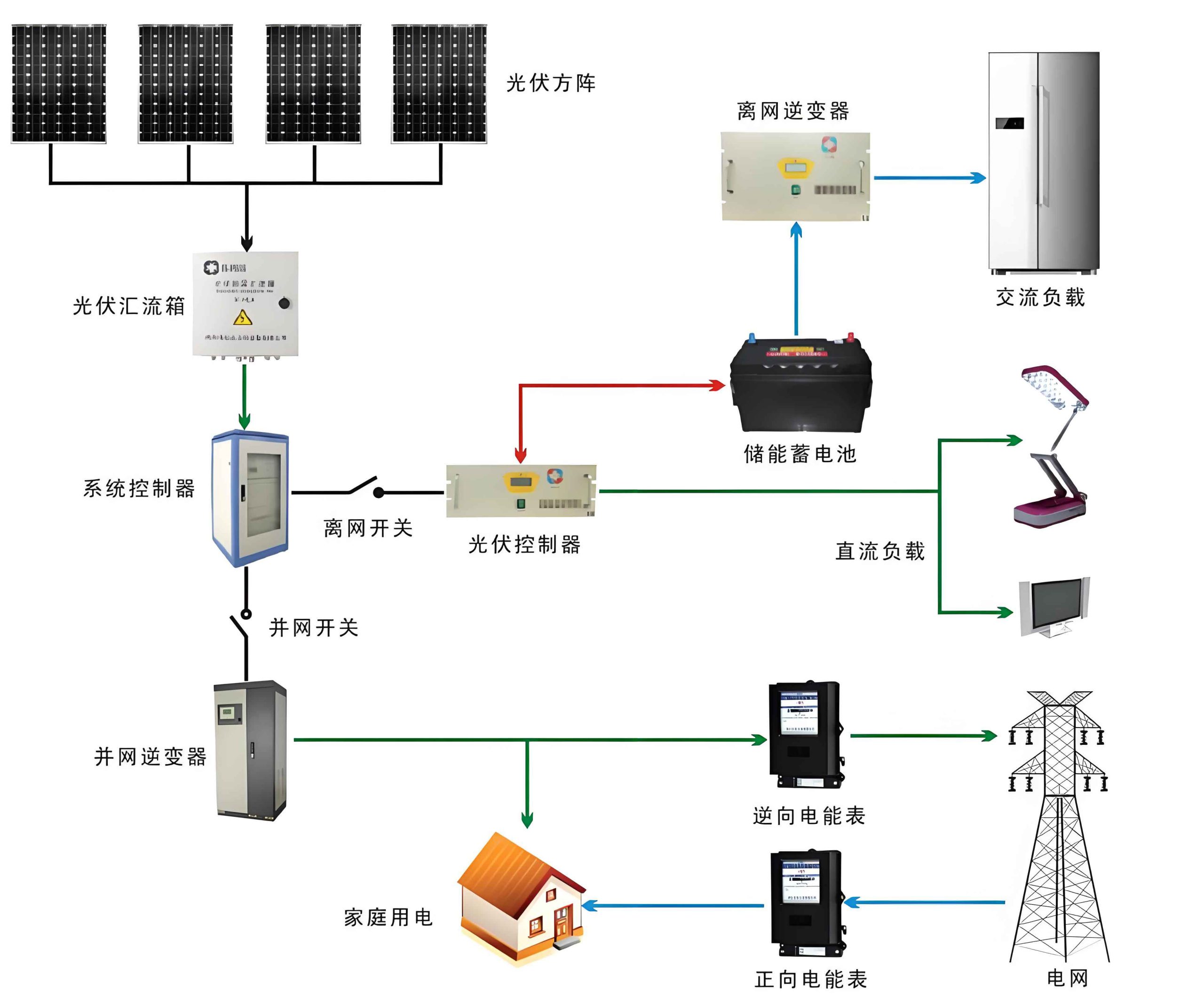
The solar system industry encompasses a complex supply chain, from raw material extraction to end-user applications. In my investigation, I examined how enterprises at various stages of this chain prioritize different types of competitive intelligence. The solar system sector is characterized by high technological barriers, capital intensity, and evolving policy frameworks, all of which shape intelligence demands. I adopted a mixed-methods approach, combining surveys and expert interviews, to capture the nuanced needs of solar system firms. This allowed me to quantify demand intensities and identify patterns specific to upstream, midstream, and downstream activities. The solar system’s growth trajectory hinges on effective intelligence utilization, making this analysis vital for stakeholders aiming to foster innovation and sustainability.
To structure my analysis, I first outline the solar system supply chain’s features, followed by a detailed breakdown of competitive intelligence demand categories. I then delve into technical competitive intelligence, which is particularly critical for solar system advancements. Subsequently, I assess the channels through which solar system enterprises acquire intelligence, and I conclude with recommendations for enhancing intelligence practices. Throughout, I incorporate tables to summarize data and formulas to model demand dynamics, ensuring a rigorous and insightful exploration. The solar system’s reliance on cutting-edge technology necessitates a deep understanding of competitive intelligence flows, which I aim to elucidate here.
The solar system supply chain can be segmented into upstream, midstream, and downstream components. Upstream activities involve silicon material purification and wafer production, which are technology-intensive and require significant R&D investments. Midstream processes include solar cell manufacturing and module assembly, blending technology and labor inputs. Downstream operations focus on PV system integration, such as power plant development and distributed applications, which are capital-intensive and market-driven. In my study, I categorized enterprises based on their primary roles in this solar system chain to analyze intelligence needs. Table 1 summarizes the characteristics of each segment, highlighting how these influence competitive intelligence priorities.
| Supply Chain Segment | Industry Features | Dominant Innovation Mode | Market Competition Style |
|---|---|---|---|
| Upstream (e.g., silicon production) | Technology-intensive | Original innovation | Oligopolistic competition |
| Midstream (e.g., cell manufacturing) | Technology- and labor-intensive | Absorptive and incremental innovation | Monopolistic and perfect competition |
| Downstream (e.g., system integration) | Capital-intensive | Integrative innovation | Monopolistic competition |
My survey involved 51 solar system enterprises, selected to represent all segments of the supply chain. I designed a questionnaire to rank their competitive intelligence demands across six categories: competitor information, R&D technology, customer data, supplier details, market dynamics, and policy regulations. Respondents were asked to prioritize these based on perceived importance. To quantify demand intensity, I assigned weights to each rank: 4 points for first priority, 3 for second, 2 for third, and 1 for fourth. The average score for each category was calculated using the formula:
$$ \text{Average Score} = \frac{\sum_{i=1}^{n} w_i \cdot f_i}{N} $$
where \( w_i \) represents the weight for rank \( i \), \( f_i \) is the frequency of that rank, and \( N \) is the total number of responses. This approach allowed me to derive a clear hierarchy of intelligence needs for the solar system industry as a whole, as shown in Table 2.
| Competitive Intelligence Category | Average Score | Rank |
|---|---|---|
| R&D Technology | 3.45 | 1 |
| Competitor Information | 3.20 | 2 |
| Market Dynamics | 2.85 | 3 |
| Customer Data | 2.60 | 4 |
| Policy Regulations | 2.30 | 5 |
| Supplier Details | 1.80 | 6 |
The results indicate that R&D technology information is the highest priority for solar system enterprises, reflecting the sector’s technology-driven nature. Competitor intelligence follows closely, underscoring the competitive pressures in the solar system market. This aligns with my observation that technological advancements are pivotal for gaining an edge in the solar system industry. To further dissect these demands, I analyzed how they vary across supply chain segments. Table 3 presents the ranked intelligence needs for upstream, midstream, and downstream solar system firms.
| Supply Chain Segment | Top Intelligence Need | Second Priority | Third Priority |
|---|---|---|---|
| Upstream | R&D Technology | Competitor Information | Market Dynamics |
| Midstream | Competitor Information | R&D Technology | Customer Data |
| Downstream | Market Dynamics | Policy Regulations | Competitor Information |
From this, I infer that upstream solar system firms, focused on core materials like silicon, prioritize technological intelligence due to high R&D barriers. Midstream enterprises, engaged in manufacturing, emphasize competitor data to navigate crowded markets. Downstream players, dealing with system deployment, prioritize market trends and policies that affect demand. This segmentation reveals the tailored intelligence strategies required for each solar system niche. Moreover, the solar system’s evolution hinges on integrating these intelligence streams to foster innovation and competitiveness.
Delving deeper into technical competitive intelligence (CTI), I subdivided it into eight specific areas: national technology support policies, technology frontiers and trends, current R&D status, competitors’ technological capabilities, potential technology partners, key R&D personnel and teams, product-related technical information, and patent data. Solar system enterprises ranked these based on urgency, using a similar weighted scoring method with 5 points for highest priority down to 1 for lowest. The average scores, computed via the formula above, are displayed in Table 4.
| Technical Competitive Intelligence Area | Average Score | Rank |
|---|---|---|
| National Technology Support Policies | 4.50 | 1 |
| Technology Frontiers and Trends | 4.20 | 2 |
| Current R&D Status | 3.90 | 3 |
| Potential Technology Partners | 3.60 | 4 |
| Competitors’ Technological Capabilities | 3.40 | 5 |
| Key R&D Personnel and Teams | 3.10 | 6 |
| Product-Related Technical Information | 2.80 | 7 |
| Patent Data | 2.50 | 8 |
National technology support policies emerged as the most critical CTI area for solar system enterprises, highlighting the sector’s dependence on governmental incentives and regulations. This is particularly relevant for the solar system industry, where policy shifts can dramatically impact market viability. Technology frontiers and trends are also highly sought, as solar system innovations—such as improved photovoltaic efficiency or energy storage solutions—drive competitive advantage. I noted that patent intelligence scores lower, possibly because solar system firms often rely on in-house R&D or collaborations rather than licensing. To model the overall CTI demand intensity, I propose a simple formula that aggregates these scores:
$$ \text{CTI Demand Index} = \sum_{j=1}^{8} S_j \cdot w_j $$
where \( S_j \) is the average score for area \( j \), and \( w_j \) is a weight reflecting its strategic importance in the solar system context. For instance, if national policies are deemed most impactful, \( w_1 \) could be set higher. This index can help solar system managers prioritize intelligence investments.
When examining CTI needs by supply chain segment, I found subtle variations. Upstream solar system firms show stronger demand for technology frontiers and R&D status, while downstream entities focus more on competitors’ capabilities and potential partners. This aligns with their operational focuses: upstream players drive foundational innovations for the solar system, whereas downstream integrators seek collaborative opportunities to enhance system deployments. Table 5 illustrates these differences, using a normalized scale from 1 to 5 based on survey responses.
| CTI Area | Upstream Demand Score | Midstream Demand Score | Downstream Demand Score |
|---|---|---|---|
| National Technology Support Policies | 4.6 | 4.5 | 4.4 |
| Technology Frontiers and Trends | 4.5 | 4.2 | 4.0 |
| Current R&D Status | 4.3 | 3.9 | 3.7 |
| Potential Technology Partners | 3.5 | 3.6 | 3.8 |
| Competitors’ Technological Capabilities | 3.2 | 3.4 | 3.5 |
| Key R&D Personnel and Teams | 3.4 | 3.1 | 2.9 |
| Product-Related Technical Information | 2.9 | 2.8 | 2.7 |
| Patent Data | 2.6 | 2.5 | 2.4 |
These scores reinforce the idea that solar system intelligence needs are stratified by supply chain role. To optimize intelligence gathering, solar system enterprises should align their efforts with these segment-specific priorities. Furthermore, the solar system’s global nature necessitates intelligence on international policies and trends, as cross-border collaborations are common in advancing photovoltaic technologies.
Shifting to intelligence acquisition channels, I investigated how solar system enterprises collect information. Respondents ranked channels like industry websites,行业协会 (industry associations), expert consultations, scientific literature databases, newspapers, commercial reports, and others. Using a weighted scoring system (5 points for most used to 1 for least), I derived the overall usage patterns for the solar system sector, as shown in Table 6.
| Intelligence Channel | Average Usage Score | Rank |
|---|---|---|
| Industry-Related Websites | 4.70 | 1 |
| Industry Associations | 4.20 | 2 |
| Expert Consultations | 3.90 | 3 |
| Scientific Literature Databases | 3.60 | 4 |
| Newspapers and Magazines | 3.30 | 5 |
| Commercial Reports | 2.80 | 6 |
| Public Research Institutions | 2.50 | 7 |
| Business Intelligence Databases | 2.20 | 8 |
Industry-related websites are the predominant channel for solar system intelligence, likely due to their accessibility and timeliness. However, this reliance on informal channels may limit the depth of information obtained. Expert consultations and scientific literature are also valued, especially for technical insights crucial to the solar system field. Notably, commercial reports and institutional sources are underutilized, suggesting a gap in leveraging high-quality, paid intelligence. For solar system enterprises, diversifying channels could enhance intelligence accuracy and comprehensiveness. I also analyzed channel usage by supply chain segment, as summarized in Table 7.
| Supply Chain Segment | Top 5 Channels (in order of usage) |
|---|---|
| Upstream | Industry websites, industry associations, scientific literature databases, expert consultations, professional consultancies |
| Midstream | Industry websites, industry associations, scientific literature databases, newspapers and magazines, business intelligence databases |
| Downstream | Industry websites, industry associations, expert consultations, government agencies, commercial reports |
Upstream solar system firms favor scientific literature and expert consultations for R&D insights, while midstream entities use newspapers and business databases for competitor tracking. Downstream players engage with government agencies and commercial reports to gauge market conditions. This segmentation underscores the need for tailored channel strategies in the solar system industry. To quantify channel effectiveness, I propose a simple metric:
$$ \text{Channel Efficacy} = \frac{\sum_{k=1}^{m} U_k \cdot Q_k}{m} $$
where \( U_k \) is the usage score for channel \( k \), \( Q_k \) is a quality rating (e.g., based on information reliability), and \( m \) is the number of channels. Solar system enterprises can use this to balance usage and quality in their intelligence networks.
Regarding technical intelligence channels, solar system enterprises prioritize expert consultations and scientific literature (e.g., journal articles, patent documents). Industry websites also feature prominently, but resources like technical reports are less utilized. This indicates a potential oversight, as technical reports often contain valuable R&D details for solar system innovations. Table 8 lists the top channels for CTI acquisition across the solar system supply chain.
| Supply Chain Segment | Top 5 CTI Channels (in order of usage) |
|---|---|
| Upstream | Expert consultations, journal articles, industry websites, patent literature, technical reports |
| Midstream | Expert consultations, journal articles, patent literature, industry websites, newspapers and magazines |
| Downstream | Expert consultations, journal articles, industry websites, professional consultancies, patent literature |
From my analysis, I derive several key characteristics of competitive intelligence demand in the solar system industry. First, intelligence needs are highly targeted, with R&D technology being the foremost priority. This reflects the solar system’s technology-intensive nature, where innovations in photovoltaic cells or system integration drive competitiveness. Second, demand intensity correlates with supply chain position: upstream solar system firms focus on technology, midstream on competitors, and downstream on markets. This segmentation highlights the phased intelligence requirements across the solar system value chain. Third, intelligence acquisition channels are relatively narrow, dominated by informal sources like websites and expert networks. Solar system enterprises underutilize formal channels such as commercial reports or public research institutes, which may offer deeper insights.
To address these findings, I offer recommendations for enhancing competitive intelligence practices in the solar system sector. From an institutional perspective, intelligence providers—such as government agencies, industry associations, or research bodies—should develop a holistic intelligence service system tailored to the solar system supply chain. This system should account for segment-specific needs, delivering customized intelligence products for upstream, midstream, and downstream players. For instance, upstream solar system firms could receive alerts on technological breakthroughs, while downstream entities get market forecasts. Collaboration among these providers can optimize resource allocation and improve intelligence relevance for the solar system ecosystem.
For solar system enterprises themselves, broadening intelligence channels is essential. Firms should move beyond over-reliance on websites by integrating formal sources like paid databases, technical reports, and institutional partnerships. Upstream players can deepen engagement with scientific literature and patent analytics to track solar system advancements. Midstream enterprises might invest in business intelligence tools to monitor competitor activities. Downstream firms should leverage commercial reports and policy briefs to anticipate market shifts in the solar system domain. Additionally, fostering ties with third-party consultancies and research organizations can enrich intelligence quality. A proactive approach to intelligence gathering will empower solar system enterprises to navigate uncertainties and capitalize on opportunities.
In conclusion, my first-person exploration of competitive intelligence demand in the solar system industry reveals a complex landscape shaped by technological imperatives and supply chain dynamics. The solar system’s growth hinges on effective intelligence utilization, with distinct needs across upstream, midstream, and downstream segments. By quantifying these demands through tables and formulas, I have highlighted the centrality of R&D intelligence, the influence of supply chain roles, and the limitations in current acquisition channels. The solar system sector must embrace tailored intelligence strategies to sustain innovation and competitiveness. As the global push for renewable energy intensifies, solar system enterprises that master competitive intelligence will be better positioned to lead the transition to a sustainable future. This analysis underscores the critical role of intelligence in advancing the solar system industry, and I hope it inspires further research and practice in this vital field.