
In recent years, with the proposal of the “carbon peak and carbon neutrality” goals, green and low-carbon development has shifted from an “optional” to a “necessary requirement.” This transition has brought significant attention to photovoltaic power generation, a key component of renewable energy systems. As demand for renewable energy continues to rise, solar photovoltaic systems have made remarkable progress in the energy sector. Within these solar systems, the performance and longevity of photovoltaic panels are critically influenced by the design and manufacturing of their components, particularly the aluminum alloy frames. These frames, often made from materials like 6063 and 6005 aluminum alloys, play a vital role in supporting and protecting the panels in harsh environmental conditions. However, to meet the increasing demands of modern solar systems, optimizing surface strengthening processes such as anodic oxidation and micro-arc oxidation is essential to enhance strength, hardness, and corrosion resistance.
The solar system, as a complex network of energy generation and distribution, relies heavily on durable materials to ensure efficiency and sustainability. In this context, 6005 aluminum alloy has emerged as a preferred choice for photovoltaic frames due to its excellent extrudability, weldability, and overall mechanical properties. However, when deployed in outdoor environments—such as those in regions with variable climates like Xinjiang, where sandstorms, rain, and snow are common—the frames are susceptible to corrosion and wear. Traditional surface treatments like anodic oxidation provide basic protection, but their limited oxide layer thickness (5–20 μm) often falls short in severe solar system applications. Therefore, exploring advanced techniques like micro-arc oxidation, which can produce thicker and more robust ceramic coatings, is crucial for improving the durability of aluminum alloy frames in solar systems.
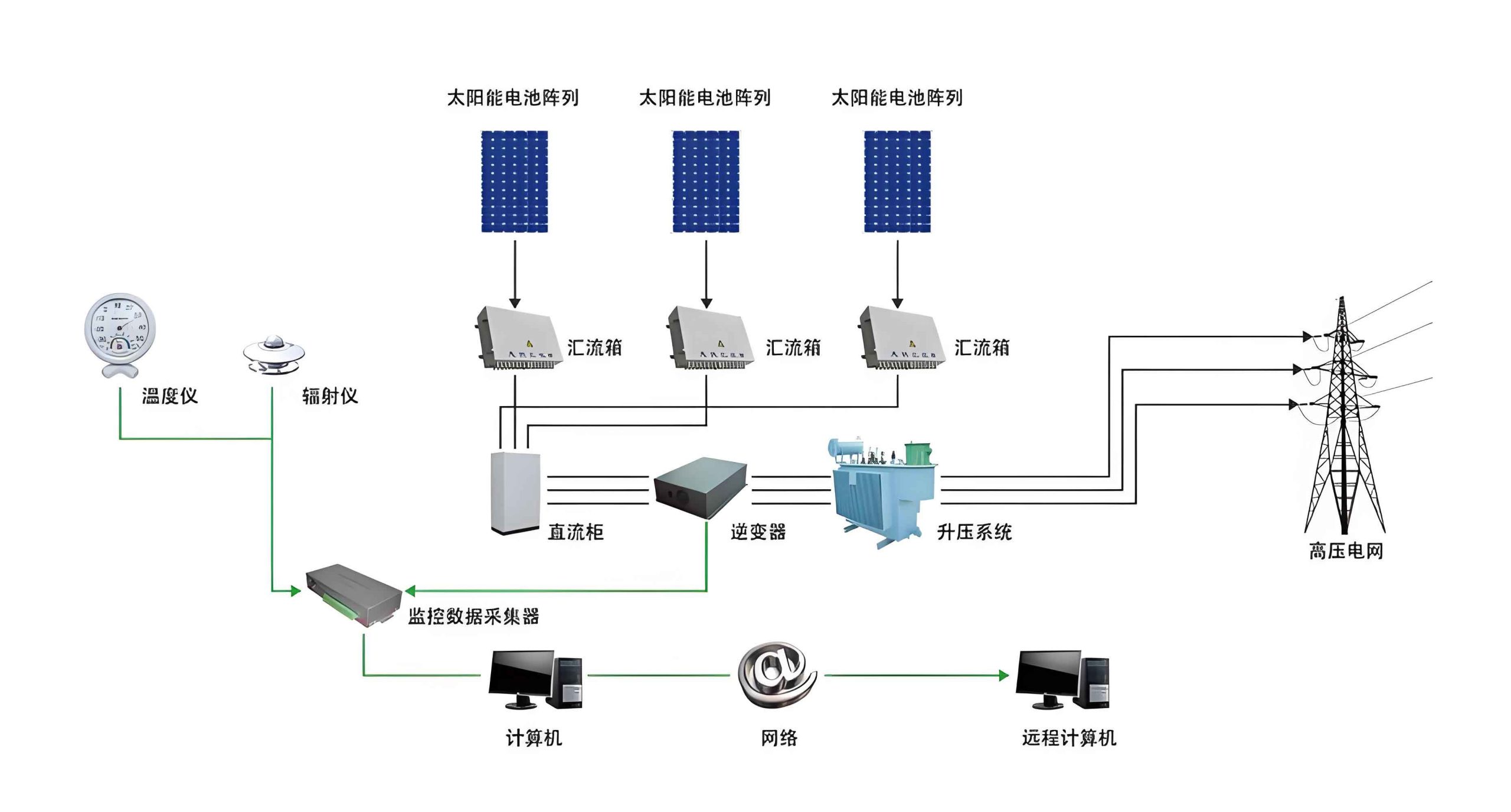
This article aims to investigate the effects of anodic oxidation and micro-arc oxidation on the microstructure and properties of 6005 aluminum alloy profiles after aging treatment. By comparing these two surface strengthening processes, I seek to identify a more effective method for enhancing the performance of aluminum alloy frames in solar systems. The study involves detailed experimental designs, including process parameter optimization, microstructural observation, and hardness testing. Through this research, I hope to contribute to the development of more reliable and efficient materials for photovoltaic applications, ultimately supporting the growth of sustainable solar systems worldwide.
Properties and Characteristics of 6005 Aluminum Alloy
6005 aluminum alloy belongs to the Al-Mg-Si series, a heat-treatable alloy known for its excellent extrusion performance, weldability, corrosion resistance, and balanced mechanical properties. Its lightweight nature and ease of oxidation coloring make it ideal for various applications, including aerospace, construction, and particularly photovoltaic frames in solar systems. In photovoltaic panels, the frames must withstand mechanical stresses and environmental exposures, and 6005 aluminum alloy offers a good balance of strength and formability. However, to meet the stringent requirements of modern solar systems, further enhancement through surface treatments is often necessary.
The alloy’s composition typically includes magnesium and silicon, which contribute to its age-hardening ability. After extrusion and artificial aging (T5 condition), the alloy achieves improved strength and stability. The extrusion process parameters, such as extrusion ratio, speed, and temperature, play a key role in determining the final properties. For instance, in this study, the extrusion was performed on a 5,000-ton horizontal extruder with specific settings: extrusion ratio λ = 29.5, ram speed v = 2.5 mm/s, cylinder temperature t1 = 400°C, ingot heating temperature t2 = 480°C, and die heating temperature t3 = 500°C. Online quenching was applied, followed by artificial aging at 180°C for 4–6 hours, resulting in a T5 temper state. This baseline material serves as the substrate for surface strengthening processes, aiming to boost its performance in solar system applications.
To quantify the benefits of surface treatments, it is essential to understand the inherent properties of 6005 aluminum alloy. The table below summarizes its typical hardness values in different conditions, highlighting the need for enhancement to meet solar system demands.
| Condition | Hardness 1 (HV) | Hardness 2 (HV) | Hardness 3 (HV) | Hardness 4 (HV) | Hardness 5 (HV) | Hardness 6 (HV) | Average Hardness (HV) |
|---|---|---|---|---|---|---|---|
| As-cast (un-extruded) | 38.4 | 39.0 | 42.8 | 40.0 | 43.1 | 39.7 | 40.5 |
| After extrusion | 55.8 | 52.3 | 51.9 | 51.5 | 50.9 | 52.6 | 52.5 |
| After aging (T5) | 68.0 | 68.8 | 65.5 | 65.7 | 73.9 | 67.8 | 68.3 |
| After anodic oxidation | 114.4 | 125.9 | 122.7 | 162.0 | 156.3 | 150.0 | 138.6 |
As shown, the hardness increases significantly after surface treatments, underscoring their importance for solar system components. In the following sections, I will delve into the specifics of anodic oxidation and micro-arc oxidation processes, exploring how they can be optimized for aluminum alloy frames in photovoltaic systems.
Surface Strengthening Processes: Anodic Oxidation and Micro-Arc Oxidation
Surface strengthening is critical for aluminum alloy frames in solar systems, as it directly impacts their resistance to corrosion, wear, and mechanical failure. Two prominent techniques are anodic oxidation and micro-arc oxidation, each with distinct mechanisms and outcomes. Anodic oxidation is a conventional electrochemical process that forms a thin oxide layer on the aluminum surface, while micro-arc oxidation is an advanced method that generates a thicker ceramic coating through arc discharge. Both processes involve complex interactions between electrical parameters, electrolyte composition, and material properties, making their optimization vital for solar system applications.
In anodic oxidation, the aluminum acts as an anode in an electrolytic cell, typically using sulfuric acid as the electrolyte. The process can be described by the following reactions: aluminum dissolution at the anode, $$ \text{Al} \rightarrow \text{Al}^{3+} + 3\text{e}^- $$, and oxide formation through the combination of aluminum ions with oxygen ions from the electrolyte, $$ 2\text{Al}^{3+} + 3\text{O}^{2-} \rightarrow \text{Al}_2\text{O}_3 $$. The resulting oxide layer consists of a dense barrier layer and a porous outer layer, with thicknesses ranging from 5 to 20 μm. However, for harsh solar system environments, this may be insufficient, prompting the exploration of micro-arc oxidation.
Micro-arc oxidation, also known as plasma electrolytic oxidation, involves higher voltages and specialized electrolytes to create a ceramic coating. The process occurs in stages: anode oxidation, spark discharge, micro-arc oxidation, and arc extinction. During micro-arc oxidation, the applied voltage exceeds the dielectric breakdown limit of the oxide layer, causing localized arc discharges that generate high temperatures and pressures. This leads to the formation of a composite ceramic layer, often containing phases like α-Al2O3, which is known for its high hardness. The overall reaction can be modeled as: $$ \text{Al} + \text{electrolyte components} \rightarrow \text{Al}_2\text{O}_3 + \text{other ceramics} $$. The thickness of the micro-arc oxidation layer can exceed 50 μm, offering superior protection for aluminum alloy frames in solar systems.
To design effective surface strengthening processes, various parameters must be controlled. For anodic oxidation, key factors include electrolyte concentration, temperature, current density, and oxidation time. The relationship between hardness (H) and these parameters can be expressed empirically as: $$ H = k_1 \cdot j \cdot t^{n} \cdot e^{-E_a/(RT)} $$, where \( j \) is the current density, \( t \) is the oxidation time, \( T \) is the temperature, \( E_a \) is the activation energy, \( R \) is the gas constant, and \( k_1 \) and \( n \) are constants. Similarly, for micro-arc oxidation, voltage, frequency, duty cycle, and oxidation time are critical. A simplified formula for oxide layer thickness (δ) in micro-arc oxidation is: $$ \delta = k_2 \cdot V^m \cdot t^{p} $$, where \( V \) is the voltage, \( t \) is the time, and \( k_2 \), \( m \), and \( p \) are constants dependent on the electrolyte and alloy composition. Optimizing these parameters is essential for achieving the desired properties in solar system components.
Anodic Oxidation of 6005 Aluminum Alloy: Process Design and Results
In this study, the anodic oxidation process for 6005 aluminum alloy was designed to mimic industrial standards for photovoltaic frames in solar systems. The procedure included several steps: degreasing, acid etching, alkaline cleaning, neutralization, oxidation, coloring, and sealing. Each step was carefully controlled to ensure consistent oxide layer formation. The specific parameters are summarized in the table below, which outlines the chemical compositions, concentrations, temperatures, and times for each stage.
| Step | Chemical Agent | Concentration (g/L) | Temperature (°C) | Time (min) | pH or Other Conditions |
|---|---|---|---|---|---|
| Degreasing | H2SO4 | 150–180 | Room temperature | 3 | – |
| Acid Etching | Mixed acid (e.g., H2SO4) | – | 35–45 | 3–6 | pH 2.5–3.5 |
| Alkaline Cleaning | NaOH | 25–40 | 40–50 | 1–2 | – |
| Neutralization | Acidic solution | – | 40–50 | 1–3 | pH 5.5–6.5 |
| Oxidation | H2SO4 electrolyte | 160–200 | 20 | 15 | Voltage: 16–20 V |
| Coloring | SnSO4, NiSO4, H2SO4 | 13–17, 17–25, 15–20 | 27 | – | – |
| Sealing | Ni2+, F– solution | – | – | 15 | – |
After processing, the anodized samples were examined using metallographic microscopy. The oxide layer exhibited a porous structure, characteristic of anodic oxidation films. The primary composition was amorphous Al2O3, with minor crystalline phases. The average thickness measured was 18 μm, which aligns with typical ranges for anodic oxidation but may be limited for aggressive solar system environments. The hardness of the anodized alloy was tested at multiple points, yielding an average value of 138.6 HV, as shown in the earlier table. This represents a significant improvement over the untreated material, making it suitable for basic photovoltaic applications. However, for solar systems exposed to extreme conditions, further enhancement is needed.
The hardness of anodic oxidation layers is influenced by several factors, including oxidation temperature, current density, and time. As mentioned, higher temperatures can reduce hardness due to increased dissolution of the oxide layer. Current density has a nonlinear effect: initially, increasing current density promotes oxide growth and hardness, but beyond a critical point, it leads to grain coarsening and microcracking, reducing hardness. This can be described by the equation: $$ H_{\text{anodic}} = H_0 + a \cdot j – b \cdot j^2 $$, where \( H_0 \) is the base hardness, \( j \) is the current density, and \( a \) and \( b \) are positive constants. Oxidation time also plays a role, with longer times generally increasing thickness and hardness, but diminishing returns may occur due to saturation effects. For solar system frames, balancing these parameters is key to achieving optimal performance.
Micro-Arc Oxidation of 6005 Aluminum Alloy: Process Design and Results
Micro-arc oxidation offers a promising alternative for surface strengthening of aluminum alloy frames in solar systems. In this study, the process was conducted using an alkaline electrolyte composed of sodium silicate (Na2SiO3·9H2O) and sodium hydroxide (NaOH). The equipment included an IPMA-750/20 micro-arc oxidation power supply, allowing precise control of voltage, current, frequency, duty cycle, and oxidation time. To investigate the effects of key parameters, a series of experiments were designed with variations in voltage and oxidation time, while keeping frequency and duty cycle constant at 500 Hz and 10%, respectively. The specific parameters for each trial group are listed in the table below, along with the resulting oxide layer thickness and hardness.
| Trial Group | Voltage (V) | Oxidation Time (min) | Average Thickness (μm) | Average Hardness (HV) |
|---|---|---|---|---|
| 1 | 350 | 10 | 23 | 149.8 |
| 2 | 400 | 10 | 32 | 153.9 |
| 3 | 450 | 10 | 35 | 155.0 |
| 4 | 500 | 10 | 52 | 150.3 |
| 5 | 450 | 5 | 18 | 138.7 |
| 6 | 450 | 15 | 57 | 161.6 |
Metallographic observations revealed that the micro-arc oxidation layers were composite ceramic coatings, containing high-hardness α-Al2O3 phases along with other compounds like Al2SiO5 from the electrolyte. The thickness varied significantly with voltage and time: at lower voltages (350 V), the layer was thinner (20–25 μm), while at higher voltages (450–500 V), thickness increased to 35–60 μm. However, at 500 V, arc discharge phenomena caused localized burning, leading to a decrease in hardness. The optimal conditions were found at 450 V and 15 minutes of oxidation, producing an average thickness of 57 μm and an average hardness of 161.6 HV. This represents a substantial improvement over anodic oxidation, making it more suitable for demanding solar system environments.
The hardness of micro-arc oxidation layers is governed by the formation of crystalline phases, particularly α-Al2O3, which has a high intrinsic hardness. The transformation from amorphous to crystalline alumina can be modeled using kinetics equations, such as the Johnson-Mehl-Avrami-Kolmogorov (JMAK) theory: $$ X = 1 – \exp(-k t^n) $$, where \( X \) is the fraction transformed, \( k \) is a rate constant dependent on voltage and temperature, \( t \) is the oxidation time, and \( n \) is an exponent related to the transformation mechanism. In micro-arc oxidation, the high local temperatures during arc discharges accelerate this transformation, leading to enhanced hardness. Additionally, the relationship between hardness and process parameters can be approximated as: $$ H_{\text{micro-arc}} = c \cdot V^{\alpha} \cdot t^{\beta} $$, where \( c \), \( \alpha \), and \( \beta \) are empirical constants. For solar system frames, maximizing hardness while maintaining coating integrity is critical, and micro-arc oxidation offers a viable path.
Comparative Analysis and Implications for Solar Systems
Comparing anodic oxidation and micro-arc oxidation reveals distinct advantages and limitations for aluminum alloy frames in photovoltaic systems. Anodic oxidation is a well-established process with relatively simple equipment and lower energy consumption, producing oxide layers with moderate hardness (138.6 HV) and thickness (18 μm). It provides basic corrosion protection and is suitable for standard solar system applications. However, in harsh environments—such as those with high humidity, salt spray, or temperature fluctuations—its performance may degrade due to the thin and porous nature of the coating.
In contrast, micro-arc oxidation generates thicker (up to 57 μm) and harder (up to 161.6 HV) ceramic layers, offering superior wear and corrosion resistance. This makes it ideal for solar systems deployed in extreme conditions, like deserts or coastal areas. Moreover, micro-arc oxidation is more environmentally friendly, as it typically uses alkaline electrolytes without heavy metals, reducing pollution compared to the acidic solutions used in anodic oxidation. The table below summarizes the key differences between the two processes, highlighting their relevance to solar system durability.
| Aspect | Anodic Oxidation | Micro-Arc Oxidation |
|---|---|---|
| Average Thickness | 18 μm | Up to 57 μm |
| Average Hardness | 138.6 HV | 161.6 HV (optimal) |
| Primary Phases | Amorphous Al2O3 | α-Al2O3 and composite ceramics |
| Process Complexity | Moderate | High (requires precise control) |
| Environmental Impact | Higher (acidic waste) | Lower (alkaline electrolytes) |
| Suitability for Harsh Solar Systems | Limited | Excellent |
From a solar system perspective, the choice of surface strengthening process depends on factors like cost, location, and expected service life. For large-scale photovoltaic installations in mild climates, anodic oxidation may suffice. However, for critical applications or regions with severe weather, micro-arc oxidation is recommended despite its higher initial cost and complexity. The enhanced durability can lead to longer frame lifespans, reducing maintenance and replacement costs over time. Furthermore, as solar systems expand globally, adopting advanced materials and processes will be essential for achieving sustainability goals.
To quantify the benefits for solar systems, one can consider the relationship between coating properties and system efficiency. For instance, the corrosion rate (CR) of aluminum alloy frames can be modeled as: $$ \text{CR} = \frac{k_c}{\delta \cdot H} $$, where \( k_c \) is a constant depending on the environment, \( \delta \) is the coating thickness, and \( H \) is the hardness. Thicker and harder coatings from micro-arc oxidation thus result in lower corrosion rates, enhancing the reliability of solar systems. Additionally, the weight savings from using thinner frames (possible with stronger coatings) can reduce transportation and installation costs, further optimizing solar system economics.
Conclusion and Future Perspectives
In this study, I investigated the effects of anodic oxidation and micro-arc oxidation on the microstructure and properties of 6005 aluminum alloy profiles for photovoltaic frames. The results demonstrate that both processes significantly enhance hardness and corrosion resistance, but micro-arc oxidation offers superior performance with thicker ceramic layers and higher hardness values. The optimal micro-arc oxidation parameters were identified as 450 V and 15 minutes of oxidation, yielding an average hardness of 161.6 HV, which is 23 HV higher than that achieved with anodic oxidation. This makes micro-arc oxidation a promising alternative for surface strengthening in demanding solar system applications.
Looking ahead, future research should focus on further optimizing micro-arc oxidation parameters, such as electrolyte composition and pulse patterns, to achieve even better properties. Additionally, integrating these surface treatments with advanced manufacturing techniques like additive manufacturing could open new possibilities for custom-designed frames for solar systems. As the world transitions toward renewable energy, the role of durable materials in photovoltaic systems will only grow in importance. By embracing innovative surface strengthening processes, we can ensure that solar systems remain efficient, reliable, and sustainable for decades to come.
In summary, this work underscores the value of surface engineering for aluminum alloy frames in solar systems. Through careful process design and analysis, we can develop materials that withstand the rigors of outdoor exposure, contributing to the global effort to harness solar energy effectively. Whether through anodic oxidation or micro-arc oxidation, the goal remains the same: to build robust and long-lasting photovoltaic systems that support a greener future.