
As a representative of next-generation energy storage and a critical component of future advanced “new quality productive forces,” the solid-state battery is currently at a pivotal stage of technological breakthrough and industrial scaling. Its evolution is poised to profoundly reshape the global industrial competitive landscape, with particularly direct and profound implications for sectors such as energy, new energy vehicles, low-altitude economy, and humanoid robotics. The intense global competition in this field is not merely a technological contest but a strategic race for industrial dominance. From my perspective, analyzing the latest dynamics in developed nations and key domestic regions, while assessing local industrial foundations and challenges, is essential for formulating effective strategies to secure a leading position in the emerging solid-state battery ecosystem.
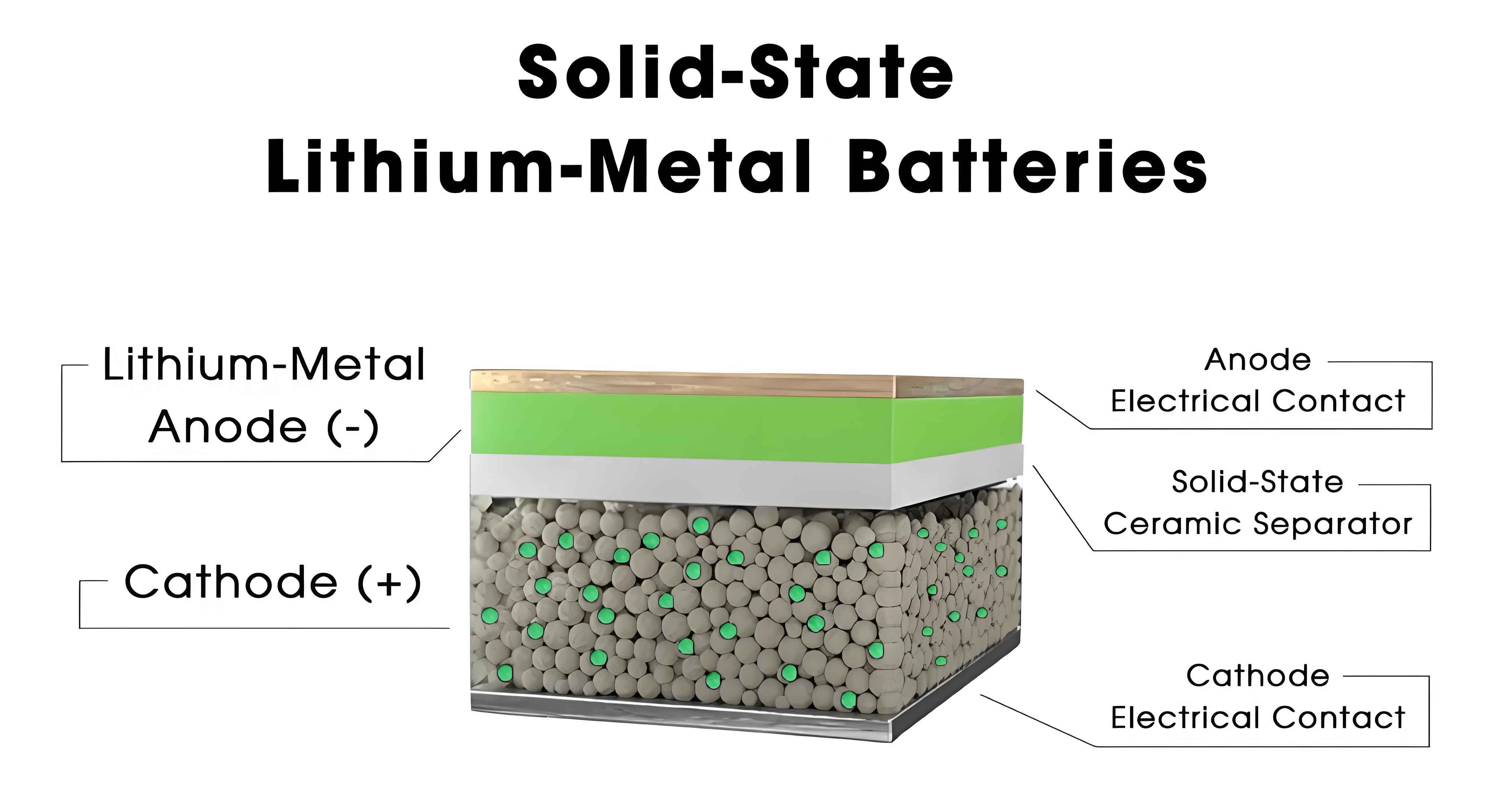
The fundamental promise of the solid-state battery lies in its replacement of the flammable liquid electrolyte in conventional lithium-ion batteries with a solid electrolyte. This core innovation theoretically unlocks significant advantages, which can be summarized by the following key performance metrics and their relationships:
Energy Density Potential: The use of high-capacity lithium metal anodes is a primary driver for higher energy density.
$$ E_d = \frac{C_{cathode} \times V_{cell}}{m_{cell}} $$
Where \( E_d \) is the gravimetric energy density (Wh/kg), \( C_{cathode} \) is the cathode capacity, \( V_{cell} \) is the cell voltage, and \( m_{cell} \) is the total cell mass. The solid-state battery design, by enabling lithium metal, dramatically increases \( C_{cathode} \) potential.
Safety Function: The solid electrolyte acts as a physical barrier against dendrite formation, a major cause of short circuits and thermal runaway in liquid electrolyte systems. The safety parameter \( S \) can be conceptually related to the mechanical modulus \( G \) of the electrolyte:
$$ S \propto \frac{G}{\sigma_{dendrite}} $$
Where \( \sigma_{dendrite} \) is the stress required for dendrite penetration. A high-modulus solid electrolyte increases \( S \).
Cycle Life Model: Cycle life degradation in solid-state batteries is often governed by interfacial instability. A simplified degradation rate \( k \) might be expressed as:
$$ k = A \cdot \exp\left(-\frac{E_a}{RT}\right) \cdot \left(\frac{1}{Z_{interface}}\right) $$
Where \( A \) is a pre-exponential factor, \( E_a \) is the activation energy for interfacial reaction, \( R \) is the gas constant, \( T \) is temperature, and \( Z_{interface} \) is the interfacial impedance. Stabilizing the interface reduces \( k \), extending cycle life.
Global and Domestic Competitive Landscape for Solid-State Batteries
Major developed economies have identified the solid-state battery as a strategic priority, backing their ambitions with comprehensive national roadmaps and substantial funding. Concurrently, within China, a multi-layered support system has emerged, combining central policy direction with vigorous local pilot programs and industrial clustering.
| Region/Country | Strategic Policy/Initiative | Key Focus & Technology Emphasis | Industrial & Commercialization Targets |
|---|---|---|---|
| Japan | Battery Industry Strategy | Sulfide-based electrolyte route. Heavy R&D investment, holding a leading global patent portfolio. | Aim for commercialization, with leading automakers targeting the late 2020s. |
| South Korea | K-Battery Development Strategy | Aggressive development by major battery manufacturers. Focus on oxide and polymer composites. | Major manufacturers have announced plans for solid-state battery mass production around 2027. |
| United States | National Blueprint for Lithium Batteries | Cross-sector R&D support, focusing on material innovation and domestic supply chain security. | Accelerate from research to domestic manufacturing, supporting EV and storage goals. |
| European Union | Battery Strategic Research and Innovation Agenda | Holistic approach covering raw materials, advanced manufacturing, and recycling for next-gen batteries. | Build a competitive, sustainable, and circular European battery value chain. |
| China (National) | “Central Policy + Local Pilot” System | Support for the transition of lithium/sodium batteries to solid-state. Cultivation of global leaders. | Target to build 3-5 world-leading enterprises by 2027. |
| Jiangsu Province | Guidance on Cultivating Future Industries | Positioning solid-state battery scale application as a key direction for new energy storage. | Leverage advanced manufacturing base to build innovation clusters (e.g., “Solid-State Battery Innovation Valley”). |
| Guangdong Province | Industrial Ecosystem (Policy-backed) | Leverage massive NEV production base (>3M vehicles/year) as primary application scenario. | Early deployment in energy storage (e.g., 5G, data centers). Target batch delivery by 2030. |
| Sichuan Province | Industrial Chain Promotion Plan | Designate solid-state battery as a key future track. Integrate into power battery industry ecosystem. | Attract major solid-state battery production and innovation base projects through flagship industry events. |
The competition extends beyond policy into distinct technological pathways, which serve as “moats” for industrial competition. Japan’s deep commitment to the sulfide route, South Korea’s integrated manufacturing push, and the diverse material explorations in China highlight this strategic divergence. The timeline for market adoption is becoming clearer. Industry forecasts project exponential growth, with global solid-state battery shipments expected to reach a significant scale by 2030, of which all-solid-state batteries are predicted to claim a notable share. This growth is fueled by impending capacity expansions, with numerous multi-GWh production projects announced or under construction across China’s provinces, transitioning the industry from a preparatory phase to an impending capacity explosion phase. The forecasted growth can be modeled as:
$$ Q(t) = Q_0 \cdot (1 + r)^t $$
Where \( Q(t) \) is the shipment volume at time \( t \), \( Q_0 \) is the baseline volume, and \( r \) is the compound annual growth rate. For the solid-state battery market, \( r \) is projected to be very high in the 2025-2035 period.
Foundational Analysis of a Regional Solid-State Battery Ecosystem: A Case Study Framework
To compete effectively, a region must build upon its unique strengths. A robust foundation typically includes intellectual property, innovation platforms, a tiered enterprise ecosystem, and a pipeline of key projects. From an analytical standpoint, a region with a strong industrial base would demonstrate the following characteristics:
1. Intellectual Property (IP) Reservoir: A substantial number of invention patents in core areas like solid electrolytes, electrode materials, and cell manufacturing processes indicate R&D vitality and potential freedom-to-operate. Patent concentration among battery makers, automotive OEMs, and research institutes shows a healthy distribution of innovative activity.
2. High-Energy Innovation Platforms: The presence of leading universities, national research institutes, and specialized laboratories dedicated to new battery technologies is crucial. These platforms act as the “innovation source,” conducting fundamental research, tackling key technical bottlenecks, and spinning off commercial technologies.
3. Tiered Enterprise Ecosystem: A complete ecosystem spans the value chain:
- Upstream Materials: Companies specializing in high-nickel cathodes, silicon-based anodes, lithium metal, and solid electrolytes (sulfide, oxide, polymer).
- Midstream Cell Manufacturing & Integration: Battery companies pursuing various solid-state electrolyte routes (oxide, polymer, composite).
- Downstream Application: Strong demand from local electric vehicle manufacturers, energy storage system integrators, and emerging sectors like low-altitude mobility.
4. Strategic Project Pipeline: Concrete, large-scale projects (in the multi-GWh range for cell production and kiloton-scale for key materials) signal serious commitment and progress towards industrialization. Breakthrough applications, such as grid-side energy storage systems using solid-state batteries, validate performance and safety in real-world conditions.
| Industry Chain Segment | Key Activities & Technologies | Representative Enterprise Types & State |
|---|---|---|
| Upstream Materials | Solid electrolyte synthesis (Sulfide, Oxide, Polymer), High-capacity cathode/anode material production, Lithium metal foil processing. | Established material suppliers diversifying into solid-state; Startups focused on proprietary electrolyte/ material tech. |
| Midstream Manufacturing | Cell design & engineering, Electrode fabrication (with solid electrolytes), Stacking & assembly, Conditioning and formation. | Spin-offs from research institutes; Incumbent battery makers with R&D divisions; Dedicated solid-state battery startups. |
| Downstream Integration & Application | Battery pack and BMS design, Integration into EVs, Energy Storage Systems, Consumer Electronics, Specialized equipment. | Automotive OEMs (in-house development or partnerships); ESS integrators; Drone/eVTOL manufacturers. |
Critical Challenges in Solid-State Battery Industrialization
Despite promising foundations, the path to widespread commercialization of solid-state batteries is fraught with significant hurdles that must be overcome through coordinated effort.
1. Insufficient Core Technology Breakthrough Capacity and Fragmented Collaboration: The pace of innovation in solid-state battery technology is relentless. A risk of technological lag exists if R&D efforts are not at the global cutting edge. Often, the collaboration between industry, academia, and research is suboptimal. Innovation platforms may be limited and operate in silos, leading to dispersed resources, duplicated efforts, and ultimately, slower progress in solving key technical problems such as interface resistance, electrolyte ionic conductivity, and long-term stability. The effectiveness of R&D collaboration \( \eta_{R\&D} \) can be conceptualized as inversely proportional to the dispersion \( D \) of resources and the barrier \( B \) to knowledge transfer:
$$ \eta_{R\&D} \propto \frac{1}{D \cdot B} $$
Strengthening systemic integration reduces \( D \) and \( B \), thereby increasing \( \eta_{R\&D} \).
2. Deficiencies in Advanced Manufacturing and Scale-Up Bottlenecks: Mass production of solid-state batteries presents distinct challenges compared to liquid lithium-ion batteries. Processes are more complex, material costs (especially for novel solid electrolytes and lithium metal) remain high, and required capital investment for specialized equipment is significant. While some manufacturing equipment is transferable, overall production demands more stringent environmental controls, higher equipment precision, and more sophisticated process monitoring. The gap between producing sample cells for testing and achieving cost-effective, high-yield, gigawatt-hour-scale manufacturing is substantial. The unit cost \( C_{SSB} \) of a solid-state battery is a critical hurdle:
$$ C_{SSB} = C_{materials} + C_{processing} + C_{equipment\_amortization} + C_{yield\_loss} $$
Currently, \( C_{materials} \) and \( C_{processing} \) for solid-state batteries are significantly higher than for incumbent technologies, and \( C_{yield\_loss} \) is also a major factor due to process immaturity.
3. Immature Market and Cost Competition from Incumbent Technology: The market for solid-state batteries is still nascent. Conversely, the conventional liquid lithium-ion battery industry is experiencing overcapacity and intense price competition, driving costs down rapidly. The price of key raw materials like lithium carbonate has fallen dramatically from its peak. This creates a challenging economic environment for the solid-state battery, as its cost per unit energy (\( \$/kWh \)) remains non-competitive for most applications despite its performance advantages. The cost competitiveness ratio \( R_{cost} \) can be defined as:
$$ R_{cost} = \frac{C_{LIB}}{C_{SSB}} $$
Where \( C_{LIB} \) is the unit cost of liquid lithium-ion batteries. Currently, \( R_{cost} > 1 \), favoring LIBs. For solid-state battery adoption, technological improvements and scale must drive \( C_{SSB} \) down until \( R_{cost} \leq 1 \) for target applications.
Strategic Countermeasures for Differentiated Industrial Development
To navigate these challenges and carve out a competitive niche, a multi-pronged, coherent strategy is essential. The following recommendations form a comprehensive framework for action.
1. Enhance Strategic Foresight and Policy Support: Solid-state battery development must be explicitly prioritized as a pivotal track in regional advanced manufacturing or future industry plans, with clear goals, roadmaps, and implementation measures. Policy should incentivize R&D investment and advanced manufacturing capex. Financial instruments, including tailored green finance and venture capital products, need to be mobilized. Guaranteeing resource availability—land, energy, water—for key projects is fundamental. Talent policies must attract and cultivate specialized scientists and engineers. Furthermore, securing the critical mineral supply chain (lithium, cobalt, nickel) through inter-regional and international cooperation is a strategic imperative for long-term stability and cost control.
2. Accelerate Core Technology攻关 and Build a High-Energy Innovation System: Foster deep, long-term strategic partnerships between leading solid-state battery enterprises and top-tier universities/research institutes. This clusters innovation resources. For critical technical hurdles—electrolyte conductivity, interface engineering, novel electrode materials—organize focused “challenge” programs utilizing mechanisms like “open innovation” or “mission-oriented funding” to accelerate breakthroughs. A strong, proactive IP strategy is vital: generate high-value patents, conduct prior-art and competitive monitoring, engage in standard-essential patent (SEP) development, and mitigate infringement risks in key markets.
3. Cultivate Market Entities and Promote Cluster-Based Development: Implement targeted investment attraction for specialized “little giant” firms, unicorns, and listed companies in the solid-state battery space. Integrate the solid-state battery industry into broader regional industrial matchmaking activities to strengthen local and regional supply chain collaboration (“chain-cluster-matching”). Support leading local battery firms to expand into solid-state domains while guiding medium-sized enterprises to focus on niche technologies. Encourage startups through incubators and technical support. Designate and develop specialized industrial parks or “innovation valleys” for solid-state batteries, ensuring they have完备的基础设施 and shared facilities. Infuse the entire manufacturing chain with digitalization (“AI+”) and green manufacturing (“Green+”) technologies to boost efficiency, quality, and sustainability.
4. Leverage Application Scenarios for Demand Pull and Build a Healthy Ecosystem: Guide technology development along a clear application trajectory: from R&D and pilot lines, to early adoption in consumer electronics, EVs, and drones, and finally to broader industrial and grid-scale storage. Actively participate in and help shape national and international standards for solid-state batteries, covering safety, key materials, manufacturing equipment, and testing methods. This builds market confidence and规范 industry practices. Explore establishing a provincial-level solid-state battery public service platform to offer testing, certification, data analytics, and industry intelligence, enhancing overall链的透明度和协同效率. Finally, integrate solid-state battery international cooperation into broader foreign economic frameworks (e.g., Belt and Road, BRICS), facilitating alignment on policies, standards, and joint R&D.
In conclusion, the race for solid-state battery supremacy is a complex marathon involving technological ingenuity, manufacturing excellence, strategic policymaking, and ecosystem cultivation. Success will belong to regions that can not only innovate at the laboratory level but also master the intricate art of industrial scaling, supply chain security, and creating virtuous cycles of market demand and technological refinement. The journey of the solid-state battery from a promising concept to a mainstream commodity will be a defining narrative of the global energy transition in the coming decades.