
As a researcher deeply immersed in the field of energy storage, I have witnessed the rapid evolution of electric vehicles (EVs) and the critical role batteries play in their adoption. The quest for higher energy density, enhanced safety, and lower cost has led to a paradigm shift towards solid-state battery technology. In this article, I will explore the intricacies of solid-state batteries, focusing on their core component—the solid-state electrolyte—and provide a detailed analysis from both technical and industrial perspectives. Solid-state batteries are increasingly recognized as the mainstream solution for next-generation EVs, promising ultra-high safety and long driving ranges. Throughout this discussion, I will emphasize the significance of solid-state batteries in overcoming current limitations, using tables and formulas to summarize key points, and ensuring that the term ‘solid-state battery’ is prominently featured to underscore its importance.
The global push for新能源汽车 has intensified, with countries worldwide implementing strategies to reduce carbon emissions and combat climate change. However, widespread EV adoption is hindered by issues such as limited range, safety concerns, and high costs. Traditional lithium-ion batteries, which rely on organic liquid electrolytes, pose risks of leakage, thermal runaway, and combustion. In contrast, solid-state batteries, which replace these liquids with solid electrolytes, offer inherent safety, higher energy density, and potential cost reductions. From my perspective, the transition to solid-state batteries is not just an incremental improvement but a revolutionary step that could redefine the EV landscape. This article will delve into the technical aspects of solid-state batteries, particularly the solid-state electrolyte, and assess their readiness for industrial application.
To understand the appeal of solid-state batteries, it is essential to compare them with conventional lithium-ion batteries. A solid-state battery consists of a solid electrolyte that acts as both ion conductor and separator, eliminating the need for flammable organic solvents. This design enhances safety by preventing leaks and reducing fire hazards. Moreover, solid-state batteries enable the use of high-capacity electrodes, such as lithium metal anodes, which can significantly boost energy density. The following table summarizes the key differences between traditional lithium-ion batteries and solid-state batteries, highlighting the advantages of the latter for EV applications.
| Feature | Traditional Lithium-Ion Battery | Solid-State Battery |
|---|---|---|
| Electrolyte | Organic liquid electrolyte (e.g., LiPF6 in carbonates) | Solid electrolyte (polymer, inorganic, or composite) |
| Safety | Prone to leakage, thermal runaway, and combustion | High safety due to non-flammable solid materials |
| Energy Density | Limited by electrode materials and electrolyte stability | Potentially higher with lithium metal anodes and high-voltage cathodes |
| Cycle Life | Degrades due to side reactions and electrolyte decomposition | Improved stability with solid interfaces, reducing degradation |
| Operating Temperature | Narrow range; performance drops at extremes | Wider range; some types perform well at high temperatures |
| Cost | Lower upfront cost but limited by material scarcity | Potentially lower long-term cost through material simplification and higher energy density |
The performance of a solid-state battery is heavily dependent on its solid-state electrolyte, which must exhibit high ionic conductivity, chemical stability, and mechanical robustness. In my analysis, I categorize solid-state electrolytes into two main types: polymer-based and inorganic-based. Each type has distinct characteristics, and their development status is crucial for the advancement of solid-state batteries. Below, I will discuss these in detail, incorporating formulas to explain key properties such as ionic conductivity and activation energy.
Polymer solid-state electrolytes are composed of organic polymers and lithium salts, offering flexibility, ease of processing, and good interfacial contact with electrodes. A common example is poly(ethylene oxide) (PEO) complexed with lithium salts like LiTFSI. The ionic conductivity in polymer electrolytes is governed by segmental motion of the polymer chains, which can be described by the Vogel-Tammann-Fulcher (VTF) equation: $$ \sigma = \sigma_0 \exp\left(-\frac{B}{T – T_0}\right) $$ where $\sigma$ is the conductivity, $\sigma_0$ is a pre-exponential factor, $B$ is a constant, $T$ is temperature, and $T_0$ is the glass transition temperature. However, polymer electrolytes often suffer from low ionic conductivity at room temperature, typically around $10^{-5}$ to $10^{-4}$ S/cm. To address this, researchers have explored additives such as ceramic fillers (e.g., SiO₂, Al₂O₃) to form composite polymer electrolytes. These fillers enhance mechanical strength and ionic conductivity by providing additional ion transport pathways. The following table summarizes the properties of common polymer electrolytes used in solid-state batteries.
| Polymer Matrix | Lithium Salt | Additives | Room-Temperature Conductivity (S/cm) | Advantages | Challenges |
|---|---|---|---|---|---|
| PEO | LiTFSI | None | ~10⁻⁵ | Flexible, easy to process | Low conductivity, limited voltage window |
| PEO | LiClO₄ | SiO₂ nanoparticles | ~10⁻⁴ | Improved mechanical stability | Moisture sensitivity |
| PVDF-HFP | LiPF₆ | Al₂O₃ | ~10⁻³ (at elevated temperatures) | High thermal stability | Requires high temperature for optimal performance |
| PAN | LiBOB | Li₁₀GeP₂S₁₂ (sulfide) | ~10⁻³ | Good compatibility with electrodes | Complex synthesis |
Inorganic solid-state electrolytes offer higher ionic conductivity and better thermal stability than polymers, making them attractive for solid-state batteries. They can be further divided into amorphous (glass) and crystalline ceramics. Amorphous inorganic electrolytes, such as oxide and sulfide glasses, exhibit isotropic ion conduction and ease of film formation. For instance, Li₂S-P₂S₅ sulfide glasses can achieve conductivities up to $10^{-3}$ S/cm at room temperature, as described by the Arrhenius equation: $$ \sigma = \sigma_0 \exp\left(-\frac{E_a}{kT}\right) $$ where $E_a$ is the activation energy, $k$ is Boltzmann’s constant, and $T$ is temperature. The high conductivity in sulfide glasses is attributed to the larger polarizability of sulfur ions, which widens the ion transport channels. However, sulfide materials are often hygroscopic and require inert atmosphere processing, increasing costs. Oxide glasses, like Li₂O-P₂O₅-B₂O₃, are more stable but have lower conductivities, typically around $10^{-6}$ to $10^{-5}$ S/cm. To illustrate, I provide a table comparing key amorphous inorganic electrolytes for solid-state batteries.
| Electrolyte System | Composition | Room-Temperature Conductivity (S/cm) | Activation Energy (eV) | Stability | Application Potential in Solid-State Battery |
|---|---|---|---|---|---|
| Oxide Glass | Li₂O-P₂O₅-B₂O₃ | ~9 × 10⁻⁵ | 0.45 | High thermal and chemical stability | Moderate; suitable for high-temperature operations |
| Sulfide Glass | Li₂S-SiS₂-LiI | ~2 × 10⁻³ | 0.25 | Prone to moisture, requires dry processing | High; promising for room-temperature applications |
| Nitrided Glass | LiPON (Li₃PO₄-xNx) | ~10⁻⁶ | 0.55 | Excellent electrochemical stability | Limited due to low conductivity; used in thin-film batteries |
Glass-ceramic electrolytes, which are derived from controlled crystallization of glasses, combine the benefits of both amorphous and crystalline phases. For example, Li₁.₃Al₀.₃Ti₁.₇(PO₄)₃ (LATP) glass-ceramics exhibit conductivities up to $10^{-3}$ S/cm and good stability against lithium metal. The crystallization process can be optimized to enhance ion transport by reducing grain boundary resistance. Similarly, sulfide-based glass-ceramics like Li₇P₃S₁₁ show even higher conductivities, exceeding $10^{-2}$ S/cm in some cases. These materials are pivotal for advancing solid-state batteries, as they balance performance and processability.
Crystalline ceramic electrolytes are another critical category, with structures such as NASICON, perovskite, garnet, and LISICON. Each structure offers unique ion transport mechanisms and properties. For instance, NASICON-type electrolytes like LiTi₂(PO₄)₃ have a three-dimensional framework that facilitates lithium ion migration through interstitial sites. The ionic conductivity can be expressed as: $$ \sigma = \frac{n e^2 D}{kT} $$ where $n$ is the carrier concentration, $e$ is the electron charge, $D$ is the diffusion coefficient, and $k$ and $T$ are as defined earlier. Doping with aliovalent ions, such as Al³⁺ for Ti⁴⁺ in Li₁+xAlxTi₂-x(PO₄)₃, creates vacancies that boost conductivity. Perovskite electrolytes, like Li₃xLa(₂/₃)-xTiO₃ (LLTO), exhibit high bulk conductivity but suffer from high grain boundary resistance. Garnet-type electrolytes, such as Li₇La₃Zr₂O₁₂ (LLZO), are notable for their stability against lithium metal and conductivities around $10^{-4}$ to $10^{-3}$ S/cm. The following table summarizes the key crystalline ceramic electrolytes for solid-state batteries, highlighting their potential and limitations.
| Electrolyte Type | Example Composition | Crystal Structure | Room-Temperature Conductivity (S/cm) | Activation Energy (eV) | Stability vs. Lithium Metal | Challenges in Solid-State Battery Application |
|---|---|---|---|---|---|---|
| NASICON | Li₁.₃Al₀.₃Ti₁.₇(PO₄)₃ | Rhombohedral | ~10⁻³ | 0.30 | Moderate; Ti⁴⁺ reduction risk | Grain boundary resistance, moisture sensitivity |
| Perovskite | Li₃xLa(₂/₃)-xTiO₃ | Cubic/Tetragonal | ~10⁻³ (bulk) | 0.35 | Poor; Ti⁴⁺ reduction | High grain boundary impedance, lithium loss during synthesis |
| Garnet | Li₇La₃Zr₂O₁₂ | Cubic | ~10⁻⁴ | 0.25 | Excellent | Requires high sintering temperatures, brittle nature |
| LISICON | Li₁₄ZnGe₄O₁₆ | Orthorhombic | ~10⁻⁶ | 0.50 | Poor; reacts with CO₂ | Low conductivity, environmental instability |
| Thio-LISICON | Li₁₀GeP₂S₁₂ | Tetragonal | ~10⁻² | 0.20 | Moderate; sulfide instability | High cost, sensitive to moisture |
The development of solid-state batteries is not solely about materials; it also involves addressing interfacial issues between the solid electrolyte and electrodes. In a solid-state battery, the interfaces must maintain intimate contact during cycling to prevent increased impedance and capacity fade. For instance, the formation of a solid electrolyte interphase (SEI) on lithium metal anodes can be beneficial if stable, but uncontrolled growth leads to degradation. Researchers have proposed strategies such as introducing compliant interlayers or using composite electrodes to mitigate these problems. Moreover, the mechanical properties of solid electrolytes play a crucial role in suppressing lithium dendrite growth, which is a major safety concern in conventional batteries. The critical current density for dendrite initiation can be modeled using linear stability analysis: $$ J_c = \frac{2 \sigma_e \sigma_i E}{\pi L (\sigma_e + \sigma_i)} $$ where $J_c$ is the critical current density, $\sigma_e$ and $\sigma_i$ are the electronic and ionic conductivities, $E$ is the Young’s modulus, and $L$ is the electrolyte thickness. This formula underscores the importance of high modulus materials in solid-state batteries for dendrite inhibition.
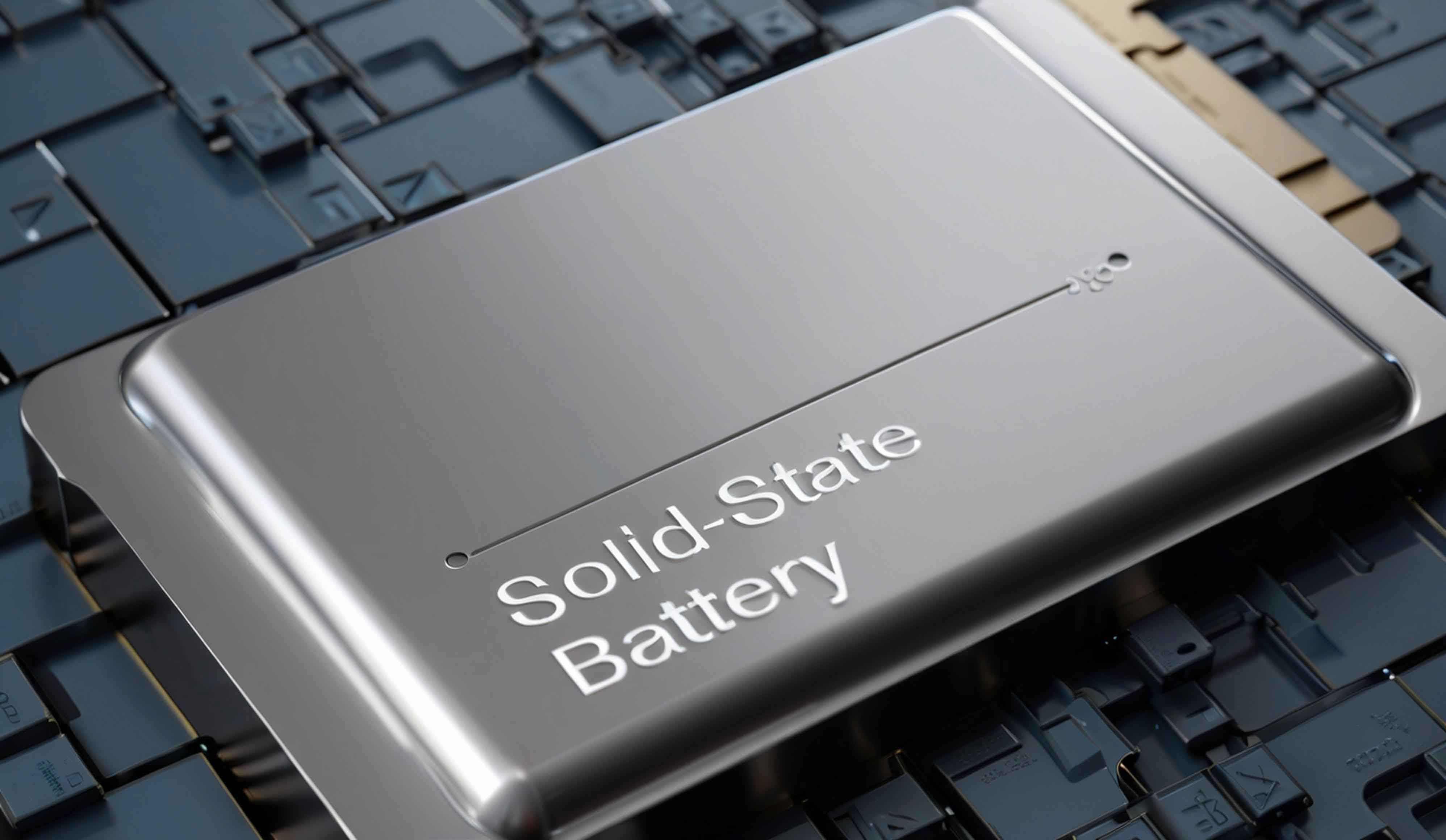
From an industrial perspective, the commercialization of solid-state batteries is progressing through stages, starting with semi-solid batteries that incorporate some liquid electrolytes, then moving to full solid-state systems. Companies like Toyota, QuantumScape, and Solid Power are at the forefront, targeting EV applications with prototypes offering energy densities above 400 Wh/kg. However, challenges remain in scaling up production, reducing costs, and ensuring long-term reliability. The manufacturing of solid-state batteries often requires dry room conditions and specialized equipment for thin-film deposition or hot-pressing, which can increase capital expenditure. To illustrate the current landscape, I have compiled a table of key players and their approaches to solid-state battery technology.
| Company/Institution | Electrolyte Type | Target Energy Density (Wh/kg) | Current Status | Estimated Commercialization Timeline |
|---|---|---|---|---|
| Toyota | Sulfide-based | >500 | Prototype testing in EVs | 2025-2030 |
| QuantumScape | Ceramic (proprietary) | 400-500 | Pilot production for automotive partnerships | 2024-2026 |
| Solid Power | Sulfide polymer composite | 350-400 | Sample delivery to automakers | 2026-2028 |
| BMW (with Solid Power) | Sulfide-based | ~450 | Joint development for next-gen EVs | 2030 |
| Panasonic | Oxide and polymer blends | 300-350 | Mass production for consumer electronics | 2023-2025 (for EVs later) |
The future of solid-state batteries hinges on continuous innovation in materials science and engineering. For instance, hybrid electrolytes that combine polymers and inorganic fillers offer a balance of flexibility and high conductivity. Additionally, machine learning approaches are being employed to discover new solid electrolyte compositions with optimized properties. The ultimate goal is to achieve a solid-state battery that meets the stringent requirements of EVs: energy densities exceeding 500 Wh/kg, cycle life over 1000 cycles, fast charging capabilities, and costs below $100/kWh. As I see it, the transition to solid-state batteries will likely be gradual, with incremental improvements in existing lithium-ion technology alongside breakthroughs in solid-state systems. The integration of solid-state batteries with emerging technologies like lithium-sulfur or lithium-air cathodes could further amplify their impact, enabling EVs with ranges beyond 1000 km per charge.
In conclusion, solid-state batteries represent a transformative technology for the electric vehicle industry, addressing critical challenges in safety, energy density, and sustainability. Through my analysis, I have highlighted the diverse landscape of solid-state electrolytes, from polymers to advanced ceramics, each with unique advantages and hurdles. The commercialization of solid-state batteries is underway, but it requires collaborative efforts across academia, industry, and government to overcome technical and economic barriers. As research progresses, I am optimistic that solid-state batteries will become the cornerstone of next-generation energy storage, powering a cleaner and more efficient transportation future. The journey towards widespread adoption of solid-state batteries is complex, but the potential rewards—ultra-safe, long-range EVs—are undoubtedly worth the pursuit.