
The landscape of the global power battery industry is undergoing a seismic shift. While conventional lithium-ion batteries with liquid electrolytes currently dominate the market, the quest for the next generation of energy storage has intensified. Nations and corporations are strategically positioning themselves to capture the future, with the solid-state battery emerging as the primary battleground. This technological frontier promises not merely incremental improvement but a fundamental leap in safety, energy density, and performance, potentially redefining electric mobility and energy storage systems.
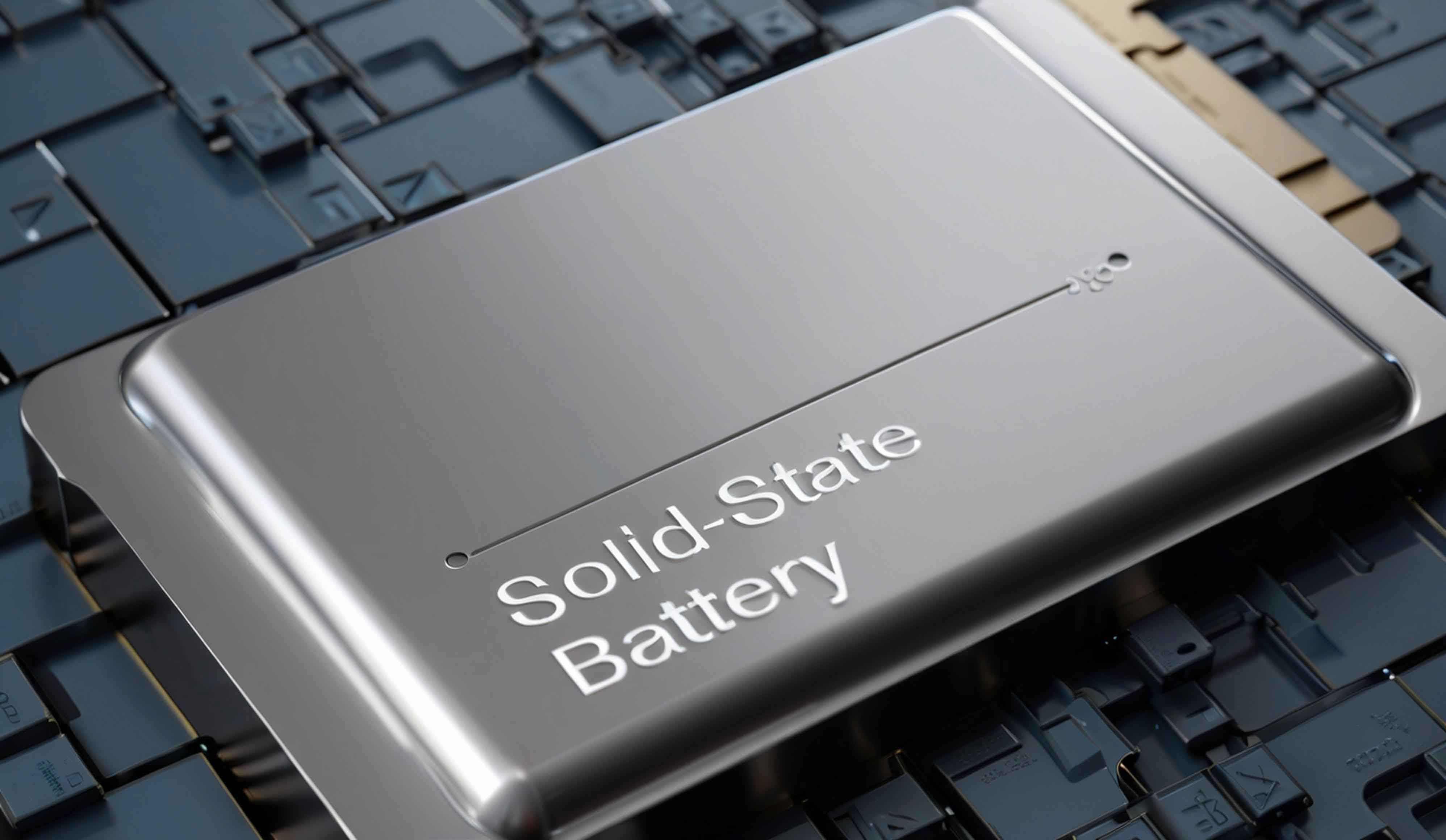
The fundamental working principle of a solid-state battery mirrors that of its liquid-electrolyte counterpart: lithium ions shuttle between the cathode and anode during charge and discharge cycles. The revolutionary change lies in the electrolyte’s physical state. In a traditional battery, lithium ions migrate through a liquid or gel electrolyte. In a solid-state battery, this medium is replaced entirely by a solid electrolyte material. This simple-sounding substitution carries profound implications. The ion transport mechanism can be visualized as ions moving through a solid lattice or along grain boundaries, a process fundamentally different from diffusion in a liquid. The ionic conductivity ($\sigma$) of this solid electrolyte is the paramount parameter, often described by an Arrhenius-type equation:
$$
\sigma = \frac{A}{T} \exp\left(-\frac{E_a}{k_B T}\right)
$$
where $A$ is a pre-exponential factor, $E_a$ is the activation energy for ion migration, $k_B$ is Boltzmann’s constant, and $T$ is the absolute temperature. The quest for a solid electrolyte with $\sigma$ rivaling that of liquid electrolytes (≈10$^{-2}$ S/cm) is central to solid-state battery development.
The classification based on electrolyte composition is crucial:
| Battery Type | Electrolyte Composition | Key Characteristics |
|---|---|---|
| Liquid Lithium-ion Battery | Liquid Organic Solvent + Li Salt | Mature technology, high ionic conductivity, flammability risk. |
| Semi-solid / Hybrid Battery | Solid Electrolyte + Reduced Liquid Electrolyte | Transitional technology, improved safety, easier manufacturing. |
| All-Solid-State Battery | Solid Electrolyte Only | Ultimate goal, highest safety potential, significant technical hurdles. |
The Geostrategic Contest for Technological Leadership
The current dominance in liquid lithium-ion battery manufacturing is concentrated, with a significant portion of the global supply chain and leading cell producers located in one region. This has spurred other major economic powers to pursue a “leapfrog” strategy, aiming to bypass the established liquid battery ecosystem and seize leadership in solid-state battery technology. Japan exemplifies this national-level approach, forming robust government-industry-academia alliances. Its automotive giants are making substantial investments, viewing the solid-state battery as a critical lever to regain automotive technology leadership. Similarly, the European Union and the United States are channeling significant public and private funding into research consortia and startup ventures focused on solid-state technologies, recognizing its strategic importance for energy independence and industrial competitiveness.
The threshold for considering a technology as “industrialized” in the automotive sector is remarkably low. A market penetration of merely 1% for solid-state batteries would constitute a significant market signal and a disruptive threat to incumbent technologies. It took decades for liquid lithium-ion batteries to achieve their current market position. Even with a successful commercial launch of solid-state batteries by 2030, a complete displacement of liquid batteries would be a process spanning 20 to 30 years. However, the initial foothold is what triggers industrial realignment and massive capital investment.
Decoding Solid Electrolyte Technology Pathways
The heart of a solid-state battery is its solid electrolyte. Three primary material families are the subjects of intense global R&D, each with distinct advantages and formidable challenges.
1. Sulfide-Based Solid Electrolytes
This is the leading international pathway, particularly in Japan and Korea. Materials like $\text{Li}_3\text{PS}_4$ (LPS) and $\text{Li}_{10}\text{GeP}_2\text{S}_{12}$ (LGPS) boast exceptionally high ionic conductivity, some even exceeding that of liquid electrolytes.
$$
\text{For LGPS: } \sigma_{\text{room temp}} \approx 1.2 \times 10^{-2} \text{ S/cm}
$$
Their soft, ceramic-like nature allows for good cold-pressing processability, enabling closer solid-solid contact with electrode materials. However, their critical flaw is instability. They react readily with moisture in air to produce toxic $\text{H}_2\text{S}$ gas, requiring stringent dry-room manufacturing environments. They also tend to have narrow electrochemical stability windows, potentially reacting with high-voltage cathodes.
2. Oxide-Based Solid Electrolytes
Oxides like garnet-type $\text{Li}_7\text{La}_3\text{Zr}_2\text{O}_{12}$ (LLZO) and perovskite-type $\text{Li}_{3x}\text{La}_{2/3-x}\text{TiO}_3$ (LLTO) are generally chemically stable and exhibit excellent stability against lithium metal anodes. They have wide electrochemical windows, suitable for high-voltage cathodes. The primary drawback is their high rigidity and high grain-boundary resistance. Achieving low interface resistance requires high-temperature sintering (often above 1000°C), which is energy-intensive and can cause undesirable reactions with electrodes. Their ionic conductivity is typically lower than top-tier sulfides.
$$
\text{For LLZO: } \sigma_{\text{room temp}} \approx 10^{-4} \text{ to } 10^{-3} \text{ S/cm}
$$
3. Polymer-Based Solid Electrolytes
Systems like $\text{PEO}$ (polyethylene oxide) with $\text{LiTFSI}$ salt offer flexibility, ease of processing, and relatively low cost. Ion conduction occurs primarily in the amorphous regions of the polymer above its glass transition temperature ($T_g$). Their major limitation is low ionic conductivity at room temperature and poor oxidation stability above 4V.
$$
\sigma_{\text{PEO}} \approx 10^{-8} \text{ to } 10^{-4} \text{ S/cm} \text{ (highly temperature dependent)}
$$
Hybrid/composite electrolytes, combining polymers with ceramic fillers (e.g., $\text{LLZO}$ nanoparticles), are actively researched to enhance mechanical strength and ionic conductivity.
| Electrolyte Type | Exemplary Material | Ionic Conductivity (RT) | Key Advantage | Key Disadvantage |
|---|---|---|---|---|
| Sulfide | $\text{Li}_{10}\text{GeP}_2\text{S}_{12}$ | ~10$^{-2}$ S/cm | Highest conductivity | Air sensitivity, $\text{H}_2\text{S}$ generation |
| Oxide | $\text{Li}_7\text{La}_3\text{Zr}_2\text{O}_{12}$ | ~10$^{-4}$ – 10$^{-3}$ S/cm | Chemical/Electrochemical stability | Rigidity, high sintering temperature |
| Polymer | $\text{PEO}$-$\text{LiTFSI}$ | ~10$^{-4}$ S/cm (at 60-80°C) | Flexibility, processability | Low RT conductivity, narrow voltage window |
The Dual-Track Development Strategy and Technical Hurdles
Facing this international competition, a pragmatic, dual-track strategy has emerged. The first track focuses on the gradual evolution towards all-solid-state systems, often beginning with semi-solid batteries. These hybrid systems incorporate a small amount of liquid or gel electrolyte (typically 5-15 wt%) to wet the interfaces between solid electrolyte and electrode particles. This dramatically reduces interfacial impedance and improves manufacturability using adapted existing production lines. They offer a tangible safety improvement over conventional batteries and serve as a crucial stepping stone, building supply chain expertise and market acceptance for solid-state technology.
The second, more radical track aims directly at the all-solid-state solid-state battery. This path, while fraught with challenges, promises the ultimate rewards: unmatched safety and the ability to pair with lithium metal anodes. The energy density ($E_d$) potential is transformative, as predicted by the formula:
$$
E_d = \frac{Q_{\text{cathode}} \times V_{\text{cell}}}{m_{\text{cell}}}
$$
where $Q_{\text{cathode}}$ is the cathode’s specific capacity, $V_{\text{cell}}$ is the cell voltage, and $m_{\text{cell}}$ is the total cell mass. Replacing the graphite anode (theoretical capacity: 372 mAh/g) with lithium metal (theoretical capacity: 3860 mAh/g) can, in principle, increase $E_d$ by 50% or more. However, the path is obstructed by three fundamental technical challenges:
- Low Ionic Conductivity & Rate Capability: While some sulfide electrolytes show high bulk conductivity, the overall cell-level resistance often remains high. The power performance is governed by the total area-specific resistance (ASR), which limits fast-charge capability. The discharge voltage under load ($V_{\text{dis}}$) drops according to:
$$
V_{\text{dis}} = V_{\text{OCV}} – I \times \text{ASR}
$$
where $V_{\text{OCV}}$ is the open-circuit voltage and $I$ is the current density. High ASR leads to significant voltage sag and power loss. - Solid-Solid Interface Issues: This is arguably the most critical challenge. Unlike the intimate, self-forming liquid-electrolyte interface (SEI), the contact between rigid solid electrolyte and solid electrode particles is point-to-point, leading to high interfacial impedance. Furthermore, these interfaces are mechanically unstable. During cycling, the anode (especially lithium metal) expands and contracts, causing contact loss, void formation, and increased local current density that promotes lithium dendrite growth. The critical current density ($J_{\text{crit}}$) for dendrite penetration through a solid electrolyte is a key metric, often modeled by:
$$
J_{\text{crit}} \propto \frac{G \times \delta}{\eta \times L}
$$
where $G$ is the shear modulus, $\delta$ is the electrolyte thickness, $\eta$ is the overpotential, and $L$ is a characteristic length. - Manufacturing Complexity and Cost: Producing thin, defect-free solid electrolyte layers at high throughput is immensely difficult. Sulfide electrolytes require argon-atmosphere dry rooms. Oxide electrolytes need high-temperature sintering steps. Assembling multilayer cells while maintaining perfect interfacial contact adds complexity. The current cost per kilowatt-hour for a prototype solid-state battery is an order of magnitude higher than for commercial liquid batteries.
| Performance Parameter | Conventional Liquid LIB | Semi-solid/Hybrid Battery | All-Solid-State Battery (Target) |
|---|---|---|---|
| Energy Density (Wh/kg) | 250-300 | 300-400 | 400-500+ |
| Operating Temperature Range | -20°C to 60°C | -30°C to 80°C | -40°C to 100°C+ |
| Safety (Flammability) | Flammable electrolyte | Reduced flammability | Non-flammable |
| Fast-Charge Capability | High (good ionic conductivity) | Moderate | Currently Low (High ASR) |
| Cycle Life (Target) | 1000-2000 cycles | >1500 cycles | >1000 cycles (with Li metal) |
| Estimated Cost (Long-term) | Low | Moderate | High (Needs significant reduction) |
The Roadmap to Industrialization and Concluding Perspective
The journey towards a solid-state battery-powered future will be evolutionary, not instantaneous. A plausible industry roadmap can be envisioned in phases:
- 2025-2030: Era of Hybridization and Niche Applications. Semi-solid batteries achieve commercialization in premium electric vehicles, drones, and specialized electronics. Pilot lines for all-solid-state prototypes are established. The 1% market penetration threshold for solid-state-based systems is crossed, validating the technology.
- 2030-2035: Breakthrough and Scaling. First-generation all-solid-state batteries, likely based on sulfide chemistry with advanced interfacial engineering, enter the automotive market in limited volumes. Manufacturing processes begin to scale, and costs start a steep descent along the learning curve. Research into oxide and polymer-based solutions intensifies.
- 2035 and Beyond: Maturation and Diversification. Second and third-generation solid-state battery designs proliferate. Lithium metal anodes become commercially viable, unlocking the full energy density promise. The technology expands beyond automotive into aviation, grid storage, and consumer electronics, creating a diversified, high-performance energy storage ecosystem.
The imperative for a holistic industry strategy is clear. Success demands simultaneous advancement on two fronts: the continuous refinement of low-cost, high-performance liquid and semi-solid batteries for mass-market adoption, and an unwavering, concerted effort to overcome the scientific and engineering barriers to the all-solid-state solid-state battery. This requires deep collaboration across the entire value chain—from fundamental materials science research to cell engineering, from equipment innovation to recycling ecosystem development. The nation or consortium that masters the scalable manufacturing of safe, high-energy-density solid-state batteries will not only capture a dominant share of the future battery economy but will also secure a pivotal position in the global transition to sustainable energy. The race is on, and its outcome will shape the technological landscape for decades to come.