
In the rapidly evolving field of energy storage, the battery energy storage system has become a cornerstone for grid stability, renewable integration, and peak shaving. However, as these systems scale up in capacity and density, safety concerns—particularly fire risks—loom large. As an engineer and researcher focused on safety technologies, I have extensively studied the hazards associated with high-density lithium-ion battery energy storage system installations. This paper presents a comprehensive analysis of fire causes, characteristics, and a proposed integrated fire protection solution. The goal is to enhance the safety and reliability of battery energy storage system deployments, ensuring they can operate without catastrophic failures.
The battery energy storage system typically consists of modular battery packs housed within prefabricated containers, known as battery cabins or enclosures. These cabins integrate not only the battery cells and modules but also thermal management systems, control units, and fire suppression systems. A large-scale battery energy storage system site may comprise dozens of such cabins arranged in arrays, forming a massive energy hub. The compact nature of these cabins, with tightly packed battery modules, creates a challenging environment for safety management. Unlike traditional power facilities, battery energy storage system cabins often lack continuous human monitoring, necessitating robust, automated safety systems. The design and layout of a battery energy storage system site must prioritize both efficiency and risk mitigation, as any failure can propagate across multiple units.
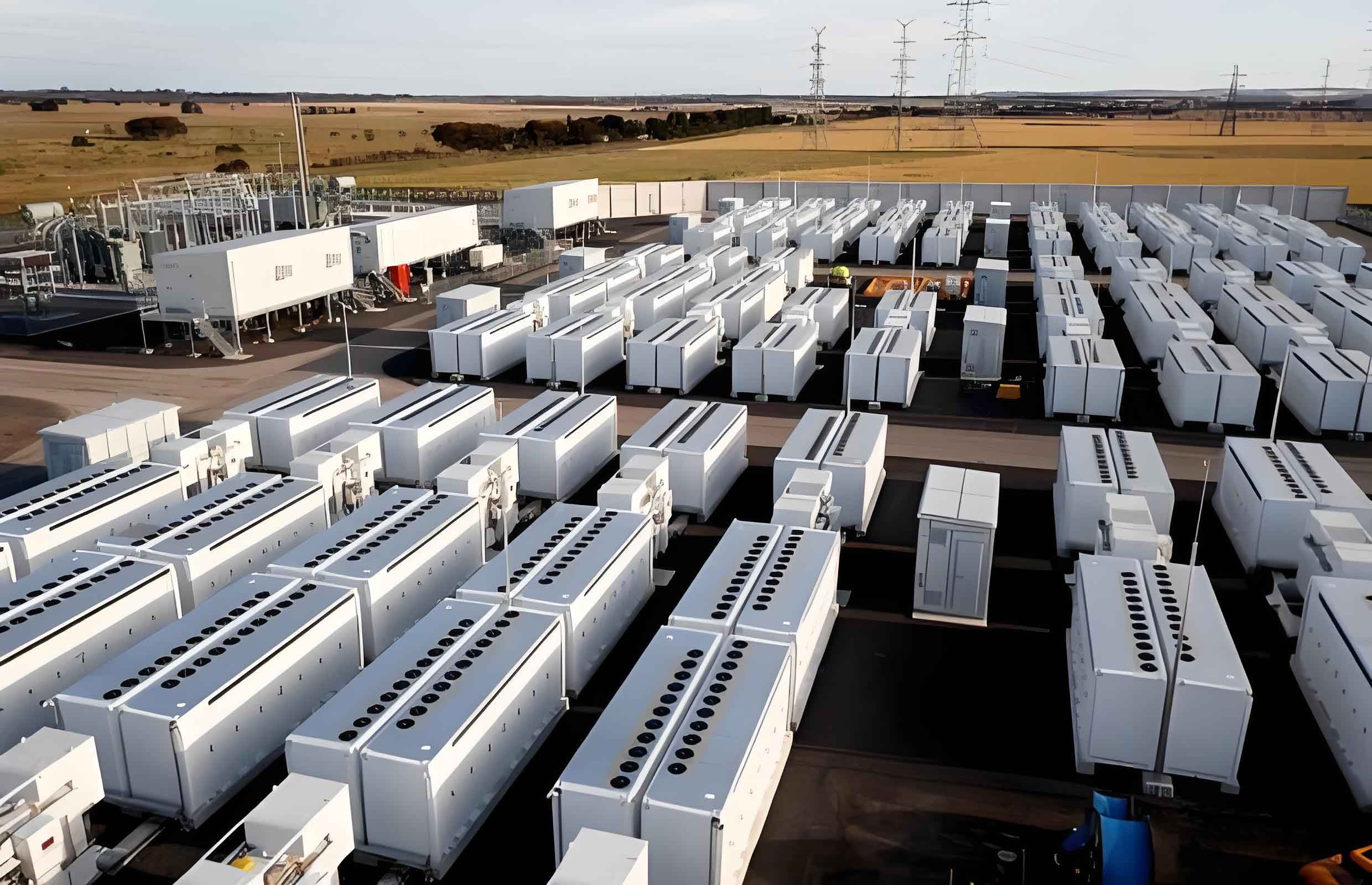
Fire incidents in a battery energy storage system primarily stem from thermal runaway in lithium-ion batteries. This phenomenon occurs under abuse conditions such as overcharging, short circuits, or excessive heat, leading to exothermic reactions that generate rapid heat accumulation. The heat release rate can be modeled using an Arrhenius-type equation, where the reaction rate $k$ is given by:
$$k = A e^{-\frac{E_a}{RT}}$$
Here, $A$ is the pre-exponential factor, $E_a$ is the activation energy, $R$ is the gas constant, and $T$ is the absolute temperature. As temperature rises, $k$ increases exponentially, accelerating thermal runaway. Once initiated in a single cell, thermal runaway can cascade to adjacent cells and modules due to heat transfer, potentially engulfing an entire battery energy storage system cabin. Moreover, lithium-ion batteries release oxygen during decomposition, supporting combustion and leading to re-ignition—a key challenge in fire suppression. Thus, fires in a battery energy storage system are characterized by high temperatures (often exceeding 800°C), rapid spread (within minutes), and a tendency for reflash, making them particularly hazardous.
| Parameter | Battery Energy Storage System Fire | Traditional Electrical Fire |
|---|---|---|
| Peak Temperature | >800°C | 400-600°C |
| Spread Rate | Very Fast (1-2 m/s) | Moderate (0.5-1 m/s) |
| Oxygen Release | Yes (from battery chemistry) | No |
| Re-ignition Risk | High | Low |
| Typical Extinguishing Agent | Multi-agent required | Water or CO₂ |
Current fire protection measures for battery energy storage system cabins often fall short due to a lack of standardized regulations. In many regions, guidelines are adapted from general industrial or electrical fire codes, such as GB51048-2014 or DL5027-2015, which do not specifically address the unique risks of lithium-ion batteries. Typical installations include ventilation systems, combustible gas detectors, portable fire extinguishers, sandboxes, alarm systems, and gas-based automatic suppression systems. However, these are often piecemeal and vary by manufacturer, leading to inconsistent safety levels. Gas suppression systems, like those using HFC-227ea (heptafluoropropane), can extinguish open flames but are ineffective at cooling battery cells or preventing re-ignition. Additionally, many battery energy storage system sites are located in remote areas without municipal water supplies, limiting the use of hydrant systems. This highlights the need for a holistic, tailored approach to fire safety in battery energy storage system deployments.
To address these gaps, I propose an integrated fire protection system that combines prevention, detection, suppression, and post-fire cooling into a unified framework. This “defend-control-extinguish” paradigm is designed specifically for the battery energy storage system environment, leveraging multiple layers of defense to mitigate fire risks. The system integrates thermal management for prevention, early warning through sensors, total flooding gas suppression for initial fire control, localized high-pressure water mist for deep-seated fires, and post-event spray cooling to prevent re-ignition. By adopting such an integrated system, the battery energy storage system can achieve higher safety standards, reducing the likelihood of catastrophic events.
The first component of this integrated system is fire prevention through advanced thermal management. In a battery energy storage system, thermal management is critical to maintain optimal operating temperatures (typically 15-35°C) and uniform heat distribution across cells, thereby prolonging battery life and preventing thermal runaway. The thermal management system comprises air conditioning units and a Battery Management System (BMS) that monitors temperature in real-time. Using computational fluid dynamics (CFD) simulations, the airflow within the cabin can be optimized. For instance, the heat transfer rate $Q$ between battery modules and air can be expressed as:
$$Q = h A (T_b – T_a)$$
where $h$ is the convective heat transfer coefficient, $A$ is the surface area, $T_b$ is the battery temperature, and $T_a$ is the air temperature. By designing efficient ductwork and vents, the system ensures that cool air is distributed evenly from the top of the cabin down through channels between battery racks. The BMS triggers alarms or shutdowns if temperatures exceed thresholds, providing an early intervention. This proactive approach is foundational to safety in any battery energy storage system.
| Parameter | Value | Unit |
|---|---|---|
| Operating Temperature Range | 15-35 | °C |
| Maximum Allowable Temperature Gradient | 5 | °C |
| Airflow Rate per Cabin | 1000-1500 | m³/h |
| Heat Dissipation per Rack | 2-5 | kW |
| BMS Sampling Frequency | 1 | Hz |
The second component is fire monitoring via a multi-sensor alarm system. Each battery energy storage system cabin is equipped with point-type smoke detectors, heat detectors, and combustible gas detectors (e.g., for hydrogen or volatile organic compounds released during thermal runaway). These sensors feed data to a centralized fire alarm control panel, which uses algorithms to distinguish between normal fluctuations and genuine fire events. Early detection is crucial; for example, the gas concentration $C$ can be modeled over time $t$ as:
$$C(t) = C_0 + \int_0^t R_g dt – \int_0^t R_v dt$$
where $C_0$ is the initial concentration, $R_g$ is the gas generation rate from batteries, and $R_v$ is the ventilation removal rate. Upon detecting anomalies, the BMS and alarm system initiate pre-programmed responses, such as de-energizing the battery energy storage system to prevent electrical arcing. This aligns with the “power off before suppression” principle, essential for electrical fire safety.
The third component is total flooding gas suppression, typically using HFC-227ea. This system is designed to extinguish incipient fires by discharging gas uniformly throughout the cabin. The required agent mass $M$ for a given enclosure volume $V$ can be calculated based on the minimum design concentration $C_d$ and altitude factors:
$$M = \frac{V \cdot C_d}{1 – e^{-\frac{C_d}{k}}}$$
where $k$ is a constant related to gas properties. The system includes storage cylinders, piping networks, nozzles, and pressure relief vents to manage overpressure during discharge. HFC-227ea works by inhibiting combustion chain reactions and absorbing heat, making it suitable for electrical fires. However, it has limited cooling capacity, necessitating additional measures for battery energy storage system fires.
The fourth component is localized high-pressure water mist suppression, which addresses the deep-seated nature of battery module fires. Water mist systems operate at pressures above 10 MPa, producing droplets with diameters less than 400 µm. These fine droplets have high surface area-to-volume ratios, enhancing heat absorption and oxygen displacement. The cooling effect can be quantified by the energy balance:
$$m_w c_p \Delta T + m_w L_v = Q_{fire}$$
where $m_w$ is the water mass, $c_p$ is the specific heat, $\Delta T$ is the temperature change, $L_v$ is the latent heat of vaporization, and $Q_{fire}$ is the fire’s heat release rate. Nozzles are installed inside each battery module, with openings in the module casing to allow mist penetration. The mist not only suppresses flames within modules but also permeates the cabin, inhibiting thermal runaway propagation. This dual-action makes it highly effective for a battery energy storage system.
| Parameter | Specification | Remarks |
|---|---|---|
| Operating Pressure | 10-15 MPa | Ensures fine droplet size |
| Droplet Size (Dv0.9) | <400 µm | Optimized for penetration |
| Flow Rate per Nozzle | 2-5 L/min | Module-specific design |
| Coverage per Nozzle | 0.5-1 m² | Based on module layout |
| System Response Time | <30 s | From detection to discharge |
The fifth component is post-fire spray cooling using water guns, which prevents re-ignition by continuously cooling the battery energy storage system cabin after initial suppression. Even after gas and mist application, residual heat in battery cells can cause re-flash. Spray guns, connected to onsite hydrant systems, provide sustained cooling for at least two hours. The required water volume $V_w$ can be estimated from the heat capacity of batteries:
$$V_w = \frac{m_b c_{p,b} \Delta T}{\rho_w c_{p,w} \Delta T_w}$$
where $m_b$ is the battery mass, $c_{p,b}$ is battery specific heat, $\Delta T$ is the temperature reduction needed, $\rho_w$ is water density, $c_{p,w}$ is water specific heat, and $\Delta T_w$ is the water temperature rise. Since battery energy storage system sites often lack municipal water, dedicated storage tanks or pumps are necessary to support this function.
The integration of these components requires a cohesive activation strategy. The system operates automatically under a hierarchical logic: first, the BMS monitors temperatures and cuts off power upon anomalies; second, fire detectors confirm a fire event; third, the gas suppression system activates for total flooding; fourth, after a brief delay, the water mist system targets individual modules; and finally, manual or automated spray cooling commences post-suppression. This sequence ensures “power off before suppression” and layered defense. The control logic can be represented as a state machine, with transitions based on sensor inputs. For instance, the probability of successful suppression $P_s$ given early detection $P_d$ and system reliability $P_r$ can be modeled as:
$$P_s = P_d \cdot P_r \cdot (1 – P_f)$$
where $P_f$ is the failure probability due to factors like agent depletion. By optimizing these probabilities, the battery energy storage system achieves robust safety.
In conclusion, the proposed integrated fire protection system offers a comprehensive solution for battery energy storage system safety. By combining thermal management, multi-sensor detection, gas suppression, water mist, and post-fire cooling, it addresses the unique challenges of lithium-ion battery fires. This multi-layered approach not only prevents incidents but also controls and extinguishes fires while mitigating re-ignition risks. As the battery energy storage system industry expands, such systems will be vital for ensuring safe, reliable operations. Future work could involve real-world testing and standardization efforts to refine these protocols further. Ultimately, enhancing safety in battery energy storage system deployments will foster greater trust and adoption of energy storage technologies worldwide.
Throughout this discussion, the term battery energy storage system has been emphasized to underscore its centrality in modern energy infrastructure. The integration of fire protection measures directly contributes to the resilience of battery energy storage system installations, enabling them to support grid services without compromising safety. As we advance, continuous innovation in materials, monitoring, and suppression technologies will further strengthen the battery energy storage system ecosystem, paving the way for a sustainable energy future.