
From my observation, the global energy landscape is on the cusp of a profound transformation, centered on the electrification of transport and beyond. At the heart of this shift lies the critical challenge of energy storage. For years, I have followed the evolution of lithium-ion batteries, witnessing their incredible improvements but also their inherent limitations in safety and energy density. Today, the consensus within the scientific and industrial communities I engage with is clear: the next significant leap requires a fundamental change in battery architecture. This brings us to the all-promising solid-state battery. The transition from liquid or gel electrolytes to a solid electrolyte matrix is not merely an incremental step; it represents a paradigm shift, promising to redefine performance parameters across countless applications.
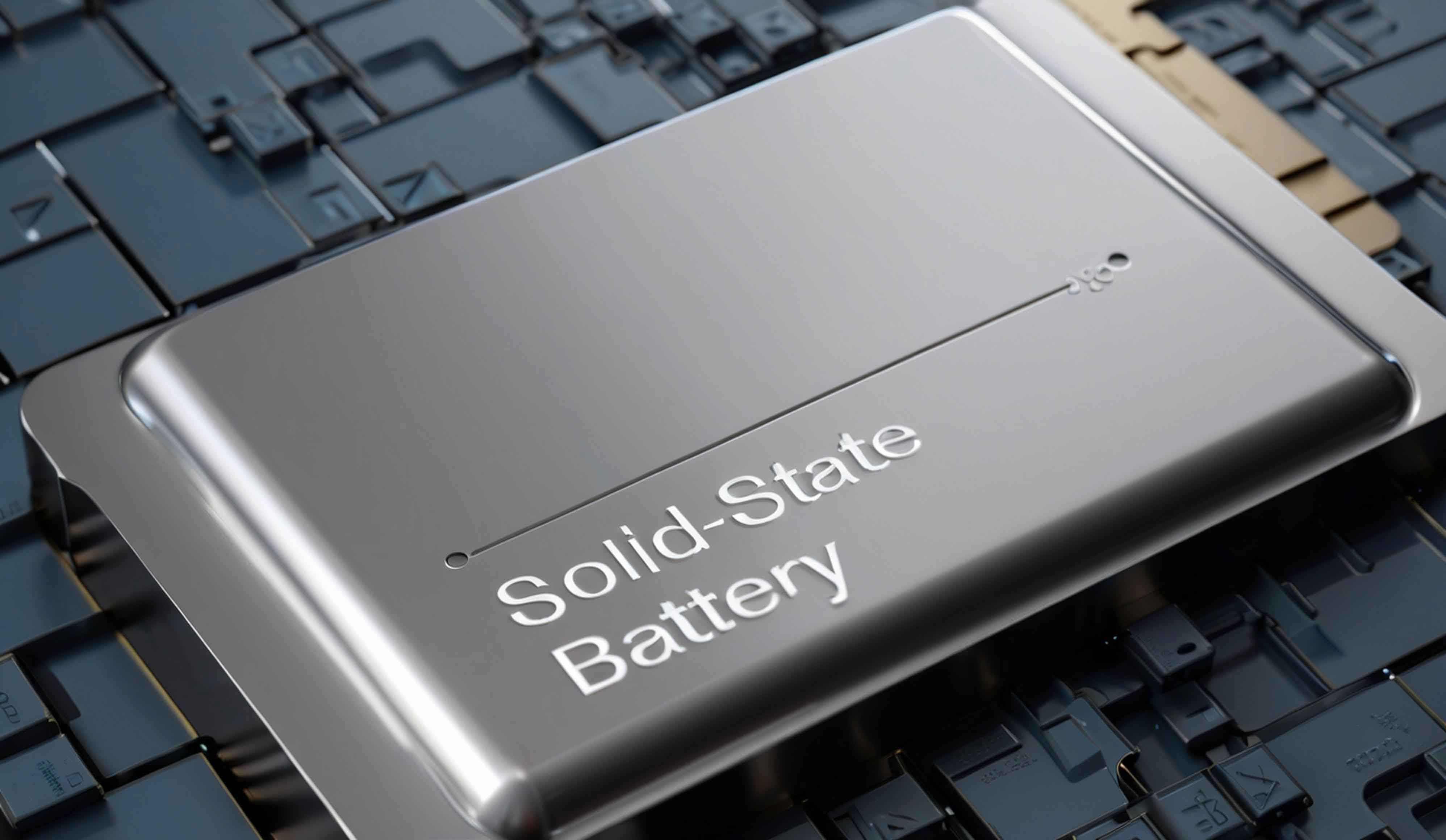
The core promise of a solid-state battery can be distilled into two pivotal advantages: safety and energy. By replacing the flammable organic liquid electrolyte with a non-flammable solid, the thermal runaway risk that plagues conventional lithium-ion cells is drastically mitigated. Simultaneously, the use of a solid electrolyte potentially enables the integration of high-capacity electrodes, such as lithium metal anodes, pushing energy densities to previously unattainable levels. In my analysis, the theoretical gravimetric energy density for a lithium-metal based solid-state battery can approach:
$$ E_{theoretical} \approx \frac{F \times V_{avg}}{3.6 \times M_{cell}} $$
where \( F \) is Faraday’s constant, \( V_{avg} \) is the average cell voltage, and \( M_{cell} \) is the molecular weight per electron transferred of the active materials. This formula highlights the potential for values exceeding 500 Wh/kg, a target that seems increasingly plausible based on recent laboratory prototypes.
The Multi-Pronged Technical Race: Materials and Manufacturing
My research indicates that the path to a commercially viable solid-state battery is not a single road but a network of parallel tracks, each with distinct challenges and opportunities. The primary differentiator is the chemical family of the solid electrolyte itself. The global R&D effort is concentrated on three main families: sulfides, oxides, and polymers. Each presents a unique trade-off between ionic conductivity, electrochemical stability, mechanical properties, and manufacturability.
| Material Family | Exemplary Compounds | Ionic Conductivity (RT, S/cm) | Key Advantages | Primary Challenges |
|---|---|---|---|---|
| Sulfide | Li10GeP2S12 (LGPS), Argyrodites | 10-2 to 10-3 | Highest conductivity, good mechanical ductility | Poor air stability (H2S release), narrow electrochemical window, high cost of Ge |
| Oxide | Li7La3Zr2O12 (LLZO), Perovskites | 10-3 to 10-4 | Excellent air stability, wide electrochemical window | High rigidity (poor interfacial contact), requires high-temperature sintering |
| Polymer | PEO-LiTFSI complexes | 10-4 to 10-5 (at ~60°C) | Excellent flexibility, low-cost processing | Low room-temperature conductivity, limited oxidative stability (~3.8V) |
From the industrial activity I track, a pragmatic intermediate step has gained significant traction: the semi-solid or hybrid solid-state battery. This design incorporates a reduced amount of liquid electrolyte within a solid matrix or uses a gel-polymer composite. It offers a tangible improvement in safety over conventional cells while leveraging much of the existing manufacturing infrastructure. This “transitional” technology is already seeing initial commercial deployment, serving as a crucial learning platform for full-scale solid-state battery production.
The material system for a next-generation solid-state battery extends beyond the electrolyte. The electrode pair must be re-engineered for compatibility. The ultimate goal for the anode is metallic lithium. The capacity advantage is immense (3860 mAh/g for Li vs. 372 mAh/g for graphite). However, the problem of lithium dendrite growth, while alleviated by a solid electrolyte, is not entirely solved. The interface between the lithium metal and the solid electrolyte remains a critical research frontier, governed by complex interfacial impedance and stability. This impedance can be modeled as:
$$ R_{int} = R_{SEI} + R_{contact} + R_{space-charge} $$
where the total interfacial resistance \( R_{int} \) is a sum of resistances from any interphase layer (\( R_{SEI} \)), physical contact points (\( R_{contact} \)), and space-charge layer effects (\( R_{space-charge} \)).
On the cathode side, high-nickel layered oxides (NMC, NCA) are the immediate candidates. Looking further ahead, materials like lithium-rich manganese-based oxides (LRMO) or even sulfur could be paired with a stable solid electrolyte, unlocking another jump in energy density. Furthermore, conductive additives like carbon nanotubes are gaining importance to ensure efficient electron transport within the thicker, denser electrodes often required for solid-state designs.
| Component | Current State (Liquid LIB) | Intermediate State (Semi-Solid) | Target State (All-Solid-State) |
|---|---|---|---|
| Electrolyte | Liquid Organic Carbonates + Li Salt | Solid Matrix + Reduced Liquid / Gel | Solid Sulfide, Oxide, or Polymer |
| Anode | Graphite / Silicon-Graphite Composite | Silicon-Dominant / Prelithiated | Lithium Metal (Protected) |
| Cathode | NMC 622/811, LFP | Ultra-High Nickel NMC (≥9), Coated | High-Voltage Cathodes (LRMO, NMC), Sulfur |
| Key Challenge | Thermal Runaway, Energy Density Limit | Interface Engineering, Cycle Life | Solid-Solid Interface, Cost, Scalable Manufacturing |
The manufacturing hurdle for a solid-state battery is, in my view, as formidable as the materials science challenge. Established processes like slurry casting and winding are not directly transferable. The industry is exploring radically different techniques. Dry electrode processing, which avoids solvents, is highly attractive. Techniques like physical vapor deposition (PVD) or aerosol deposition for creating thin, dense solid electrolyte layers are under development. The application of isostatic pressing is crucial to ensure intimate contact between solid components. The capital expenditure for this new generation of production equipment will be a major factor determining the final cost of the solid-state battery.
The Geopolitical and Industrial Landscape: A Global Contest
It is impossible to discuss the solid-state battery without acknowledging its geopolitical dimension. Major economic blocs have identified it as a strategic technology and are enacting policies to secure domestic leadership. The United States, through legislation like the Inflation Reduction Act, is creating strong incentives for localized supply chains, indirectly pushing for domestic development of advanced batteries like the solid-state battery. The European Union has established frameworks like the Critical Raw Materials Act to secure access to necessary inputs and is funding large-scale research consortia aimed at solid-state battery innovation.
In East Asia, the competition is particularly intense. Japan, with its long-term research legacy in this field, has a formal national strategy targeting the commercialization of all-solid-state batteries by 2030. Its approach involves deep material science research on sulfide electrolytes. South Korea, home to giant cell manufacturers, has an aggressive roadmap to accelerate the commercialization of the solid-state battery, aiming to reduce supply chain dependencies. The industrial activity I monitor suggests that while these nations have clear strategic plans, the scale of manufacturing experimentation and iterative development happening elsewhere is creating a highly dynamic, multi-polar race.
The industrial timelines announced by various players are optimistic yet indicative of the momentum. Several leading automotive and battery entities have announced plans for pilot production lines or initial vehicle integration within the 2025-2027 window. However, based on my analysis of technology readiness levels, true mass production of a cost-competitive, automotive-grade solid-state battery is more likely towards the end of this decade. The cost trajectory is expected to follow a learning curve, similar to conventional lithium-ion batteries but starting from a much higher initial point. A simplified cost projection model could be:
$$ C(t) = C_0 \times (1 – LR)^{ \frac{\ln(CumulativeOutput(t))}{\ln(2)} } $$
where \( C(t) \) is the cost at time \( t \), \( C_0 \) is the initial cost, and \( LR \) is the learning rate. For the solid-state battery, \( C_0 \) is high and the \( LR \) will depend heavily on breakthroughs in materials synthesis and process engineering.
| Timeframe | Development Phase | Expected Gravimetric Energy Density | Projected Cell Cost (USD/Wh) | Primary Application Focus |
|---|---|---|---|---|
| 2024-2026 | Pilot / Prototype Lines, Niche Deployment | 300 – 400 Wh/kg | > 1.50 | High-end EVs, Aerospace prototypes |
| 2027-2030 | Initial Mass Production Ramp-up | 400 – 500 Wh/kg | 1.00 – 1.50 | Premium EVs, Electric Aviation, Specialized Transport |
| 2030-2035 | Mature Production, Scale Economics | > 500 Wh/kg | 0.70 – 1.00 | Mainstream EVs, Grid Storage, Robotics |
Overcoming the Valley of Death: Challenges to Commercialization
Despite the optimism, my assessment of the technical hurdles remains sober. The “valley of death” between laboratory discovery and industrial product is wide for the solid-state battery. First, the solid-solid interface issue is paramount. Maintaining intimate physical and electrochemical contact between rigid solids through thousands of charge-discharge cycles, amidst volume changes of the electrodes, is an enormous challenge. Even micron-scale voids or reactions at the interface can lead to rapid performance degradation.
Second, the manufacturing cost and complexity are prohibitive for mass markets today. The need for controlled atmosphere dry rooms (especially for sulfides), precision deposition equipment, and high-pressure compaction steps adds significant capital and operational expense. The yield rates for these novel processes are still unknown at scale. Third, the supply chain for key raw materials—whether it’s germanium for certain sulfides, lanthanum for LLZO, or ultra-high purity lithium metal—needs to be established and scaled, which presents its own set of economic and logistical challenges.
Finally, standardization and safety certification are in their infancy. New test protocols must be developed to evaluate the unique failure modes of a solid-state battery. While inherently safer, they are not risk-free; the management of heat generation and the potential for new failure mechanisms (e.g., internal short circuits through crystalline defects) must be thoroughly understood and mitigated.
The Future Application Spectrum: Beyond the Electric Car
While the automotive sector is the primary driver, the impact of a successful solid-state battery will resonate far beyond. The high energy density and safety profile unlock transformative possibilities. Electric Vertical Take-Off and Landing (eVTOL) aircraft and drones, which are critically sensitive to weight and safety, could become commercially viable. The nascent field of sophisticated humanoid and mobile robotics, demanding compact, high-power, and safe energy sources, would find an ideal solution in the solid-state battery.
In consumer electronics, the promise is not just longer runtime but fundamentally new form factors—flexible, ultra-thin, and more durable devices. For grid storage, the superior safety could reduce the need for expensive containment and safety systems, lowering the levelized cost of storage, especially in dense urban environments. This broad applicability underscores why the development of the solid-state battery is considered a general-purpose technology with the potential to catalyze innovation across multiple industries.
Conclusion: A Disruptive Force in the Making
In my view, the journey toward the solid-state battery is emblematic of the modern technological race: deeply scientific, intensely industrial, and undeniably geopolitical. The technical path is fraught with complex materials science and engineering challenges, from stabilizing interfaces to inventing new manufacturing paradigms. Yet, the potential reward—a step-change in energy storage safety and performance—justifies the global mobilization of talent and capital.
The transition will likely be gradual, with semi-solid solutions paving the way. Different electrolyte families may find their optimal niches—sulfides in high-performance mobility, oxides in extreme environments, polymers in consumer wearables. The timeline to an affordable, mass-produced solid-state battery in every electric vehicle remains a subject of debate, but the direction of travel is unequivocal. As the pieces of this complex puzzle—material stability, interface engineering, scalable manufacturing, and supply chain resilience—slowly fall into place, the solid-state battery is poised to move from the pages of scientific journals and corporate roadmaps into the fabric of our electrified daily lives, powering a safer and more energy-dense future.