
In my research, I focus on the safety challenges associated with lithium-ion batteries, particularly LiFePO4 batteries, which are widely adopted in energy storage systems due to their high energy density, long cycle life, and environmental friendliness. However, the risk of thermal runaway remains a critical concern, as it can be triggered by various external factors such as overcharging, overheating, or mechanical abuse, leading to severe fires and explosions. The state of charge (SOC) is a key parameter influencing thermal runaway behavior, and effective suppression methods are essential for mitigating these hazards. In this article, I present a comprehensive study on the thermal runaway characteristics of LiFePO4 batteries under different SOC conditions and evaluate the cooling effects of liquid nitrogen injection, with a specific emphasis on how thermal insulation of the battery enclosure enhances suppression capabilities. Through experimental investigations, I aim to provide insights into the dynamics of thermal runaway in LiFePO4 batteries and offer practical strategies for improving safety in energy storage applications.
The growing deployment of LiFePO4 batteries in grid-scale energy storage and electric vehicles underscores the urgency of addressing their thermal safety issues. Thermal runaway is a complex phenomenon involving exothermic reactions within the battery, often initiated by the decomposition of electrolytes and electrode materials. For LiFePO4 batteries, while they are generally considered more stable than other chemistries like lithium cobalt oxide, they are still susceptible to thermal runaway under extreme conditions. The SOC plays a pivotal role, as higher SOC levels correlate with increased stored chemical energy, potentially exacerbating the severity of thermal runaway events. My study builds upon prior research that has explored factors such as overcharging, mechanical damage, and environmental constraints, but I delve deeper into the interplay between SOC and suppression techniques using cryogenic agents like liquid nitrogen. By examining these aspects, I contribute to the development of robust safety protocols for LiFePO4 battery systems.
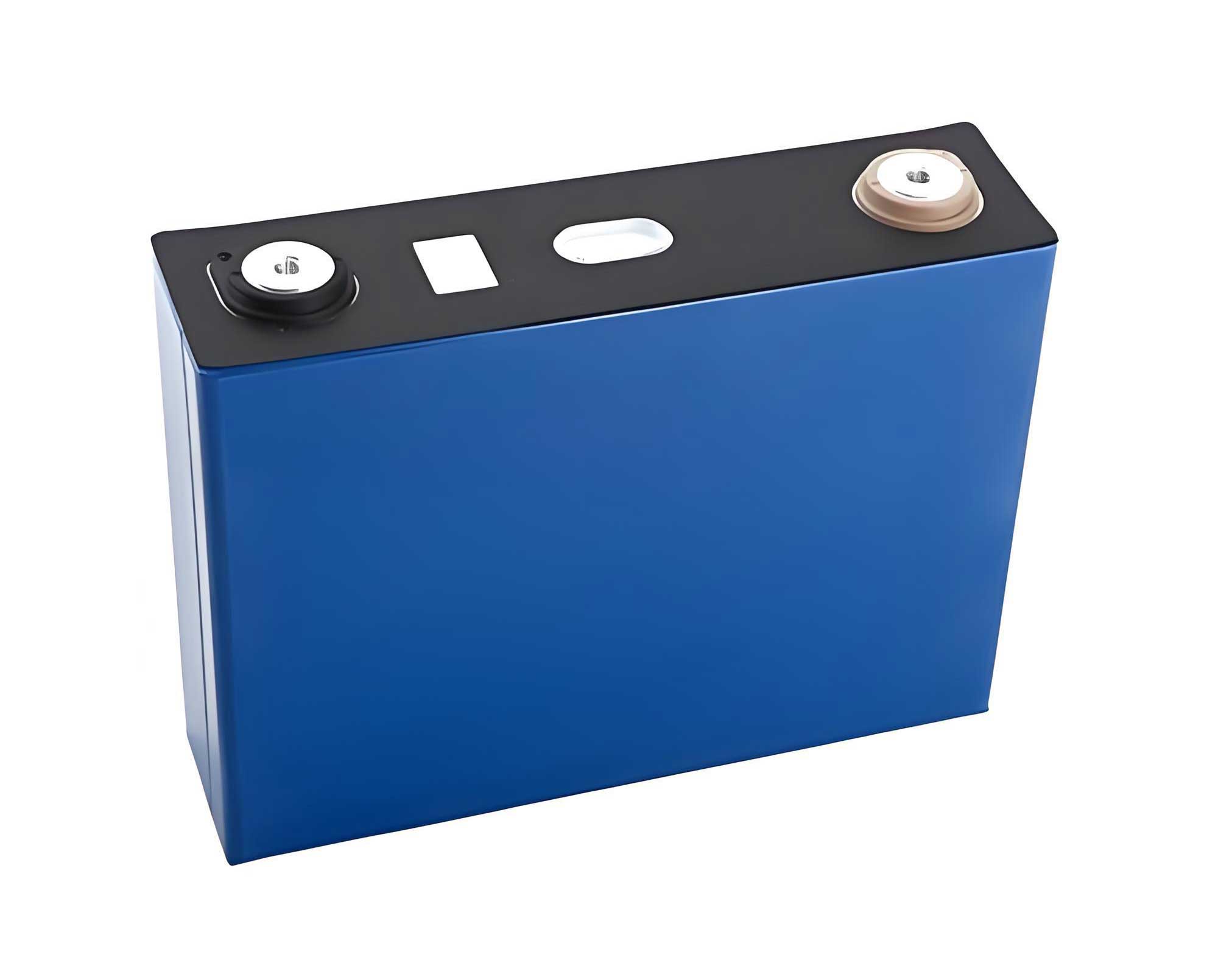
To conduct this research, I designed an experimental setup centered on a custom-built closed combustion chamber with dimensions of 120 cm × 120 cm × 120 cm. This environment simulates confined spaces typical of energy storage installations, allowing for controlled observations of thermal runaway behavior in LiFePO4 batteries. The battery samples were square aluminum-shell LiFePO4 cells, each with a nominal voltage of 3.2 V, a capacity of 60 Ah, and dimensions of 173 mm × 120 mm × 45 mm, weighing approximately 1730 g. These LiFePO4 batteries were selected for their relevance in commercial energy storage applications. I prepared four SOC levels—25%, 50%, 75%, and 100%—by charging the LiFePO4 batteries to the desired states using a standard battery cycler, ensuring accuracy in SOC representation for the thermal runaway tests.
The LiFePO4 battery was placed inside a battery box measuring 345 mm × 330 mm × 200 mm, secured with clamping plates to mimic real-world packaging. Thermal runaway was triggered by an external heating plate attached to the battery surface, which provided a consistent heat source to initiate the exothermic reactions. Temperature monitoring was achieved through multiple thermocouples: six were attached to the battery surface at strategic locations (e.g., near the safety valve and electrodes), and six were positioned within the battery box to measure ambient air temperatures. Gas sensors were installed in the combustion chamber to detect carbon monoxide (CO) concentrations during thermal runaway events, as CO is a key indicator of combustion severity. Additionally, high-speed cameras and thermal infrared imagers recorded visual and thermal data externally, enabling detailed analysis of flame propagation and temperature distribution.
For the suppression phase, I employed a liquid nitrogen system consisting of a YDZ-50 self-pressurized liquid nitrogen tank. Liquid nitrogen was injected into the battery box at a constant flow rate of 3.2–3.3 L/min under a pressure of 0.04 MPa, using a DN20 stainless steel delivery pipe. The injection strategy involved cyclical spraying: 40 seconds of injection followed by a 5-second pause, repeated over a total duration of 180 seconds. To assess the impact of thermal insulation, I modified the battery box by adding insulation material into a预留的夹层 (reserved interlayer), with small vents for pressure release, creating a thermally treated enclosure. This allowed me to compare scenarios with and without insulation, denoted as Condition 5 (no insulation) and Condition 6 (with insulation), respectively. The experimental conditions are summarized in Table 1, which outlines the SOC levels, triggering methods, and suppression parameters for the LiFePO4 battery tests.
| Condition Number | State of Charge (SOC) | Trigger Method | Liquid Nitrogen Injection Timing | Injection Pattern | Total Injection Time (s) | Pipe Diameter (mm) | Thermal Insulation |
|---|---|---|---|---|---|---|---|
| 1 | 100% | External Heating | N/A (Baseline) | N/A | N/A | N/A | No |
| 2 | 75% | External Heating | N/A (Baseline) | N/A | N/A | N/A | No |
| 3 | 50% | External Heating | N/A (Baseline) | N/A | N/A | N/A | No |
| 4 | 25% | External Heating | N/A (Baseline) | N/A | N/A | N/A | No |
| 5 | 100% | External Heating | At Thermal Runaway Onset | 40 s on, 5 s off | 180 | 20 | No |
| 6 | 100% | External Heating | At Thermal Runaway Onset | 40 s on, 5 s off | 180 | 20 | Yes |
The thermal runaway behavior of LiFePO4 batteries varied significantly with SOC. For the 25% SOC LiFePO4 battery, thermal runaway was relatively mild, characterized by limited jet flames and minor material ejection. In contrast, the 100% SOC LiFePO4 battery exhibited intense jet flames, vigorous combustion, and substantial mass loss. I quantified these observations by measuring the post-thermal runaway mass and calculating the mass loss rate, as shown in Table 2. The data indicate a clear positive correlation between SOC and both fire scale and mass reduction in LiFePO4 batteries. This trend can be attributed to the higher chemical energy stored in LiFePO4 batteries at elevated SOC levels, which fuels more aggressive exothermic reactions upon triggering.
| SOC Level | Initial Mass (g) | Post-Thermal Runaway Mass (g) | Mass Loss (g) | Mass Loss Rate (%) | Observed Fire Intensity |
|---|---|---|---|---|---|
| 25% | 1730 | 1497.1 | 232.9 | 13.46 | Low, smoke-dominated |
| 50% | 1730 | 1482.6 | 247.4 | 14.30 | Moderate, visible jet flames |
| 75% | 1730 | 1455.3 | 274.7 | 15.88 | High, vigorous flames |
| 100% | 1730 | 1421.5 | 308.5 | 17.83 | Very high, explosive jets |
Temperature profiles provided further insights into the thermal dynamics of LiFePO4 batteries. I calculated the average temperature on the non-heated surface of the LiFePO4 battery using data from multiple thermocouples, and the results are plotted in Figure 1 (conceptually described; no actual image referenced). The 25% SOC LiFePO4 battery showed a gradual temperature rise, peaking at approximately 270.60°C, while the 100% SOC LiFePO4 battery reached a peak temperature of 375.81°C with a steeper ascent. To model the thermal response, I applied the Arrhenius equation to describe the reaction kinetics during thermal runaway in LiFePO4 batteries:
$$k = A e^{-E_a/(RT)}$$
where \(k\) is the reaction rate constant, \(A\) is the pre-exponential factor, \(E_a\) is the activation energy, \(R\) is the universal gas constant (8.314 J/mol·K), and \(T\) is the absolute temperature in Kelvin. For LiFePO4 batteries, higher SOC corresponds to lower activation energy barriers for exothermic reactions, leading to accelerated heat generation. This can be expressed as a modified rate equation specific to LiFePO4 battery decomposition:
$$\frac{dQ}{dt} = \Delta H \cdot k \cdot C$$
where \(dQ/dt\) is the heat generation rate, \(\Delta H\) is the enthalpy change, and \(C\) is the concentration of reactive species in the LiFePO4 battery. As SOC increases, \(C\) rises, enhancing \(dQ/dt\) and resulting in higher peak temperatures. I derived key thermal parameters from the experiments, summarized in Table 3, which highlights the inverse relationship between SOC and thermal runaway onset temperature, and the direct relationship with peak temperature for LiFePO4 batteries.
| SOC Level | Thermal Runaway Onset Temperature (°C) | Peak Temperature (°C) | Time to Onset (s) | Time to Peak (s) | Characteristic Time Difference Δt (s) |
|---|---|---|---|---|---|
| 25% | ~150 | 270.60 | ~800 | ~978 | 178 |
| 50% | ~140 | 290.03 | ~600 | ~850 | 250 |
| 75% | ~130 | 354.75 | ~500 | ~900 | 400 |
| 100% | ~120 | 375.81 | ~400 | ~776 | 376 |
The characteristic time difference Δt, defined as the duration between thermal runaway onset and peak temperature, increased with SOC for the LiFePO4 battery, indicating prolonged reaction phases at higher energy states. This trend underscores the heightened risk associated with fully charged LiFePO4 batteries in energy storage systems. To quantify the gas emissions, I monitored CO concentrations during thermal runaway events in LiFePO4 batteries. The maximum CO volume fractions recorded were 134 × 10⁻⁶ for 25% SOC, 180 × 10⁻⁶ for 50% SOC, 311 × 10⁻⁶ for 75% SOC, and 353 × 10⁻⁶ for 100% SOC. These values align with the enhanced combustion intensity in high-SOC LiFePO4 batteries, as CO production correlates with incomplete oxidation of organic electrolytes and electrode materials. The relationship can be approximated by a linear regression model:
$$[CO]_{\text{max}} = \alpha \cdot \text{SOC} + \beta$$
where \([CO]_{\text{max}}\) is the maximum CO volume fraction in ppm, SOC is expressed as a decimal (e.g., 0.25 for 25%), and \(\alpha\) and \(\beta\) are constants derived from experimental data on LiFePO4 batteries. For my tests on LiFePO4 batteries, \(\alpha \approx 2.5 \times 10^{-4}\) and \(\beta \approx 100\), emphasizing the direct impact of SOC on toxic gas release.
Turning to suppression effects, liquid nitrogen injection proved effective in cooling LiFePO4 batteries during thermal runaway. In Condition 5 (without insulation), the average ambient temperature inside the battery box dropped to a minimum of -105.1°C after liquid nitrogen injection, but it rebounded to -2.9°C by 3000 seconds. For Condition 6 (with insulation), the minimum temperature reached -173.9°C, and it remained at -58.4°C at 3000 seconds, demonstrating the prolonged cooling effect due to reduced heat loss. The battery surface temperatures also reflected this benefit: in Condition 5, the LiFePO4 battery surface temperature peaked at 196.6°C during injection and later stabilized at 43.2°C, whereas in Condition 6, the peak was 202.1°C with a post-cooling stabilization at 11.3°C. This indicates that thermal insulation significantly enhances the efficacy of liquid nitrogen in suppressing thermal runaway in LiFePO4 batteries by maintaining a cryogenic environment for extended periods.
To analyze the cooling dynamics mathematically, I considered the heat balance equation for a LiFePO4 battery undergoing liquid nitrogen cooling:
$$m C_p \frac{dT}{dt} = \dot{Q}_{\text{gen}} – \dot{Q}_{\text{cool}}$$
where \(m\) is the mass of the LiFePO4 battery, \(C_p\) is its specific heat capacity, \(T\) is temperature, \(t\) is time, \(\dot{Q}_{\text{gen}}\) is the heat generation rate from exothermic reactions, and \(\dot{Q}_{\text{cool}}\) is the cooling rate provided by liquid nitrogen. For a LiFePO4 battery with insulation, \(\dot{Q}_{\text{cool}}\) is augmented by reduced thermal dissipation, which can be modeled as an additional term \(\dot{Q}_{\text{insul}} = -h A (T – T_{\text{env}})\), where \(h\) is the heat transfer coefficient, \(A\) is the surface area, and \(T_{\text{env}}\) is the ambient temperature. Integrating this equation over time explains the observed temperature profiles and confirms the advantage of insulation in delaying thermal runaway recurrence in LiFePO4 batteries.
Further insights come from comparing the suppression effectiveness across SOC levels. Although my liquid nitrogen tests were primarily conducted on 100% SOC LiFePO4 batteries, extrapolating the results suggests that lower SOC LiFePO4 batteries would be easier to control due to their reduced heat output. This aligns with findings from prior studies on LiFePO4 battery safety. The efficacy of liquid nitrogen can be expressed as a suppression index \(S\), defined as:
$$S = \frac{T_{\text{peak, uncontrolled}} – T_{\text{peak, controlled}}}{T_{\text{peak, uncontrolled}}} \times 100\%$$
where \(T_{\text{peak, uncontrolled}}\) is the peak temperature without suppression, and \(T_{\text{peak, controlled}}\) is the peak temperature with liquid nitrogen injection. For the 100% SOC LiFePO4 battery in Condition 6, \(S \approx 46\%\), indicating substantial mitigation. Higher \(S\) values are anticipated for lower SOC LiFePO4 batteries, underscoring the importance of early intervention in thermal management strategies for LiFePO4 battery systems.
In discussion, the implications of these findings for energy storage safety are profound. LiFePO4 batteries, while stable, require robust thermal runaway suppression mechanisms, especially in high-SOC scenarios common in grid storage. Liquid nitrogen offers a rapid cooling solution, but its efficiency depends on enclosure design—thermal insulation being a key factor. Future work could explore optimized injection protocols, such as variable flow rates or pulsed spraying, tailored for LiFePO4 batteries. Additionally, integrating temperature sensors with automated liquid nitrogen systems could enable real-time response to incipient thermal runaway in LiFePO4 battery packs, preventing cascading failures. The mathematical models presented here, though simplified, provide a framework for predicting thermal behavior and designing safety systems for LiFePO4 batteries.
In conclusion, my experimental study on LiFePO4 batteries reveals that SOC critically influences thermal runaway severity, with higher SOC leading to larger fire scales, greater mass loss, elevated CO emissions, lower onset temperatures, and higher peak temperatures in LiFePO4 batteries. The characteristic time difference Δt increases proportionally with SOC, highlighting prolonged reaction durations. Liquid nitrogen injection effectively suppresses thermal runaway in LiFePO4 batteries, and thermal insulation of the battery enclosure significantly extends cooling duration, maintaining lower temperatures and enhancing suppression capabilities. These insights contribute to safer deployment of LiFePO4 batteries in energy storage, emphasizing the need for SOC-aware safety measures and improved enclosure designs. Continued research on LiFePO4 battery thermal dynamics will further advance risk mitigation strategies for the growing energy storage sector.