
As I observe the rapidly evolving landscape of electric vehicles and energy storage, the emergence of solid-state batteries stands out as a pivotal development that could redefine the future of transportation and technology. From my perspective, the solid-state battery represents not just an incremental improvement but a potential paradigm shift, offering enhanced safety, higher energy density, and longer lifespan compared to traditional lithium-ion batteries. The global race to commercialize solid-state battery technology is intensifying, with nations and corporations investing heavily in research and development. In this article, I will delve into the current state of the solid-state battery industry, analyze key technological pathways, and explore the challenges and opportunities that lie ahead. My aim is to provide a comprehensive overview, supported by data, tables, and formulas, to shed light on whether the solid-state battery is truly on the cusp of a breakthrough.
The solid-state battery has garnered significant attention in recent years, driven by the growing demand for electric vehicles and renewable energy storage. Unlike conventional batteries that use liquid electrolytes, solid-state batteries employ solid electrolytes, which can mitigate risks such as leakage, combustion, and degradation. This fundamental change in design promises to unlock new performance benchmarks. According to industry reports, the global solid-state battery market is projected to expand rapidly, with estimates suggesting a compound annual growth rate exceeding 50% over the next decade. As I reflect on this trend, it becomes clear that the solid-state battery is not merely a niche innovation but a cornerstone of future energy solutions.
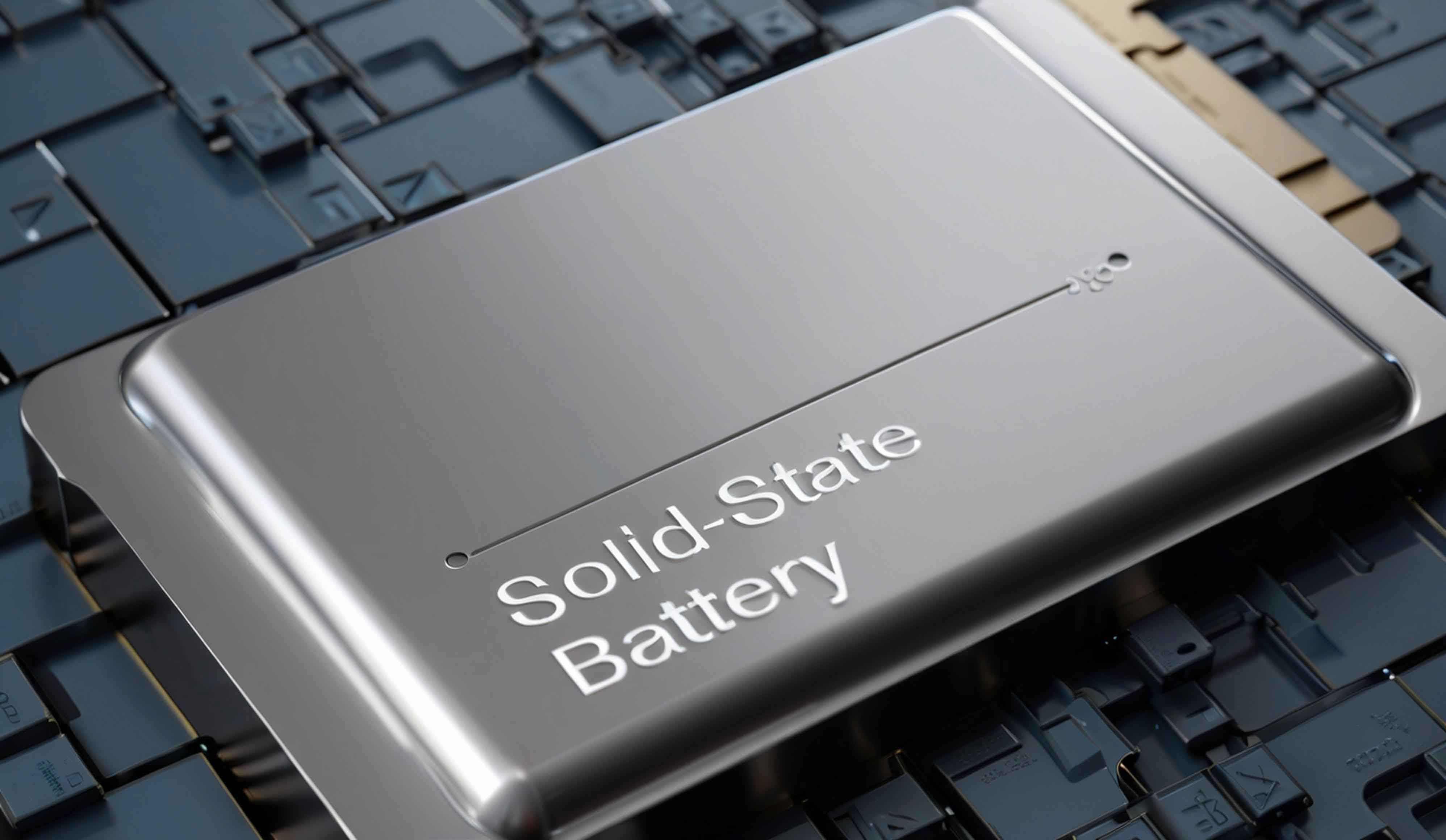
From a global competition standpoint, the solid-state battery landscape is characterized by fierce rivalry among key players. Countries like Japan, South Korea, China, the United States, and the European Union have all outlined strategic plans to dominate this sector. In my analysis, I have compiled a table comparing the focus areas and projected commercialization timelines for major regions. This highlights the diverse approaches and investments being made to advance solid-state battery technology.
| Region/Country | Primary Technology Focus | Key Players | Projected Commercialization Window | Strategic Goals |
|---|---|---|---|---|
| Japan | Sulfide-based electrolytes | Automotive and battery giants | 2027-2030 for full-scale production | Regain leadership in battery innovation |
| South Korea | Sulfide and oxide hybrids | Major battery manufacturers | 2026-2028 for initial deployment | Secure global market share in EVs |
| China | Oxide and polymer composites | State-backed and private firms | 2026-2030 for mass adoption | Leverage manufacturing scale and supply chains |
| United States | Polymer and startup-driven routes | Tech startups and automotive alliances | 2025-2030 for pilot programs | Foster innovation through venture capital |
| European Union | Collaborative research across pathways | Automakers and research institutes | 2028-2032 for industrial integration | Achieve sustainability and energy independence |
Technologically, the solid-state battery encompasses multiple electrolyte options, each with distinct advantages and drawbacks. In my assessment, the three primary routes—polymer, oxide, and sulfide-based solid-state batteries—offer varied trade-offs in terms of ionic conductivity, stability, and manufacturability. To quantify these differences, I present a formula for ionic conductivity, which is a critical parameter for solid-state battery performance. The ionic conductivity $\sigma$ can be expressed as:
$$ \sigma = n \cdot q \cdot \mu $$
where $n$ is the charge carrier concentration, $q$ is the charge per carrier, and $\mu$ is the mobility of ions. For solid-state batteries, achieving high $\sigma$ in solid electrolytes remains a challenge, often requiring composite materials or novel chemistries. Below, I summarize the key characteristics of each solid-state battery type in a table, based on my review of current research.
| Electrolyte Type | Typical Ionic Conductivity (S/cm) | Advantages | Disadvantages | Current Development Stage |
|---|---|---|---|---|
| Polymer | 10^{-5} to 10^{-3} | Flexible, easy processing, good interface compatibility | Low thermal stability, limited conductivity at room temperature | Pilot production for niche applications |
| Oxide | 10^{-4} to 10^{-2} | High thermal and electrochemical stability, robust | Brittle, difficult to fabricate into thin films | Lab-scale to early commercial prototypes |
| Sulfide | 10^{-3} to 10^{-2} | Excellent ionic conductivity, some flexibility | Highly sensitive to moisture, interface issues with electrodes | Advanced R&D with some pilot lines |
| Composite/Hybrid | Varies based on composition | Combines benefits of multiple materials, tailored properties | Complex synthesis, potential cost increments | Emerging as a promising route for commercialization |
As I explore the path to commercialization, it is evident that the solid-state battery industry is progressing through phased milestones. Most experts, including myself, believe that semi-solid batteries will serve as a transitional step before full solid-state batteries become viable. The energy density of a solid-state battery, denoted as $E_d$, can be modeled as a function of electrode capacity and cell design. For instance, the theoretical energy density for a lithium-metal solid-state battery can be approximated by:
$$ E_d = \frac{C_a \cdot V_a + C_c \cdot V_c}{m_{total}} $$
where $C_a$ and $C_c$ are the capacities of the anode and cathode, $V_a$ and $V_c$ are their respective voltages, and $m_{total}$ is the total mass of the cell. Current projections indicate that solid-state batteries could achieve $E_d$ values exceeding 400 Wh/kg, compared to 150-350 Wh/kg for liquid lithium-ion batteries. This improvement is a key driver behind the push for solid-state battery adoption.
The timeline for solid-state battery mass production is a topic of intense debate. From my analysis of public announcements and industry trends, I have compiled a table outlining the expected launch windows for various companies. This reflects the consensus that the solid-state battery will see gradual rollout, with semi-solid variants leading the way in the mid-2020s.
| Company/Entity | Technology Phase | Planned Launch Year | Target Energy Density (Wh/kg) | Application Focus |
|---|---|---|---|---|
| Automaker A (Asia) | Semi-solid | 2025 | 300-350 | Luxury electric vehicles |
| Battery Manufacturer B (Europe) | Full solid-state prototype | 2026 | 400-500 | Premium automotive segments |
| Tech Startup C (North America) | Polymer-based solid-state | 2027 | Consumer electronics and EVs | |
| Joint Venture D (Global) | Oxide-composite solid-state | 2028 | 450-550 | Mass-market electric cars |
| Research Consortium E (International) | Sulfide-based solid-state | 2030 | 500-700 | Next-generation mobility and grid storage |
Market forecasts for the solid-state battery sector are optimistic, yet they hinge on overcoming significant hurdles. I estimate that the global demand for solid-state batteries could follow an exponential growth curve, modeled by the equation:
$$ D(t) = D_0 \cdot e^{kt} $$
where $D(t)$ is the demand at time $t$, $D_0$ is the initial demand, and $k$ is the growth rate constant. Based on recent studies, $k$ for solid-state batteries might range from 0.5 to 0.7 per year, indicating rapid expansion. However, this growth is contingent on reducing costs, which currently remain high. The cost $C$ of a solid-state battery can be broken down into material, manufacturing, and R&D expenses, expressed as:
$$ C = C_m + C_p + C_r $$
Here, $C_m$ represents material costs (e.g., solid electrolytes, high-capacity electrodes), $C_p$ denotes production costs (e.g., specialized equipment, quality control), and $C_r$ covers research and development amortization. In my view, achieving cost parity with liquid lithium-ion batteries—which have seen costs plummet by over 80% in the past decade—is crucial for the solid-state battery to gain widespread acceptance.
One of the most pressing challenges for solid-state battery adoption is technical maturity. Issues such as interface resistance between solid electrolytes and electrodes, dendrite formation in lithium-metal anodes, and scalability of fabrication processes must be addressed. I have developed a formula to describe the interface resistance $R_i$ in a solid-state battery, which impacts overall cell impedance and performance:
$$ R_i = \frac{\rho \cdot d}{A} $$
where $\rho$ is the resistivity of the interface layer, $d$ is its thickness, and $A$ is the contact area. Minimizing $R_i$ through material engineering and design innovations is a key research focus for solid-state battery developers. Additionally, cycle life $L_c$, defined as the number of charge-discharge cycles before capacity degradation to 80% of initial value, can be modeled as:
$$ L_c = f(S, T, C_{rate}) $$
with $S$ representing stress factors, $T$ temperature, and $C_{rate}$ the charging rate. Enhancing $L_c$ to match or exceed the 1000+ cycles of liquid batteries is essential for the solid-state battery to be competitive in automotive applications.
From an economic perspective, the solid-state battery industry faces a dual challenge: scaling production while driving down costs. I believe that economies of scale will play a pivotal role, similar to the trajectory observed with lithium-ion batteries. The learning curve for solid-state battery manufacturing can be approximated by:
$$ C_{cum} = C_0 \cdot N^{-b} $$
where $C_{cum}$ is the cumulative average cost, $C_0$ is the initial cost, $N$ is the cumulative production volume, and $b$ is the learning rate exponent. For solid-state batteries, a steeper learning curve (higher $b$) may be achievable through automation and process optimization. Below, I present a table summarizing key cost drivers and potential mitigation strategies for solid-state battery production.
| Cost Component | Current Estimate (per kWh) | Primary Factors | Reduction Strategies | Projected Impact by 2030 |
|---|---|---|---|---|
| Solid Electrolyte Materials | $150-$300 | Rare or processed materials, purity requirements | Develop alternative chemistries, improve synthesis methods | 50-70% decrease via scaling |
| Electrode Materials | $100-$200 | High-capacity anodes (e.g., lithium metal), advanced cathodes | Innovate in material sourcing, enhance yield rates | 40-60% reduction through R&D |
| Manufacturing Equipment | $50-$150 | Specialized tools for solid-state layer deposition | Adopt modular designs, leverage existing battery lines | 30-50% cost saving via automation |
| Quality Control and Testing | $30-$80 | Stringent standards for safety and performance | Implement AI-driven inspection, standardize protocols | 20-40% efficiency gain |
| Research and Development | Amortized over volume | High upfront investment in novel technologies | Collaborative funding, government subsidies | Lower per-unit cost at high volumes |
Looking ahead, the solid-state battery ecosystem is likely to evolve through collaborations and partnerships. In my opinion, alliances between automakers, battery producers, and material suppliers will accelerate innovation and de-risk investments. The integration of solid-state batteries into electric vehicles could revolutionize energy storage, enabling faster charging, longer ranges, and improved safety. However, I caution that the transition will be gradual; liquid lithium-ion batteries will continue to dominate for at least two more decades, even as solid-state batteries capture niche markets initially.
To quantify the potential market penetration of solid-state batteries, I propose a diffusion model based on technology adoption theory. The fraction $F(t)$ of the battery market occupied by solid-state batteries at time $t$ can be expressed as:
$$ F(t) = \frac{1}{1 + e^{-a(t – t_0)}} $$
where $a$ is the adoption rate constant and $t_0$ is the inflection point when adoption accelerates. Assuming $t_0$ around 2028 and $a$ derived from historical analogies, solid-state batteries might reach 10-15% market share by 2035. This underscores the importance of sustained effort in advancing solid-state battery technology.
In conclusion, the solid-state battery represents a transformative opportunity for the energy and transportation sectors. From my vantage point, the convergence of technological progress, strategic investments, and market demand is creating a fertile ground for innovation. While challenges related to cost, performance, and scalability persist, the collective drive toward a solid-state battery future is undeniable. I am optimistic that with continued research and collaboration, solid-state batteries will eventually overcome these hurdles, ushering in a new era of efficient and sustainable energy storage. The journey ahead is complex, but the promise of solid-state batteries makes it a pursuit worth championing.