
As the demand for electric vehicles and renewable energy storage systems grows, the accurate monitoring and management of battery health have become paramount. Among various energy storage technologies, the lithium ion battery stands out due to its high energy density, long cycle life, and environmental friendliness. However, the degradation of lithium ion batteries over time poses significant challenges for safety, reliability, and performance. Estimating the State of Health (SOH) of a lithium ion battery is crucial for predicting its remaining useful life, optimizing charging strategies, and preventing failures. Traditional methods, such as model-based approaches, often struggle with the complex, nonlinear aging dynamics of lithium ion batteries. In recent years, data-driven techniques have gained popularity, leveraging machine learning algorithms to capture the intricate relationships between measurable parameters and battery health. In this work, I propose a novel SOH estimation method that combines Incremental Capacity (IC) analysis with an enhanced Gaussian Process Regression (GPR) model optimized by the Grey Wolf Optimization (GWO) algorithm. This approach aims to address the limitations of single-kernel GPR, such as poor generalization and local optima in hyperparameter tuning, by introducing a composite kernel function and intelligent optimization. Through extensive experiments on publicly available datasets, I demonstrate the accuracy, robustness, and uncertainty quantification capabilities of this method for lithium ion battery SOH estimation.
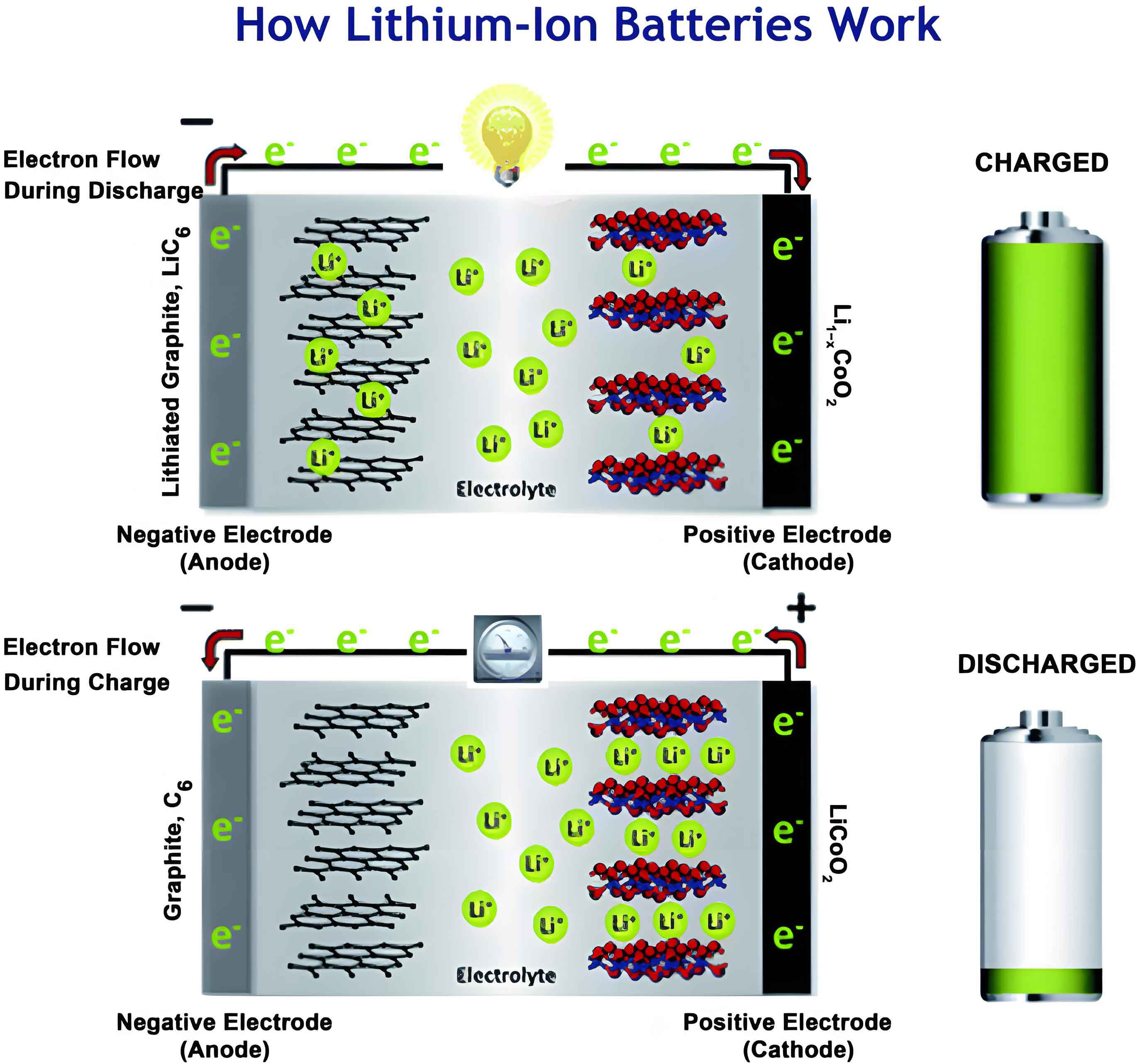
The degradation of a lithium ion battery is influenced by numerous factors, including operational conditions, charging protocols, and environmental stresses. These factors lead to internal chemical reactions, such as solid electrolyte interphase (SEI) growth, lithium plating, and electrode material loss, which ultimately reduce the battery’s capacity and increase its internal resistance. Accurately estimating the SOH of a lithium ion battery is essential for ensuring the safety and efficiency of energy storage systems. Data-driven methods, which extract health features from operational data and map them to SOH using machine learning models, have shown great promise. However, many existing techniques, such as Support Vector Regression (SVR) or Extreme Learning Machine (ELM), often lack the ability to quantify estimation uncertainty or handle the nonlinear and quasi-periodic nature of battery aging. Gaussian Process Regression (GPR) offers a probabilistic framework that provides both predictions and confidence intervals, making it suitable for SOH estimation. Yet, the performance of GPR heavily depends on the choice of kernel function and hyperparameters. Single kernels may not adequately capture the complex degradation patterns of lithium ion batteries, while traditional optimization methods like conjugate gradient can get stuck in local minima. To overcome these issues, I integrate a composite kernel—combining neural network and periodic kernels—to model both nonlinear trends and capacity regeneration cycles in lithium ion battery aging. Furthermore, I employ the Grey Wolf Optimization (GWO) algorithm to efficiently search for optimal hyperparameters, enhancing the model’s accuracy and generalization. The health features are derived from Incremental Capacity (IC) curves, which transform voltage plateaus during constant-current charging into identifiable peaks, offering robust indicators of battery degradation. By applying Multidimensional Scaling (MDS) for dimensionality reduction and validating feature relevance with Pearson correlation coefficients, I ensure that the input data is both informative and computationally efficient. In the following sections, I will detail the methodology, experimental setup, and results, highlighting the superiority of the proposed GWO-GPR model for lithium ion battery SOH estimation.
Incremental Capacity Analysis (ICA) is a powerful technique for characterizing the aging of lithium ion batteries. It involves calculating the derivative of capacity with respect to voltage during charging, revealing peaks that correspond to phase transitions in electrode materials. For a lithium ion battery under constant-current charging, the IC curve is defined as:
$$IC = \frac{dQ}{dV} \approx \frac{\Delta Q}{\Delta V} = \frac{Q_k – Q_{k-1}}{V_k – V_{k-1}}$$
where \( Q_k \) and \( Q_{k-1} \) are the accumulated capacities at times \( k \) and \( k-1 \), and \( V_k \) and \( V_{k-1} \) are the corresponding voltages. In practice, voltage data may have coarse sampling intervals, so linear interpolation is applied to refine the voltage scale. Then, Savitzky-Golay filtering is used to smooth the IC curve, preserving peak shapes while reducing noise. From the smoothed IC curve, three health features are extracted: peak height (\( H \)), peak voltage (\( V_p \)), and peak area (\( A \)) over a fixed voltage range (e.g., 3.9 V to 4.1 V). These features correlate strongly with the degradation of lithium ion batteries, as peak height and area decrease while peak voltage shifts with aging. The SOH of a lithium ion battery is defined as the ratio of current capacity to initial capacity:
$$SOH = \frac{C_i}{C_0} \times 100\%$$
where \( C_i \) is the available capacity at cycle \( i \), and \( C_0 \) is the nominal capacity. To reduce redundancy among features and lower computational cost, Multidimensional Scaling (MDS) is employed for nonlinear dimensionality reduction. MDS projects high-dimensional data into a lower-dimensional space while preserving pairwise distances, making it suitable for the nonlinear relationships in lithium ion battery features. The distance matrix \( D \) with elements \( d_{ij} \) represents dissimilarities between samples, and the reduced representation \( Z \) is obtained by eigenvalue decomposition of the inner product matrix \( B \), where:
$$b_{ij} = -\frac{1}{2} \left( d_{ij}^2 – k_i^2 – k_j^2 + k_{ij}^2 \right)$$
with \( k_i = \frac{1}{m} \sum_{j=1}^m d_{ij}^2 \), \( k_j = \frac{1}{m} \sum_{i=1}^m d_{ij}^2 \), and \( k_{ij} = \frac{1}{m^2} \sum_{i=1}^m \sum_{j=1}^m d_{ij}^2 \). The reduced feature vector effectively captures the health state of the lithium ion battery.
Gaussian Process Regression (GPR) is a non-parametric Bayesian method that models functions as distributions over possible mappings. For a lithium ion battery SOH estimation problem, the observed data \( y \) (SOH values) and input features \( x \) (reduced health features) are related by:
$$y = f(x) + \epsilon, \quad \epsilon \sim \mathcal{N}(0, \sigma_n^2)$$
where \( f(x) \) is a latent function, and \( \epsilon \) is Gaussian noise. A Gaussian process is fully specified by a mean function \( m(x) \) and a covariance kernel function \( k(x, x’) \). Typically, \( m(x) = 0 \), and the kernel defines the covariance between function values at different inputs. To capture the complex degradation patterns of lithium ion batteries, I propose a composite kernel combining a neural network kernel and a periodic kernel:
$$k(x, x’) = \sigma_{f1}^2 \arcsin\left( \frac{x^T x’}{\sqrt{(1 + x^T x)(1 + x’^T x’)}} \right) + \sigma_{f2}^2 \exp\left( -\frac{2}{l^2} \sin^2\left( \frac{\pi |x – x’|}{p} \right) \right)$$
where \( \sigma_{f1} \), \( \sigma_{f2} \), \( l \), and \( p \) are hyperparameters. The neural network kernel models nonlinear trends, while the periodic kernel accounts for quasi-periodic capacity regeneration observed in lithium ion batteries. The hyperparameters are optimized by maximizing the marginal likelihood, but traditional gradient-based methods can converge to local optima. To address this, the Grey Wolf Optimization (GWO) algorithm is used. GWO mimics the hunting behavior of grey wolves, with leaders (alpha, beta, delta) guiding the search for prey (optimal hyperparameters). The position update equations are:
$$D_{\alpha} = |C \cdot X_{\alpha} – X|, \quad D_{\beta} = |C \cdot X_{\beta} – X|, \quad D_{\delta} = |C \cdot X_{\delta} – X|$$
$$X_1 = X_{\alpha} – A \cdot D_{\alpha}, \quad X_2 = X_{\beta} – A \cdot D_{\beta}, \quad X_3 = X_{\delta} – A \cdot D_{\delta}$$
$$X(t+1) = \frac{X_1 + X_2 + X_3}{3}$$
where \( A \) and \( C \) are coefficient vectors, and \( X \) represents the hyperparameters. GWO efficiently explores the search space, avoiding local minima and improving the GPR model’s performance for lithium ion battery SOH estimation.
The experimental validation uses the NASA lithium ion battery dataset, which includes cycling data for multiple batteries under controlled conditions. I focus on batteries B0005, B0006, and B0007, each subjected to constant-current constant-voltage charging and discharging. The capacity degradation curves exhibit nonlinear decay with occasional capacity regeneration, typical of lithium ion batteries. The IC curves are computed from charging data, and health features are extracted after smoothing. The Pearson correlation coefficient \( \rho \) is calculated to validate the relationship between features and SOH:
$$\rho_{xy} = \frac{\text{cov}(X, Y)}{\sqrt{D(X) D(Y)}}$$
where \( X \) represents a health feature, and \( Y \) is the SOH. High absolute values of \( \rho \) indicate strong linear correlation. After MDS reduction, the single-dimensional feature shows even higher correlation with SOH, as summarized in Table 1.
| Battery ID | Peak Height | Peak Voltage | Peak Area | MDS-Reduced Feature |
|---|---|---|---|---|
| B0005 | 0.9913 | -0.9550 | 0.9953 | 0.9920 |
| B0006 | 0.9914 | -0.9865 | 0.9922 | 0.9931 |
| B0007 | 0.9871 | -0.9562 | 0.9916 | 0.9878 |
The dataset is split into training and testing sets. For example, the first 80 cycles are used for training, and the remaining 88 cycles for testing. The proposed GWO-GPR model is compared against baseline methods: SVR, ELM, and standard GPR. Performance is evaluated using Root Mean Square Error (RMSE) and Mean Absolute Error (MAE):
$$RMSE = \sqrt{ \frac{1}{N} \sum_{i=1}^N (y_i – \hat{y}_i)^2 }$$
$$MAE = \frac{1}{N} \sum_{i=1}^N |y_i – \hat{y}_i|$$
where \( y_i \) is the true SOH, \( \hat{y}_i \) is the estimated SOH, and \( N \) is the number of cycles. The results for each lithium ion battery are presented in Table 2, demonstrating the superior accuracy of the GWO-GPR model.
| Battery ID | Method | RMSE | MAE |
|---|---|---|---|
| B0005 | GWO-GPR | 0.67 | 0.38 |
| SVR | 1.27 | 0.99 | |
| ELM | 1.90 | 1.67 | |
| GPR | 1.56 | 1.28 | |
| B0006 | GWO-GPR | 1.03 | 0.50 |
| SVR | 2.82 | 2.14 | |
| ELM | 1.41 | 0.92 | |
| GPR | 2.44 | 1.80 | |
| B0007 | GWO-GPR | 0.73 | 0.35 |
| SVR | 0.99 | 0.74 | |
| ELM | 1.62 | 1.38 | |
| GPR | 2.32 | 1.71 |
The GWO-GPR model not only achieves lower errors but also provides 95% confidence intervals for SOH estimates, enhancing reliability. The confidence interval for a prediction \( \hat{y}_* \) is given by:
$$[\hat{y}_* – 1.96 \sqrt{\text{cov}(\hat{y}_*)}, \hat{y}_* + 1.96 \sqrt{\text{cov}(\hat{y}_*)}]$$
where \( \text{cov}(\hat{y}_*) \) is the predictive variance. This uncertainty quantification is crucial for risk assessment in lithium ion battery management systems.
To assess robustness, the GWO-GPR model is trained starting from different cycles (60, 80, and 100) for each lithium ion battery. The RMSE values across these scenarios are listed in Table 3, showing consistent performance with errors below 1.03%.
| Training Start Cycle | B0005 | B0006 | B0007 |
|---|---|---|---|
| 60 | 0.70 | 1.03 | 0.89 |
| 80 | 0.67 | 1.03 | 0.73 |
| 100 | 0.46 | 0.73 | 0.52 |
The improvement with later start cycles is due to more training data, which refines the model’s understanding of lithium ion battery aging patterns. The composite kernel effectively captures both the nonlinear degradation and periodic regeneration, while GWO ensures optimal hyperparameters. This makes the GWO-GPR model highly suitable for real-world applications where lithium ion batteries experience varying operational conditions.
In conclusion, this work presents a robust and accurate method for estimating the State of Health of lithium ion batteries. By integrating Incremental Capacity analysis for feature extraction, Multidimensional Scaling for dimensionality reduction, and a composite kernel Gaussian Process Regression optimized with Grey Wolf Optimization, the proposed approach addresses key challenges in battery health monitoring. The method demonstrates superior performance compared to existing techniques, with low RMSE and MAE, and provides uncertainty quantification through confidence intervals. The robustness across different training scenarios further validates its practicality for lithium ion battery management systems. Future work could explore adaptive feature selection, online learning for real-time estimation, and application to other battery chemistries. Ultimately, advancing SOH estimation techniques is essential for enhancing the safety, longevity, and efficiency of lithium ion batteries in electric vehicles and grid storage, contributing to a sustainable energy future.
The mathematical formulations and algorithmic details underscore the sophistication of this approach. For instance, the GWO algorithm’s convergence factor \( a \) decreases linearly from 2 to 0 over iterations, balancing exploration and exploitation. The kernel hyperparameters, optimized by GWO, include \( \sigma_{f1} \), \( \sigma_{f2} \), \( l \), and \( p \), which control the amplitude and scale of the covariance functions. The marginal likelihood maximization in GPR involves minimizing the negative log likelihood:
$$-\log p(y | X, \theta) = \frac{1}{2} y^T (K + \sigma_n^2 I)^{-1} y + \frac{1}{2} \log |K + \sigma_n^2 I| + \frac{n}{2} \log 2\pi$$
where \( K \) is the covariance matrix from the composite kernel. The GWO-GPR model’s ability to handle small datasets and provide probabilistic outputs makes it ideal for lithium ion battery SOH estimation, where data may be limited due to long cycle lives. Additionally, the IC curve features offer physical interpretability, linking electrochemical processes to measurable signals. As lithium ion batteries continue to dominate the energy storage landscape, such data-driven methods will play a critical role in optimizing their performance and ensuring reliable operation across diverse applications.