
As global energy demands continue to rise, the limitations of fossil fuels have become increasingly apparent, driving the search for sustainable alternatives. Solar energy, with its vast potential and minimal environmental impact, stands out as a key solution. Among solar technologies, perovskite solar cells have emerged as a promising third-generation option due to their high efficiency and cost-effectiveness. In this article, we explore the role of nickel oxide (NiO) target materials in improving the performance of perovskite solar cells, focusing on advancements in doping, sintering, and magnetron sputtering techniques. We will delve into the structural and operational principles of perovskite solar cells, the challenges associated with NiO targets, and recent innovations that address these issues, all while emphasizing the importance of high-density, low-temperature fabrication methods.
The structure of a typical perovskite solar cell consists of multiple thin layers, including a transparent conductive oxide (TCO) layer, a hole transport layer (HTL), a perovskite active layer, and an electron transport layer (ETL). The HTL, often fabricated using NiO, plays a critical role in facilitating hole transport and blocking electrons, thereby enhancing the overall efficiency of the perovskite solar cell. The following diagram illustrates the general architecture of such a device:
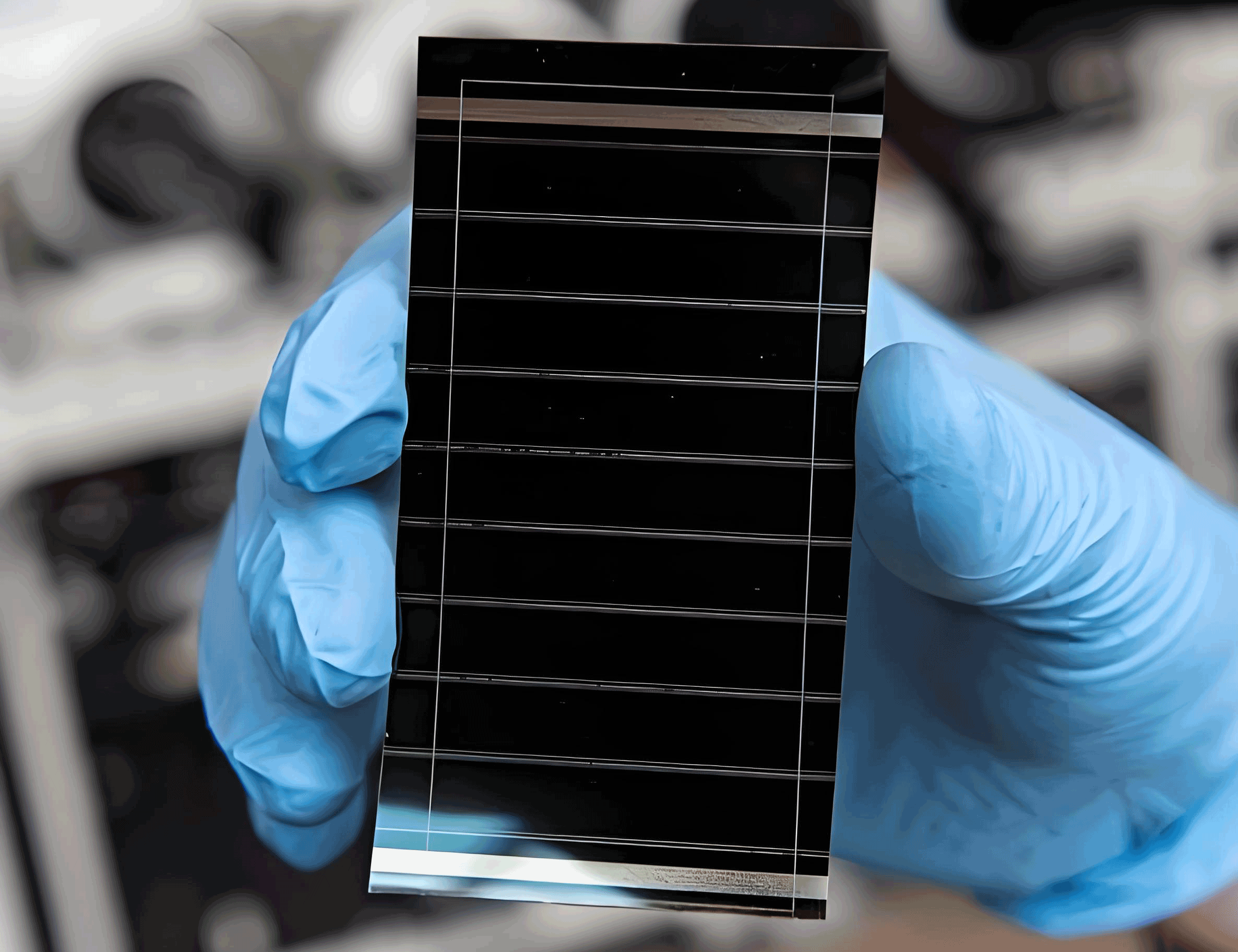
In this configuration, sunlight penetrates the TCO layer and reaches the perovskite active layer, where photons with energy exceeding the bandgap excite electrons from the valence band to the conduction band, generating electron-hole pairs. These charge carriers then migrate to the respective transport layers—electrons to the ETL and holes to the HTL—creating a potential difference that drives current through an external circuit. The efficiency of a perovskite solar cell can be expressed using the photoconversion efficiency formula:
$$ \eta = \frac{J_{sc} \times V_{oc} \times FF}{P_{in}} \times 100\% $$
where \( \eta \) is the efficiency, \( J_{sc} \) is the short-circuit current density, \( V_{oc} \) is the open-circuit voltage, \( FF \) is the fill factor, and \( P_{in} \) is the incident light power. For perovskite solar cells, achieving high \( \eta \) relies heavily on the quality of the HTL, which is why NiO targets are so pivotal.
Nickel oxide, as a p-type semiconductor, exhibits excellent chemical stability, high hole mobility, and a suitable bandgap that aligns well with perovskite materials. The bandgap energy \( E_g \) of NiO is typically around 3.6–4.0 eV, which can be tuned through doping to optimize performance in perovskite solar cells. The relationship between the bandgap and the material’s properties is crucial for minimizing energy losses. For instance, the valence band maximum (VBM) and conduction band minimum (CBM) of NiO must match those of the perovskite layer to facilitate efficient charge transfer. This can be described by:
$$ E_g = E_{CBM} – E_{VBM} $$
where \( E_{CBM} \) and \( E_{VBM} \) are the energy levels of the conduction and valence bands, respectively. In practice, non-stoichiometric NiO, with nickel vacancies or oxygen interstitials, enhances its p-type conductivity, making it ideal for HTL applications in perovskite solar cells.
However, pure NiO targets often suffer from low density, high sintering temperatures, and poor electrical conductivity, which can compromise the performance of perovskite solar cells. To address these issues, researchers have turned to doping and process optimization. Doping with elements such as lithium (Li), copper (Cu), or magnesium (Mg) can significantly improve the density and conductivity of NiO targets. For example, the incorporation of Li into NiO introduces additional charge carriers, increasing hole concentration and mobility. The effect of doping on electrical conductivity \( \sigma \) can be modeled using:
$$ \sigma = n e \mu $$
where \( n \) is the charge carrier density, \( e \) is the electron charge, and \( \mu \) is the mobility. By optimizing these parameters, the performance of perovskite solar cells can be enhanced substantially.
Magnetron sputtering is a widely used technique for depositing thin films in perovskite solar cells due to its uniformity, high deposition rates, and scalability. In this process, a NiO target is bombarded with argon ions in a vacuum environment, causing atoms to sputter and deposit onto a substrate. The deposition rate \( R \) can be expressed as:
$$ R = \frac{J \times Y \times A}{\rho} $$
where \( J \) is the ion current density, \( Y \) is the sputtering yield, \( A \) is the area, and \( \rho \) is the density of the target. High-density targets are essential for achieving uniform films with minimal defects, which directly impacts the efficiency and stability of perovskite solar cells.
Recent studies have focused on improving NiO target properties through various methods. The table below summarizes key advancements in doping strategies and their effects on the performance of perovskite solar cells:
| Doping Element | Sintering Temperature (°C) | Relative Density (%) | Electrical Conductivity (S/cm) | Impact on Perovskite Solar Cell Efficiency |
|---|---|---|---|---|
| Lithium (Li) | 1400–1600 | 98.5 | 18 | Increased hole mobility, enhanced \( V_{oc} \) |
| Copper (Cu) | 1300–1500 | 97.8 | 12 | Improved film uniformity, reduced recombination |
| Magnesium (Mg) | 1200–1400 | 99.2 | 15 | Lower sintering temperature, higher stability |
| Zirconium (Zr) | 1300–1500 | 99.9 | 20 | Enhanced cracking resistance, longer lifespan |
As shown, doping not only improves density and conductivity but also allows for lower sintering temperatures, which reduces energy consumption and production costs. This is critical for the large-scale deployment of perovskite solar cells. For instance, the use of composite doping with Mg and Zr has led to NiO targets with relative densities exceeding 99% and conductivities above 15 S/cm, directly benefiting the photoconversion efficiency of perovskite solar cells.
In addition to doping, optimizing the sintering process is vital. The sintering kinetics can be described by models such as the initial stage sintering equation:
$$ \frac{\Delta L}{L_0} = k t^n $$
where \( \Delta L / L_0 \) is the linear shrinkage, \( k \) is a rate constant, \( t \) is time, and \( n \) is an exponent related to the mechanism. By controlling parameters like temperature ramp rates and atmosphere (e.g., oxygen or nitrogen-hydrogen mixtures), researchers have achieved NiO targets with high density and reduced cracking. This progress is essential for producing reliable HTLs in perovskite solar cells.
Another key aspect is the role of nanostructured materials in enhancing target properties. Mixing micron-sized NiO powders with nano-sized oxides fills gaps between particles, increasing density and homogeneity. The relationship between particle size \( d \) and density \( \rho \) can be approximated by:
$$ \rho = \rho_0 \left(1 – \frac{\alpha}{d}\right) $$
where \( \rho_0 \) is the theoretical density and \( \alpha \) is a constant. This approach has enabled the fabrication of NiO targets with densities up to 99.93% at temperatures as low as 1200–1300°C, making them suitable for industrial applications in perovskite solar cells.
Despite these advancements, challenges remain in the widespread adoption of NiO targets for perovskite solar cells. Uniform distribution of dopants is difficult to achieve, leading to variations in film quality and performance. Moreover, the trade-off between density and sintering temperature requires careful optimization. To illustrate the current state of research, the table below compares different sintering conditions and their outcomes for NiO targets used in perovskite solar cells:
| Sintering Condition | Temperature Range (°C) | Atmosphere | Resulting Density (%) | Application in Perovskite Solar Cells |
|---|---|---|---|---|
| Conventional | 1600–1800 | Air | 95–97 | Moderate efficiency, high cost |
| Optimized with Doping | 1300–1500 | O₂/N₂-H₂ | 98–99 | Improved stability, higher \( \eta \) |
| Low-Temperature Process | 1200–1300 | Controlled O₂ | 99.5+ | Cost-effective, scalable for perovskite solar cells |
These innovations highlight the potential of NiO targets to revolutionize perovskite solar cell technology. For example, by employing doped NiO HTLs, the efficiency of perovskite solar cells has surpassed 20%, with some approaches reaching up to 33.9% in lab settings. The fill factor \( FF \), a key parameter, is also improved due to better charge extraction, as given by:
$$ FF = \frac{P_{max}}{J_{sc} \times V_{oc}} $$
where \( P_{max} \) is the maximum power output. Enhanced NiO targets contribute to higher \( FF \) by reducing series resistance and recombination losses in perovskite solar cells.
Looking ahead, future research should focus on developing multi-element doping strategies and advanced sintering techniques to further lower temperatures and increase density. Additionally, integrating machine learning for process optimization could accelerate the design of optimal NiO targets for perovskite solar cells. The continuous improvement in these areas will not only boost the efficiency of perovskite solar cells but also support the global transition to renewable energy.
In conclusion, the evolution of nickel oxide target materials is integral to advancing perovskite solar cell technology. Through doping, composition adjustment, and sintering optimization, we can overcome current limitations and unlock the full potential of perovskite solar cells. As we continue to innovate, the synergy between material science and photovoltaic applications will drive the commercialization of high-performance, sustainable perovskite solar cells, contributing significantly to the global energy landscape.