
The proliferation of lithium-ion batteries (LIBs) across diverse applications, from consumer electronics to electric vehicles and large-scale energy storage systems, has underscored significant safety challenges. Their high energy density, while advantageous for performance, makes them susceptible to thermal runaway—an uncontrollable self-heating process that can lead to fire and explosion. Warehouse storage of lithium-ion batteries presents a particularly severe hazard scenario, as a single failing cell can propagate thermal runaway to adjacent units, resulting in rapidly escalating fires that are difficult to control. Understanding the dynamics of such fires is paramount for designing effective prevention and mitigation strategies.
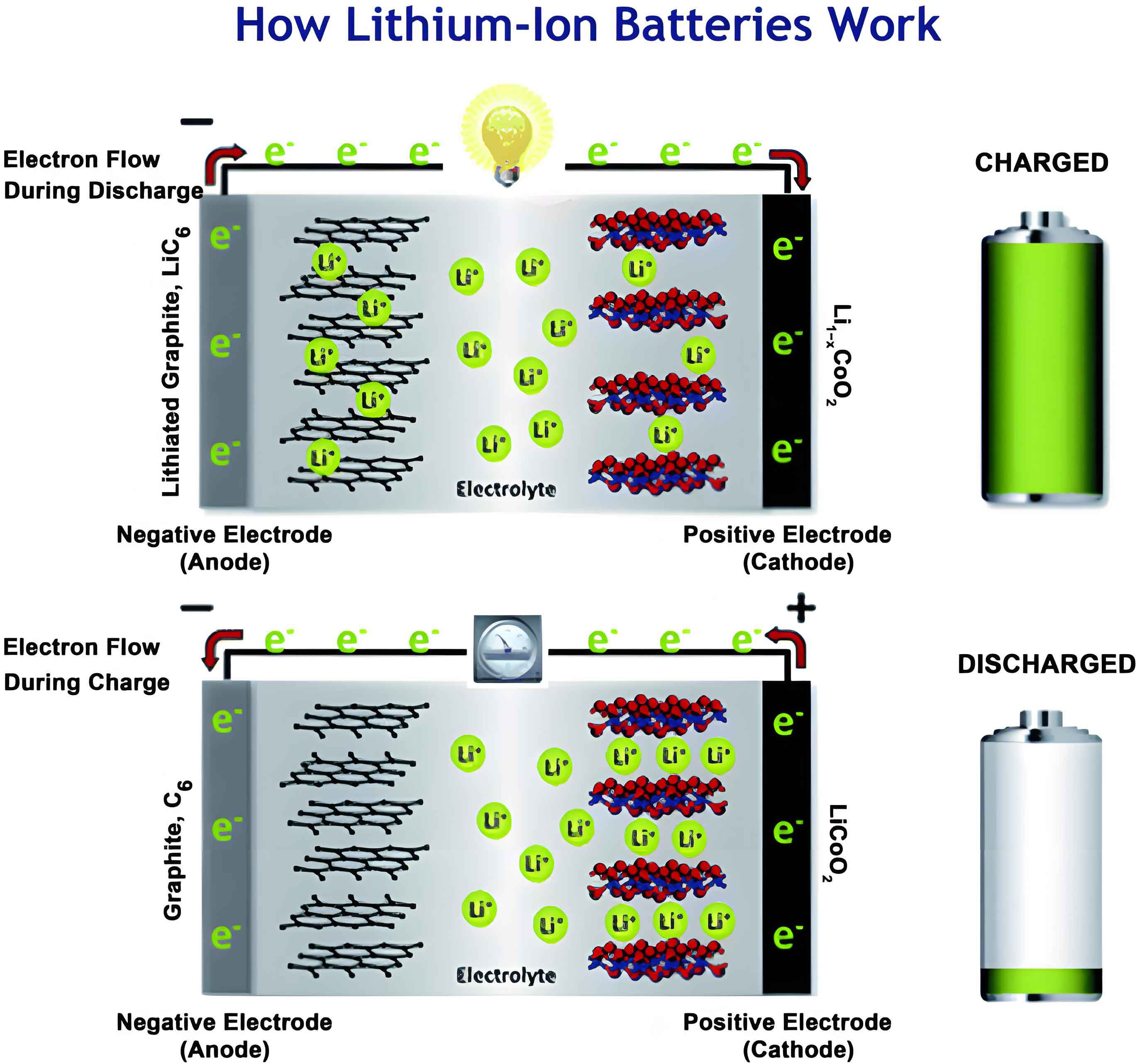
This study employs PyroSim, a graphical user interface for the Fire Dynamics Simulator (FDS), to conduct a comprehensive numerical analysis of a warehouse fire initiated by thermal runaway in a stored lithium-ion battery pack. FDS, developed by the National Institute of Standards and Technology (NIST), solves numerically a form of the Navier-Stokes equations appropriate for low-speed, thermally-driven flow with an emphasis on smoke and heat transport from fires. The primary objectives are to characterize the hazardous conditions—temperature, heat release rate (HRR), visibility, and carbon monoxide (CO) concentration—resulting from an unmitigated lithium-ion battery fire, and to evaluate the effectiveness of an automatic sprinkler system in suppressing the incident before catastrophic escalation.
Unlike experimental studies, which can be prohibitively expensive and dangerous at full scale, Computational Fluid Dynamics (CFD) simulation provides a safe and versatile tool for investigating fire scenarios under controlled virtual conditions. Previous research has utilized PyroSim/FDS for various lithium-ion battery fire investigations, focusing on material modeling, single-cell or module thermal behavior, and ventilation effects. This work contributes by modeling a realistic warehouse storage configuration with multiple shelving units and performing a comparative analysis of fire development with and without active fire protection, offering critical insights for warehouse safety design.
1. Methodology: Numerical Model Development
The simulation workflow, as implemented in PyroSim, follows a structured process: geometry and mesh creation, definition of material properties and combustion parameters, specification of initial and boundary conditions, placement of measurement devices, and finally, execution of the simulation via FDS and visualization of results using Smokeview.
1.1 Geometry and Computational Domain
A warehouse model with internal dimensions of 20 m (length, X) × 10 m (width, Y) × 5 m (height, Z) was constructed. The warehouse contains eight storage racks, each 5 m long, 0.8 m wide, and 2.9 m high. Each rack holds 20 cardboard boxes, with each box (0.7 m × 0.6 m × 0.4 m) representing a packaged lithium-ion battery pack. The spatial arrangement is summarized in Table 1.
| Component | Dimension (X×Y×Z) in m | Quantity | Spacing (X/Y) in m |
|---|---|---|---|
| Warehouse | 20 × 10 × 5 | 1 | N/A |
| Storage Rack | 5 × 0.8 × 2.9 | 8 | 2.0 / 1.2 |
| Battery Box | 0.7 × 0.6 × 0.4 | 160 | N/A |
The computational mesh is crucial for simulation accuracy and stability. A uniform grid cell size of 0.4 m was applied across all three directions, resulting in a total of 50 × 25 × 15 = 18,750 cells. The grid parameters are detailed below:
$$ \text{Number of Cells in X: } N_x = \frac{20}{0.4} = 50 $$
$$ \text{Number of Cells in Y: } N_y = \frac{10}{0.4} = 25 $$
$$ \text{Number of Cells in Z: } N_z = \frac{5}{0.4} = 12.5 \approx 15 \text{ (adjusted to fit domain)} $$
The ignition source was modeled as a constant heat flux burner placed adjacent to a battery box on the second rack from the left, simulating an internal short circuit or external heating event leading to thermal runaway of a single lithium-ion battery pack.
For the suppression scenario, two standard spray sprinklers were added to the model, positioned at coordinates above the ignition source rack at Z = 3.5 m. The sprinklers were set to activate at a link temperature of 60°C. Key sprinkler parameters were: droplet median diameter = 100 µm, operating pressure = 8 MPa, with a cone spray pattern (inner angle = 30°, outer angle = 80°).
1.2 Material Properties and Fire Modeling
Modeling the complex chemistry of a lithium-ion battery fire in detail is computationally intensive. A simplified approach was adopted, where the primary fuel source is the flammable electrolyte (typically a mixture of organic carbonates). The battery components were represented by their bulk thermal properties. The reaction was modeled using a single-step mixing-controlled combustion model. The critical thermal properties for the lithium-ion battery materials are defined in Table 2.
| Component | Density (kg/m³) | Specific Heat (J/kg·K) | Thermal Conductivity (W/m·K) | Absorption Coefficient |
|---|---|---|---|---|
| Positive Electrode | 2700 | 900 | 160 | 0.8 |
| Negative Electrode | 8500 | 385 | 146 | 0.8 |
| Electrolyte (Fuel) | 2600 | 1100 | 21 | 0.9 |
| Separator | 492 | 1978 | 0.334 | 0.8 |
| Cardboard Box | 700 | 1500 | 0.15 | 0.8 |
The heat release rate per unit area (HRRPUA) for the burning electrolyte was estimated based on experimental data from similar battery fires. The fire growth was modeled as an ultra-fast t-squared fire, a common model for rapidly developing fires involving high-energy fuels like a lithium-ion battery pack:
$$ \dot{Q}(t) = \alpha t^2 $$
where $\dot{Q}(t)$ is the HRR at time $t$, and $\alpha$ is the fire growth coefficient (kW/s²). For an ultra-fast fire, $\alpha$ is typically 1.876 kW/s², leading to a very rapid escalation.
1.3 Initial and Boundary Conditions
The simulations were conducted under quiescent, standard atmospheric conditions to isolate the fire-driven flow. The initial and boundary conditions are listed in Table 3. The racks themselves were modeled as adiabatic surfaces to simplify the heat transfer analysis, focusing on convective and radiative heat transfer between the fire and other fuel packages.
| Parameter | Value |
|---|---|
| Ambient Temperature | 20 °C |
| Relative Humidity | 40% |
| Atmospheric Pressure | 101325 Pa |
| Initial Wind Speed | 0 m/s |
| Total Simulation Time | 100 s |
1.4 Measurement Devices
To analyze fire dynamics, multiple virtual measurement devices were placed within the domain:
- Thermocouples: A vertical array of four thermocouples was placed near the ignition source (X=1.6 m, Y=3.4 m) at heights Z = {0.5, 1.2, 1.9, 2.6} m to track temperature evolution with height.
- Heat Release Rate (HRR) Gauge: A single device measures the total heat release rate from the combustion reaction.
- Visibility Sensors: 19 sensors placed at Z=1.6 m, Y=3.4 m along the X-axis (spaced 1 m apart) to measure smoke obscuration, with visibility calculated based on light extinction coefficient.
- CO Gas Sensors: Co-located with the visibility sensors to measure the volume fraction of carbon monoxide produced.
2. Simulation Results and Analysis
Two distinct scenarios were simulated: Scenario 1 (Unprotected Fire) and Scenario 2 (Fire with Sprinkler Suppression). The results are compared to quantify the hazard severity and the effectiveness of the suppression system.
2.1 Scenario 1: Unprotected Lithium-Ion Battery Warehouse Fire
This scenario represents the worst-case condition where no active fire protection system intervenes.
2.1.1 Temperature Dynamics
The temperature rise near the ignition source was extreme. After an initial pre-heating period of approximately 25 seconds, the temperature at the lowest thermocouple (Z=0.5 m) spiked catastrophically, reaching a peak of over 1600°C within seconds. This spike represents the violent thermal runaway and ignition of the primary lithium-ion battery pack. Subsequent peaks observed in the temperature-time curves (see Fig. 3 in the reference material) correspond to the sequential involvement of adjacent battery packs due to radiant heat exposure, demonstrating the propagation risk inherent in high-density storage. The peak temperature decreased with height due to plume cooling and stratification, but all levels experienced temperatures far exceeding the ignition point of common materials.
2.1.2 Heat Release Rate (HRR)
The HRR curve is a direct indicator of fire intensity. As shown in Figure 4a, the HRR began a sharp, almost exponential rise at around 20 seconds. It reached a staggering maximum of approximately 81,600 kW within 10 seconds of significant growth. This immense power output confirms the high energy density of the involved lithium-ion battery inventory. The HRR remained high for a sustained period as multiple packs burned, before beginning a decay phase as the fuel near the ignition zone was consumed. The total energy released poses a severe threat to structural integrity.
2.1.3 Smoke Obscuration and Visibility
Smoke production from the burning lithium-ion batteries and packaging was rapid and voluminous. The visibility sensors recorded a swift drop in visibility to near-zero levels across the entire warehouse floor (Z=1.6 m plane) by t=35 seconds (Fig. 5). This rapid smoke fill, occurring before temperatures become universally lethal, represents a primary life safety hazard, severely hindering occupant evacuation and firefighter intervention. The transient increase in visibility observed locally at t=28 seconds is attributed to the clearance effect of the rising, high-velocity fire plume.
2.1.4 Toxic Gas Production (CO)
Carbon monoxide generation is a critical hazard in enclosure fires. The CO volume fraction evolution (Fig. 6) showed a complex pattern. Initially, high concentrations formed near the fire. As the fire grew and the hot smoke layer descended, CO became well-mixed within the enclosure, with concentrations rising uniformly. Notably, in the later stages (t=100 s), the highest CO concentration migrated back towards the fire origin. This “reverse stratification” or accumulation phenomenon is likely due to the decay of the fire plume’s momentum, allowing the dense, CO-laden gas to settle back towards its source, creating an extremely toxic local environment. The peak recorded CO volume fraction was 1.799×10⁻³ (≈1799 ppm), far exceeding the Immediately Dangerous to Life and Health (IDLH) concentration of 1200 ppm.
2.2 Scenario 2: Fire Development with Sprinkler Activation
This scenario evaluates the performance of the automatic sprinkler system.
2.2.1 Temperature Control
The sprinklers activated promptly upon detecting the rising thermal plume from the initial lithium-ion battery failure. The effect was immediate and decisive. The temperature curves (implied by comparison in the reference) show that the ambient temperature near the ignition source rose from 20°C to a maximum of only about 150°C before the sprinkler discharge caused rapid cooling back to near-ambient conditions. The dramatic temperature spikes observed in Scenario 1 were completely prevented. The energy balance is governed by the cooling effect of water:
$$ \dot{Q}_{cooling} = \dot{m}_w \left[ C_{p,w} \Delta T + h_{fg} \right] $$
where $\dot{Q}_{cooling}$ is the heat removal rate, $\dot{m}_w$ is the water mass flow rate, $C_{p,w}$ is the specific heat of water, $\Delta T$ is the temperature rise of the water, and $h_{fg}$ is the latent heat of vaporization. The phase change (vaporization) is the most effective heat removal mechanism.
2.2.2 Suppression of Heat Release Rate
The sprinkler action suppressed combustion at its incipient stage. The HRR curve for Scenario 2 (Fig. 4b) shows a very minor increase to a maximum of only 6.5 kW/s before dropping to zero. This indicates that the fire was effectively extinguished before it could transition from the heating of the first lithium-ion battery pack to a growing, propagating fire involving other fuel packages. The sprinkler spray likely acted by cooling the fuel surface below its vaporization temperature, diluting the fuel vapors with water vapor and non-combustible gases, and physically disrupting the flame zone.
2.2.3 Visibility and Toxic Gas Hazard Mitigation
With combustion suppressed, smoke and toxic gas production were negligible. Visibility throughout the warehouse remained at its maximum (30 m, the limit set in the sensor) for the entire simulation. CO concentrations remained at background levels (effectively zero). This stark contrast with Scenario 1 highlights how early suppression maintains tenable conditions for life safety and allows for safe emergency response.
3. Discussion and Implications for Safety Design
The simulation results clearly delineate the extreme hazard of an uncontrolled lithium-ion battery warehouse fire and the profound mitigating effect of an appropriately designed sprinkler system. The key comparative metrics are summarized in Table 4.
| Parameter | Scenario 1 (Unprotected) | Scenario 2 (With Sprinklers) | Mitigation Factor / Notes |
|---|---|---|---|
| Peak Local Temperature | ~1625 °C | ~150 °C | ~10.8x reduction; prevented thermal propagation. |
| Peak Heat Release Rate (HRR) | 81,607 kW | 6.5 kW | ~12,555x reduction; fire extinguished at incipient stage. |
| Time to Full Smoke Fill | ~35 s | Did not occur | Visibility maintained, critical for evacuation. |
| Peak CO Volume Fraction | 1.799 × 10⁻³ | ~0 | Toxic hazard eliminated. |
| Final Outcome | Major fire, likely total loss | Minor incident, localized damage | Sprinklers prevented catastrophic loss. |
The effectiveness of the sprinkler system hinges on several factors, many of which can be optimized through further numerical study. The primary mechanisms of suppression include:
- Heat Extraction: Water absorbs sensible heat and, more importantly, latent heat during vaporization, cooling the lithium-ion battery surfaces and adjacent fuels.
- Oxygen Displacement and Dilution: Water vapor and steam generated dilute the oxygen concentration near the fuel and displace air.
- Flame Cooling and Radiation Blocking: The spray cools the flame itself and can attenuate thermal radiation from the fire to other lithium-ion battery packs, breaking the propagation chain.
The model used, while insightful, has limitations. The lithium-ion battery combustion was simplified, and complex chemical interactions during thermal runaway (e.g., jet fires from venting cells) were not explicitly modeled. The suppression model assumes immediate and perfect wetting of the fuel surfaces. Future work should investigate:
- The sensitivity of suppression success to sprinkler parameters: droplet size distribution (Sauter Mean Diameter), flow rate (K-factor), activation temperature, and spacing.
- The use of water additives (e.g., wetting agents, foam) for potentially enhanced suppression of lithium-ion battery fires.
- Different ventilation conditions and their impact on fire growth and sprinkler effectiveness.
- Multi-stage combustion models that better represent the sequential venting and flaming of individual cells within a failing lithium-ion battery pack.
4. Conclusion
This numerical simulation study, conducted using PyroSim and FDS, has successfully modeled the severe fire dynamics resulting from thermal runaway in a warehouse storing lithium-ion batteries and demonstrated the critical importance of automatic sprinkler protection. The findings are conclusive:
- An unmitigated lithium-ion battery warehouse fire develops with alarming speed and intensity, characterized by extreme temperatures exceeding 1600°C, a heat release rate surpassing 80 MW, rapid smoke obscuration (< 35 s), and the generation of lethal concentrations of carbon monoxide. This represents a fast-growing, high-hazard fire with significant potential for structural collapse and total loss.
- The installation and activation of a standard automatic sprinkler system fundamentally alters the outcome. By intervening during the initial heating phase, the sprinklers prevent the transition to a growing fire. They reduce the peak heat release rate by over four orders of magnitude, control temperatures to non-hazardous levels, prevent smoke production, and eliminate toxic gas generation, thereby achieving the primary goals of life safety and property protection.
- While the simulated sprinkler system was highly effective, performance depends on specific design parameters. Numerical simulation serves as a powerful tool for optimizing these parameters—such as droplet size, density, and activation time—for the specific challenge of lithium-ion battery fires, which involve intense, localized energy release and potential for re-ignition.
In summary, this research underscores the non-negotiable requirement for robust, well-designed active fire protection systems, specifically automatic sprinklers, in warehouses and storage facilities dedicated to lithium-ion batteries. Furthermore, it validates PyroSim/FDS as an effective engineering tool for conducting fire hazard analyses and evaluating mitigation strategies for these high-energy-density commodities, ultimately contributing to safer storage practices and reduced risk of catastrophic loss.